


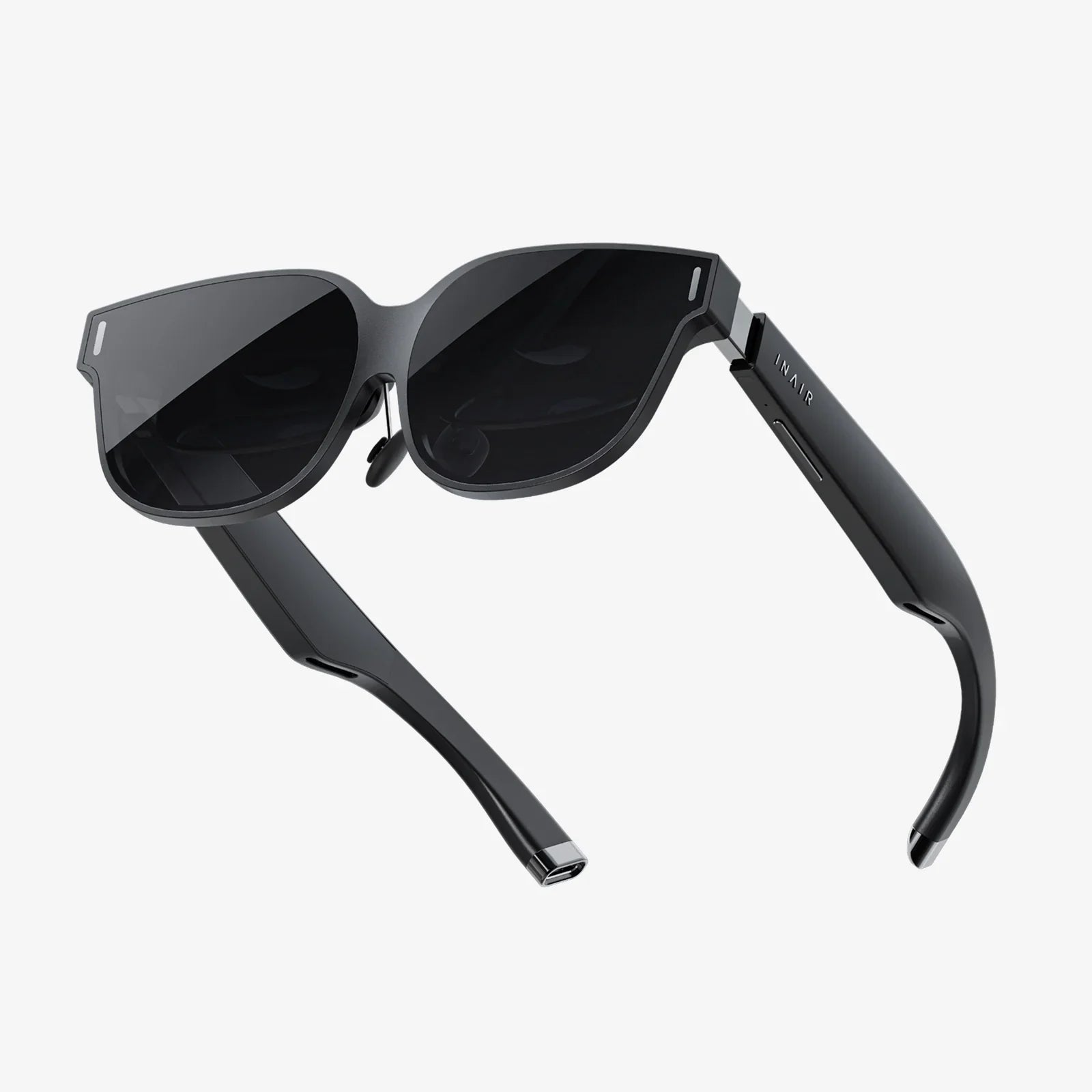
Imagine walking through a labyrinthine foreign city, not with your nose buried in a map, but with digital arrows and signposts painted directly onto the pavement in front of you. Envision finding a specific product in a vast supermarket, guided by a glowing path on the floor that leads you right to the shelf. This is no longer the stuff of science fiction; it is the imminent reality promised by augmented reality navigation, a technology set to fundamentally rewire our relationship with the physical world around us.
The Foundation: Understanding the Technology
At its core, augmented reality (AR) navigation is the practice of using AR technology to provide real-time, on-screen guidance within a live view of a user's surroundings. Unlike virtual reality, which creates a completely immersive digital environment, AR layers computer-generated information—such as images, text, and 3D models—onto the user's perception of the real world. This is typically achieved through the camera and screen of a smartphone, tablet, or, more immersively, through specialized eyewear.
The magic of AR navigation is conjured through a sophisticated fusion of several advanced technologies:
Computer Vision and Environmental Understanding
This is the brains of the operation. The device's camera continuously captures the environment, and sophisticated algorithms analyze this visual data to understand what it is seeing. It identifies flat surfaces like floors and walls, recognizes unique features and objects, and builds a digital understanding of the space. This process, often called simultaneous localization and mapping (SLAM), allows the device to precisely place and anchor digital content in the real world, ensuring that a virtual signpost stays fixed to a street corner even as the user moves their device.
Precise Geolocation and Sensor Fusion
While standard GPS can get you within about 5-10 meters of your target—fine for car navigation but useless for pointing out a specific restaurant door—AR navigation requires centimeter-level accuracy. This is achieved by combining GPS data with inputs from a suite of onboard sensors: an accelerometer to measure movement, a gyroscope to understand orientation, and a magnetometer (digital compass) to determine direction. This sensor fusion creates a highly precise and real-time understanding of the user's exact position and where they are looking.
3D Mapping and Point Clouds
For AR navigation to work reliably, especially indoors where GPS signals fail, it often relies on pre-scanned or crowdsourced 3D maps of environments. These are not just simple floor plans; they are rich, detailed data sets known as point clouds, which contain millions of data points representing the precise geometry of a space. The device's live camera feed is constantly compared to this pre-existing digital twin to pinpoint its location with incredible accuracy, a process known as visual positioning.
A World Overlaid: The Tangible Benefits
The transition from a top-down, abstract 2D map to an intuitive, contextual 3D overlay brings a multitude of benefits that extend far beyond simple convenience.
Intuitive and Immersive Guidance
The most immediate advantage is the death of the "blue dot" dilemma. Instead of mentally translating a 2D map onto a 3D world—figuring out if you need to turn left at the blue dot or at the next street—instructions are presented in the most natural way possible: within your field of vision. A large arrow appears, pointing down the correct path. The name of the destination hovers over the actual building. This eliminates cognitive load, making navigation effortless and reducing the anxiety of getting lost in an unfamiliar place.
Enhanced Context and Rich Information
AR navigation turns the world into an interactive information hub. As you pan your device across a street, you could see ratings and today's specials floating over restaurants. Historical landmarks could have informational placards materialize next to them. In a corporate setting, a technician could see the maintenance history and operational status of machinery simply by looking at it through AR glasses. This contextual layering of data transforms navigation from a simple A-to-B tool into a powerful platform for discovery and learning.
Revolutionizing Indoor and Complex Spaces
This is where AR navigation truly shines. GPS signals are notoriously weak or non-existent inside large structures like airports, shopping malls, hospitals, and university campuses. AR navigation, using visual markers and pre-mapped data, can guide users seamlessly through these complex environments. It can lead you to the correct check-in counter, the nearest restroom, a specific gate, or a product on a shelf in a massive big-box store, solving a problem that has long plagued traditional digital maps.
Increased Safety and Accessibility
By presenting information within the context of the environment, users can keep their heads up and remain aware of their surroundings, a significant safety improvement over constantly looking down at a phone screen. This is particularly valuable for pedestrians navigating busy urban streets. Furthermore, for individuals with cognitive disabilities or difficulties interpreting traditional maps, AR provides a straightforward, visual cue-based system that can greatly enhance their independence and mobility.
Navigating the Challenges: The Road Ahead
Despite its immense potential, the widespread adoption of AR navigation faces significant technological and societal hurdles that must be overcome.
Technical Limitations and Hardware Demands
The technology is computationally intensive. Real-time environmental recognition, sensor fusion, and 3D rendering drain battery life at an alarming rate and require powerful processors that can generate heat. Furthermore, current accuracy can be affected by changing conditions: poor lighting, weather (rain on the camera lens), or dynamic environments with moving crowds and vehicles can confuse the algorithms. The vision of seamless, all-day AR navigation is currently tethered to the limitations of battery technology and mobile processing power.
The Digital Divide and Privacy Concerns
Waving a phone around in public to see digital overlays can feel socially awkward and may mark a user as a tourist or distracted individual, making them a potential target. More seriously, the technology raises profound privacy questions. The constant scanning and mapping of environments, both public and private, involves the collection of vast amounts of visual data. Who owns this data? How is it stored and used? The potential for misuse, surveillance, and unauthorized data collection is a serious concern that requires robust legal and ethical frameworks.
Information Overload and Visual Clutter
There is a very real risk of creating a visually chaotic experience. If every store has a flashing sign, every landmark a paragraph of text, and every street multiple directional arrows, the real world could become an overwhelming and distracting digital billboard. Designing intuitive, minimalist, and user-controlled interfaces that provide information only when it is contextually relevant will be critical to preventing AR fatigue and ensuring the technology enhances rather than obscures reality.
The Future is Overlaid: What Comes Next?
The evolution of AR navigation is inextricably linked to the development of its hardware. Smartphones are merely the stepping stone. The true potential will be unlocked with the mass adoption of lightweight, socially acceptable AR eyewear. These devices, acting as a persistent layer between our eyes and the world, will make AR navigation always available, hands-free, and truly immersive.
We are moving towards a future of the ambient interface, where digital information is seamlessly integrated into our perception without the need to consciously consult a device. Navigation will become a subconscious process, with subtle visual cues guiding us effortlessly. This will converge with other technologies like the Internet of Things (IoT), where smart objects in the environment can communicate directly with our AR devices, providing real-time data and guidance.
Furthermore, the creation of a universally accessible, constantly updated, and incredibly detailed 3D digital twin of our entire world—a project already underway by several major tech companies—will serve as the foundational map for this new era of exploration. This living, breathing digital replica will allow for hyper-accurate positioning and incredibly rich contextual information everywhere on the planet.
We stand at the precipice of a new paradigm in human-computer interaction. Augmented reality navigation is not just a better way to get from point A to point B; it is the beginning of a fundamental shift in how we perceive and interact with our environment. It promises a world where information is not sought, but presented; where exploration is not daunting, but encouraged; and where the line between the digital and the physical gracefully dissolves, creating a richer, more intuitive, and more connected human experience. The path forward is literally right before our eyes.
Share:
Augmented Reality Development Services: The Ultimate Guide to Transforming Your Business
Augmented Reality Development Services: The Ultimate Guide to Transforming Your Business