


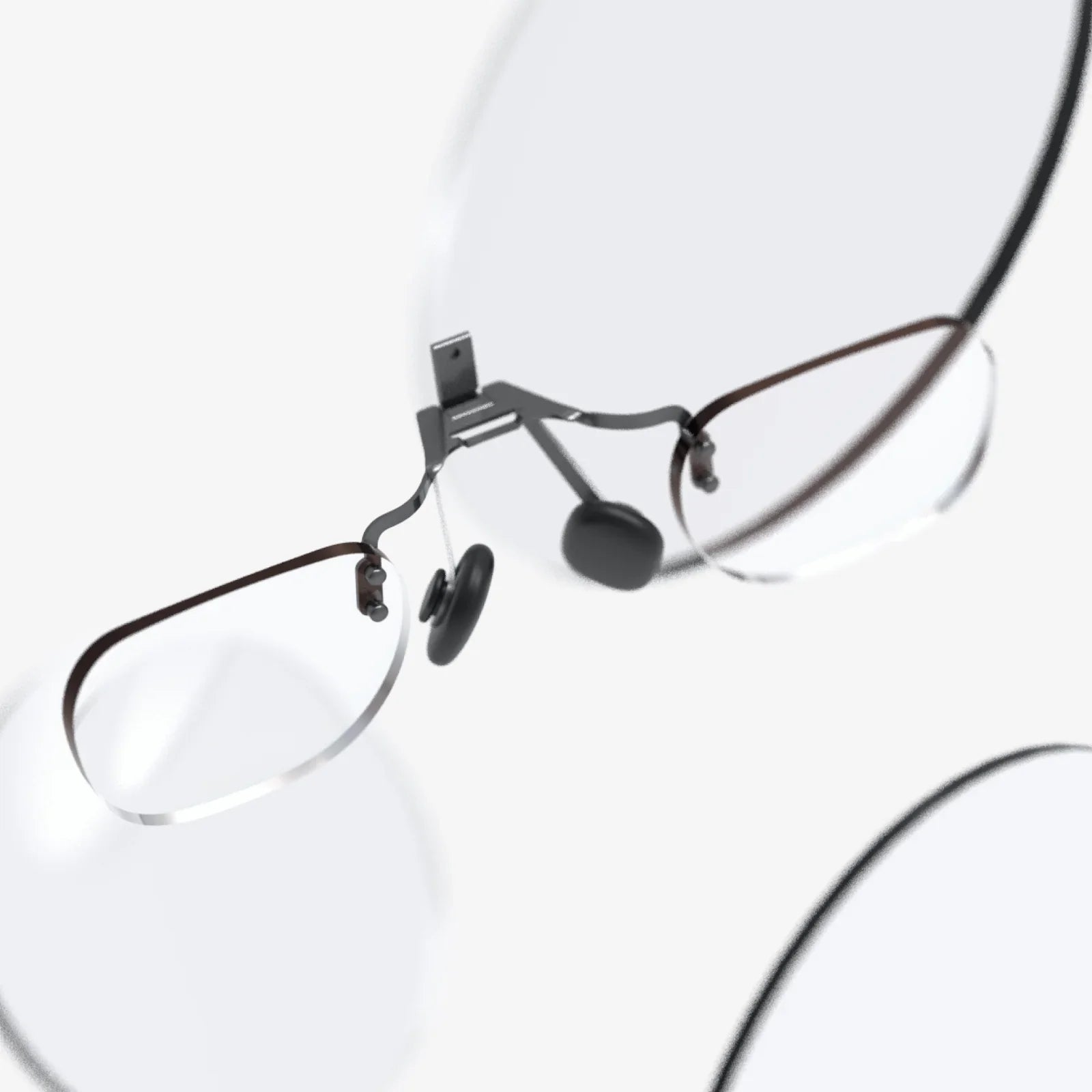
Remember when checking the news meant scrolling through a flat screen? In 2025, that concept feels as archaic as a town crier. The headlines of today don't just inform you; they materialize around you. The long-prophesied fusion of our digital and physical realities has finally reached its tipping point, moving from a novel gadget to the very fabric of our daily existence. This isn't just about seeing a dinosaur in your living room anymore; it's about a fundamental rewiring of how we work, learn, connect, and perceive the world itself. The augmented reality news today isn't a story you read—it's an environment you experience, and 2025 is the year we all moved in.
The Demise of the Static Screen: News in Your Field of View
The most visible shift for the average person has been the evolution of news consumption. The clunky headsets of the early 2020s have given way to elegant, lightweight smart glasses and even sophisticated contact lenses. These devices project a persistent, customizable information layer onto our vision, turning the world into a dynamic, interactive interface.
Imagine walking down a street in a new city. Your AR display doesn't just show you the names of restaurants; it floats user reviews, today's specials plated in photorealistic 3D, and even a live wait-time indicator. But this hyper-local context is just the beginning. Major news events are now experienced, not just observed. A breaking news alert about a hurricane isn't a push notification; it's a miniature, real-time weather simulation hovering over your coffee table, showing the storm's path and intensity with terrifying clarity. Political speeches are annotated with live fact-checks and contextual data streams, and sports highlights are replayed on your desk surface from any angle you choose.
This has given rise to a new form of journalism: immersive reporting. Correspondents in conflict zones or at scientific discoveries stream 360-degree, volumetric video, allowing audiences to stand virtually beside them, absorbing the environment and the gravity of the situation in a way a 2D video never could. The line between audience and witness is blurring.
The Spatial Workplace: Redefining Collaboration and Design
Beyond the consumer sphere, augmented reality has triggered a productivity revolution. The concept of the "office" has been utterly transformed. Remote work, once confined to video call grids on a monitor, is now a collaborative, spatial experience.
Architects and engineers don 3D model overlays onto physical construction sites, identifying potential clashes between systems before a single beam is laid. Medical students practice complex surgical procedures on detailed holographic anatomies, and seasoned surgeons use AR guidance during operations to visualize critical structures beneath the surface. In manufacturing, assembly line workers see digital instructions overlaid directly on the components they are handling, drastically reducing errors and training time.
Team meetings are held in persistent virtual workspaces. Instead of sharing a screen, colleagues from across the globe manipulate 3D models, data visualizations, and whiteboards as if they were in the same room. This "spatial computing" has ended the tyranny of the video call fatigue, fostering a sense of presence and collaboration that was previously impossible for distributed teams.
The Social Layer: Connecting in a Enhanced World
Social media has evolved from a platform we visit to a layer we inhabit. Platforms now offer persistent AR spaces tied to locations. You can leave a holographic message for a friend at their favorite coffee shop, see reviews and tips left by others floating over a museum exhibit, or participate in location-based AR games that transform entire city blocks into interactive playgrounds.
This has created a new digital public square, but it's one with profound implications for privacy and shared reality. The ability to annotate the world comes with the risk of digital graffiti and misinformation. The concept of "seeing is believing" is under threat, as malicious actors can create convincing AR overlays that distort reality for their own ends.
The Invisible Infrastructure: 5G-Advanced, Edge Computing, and AI
This seamless AR experience is powered by an invisible technological triumvirate. The rollout of 5G-Advanced networks provides the high-bandwidth, low-latency connection necessary to stream complex holographic data without lag. Edge computing processes immense amounts of spatial and visual data locally, on the device or at nearby network nodes, ensuring responsiveness and privacy. Most critically, generative AI acts as the brain of the operation.
AI algorithms now understand the world in real-time, identifying objects, people, and contexts to deliver the right information at the right time. They can translate street signs instantly, summarize long articles into key bullet points floating next to the source, and even generate custom 3D content on the fly. This intelligent curation is what makes modern AR feel less like a tool and more like a cognitive extension.
The Ethical Frontier: Privacy, Accessibility, and the Digital Divide
With great power comes great responsibility, and the proliferation of AR has opened a Pandora's box of ethical dilemmas. Continuous environmental scanning means our devices are always "watching." Who has access to this data? How is it stored and used? Laws are scrambling to catch up to the reality of persistent surveillance baked into consumer technology.
The digital divide has also taken on a new dimension. Access to high-speed data and advanced AR hardware is creating a class of "information haves" and "information have-nots." Those without AR are at a significant disadvantage, unable to access the contextual data and enhanced experiences that are becoming standard in education, employment, and social interaction.
Furthermore, the potential for addiction and reality distortion is a growing concern. As the digital layer becomes more engaging than the physical one, will we disengage from our actual surroundings? The mental health impact of a perpetually augmented existence is a primary focus of researchers in 2025.
Looking Ahead: The Path to True Ubiquity
The technology is still evolving. Battery life remains a constraint for all-day wear, and achieving true photorealistic holography in all lighting conditions is the next holy grail. The focus for developers is now on creating more intuitive and natural user interfaces, moving beyond gesture and voice controls toward brain-computer interfaces that are in early testing phases.
The goal is a future where AR is so seamlessly integrated it becomes indistinguishable from reality itself—a calm technology that empowers without overwhelming. The next steps will involve deeper biometric integration, allowing our AR environment to respond to our emotional and cognitive state, and the development of a decentralized "AR cloud," a shared, persistent digital map of the world that all devices can access and contribute to.
The augmented reality of 2025 is not a futuristic fantasy; it is our present reality. It has moved beyond the realm of entertainment and novelty into the core infrastructure of modern society. It is reshaping industries, redefining human connection, and challenging our very notions of privacy and perception. The world now has a permanent, digital nervous system, and we are all learning how to live within it. The question is no longer if AR will change everything, but how we will steer this powerful technology to build a future that is not only more efficient but also more human, equitable, and truly awe-inspiring.
Share:
Smartglasses Market: A Vision of the Future Beyond the Hype
VR Glasses Try On: The Ultimate Guide to Virtual Fitting Before You Buy