


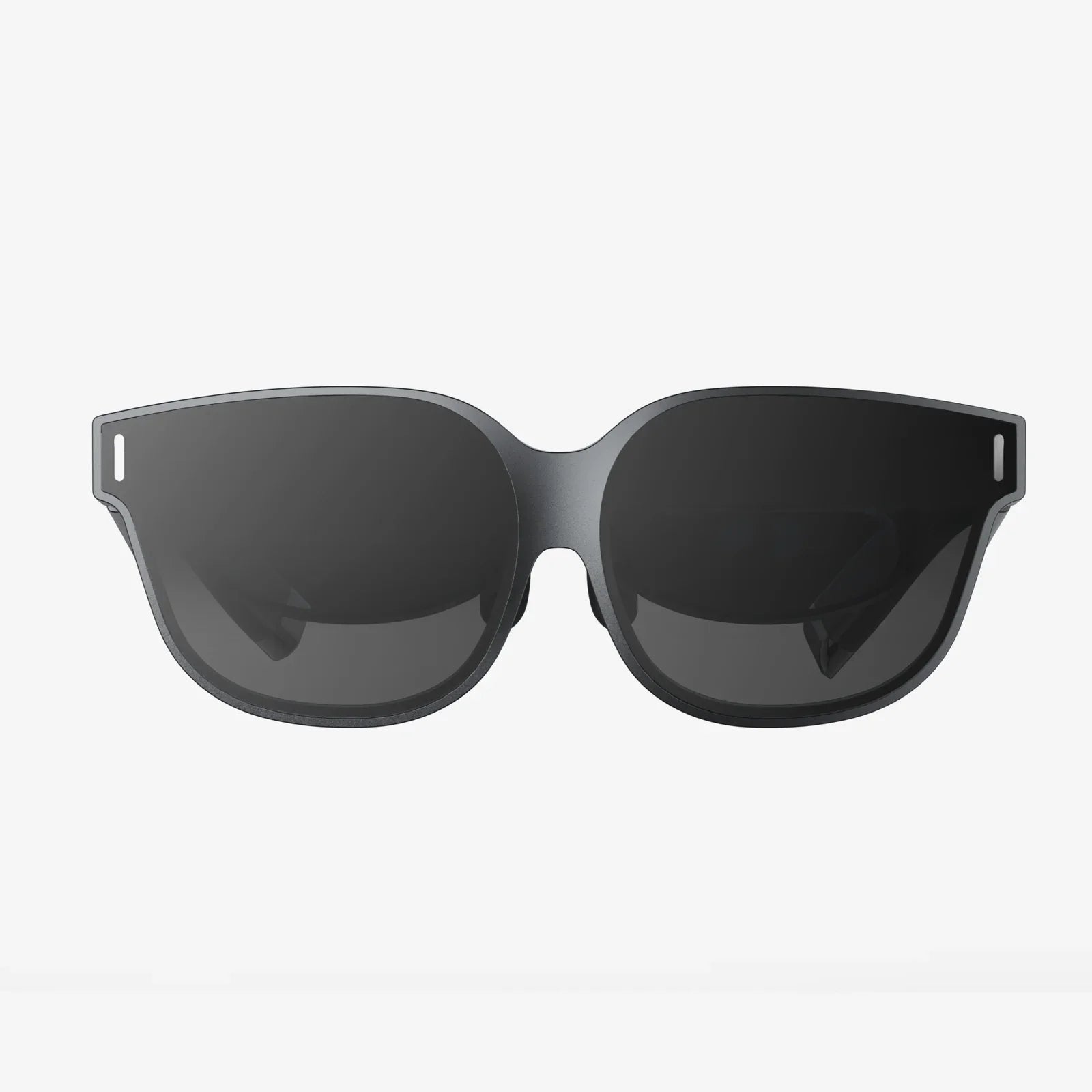
Imagine a world where digital information doesn't confine itself to the glowing rectangles of our phones and computers but bleeds seamlessly into our physical environment, enhancing everything we see, do, and understand. This is the promise of augmented reality (AR), a technology that feels both futuristic and increasingly familiar. But to truly grasp its transformative potential and where it's headed, we must first journey back to its inception, to the visionary minds and pivotal moments that laid the groundwork for this digital revolution. The story of AR's origin is not a simple tale of a single inventor or a eureka moment; it is a rich, complex tapestry woven from decades of academic research, speculative fiction, and incremental technological breakthroughs that collectively birthed a new way of perceiving reality itself.
The Conceptual Seed: Before the Technology Existed
Long before the hardware was capable, the idea of augmenting human perception with machine-generated data was blossoming in the realm of science fiction. Authors and filmmakers served as the original architects of AR, planting the conceptual seed in the public consciousness.
One of the earliest and most poignant examples is L. Frank Baum's 1901 novel, The Master Key. In it, a young character named Rob is given a set of fantastic inventions by the Demon of Electricity, including what Baum called "character markers." These were a pair of spectacles that, when worn, would place letter symbols above people's heads indicating their character—a 'G' for good, an 'E' for evil, and so on. This is a pure, literary form of augmented reality: a contextual data overlay on the real world, designed to enhance the wearer's understanding of their surroundings.
Decades later, the concept was visually cemented in popular culture through cinema. In the 1980s, films like Terminator and RoboCop featured cyborg protagonists whose vision was supplemented with targeting reticles, text readouts, and graphical overlays identifying objects and people. While these depictions were often militaristic, they powerfully illustrated the potential for a heads-up display (HUD) to provide real-time, actionable information. Perhaps the most direct and influential fictional precursor was Vernor Vinge's 1999 essay, The Coming Technological Singularity, and his novels, which described "cyber glasses" that could overlay a digital world onto the physical one. These visions provided a crucial blueprint; they defined the what long before science could deliver the how.
The Father and the First Prototype: Ivan Sutherland's Sword of Damocles
If science fiction provided the dream, then Ivan Sutherland, a computer scientist, provided the first tangible step towards its realization. In 1968, while at Harvard University, Sutherland and his student Bob Sproull created what is widely considered the first head-mounted augmented reality system. They named it The Sword of Damocles, a title that perfectly captured its imposing and intimidating nature.
This device was a long way from today's sleek AR glasses. It was so heavy that it had to be mechanically counterbalanced and suspended from the ceiling, literally hanging over the user's head like the mythical sword. It didn't use a camera to see the world; instead, it employed a combination of ultrasonic and mechanical trackers to align simple, computer-generated wireframe graphics with the user's physical environment. The user would see a ghostly, three-dimensional cube hovering in real space, an effect that was breathtaking for its time.
Sutherland's system was not "augmented reality" in the modern sense—it was more an early form of virtual reality. However, its core innovation was the concept of a perspective window, a display that could present graphical information in a way that was spatially congruent with the real world. In his seminal 1965 paper, The Ultimate Display, Sutherland laid out his philosophy: "The ultimate display would, of course, be a room within which the computer can control the existence of matter. A chair displayed in such a room would be good enough to sit in. Handcuffs displayed in such a room would be confining, and a bullet displayed in such a room would be fatal." While we are far from that ultimate goal, The Sword of Damocles was the first, monumental step down that path, earning Sutherland the rightful title of "the father of computer graphics" and a founding father of both VR and AR.
Defining the Dream: The Birth of a Name and a Research Field
For the next two decades, research continued primarily within university and military labs, often under different names like "mixed reality" or "computer-mediated reality." The technology remained prohibitively expensive and complex, confined to research on telepresence, aviation, and military applications. The U.S. Air Force's Armstrong Labs, for example, developed the first functional heads-up displays for pilots in the 1970s and 80s, projecting critical flight data onto the cockpit canopy so pilots wouldn't need to look down at their instruments.
The field needed a unifying identity. That moment arrived in 1990, thanks to two Boeing researchers, Tom Caudell and David Mizell. They were working on an experimental system to assist factory workers in the complex task of assembling aircraft wiring harnesses. Instead of using bulky, physical diagrams and manuals, they proposed a head-mounted display that would project digital, wireframe diagrams and instructions directly onto the boards and components where the workers were assembling them.
Watching this system take shape, Caudell and Mizell needed a name for the technology in their reports. They felt "virtual reality" was inaccurate, as the system wasn't replacing the real world but supplementing it. Inspired by the concept, Caudell coined the term "augmented reality." This was a pivotal moment. By giving the technology a distinct name, they effectively carved out a new field of study separate from virtual reality. They had defined the dream that science fiction authors had imagined and that Ivan Sutherland had begun to engineer.
Building the Foundation: The Essential Pillars of AR
For AR to transition from a lab curiosity to a functional tool, it required a robust technical foundation. Researchers in the 1990s and early 2000s dedicated themselves to solving the core challenges that define any AR experience. These can be broken down into four essential pillars:
- Tracking: For digital content to stay locked in place in the real world, the system must understand its own position and orientation. This involves a complex combination of sensors (gyroscopes, accelerometers) for coarse movement, and computer vision techniques for fine-tuning. Early systems used fiducial markers—simple, high-contrast black-and-white symbols—that cameras could easily detect and track to anchor digital content.
- Registration: This is the precise alignment of virtual and real-world coordinates. Perfect registration ensures a virtual vase sits convincingly on a real table without appearing to jitter or drift away. Achieving this low-latency, high-fidelity alignment has been one of the most persistent and critical challenges in AR development.
- Display Technology: How to get the image into the user's eyes? Research diverged into two main paths: optical see-through and video see-through displays. The former uses semi-transparent mirrors or waveguides to project light into the eye, allowing the user to see the real world directly. The latter uses a camera to capture the real world and then blends the digital content into that video feed before displaying it on an opaque screen. Each method has trade-offs in terms of resolution, safety, and realism.
- Computing Power: Processing video feeds, running tracking algorithms, and rendering complex 3D graphics in real-time requires immense computational resources. The history of AR is inextricably linked to Moore's Law; it was only as processors became smaller, faster, and more power-efficient that untethered, wearable AR became a feasible consumer proposition.
The work of academics like Steve Feiner, Blair MacIntyre, and Hirokazu Kato (who created the open-source ARToolKit in 1999, a critical library for marker-based AR) was instrumental in building and refining these pillars, providing the tools that would enable the next wave of innovation.
The Catalyst for Mainstream Awareness: Mobile AR Arrives
Despite these advancements, AR remained a niche technology for experts. The hardware was still too specialized. The catalyst for its explosion into the mainstream was, ironically, a device designed for something else entirely: the smartphone.
The modern smartphone is a perfect AR machine in a pocket-sized form factor. It packs a high-resolution camera, a bright screen, a powerful GPU and CPU, and a full suite of sensors including GPS, accelerometers, and gyroscopes. In the late 2000s, developers began to leverage this ready-made hardware platform. Early mobile AR apps used GPS and compass data to create "point-and-find" experiences, overlaying information about nearby restaurants or landmarks on the camera view. While innovative, these experiences suffered from poor registration due to the imprecision of GPS.
The true breakthrough came with the integration of advanced computer vision and simultaneous localization and mapping (SLAM) algorithms directly into mobile operating systems. Tech giants began releasing AR development platforms—like ARKit and ARCore—that turned the smartphone into a sophisticated spatial computer. These platforms used the camera and sensors to understand flat surfaces, estimate lighting, and track the phone's position in space with remarkable accuracy, all without the need for markers.
Suddenly, anyone with a smartphone could experience convincing AR. They could place virtual furniture in their living room, play games with digital characters running across their kitchen table, or use interactive, 3D models to learn about human anatomy. This democratization of access was the final link in the chain, transforming AR from a research topic into a global phenomenon and proving its utility and entertainment value to millions.
From Sci-Fi to Surgery: The Expanding Universe of AR Applications
The journey from the Sword of Damocles to the smartphone camera is complete, but the story of AR is still being written. Its applications are rapidly expanding far beyond gaming and entertainment, permeating nearly every professional field and fundamentally changing how we work, learn, and interact with information.
- Enterprise & Manufacturing: Fulfilling the original vision of Caudell and Mizell, AR is now a cornerstone of Industry 4.0. Warehouse workers use smart glasses to see picking instructions and inventory locations, hands-free. Complex machinery technicians see animated repair instructions overlaid directly on the equipment they are fixing, reducing errors and downtime. Architects and construction teams can visualize full-scale building plans on an empty plot of land.
- Healthcare: In medicine, AR is saving lives and improving outcomes. Surgeons can visualize CT scans and MRI data—such as the precise location of a tumor—projected directly onto the patient's body during an operation, improving precision. Medical students can practice procedures on detailed holographic models, and patients can better understand their conditions through interactive 3D visualizations.
- Retail & E-Commerce: The "try before you buy" paradigm has been revolutionized. Customers can use their phones to see how a new sofa would look in their home, how a pair of glasses fits their face, or how a shade of paint changes a room's ambiance, drastically reducing purchase uncertainty.
- Education & Training: Textbooks become living, interactive documents. Students can dissect a virtual frog, explore the solar system in their classroom, or walk through a historical site as it looked centuries ago, creating immersive and unforgettable learning experiences.
The origin of augmented reality is a story of convergence. It is the convergence of imaginative fiction and rigorous science, of military necessity and consumer convenience, of separate technological threads—display, tracking, computing—woven together over half a century. It began with a hanging monstrosity that could display a simple cube and evolved into a powerful layer of intelligence we carry in our pockets. As we stand on the brink of the next evolution—toward lightweight, socially acceptable glasses that will make this technology always available—it's clear that the initial dream has not just been realized; it has become the foundation for a future where our digital and physical realities are forever intertwined, creating a world of limitless possibility right before our eyes.
Share:
Tint Adjustable Smart Sunglasses: The Future of Eyewear is Here
Top Smart Sunglasses 2025: The Ultimate Fusion of Vision, Audio, and AI