


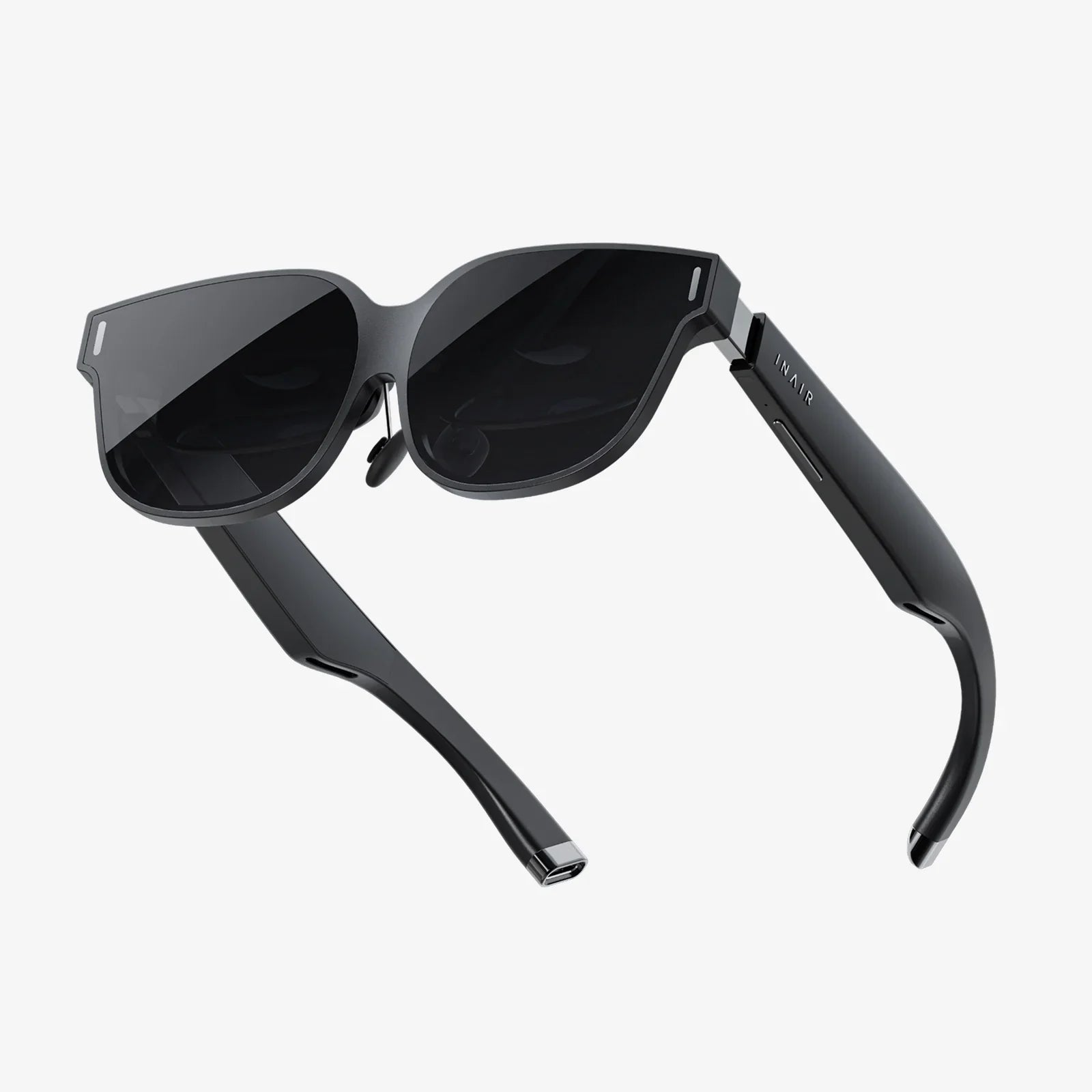
Imagine a world where digital information seamlessly overlays your physical reality, where instructions float over a complex machine you're repairing, historical figures narrate the ruins you're exploring, and a virtual guide helps you navigate a new city. This is the breathtaking promise of augmented reality (AR), a technology poised to fundamentally reshape how we work, learn, play, and connect. Yet, for every dazzling demo and futuristic vision, there exists a stark, often unspoken, reality: a tangled web of formidable problems that stand between AR's potential and its pervasive, practical adoption. The journey from a compelling novelty to an indispensable tool is riddled with technical hurdles, human factors challenges, and profound societal questions that demand innovative and thoughtful solutions.
The Hardware Conundrum: Balancing Power, Form, and Function
The most immediate barrier to widespread AR adoption lies in the physical hardware itself. The dream device must be powerful, socially acceptable, comfortable for extended use, and accessible—a combination that has, so far, proven incredibly difficult to achieve.
The Problem of Bulky, Unsocial Design
Many current AR headsets and glasses are often criticized for being too large, too heavy, and too obtrusive. The "goggles" aesthetic is a significant social barrier; people are hesitant to wear technology that makes them look conspicuous or alienates them from others in a social setting. This lack of social acceptance severely limits the contexts in which users feel comfortable deploying AR, confining it to specific professional or private environments rather than enabling all-day, everyday use.
The Challenge of Battery Life and Thermal Management
High-fidelity AR is computationally intensive. It requires powerful processors to handle real-time world tracking, environmental understanding, and rendering complex 3D graphics. This immense processing power consumes substantial energy, leading to a critical limitation: short battery life. A device that can't last a full workday without a recharge is impractical for many applications. Furthermore, this processing generates heat. Managing thermal output to prevent discomfort or even potential skin damage is a major engineering challenge that often conflicts with the desire for smaller, lighter form factors.
Limited Field of View and Visual Fidelity
Another significant hardware limitation is the constrained field of view (FOV). Many devices only project digital content into a small, rectangular window in the user's central vision, breaking the illusion of immersion and forcing users to consciously look through this window. Coupled with issues like low resolution, which can make text hard to read, and inaccurate registration, where digital objects don't stay perfectly locked to the real world, the visual experience often falls short of the seamless blend promised by AR proponents.
Software and Interaction Hurdles: Building an Intuitive Digital Layer
Assuming the hardware challenges are overcome, the next layer of problems resides in the software and the fundamental question of how users interact with this merged reality.
The Daunting Task of Robust Tracking and Mapping
For AR to work, the device must understand the environment in real-time. This process, known as Simultaneous Localization and Mapping (SLAM), is what allows digital content to be placed persistently and accurately on a physical table or for a virtual character to hide behind a real sofa. However, SLAM is not foolproof. It can struggle with dynamic environments (e.g., crowded spaces with moving people), poorly textured surfaces (blank white walls), and varying lighting conditions. A single tracking failure, where the digital world jitters or floats away, instantly shatters user confidence and immersion.
Designing for a New Reality: The UI/UX Paradigm Shift
How do you design a user interface for a medium that has no borders? Traditional GUI principles from desktops and smartphones don't directly translate. Designers grapple with questions of information placement (where in the user's vision should data appear?), depth (how far away should a menu be?), and avoiding information overload or "interface blindness" where the real world is obscured by digital clutter. There are no established conventions, leading to confusing and inconsistent user experiences across different AR applications.
The Interaction Dilemma: How Do We "Touch" the Virtual?
Interacting with virtual objects is another core challenge. While hand-tracking and gesture control offer a direct and intuitive method, they can be imprecise and lead to "gorilla arm" fatigue from holding one's arms up for extended periods. Voice control is useful but not always socially appropriate or practical in noisy environments. Other solutions, like handheld controllers or smartphones, break the feeling of immersion. Finding a universally intuitive, precise, and fatigue-free interaction model remains a key unsolved problem.
The Human Factor: Physiological and Psychological Impacts
Perhaps the most critical challenges are those that affect the user directly—the human experience of living with an augmented world.
Vergence-Accommodation Conflict and Cybersickness
A significant physiological issue is known as Vergence-Accommodation Conflict (VAC). In the real world, our eyes converge (cross) and accommodate (focus) in unison when looking at nearby objects. Most AR displays present images at a fixed focal plane, often further away. This means your eyes might be converging on a virtual object that appears inches away, but must focus on the screen itself, which is much farther. This sensory mismatch can cause significant eye strain, headaches, and visual fatigue, limiting comfortable use to short sessions. For some users, this and other latency issues can also induce cybersickness, a form of motion sickness.
Cognitive Overload and Situational Awareness
AR has the potential to create crippling cognitive overload. Bombarding a user with notifications, information, and graphics while they are trying to navigate a busy street or operate machinery is not just annoying—it's dangerous. The technology must be designed to prioritize critical information and minimize distraction, ensuring it enhances situational awareness rather than degrading it. The term "attention theft" has emerged to describe the risk of AR systems hijacking our focus from the physical tasks and people that matter most.
Privacy in a World of Always-On Cameras and Sensors
AR devices are, by nature, data-collection machines. They feature always-on cameras, microphones, and a suite of sensors constantly scanning and interpreting the environment. This raises monumental privacy concerns. Who has access to this data? Is it stored? Could it be used for unauthorized surveillance? The potential for creepiness is high—imagine walking down the street and having devices worn by others automatically pulling up your public social media profile. Establishing ethical guidelines and robust, transparent data-handling practices is not just a solution; it's a prerequisite for public trust.
Forging the Path Forward: A Multifaceted Approach to Solutions
The problems are significant, but not insurmountable. Across the industry, researchers and engineers are developing innovative solutions that address these challenges from multiple angles.
Hardware Innovation: The Road to Everyday Glasses
The solution to the hardware problem lies in advancements in multiple fields. Waveguide and holographic optics are being developed to create thinner, more transparent displays that can be integrated into designs resembling everyday eyeglasses. The development of ultra-low-power, specialized processors (ASICs) for AR-centric tasks like computer vision will drastically reduce power consumption and heat generation. Furthermore, research into alternative battery technologies and even harvesting ambient energy could eventually lead to all-day battery life. The goal is to make the technology disappear, both physically and socially.
Advanced Software and Smarter AI
On the software front, the solution is smarter algorithms powered by artificial intelligence. AI can enhance SLAM, making it more robust in difficult environments by predicting and filling in gaps. Machine learning can be used to understand user intent and context, allowing the AR system to proactively offer relevant information instead of waiting for commands. For UI/UX, the solution is the establishment of strong, human-centered design principles—like always providing a clear digital-to-physical sightline and using spatial audio to direct attention—that will become the standard for intuitive AR interfaces.
Prioritizing User Comfort and Safety
Addressing physiological issues like VAC requires hardware breakthroughs. Technologies like varifocal and light field displays are in development, which can dynamically adjust focal planes, allowing the eyes to focus naturally on virtual objects at different depths, thereby eliminating strain. To combat cognitive overload, context-aware systems are key. The device must understand the user's activity and environment to filter notifications and information appropriately. A "focus mode" or "driving mode" could automatically limit digital distractions during critical tasks.
Building a Foundation of Ethics and Privacy by Design
The privacy dilemma requires a solution rooted in ethics and technology architecture. The concept of "privacy by design" must be central to AR development. This includes implementing on-device processing for sensitive data (like camera feeds) whenever possible, so information doesn't need to be sent to the cloud. Clear, user-centric data permissions and transparent policies are non-negotiable. Features like physical-world "opting-out"—where spaces can be digitally marked as private and off-limits to AR annotation—could help create a respectful balance between the digital and physical realms.
The Societal and Economic Dimension
Beyond the immediate user, AR's integration will pose broader societal questions that require proactive solutions. The potential for a new "digital divide" is high, where access to advanced AR tools creates inequalities in education and the workplace. Content moderation for a persistent, shared AR layer will be a monumental challenge, akin to policing a new internet superimposed on our cities. Furthermore, the economic disruption as AR transforms industries from retail to manufacturing must be met with policies that support workforce transition and retraining. The solutions here are not technological, but legislative, educational, and cultural, requiring collaboration between technologists, policymakers, and the public.
The true potential of augmented reality will not be unlocked by a single magical breakthrough, but by a relentless, multi-disciplinary effort to solve a complex puzzle. It requires chip designers working on efficiency, optical engineers bending light in new ways, software architects building ethical data frameworks, and interaction designers discovering the language of this new medium. The path forward is one of iteration, collaboration, and an unwavering focus on the human experience. The hurdles are high, but the destination—a world seamlessly enhanced by technology that feels less like a device and more like an extension of our own capabilities—is a future worth building thoughtfully, responsibly, and brilliantly.
We stand on the precipice of this new reality, not as passive consumers, but as active participants in its creation. The choices made today—to prioritize comfort, champion privacy, and design for humanity—will echo for decades, determining whether augmented reality becomes a tool that empowers us or a burden that overwhelms us. The promise is too profound to ignore, and the problems, while daunting, are simply the first chapter in a story we are all writing together.
Share:
Do Gaming Glasses Work? A Deep Dive Into The Science Behind The Lenses
Augmented Reality at Work: The Invisible Revolution Reshaping Your 9-to-5