


- by wangfred
Augmented Reality Product Revolution: Reshaping Reality and Redefining Interaction
- by wangfred
Imagine a world where digital information doesn't just live on a screen but is seamlessly woven into the fabric of your physical reality. This is the promise and the power of the augmented reality product, a technological leap that is fundamentally altering our perception of and interaction with the world around us. Unlike its fully immersive cousin, virtual reality, which transports you to a completely digital environment, augmented reality (AR) enhances your existing reality by superimposing computer-generated images, data, and animations onto your view of the real world. This powerful synthesis of the physical and the digital is moving from niche novelty to mainstream utility, poised to revolutionize everything from complex surgical procedures to the simple act of trying on a new piece of furniture. The journey of the augmented reality product is one of the most exciting technological narratives of our time, and we are only just beginning to scratch the surface of its potential.
At its heart, an augmented reality product functions by bridging the gap between the digital and physical realms through a sophisticated interplay of hardware and software. The process typically begins with a camera or sensor, which acts as the eyes of the device, continuously capturing the user's real-world environment. This visual data is then fed into a processing unit, which can be a powerful smartphone, a dedicated headset, or smart glasses. The processor's first critical task is to understand the environment. It does this through a technology called simultaneous localization and mapping (SLAM). SLAM algorithms analyze the camera feed to identify unique features, surfaces, and objects, creating a real-time 3D map of the space and precisely tracking the user's position and orientation within it.
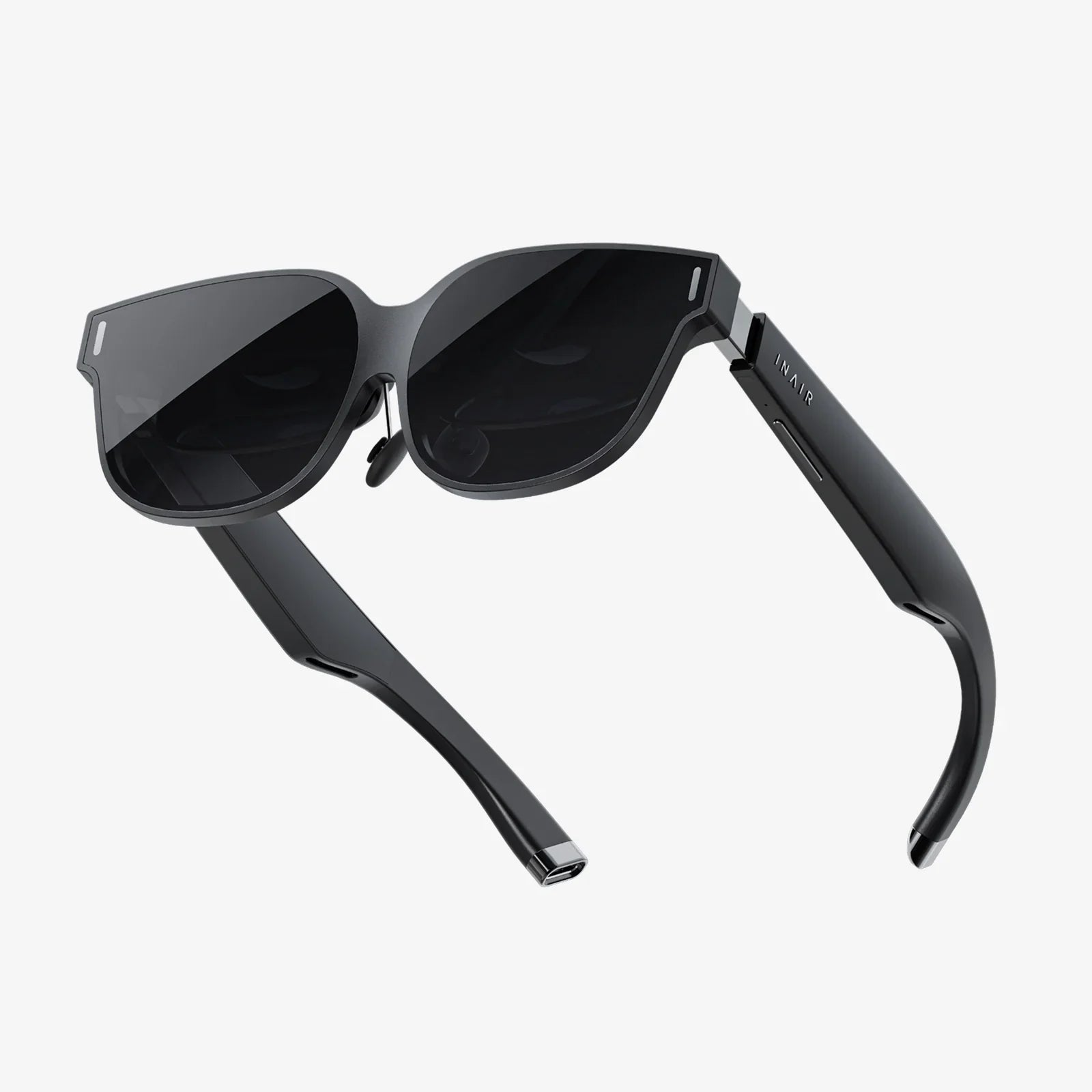
Once the environment is mapped and the device understands its position, the next step is anchoring. This is where the digital content is precisely placed and locked onto a specific point in the physical world. This anchor could be a flat surface like a table, a unique image (an image target), a GPS coordinate, or even a physical object. The sophistication of this anchoring is what separates a compelling AR experience from a gimmicky one; a well-anchored virtual object will stay in place, maintain its scale, and occlude realistically behind real-world objects as the user moves. Finally, the rendering engine takes over, generating the high-fidelity 3D models, animations, or data overlays and compositing them onto the user's live view in perfect perspective and alignment. This final composited view is presented to the user through a display, which can range from the screen of a mobile device to optical projection systems within transparent lenses on smart glasses.
The true value of an augmented reality product is revealed in its vast and growing range of practical applications. What began as a fun feature for mobile games has rapidly evolved into a serious tool driving efficiency, enhancing understanding, and creating entirely new experiences across numerous sectors.
In industrial settings, AR is a game-changer. Technicians and field engineers can use AR smart glasses to view interactive repair manuals overlaid directly onto the malfunctioning machinery they are fixing, guiding them through complex procedures with animated arrows and highlighting specific components. This hands-free access to information drastically reduces error rates, shortens repair times, and empowers less experienced workers to perform complex tasks. Similarly, in manufacturing and logistics, AR can project digital picking lists and optimal pathways directly into a warehouse worker's field of vision, streamlining the fulfillment process and dramatically improving accuracy and speed. Architects and engineers can project full-scale 3D models of their designs onto a physical construction site, allowing them to identify potential clashes with existing structures before a single foundation is poured, saving immense time and resources.
The retail sector has been quick to embrace the augmented reality product as a powerful tool to bridge the online-offline gap and combat product uncertainty. Virtual try-on applications allow customers to see how sunglasses, makeup, or even hairstyles will look on their own face in real-time using their smartphone camera. Furniture retailers enable shoppers to place true-to-scale 3D models of sofas, tables, and decor into their actual living room, helping them visualize how a piece will fit and complement their existing space before making a purchase. This "try before you buy" digital capability reduces purchase anxiety, decreases return rates, and creates a more engaging and confident shopping experience from the comfort of home.
In medicine, the implications of AR are profound and life-changing. Surgeons can use AR headsets to visualize critical patient data, such as MRI scans or 3D reconstructions of organs and tumors, projected directly onto their field of view during an operation. This provides vital, context-aware information without forcing them to look away from the surgical site. Medical students can practice complex procedures on detailed, interactive holographic models, accelerating their learning curve in a risk-free environment. AR can also assist in extremely precise tasks, such as vein detection for injections, by projecting a map of the patient's vasculature directly onto their skin.
Education is being transformed by the ability of an augmented reality product to make abstract concepts tangible and interactive. Instead of reading about ancient Rome, history students can walk through a digitally reconstructed Colosseum right in their classroom. Biology students can dissect a virtual frog or explore a detailed, life-sized model of the human heart from every angle. This interactive, immersive learning fosters deeper engagement and improves knowledge retention. From corporate training simulations to guided assembly instructions, AR provides a learn-by-doing environment that is both safe and highly effective.
The surge in development and adoption of augmented reality products is driven by a clear set of compelling advantages that deliver real value.
Enhanced Visualization and Understanding: AR translates abstract data and 2D designs into intuitive, interactive 3D experiences. This allows people to understand complex spatial relationships, mechanisms, and designs far more quickly and thoroughly than with traditional blueprints or manuals.
Improved Efficiency and Accuracy: By providing contextual, hands-free information exactly where and when it is needed, AR eliminates constant cross-referencing with paper manuals or computer screens. This streamlines workflows, minimizes errors, and significantly boosts productivity in tasks ranging from warehouse picking to machine assembly.
Remote Collaboration and Assistance: An expert located thousands of miles away can see what a local technician sees through their AR glasses. The expert can then annotate the technician's real-world view with arrows, notes, and diagrams to guide them through a repair in real-time, saving on travel costs and resolving issues faster.
Engaging Customer Experiences: AR creates memorable, interactive, and personalized marketing and sales experiences. It allows brands to tell richer stories and connect with customers in innovative ways, building stronger emotional connections and driving conversion rates.
Despite its immense potential, the path for the augmented reality product is not without obstacles. Widespread adoption faces several significant hurdles. The hardware, particularly for advanced smart glasses, can be expensive, bulky, and suffer from limited battery life, creating barriers for consumer and enterprise adoption alike. From a software perspective, creating high-quality, realistic, and robust AR experiences requires significant development resources and expertise in 3D modeling, computer vision, and user interface design.
Perhaps the most critical challenges are those of privacy and social acceptance. AR devices with always-on cameras raise legitimate concerns about data collection, surveillance, and the erosion of personal privacy. The concept of being recorded by someone wearing AR glasses in public is a contentious issue that society and lawmakers will need to address. Furthermore, the social awkwardness of wearing conspicuous technology and the potential for digital distractions in the physical world are social hurdles that will need to be overcome as the technology evolves and becomes more normalized.
The evolution of the augmented reality product is accelerating at a breathtaking pace, pointing toward a future where the technology becomes as ubiquitous and indispensable as the smartphone. We are moving toward lighter, more powerful, and more socially acceptable form factors—think everyday eyeglasses that seamlessly integrate digital overlays without compromising style or comfort. The development of more powerful and energy-efficient processors will enable even more complex and photorealistic renderings in real-time.
The convergence of AR with other transformative technologies like 5G connectivity and artificial intelligence will unlock new capabilities. 5G's ultra-low latency and high bandwidth will allow for complex rendering to be offloaded to the cloud, making hardware lighter and cheaper, while AI will enable AR systems to better understand and intelligently interact with the environment. The concept of the spatial web or metaverse—a persistent digital layer over the entire physical world—is fundamentally an AR-driven vision. In this not-too-distant future, navigating a city, learning a new skill, or collaborating with colleagues will be mediated through an elegant, context-aware digital interface that enhances our natural capabilities and deepens our connection to the world, rather than isolating us from it.
The journey of the augmented reality product is a testament to human ingenuity, a relentless push to create tools that expand our perception and empower our actions. It is a technology that promises not to replace our reality, but to enrich it, offering a new lens through which to see, understand, and interact with the limitless potential of the world around us. The boundary between the atoms of our world and the bits of our digital creations is blurring, and through that haze, a new, augmented era is coming sharply into focus.