


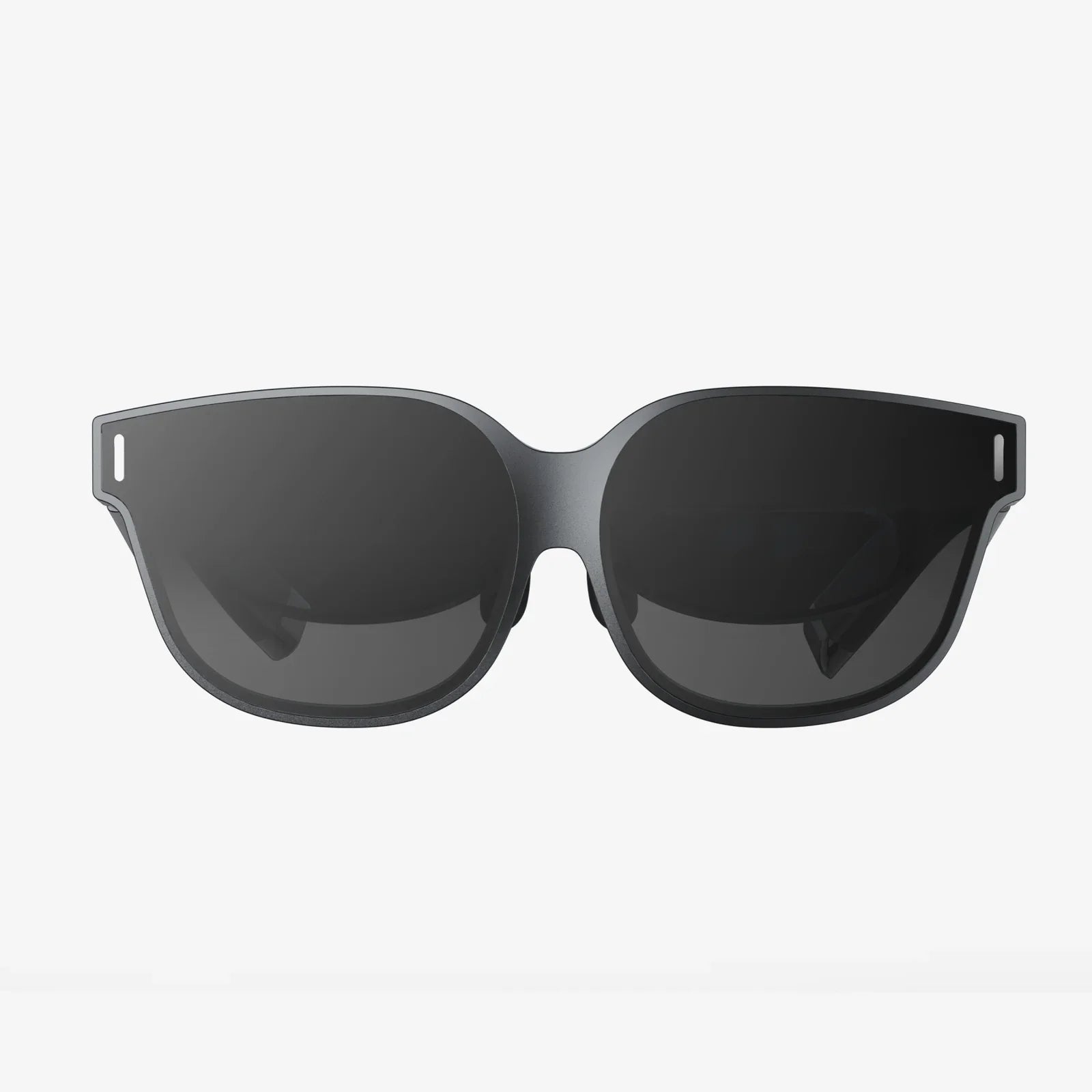
Imagine a world where digital information doesn’t live behind a screen but is seamlessly woven into the fabric of your everyday life. Where instructions for assembling furniture float directly above the pieces, historical figures narrate their stories as you walk past a monument, and a surgeon can see a patient’s vital signs overlaid on their body during a complex procedure. This is not a distant science fiction dream; it is the rapidly emerging present, powered by a new generation of augmented reality products. These devices are breaking down the final barrier between the digital and the physical, promising to transform how we work, learn, play, and connect in profound and unimaginable ways.
The Core Technology: How Augmented Reality Products Perceive and Project
At their essence, augmented reality products are sophisticated systems designed to do three things: see the world, understand it, and augment it. This technological ballet happens in real-time, creating the illusion that digital content is part of our environment.
The process begins with a suite of sensors. Cameras capture the user's surroundings in high fidelity, while depth sensors, such as time-of-flight cameras or structured light systems, map the environment in three dimensions, calculating the precise distance to every surface. Simultaneously, inertial measurement units (IMUs)—including accelerometers and gyroscopes—track the precise movement and orientation of the user's head or hand, ensuring the digital overlay remains stable and doesn't drift unnaturally.
This raw sensor data is then processed by powerful onboard processors and algorithms using a technique called simultaneous localization and mapping (SLAM). SLAM allows the device to both map the environment and understand its own position within that environment without prior knowledge. It identifies feature points—distinct edges, corners, or patterns—and tracks them across frames to build a persistent 3D map. This is how an AR product can place a virtual vase on your real coffee table and have it stay there, even if you walk around the room.
Finally, the projection system takes over. For head-worn devices, this is typically achieved through waveguides or micro-displays that project light directly into the user's eyes, blending digital images with their view of the real world. On handheld devices like smartphones and tablets, the augmentation is rendered on the screen, using the camera feed as a background. The result is a cohesive experience where information and imagination are anchored to reality itself.
Beyond Gaming: The Industrial and Enterprise Revolution
While consumer applications often grab headlines, the most significant and immediate impact of augmented reality products is occurring in the industrial and enterprise sectors. Here, AR is solving real-world problems, boosting efficiency, reducing errors, and saving considerable costs.
- Manufacturing and Assembly: On factory floors, technicians wearing AR headsets can see digital work instructions overlaid directly onto the machinery they are assembling or repairing. Animated arrows can show the exact sequence of steps, torque values can be displayed next to bolts, and safety warnings can appear when a hand gets too close to a hazardous component. This hands-free access to information drastically reduces training time, minimizes errors, and increases overall productivity.
- Field Service and Maintenance: A field engineer dispatched to repair a complex piece of equipment, like an MRI machine or a wind turbine, can be remotely guided by an expert sitting thousands of miles away. Using AR glasses, the expert can see exactly what the engineer sees and can draw annotations directly into their field of view—"turn this valve," "check this connection"—transforming every field technician into an expert.
- Design and Prototyping: Architects and engineers are using AR to visualize 3D models at full scale on a construction site before a single foundation is dug. Design flaws can be identified and resolved in the digital realm, saving millions in costly change orders later. Car designers can project life-size holograms of new vehicle models into an empty studio, allowing them to walk around, peer inside, and evaluate proportions and styling in a way that a small screen or physical clay model could never allow.
- Logistics and Warehousing: In massive distribution centers, AR smart glasses can visually guide warehouse workers to the exact shelf location for an item, displaying the optimal route and confirming the pick with a visual check. This "vision picking" technology has been shown to increase order fulfillment speed and accuracy by significant margins, streamlining the entire supply chain.
Transforming Healthcare: From the Operating Room to the Classroom
The healthcare industry is embracing augmented reality products with life-altering potential. The ability to superimpose critical data onto a clinician's view of a patient is revolutionizing medical practice.
In surgery, AR systems can project a patient's pre-operative scans—CT, MRI, or ultrasound—directly onto their body during an operation. This gives surgeons "X-ray vision," allowing them to see beneath the surface to locate tumors, major blood vessels, or critical structures with unparalleled precision. This enhances surgical accuracy, reduces operative time, and minimizes tissue damage, leading to better patient outcomes and faster recovery.
Beyond the OR, AR is a powerful tool for medical training. Students can interact with detailed, life-size holograms of human anatomy, peeling back layers of muscle, bone, and organs in a way that textbooks or even cadavers cannot match. It provides an immersive, repeatable, and risk-free environment for practicing complex procedures. Furthermore, AR is being used for patient education, helping doctors explain conditions and treatments in a visually intuitive manner, and in physical therapy to guide patients through exercises with proper form.
The Consumer Landscape: Entertainment, Retail, and Social Connection
The promise of AR for everyday consumers is vast, though the path to ubiquitous adoption is still being paved. Current applications are primarily experienced through smartphone cameras, offering a tantalizing glimpse of the future.
- Retail and Try-Before-You-Buy: One of the most popular uses of consumer AR is in retail. Furniture shoppers can project virtual sofas and tables into their living room to see how they fit with their existing decor and ensure they are the right size. Cosmetic brands allow users to virtually try on thousands of shades of lipstick and eyeshadow. This not only enhances customer confidence and reduces return rates but also creates a novel and engaging shopping experience.
- Gaming and Interactive Entertainment: The global phenomenon of location-based AR games demonstrated the mass-market appeal of blending gameplay with the real world. This genre has expanded to include immersive storytelling, where narratives unfold in your own neighborhood, and interactive art installations that can be viewed through a phone. AR is creating new forms of play that encourage physical exploration and social interaction.
- Social Media and Communication: Filters and lenses that add digital masks, effects, and backgrounds to selfies are a ubiquitous form of AR. These playful tools have become a fundamental language of online communication, driving engagement and creativity. The next evolution involves persistent AR worlds and avatars that could enable new forms of rich, spatially-aware social interaction, making video calls feel more like sitting in the same room.
Navigating the Challenges: The Roadblocks to Mass Adoption
Despite its immense potential, the widespread adoption of dedicated augmented reality products, particularly headsets, faces several significant hurdles that must be overcome.
Technical Limitations: For AR glasses to become an all-day wearable, they must solve the challenge of form factor and comfort. Current technology often requires a trade-off between performance and size. Achieving high-resolution, wide-field-of-view displays in a package that is as lightweight and socially acceptable as regular eyeglasses remains a formidable engineering challenge. Furthermore, battery life is a critical constraint. Processing high-fidelity graphics and sensor data is incredibly power-intensive, and consumers will not tolerate a device that needs recharging every few hours.
The Social Conundrum: Beyond technology, there is a social acceptance hurdle. Walking around in public with a conspicuous computer on your face can feel awkward and may even be perceived as rude or isolating. The industry must navigate these social norms, likely by making the technology increasingly invisible and intuitive.
Privacy and Security: Perhaps the most profound challenge is ethical. AR devices, with their always-on cameras and microphones, are arguably the most intimate surveillance tools ever conceived. They continuously capture detailed data about your environment, your activities, and the people around you. This raises urgent questions: Who owns this data? How is it stored and used? How do we prevent malicious hacking of a device that mediates a user's entire reality? Establishing robust ethical frameworks, transparent data policies, and ironclad security will be non-negotiable prerequisites for public trust.
The Future Vision: The Invisible Interface
The ultimate goal for augmented reality products is not to create a distracting, cluttered world full of floating screens, but to develop an invisible interface—one that provides information and assistance precisely when and where it is needed, then disappears into the background. This is the concept of calm technology, where computing amplifies our innate human capabilities without overwhelming our senses.
We are moving towards a future where AR will be contextually aware, anticipating our needs based on our location, schedule, and even gaze. Your glasses could highlight the name of a colleague you met once at a conference as they approach you, translate a restaurant menu in real-time, or remind you to pick up milk when you walk past the grocery store. This shift will move computing from something we actively use to a pervasive, ambient intelligence that enhances our perception and decision-making without conscious effort.
This evolution will be powered by advancements in artificial intelligence, 5G/6G connectivity for low-latency cloud processing, and even more miniaturized hardware. The line between the digital and the physical will continue to blur until it vanishes entirely, creating a world where our reality is not replaced, but richly augmented.
The doorway to a world layered with digital magic is now open, and augmented reality products are the key. This isn't just about new gadgets; it's about fundamentally reshaping human potential, turning every blank space into a canvas and every challenge into an opportunity for enhanced understanding. The next great leap in our relationship with technology won't be in your pocket—it will be in everything you see.
Share:
Does Augmented Reality Use AI? The Symbiotic Relationship Powering the Future
How to Wear Glasses with VR Headset: The Ultimate Guide to a Clear and Comfortable Experience