


Imagine walking through a historic city street, pointing your device at an ancient building, and watching its entire history unfold before your eyes—layers of architectural changes, ghostly figures of past inhabitants, and data visualizations of its cultural impact, all seamlessly integrated into the very cobblestones and brickwork you're standing on. This isn't a scene from a distant sci-fi future; it is the tangible, exhilarating promise of augmented reality in the real environment, a technological revolution that is quietly dismantling the barriers between the digital and the physical. This convergence is poised to redefine every facet of our lives, from how we work and learn to how we connect and perceive the world around us. The journey into this enhanced world begins not with replacing our reality, but with enriching it, painting our familiar surroundings with a dynamic, interactive layer of digital information.
The Core Principle: What is Augmented Reality?
At its essence, augmented reality (AR) is a technology that superimposes computer-generated perceptual information—be it visual, auditory, haptic, or olfactory—onto a user's view of the real environment. Unlike Virtual Reality (VR), which creates a completely immersive, artificial digital environment that replaces the real world, AR operates on a principle of supplementation. It takes the existing, real environment as its foundation and canvas, then layers relevant, contextual digital assets onto it. The key differentiator is that the user never loses touch with reality; instead, their interaction with and understanding of that reality is enhanced. This is achieved through a sophisticated technological pipeline that involves capturing the real world, processing it, and then accurately registering digital content within it in real-time.
How It Works: The Technology Behind the Magic
The seamless blending of the digital and physical in an augmented reality real environment is a feat of engineering that relies on a symphony of hardware and software components working in perfect harmony.
Sensing the World: Cameras and Sensors
The first step is for the AR system to perceive and understand the real environment. This is primarily done using cameras, which act as the digital eyes, capturing live video of the user's surroundings. However, vision alone is not enough. A suite of advanced sensors is crucial for depth perception and spatial understanding. These include:
- Depth Sensors: Use technologies like structured light or time-of-flight to measure the distance between the sensor and objects in the environment, creating a detailed 3D map of the space.
- Inertial Measurement Units (IMUs): Comprising accelerometers and gyroscopes, these track the device's orientation, rotation, and movement through space with extreme precision.
- LiDAR (Light Detection and Ranging): Particularly prominent in modern devices, LiDAR scanners fire out millions of laser points to create a detailed, real-time 3D point cloud of the environment, enabling incredibly accurate object placement and occlusion (where digital objects can appear behind real-world physical objects).
Processing and Registration: The Brain of the Operation
The raw data from the sensors is then processed by powerful algorithms. This is where the magic of registration happens. Computer vision algorithms analyze the camera feed to identify flat surfaces (like floors and tables), recognize distinct features or objects (a specific monument, a product package), and track these features frame-by-frame as the user moves. Simultaneously, the IMU data is fused with the visual data to ensure the digital content remains stable and locked in place in the real world, preventing it from jittering or drifting unrealistically. This process, known as simultaneous localization and mapping (SLAM), allows the device to both understand the environment and track its own position within it without any prior knowledge of the space.
Display and Interaction: Viewing the Enhancement
Finally, the composited view—the real-world feed with the registered digital content—is presented to the user. This can happen through several types of displays:
- Smartphone and Tablet Displays: The most accessible form of AR, using the device's screen as a viewport into the blended world.
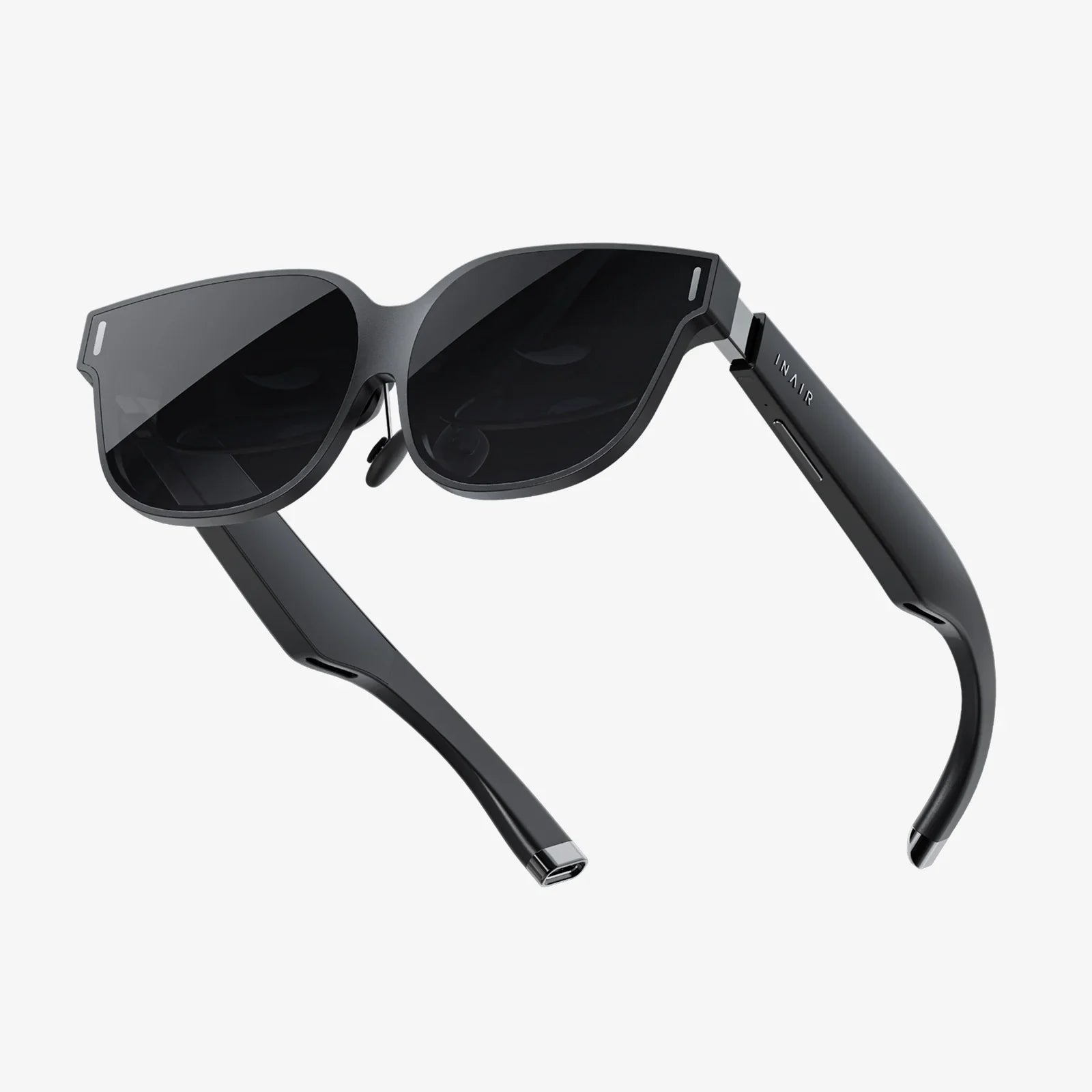
- Smart Glasses and Headsets: These wearable devices use either optical see-through (where digital imagery is projected onto transparent lenses) or video see-through (where cameras capture the real world and then display it on screens inside the headset with the AR elements added) to provide a more immersive, hands-free experience.
- Projection Mapping: AR can also be spatially anchored, using projectors to cast light directly onto physical objects, effectively "painting" them with digital information without requiring the user to wear or hold anything.
Transforming Industries: Applications of AR in the Real World
The potential of an augmented reality real environment extends far beyond novelty filters and gaming. It is a powerful tool driving innovation and efficiency across a vast spectrum of professional fields.
Revolutionizing Education and Training
AR turns any classroom or workspace into an interactive learning lab. Medical students can practice complex surgical procedures on detailed, interactive holograms of human anatomy, making mistakes without consequence. Mechanics can look at an engine and see internal parts, torque specifications, and step-by-step repair instructions overlaid directly on the components they are working on. History lessons can transform into immersive time-travel experiences, bringing ancient civilizations to life in the school hallway.
Empowering Industrial Design and Manufacturing
In architecture and manufacturing, the ability to visualize 3D models at 1:1 scale within their intended real environment is a game-changer. Designers can project full-scale building plans onto an empty construction site, allowing for on-the-fly modifications and stakeholder walkthroughs long before ground is broken. Factory technicians can see assembly instructions, safety warnings, and performance data overlaid on complex machinery, drastically reducing errors and training time.
Enhancing Retail and E-Commerce
The "try before you buy" paradigm has been completely reimagined. Shoppers can use their smartphones to see how a new sofa would look in their living room, accurately gauging its size, color, and style against their existing decor. They can virtually try on glasses, makeup, or clothing, increasing consumer confidence and reducing return rates. This bridges the critical gap between the digital shopping cart and the physical world, creating a more confident and satisfying customer journey.
Redefining Navigation and Wayfinding
Forget looking down at a small 2D map on your phone. AR navigation can project giant, floating arrows onto the road ahead, highlight the correct path through a complex airport terminal, or label points of interest as you walk through a new city—all within your direct line of sight. This contextual, in-environment guidance is more intuitive, safer, and far more engaging than traditional methods.
The Human and Societal Impact: A Double-Edged Sword
As with any transformative technology, the integration of an augmented reality real environment presents a complex array of profound opportunities and significant challenges that society must thoughtfully navigate.
The Promise: Enhanced Human Capability
AR acts as a cognitive prosthesis, offloading information from our memory and placing it directly into our context. It has the potential to democratize expertise, giving anyone the ability to perform complex tasks with guided assistance. It can enhance accessibility, providing real-time translations of street signs for travelers or subtitles for the hearing impaired in a live conversation. It can deepen our connection to art, history, and nature by revealing hidden layers of information and narrative, fostering a greater appreciation for the world around us.
The Peril: Privacy, Safety, and Reality Blur
The technology's need to continuously scan and map our environments raises monumental privacy concerns. Who owns the data collected about our homes, offices, and public spaces? How is it stored and used? The concept of augmented eavesdropping becomes a threat, where a device could identify people in a crowd and pull up their public social media profiles without their consent. From a safety perspective, distracted walking or driving while engaged with AR content is a tangible hazard. Furthermore, the long-term psychological effects of persistently mediating our reality through a digital layer are unknown. Could it lead to a diminished ability to appreciate the un-augmented world, or create a new digital divide between those who can afford AR and those who cannot?
The Future is Layered: What Comes Next?
The trajectory of AR points towards a future of even deeper integration. We are moving towards lightweight, socially acceptable eyewear that we wear all day, offering a persistent augmented layer over our vision. The development of the spatial web or WebXR will see digital information become as persistent and accessible as physical objects, anchored to locations for anyone with the right device to see. Advancements in AI will make AR interfaces more predictive and contextual, offering information before we even know we need it. The line between the digital and the physical will continue to blur, eventually becoming so seamless that the augmented reality real environment will simply become… our reality.
The city street you walk down tomorrow might look the same as it does today, but it holds invisible depths waiting to be revealed. With the advent of augmented reality, our world is becoming a living document, a dynamic interface, and a canvas for infinite digital expression. The mundane is becoming magical, the complex is becoming simple, and our understanding of the very space we inhabit is expanding in ways we are only beginning to comprehend. The door to this enhanced world is now open, inviting us to step through and see everything—and everyone—in a brilliant, transformative new light.
Share:
Augmented Reality Uses in Daily Life Are Transforming Our World
Back to the Future Augmented Reality: Blending Nostalgia with Next-Gen Vision