


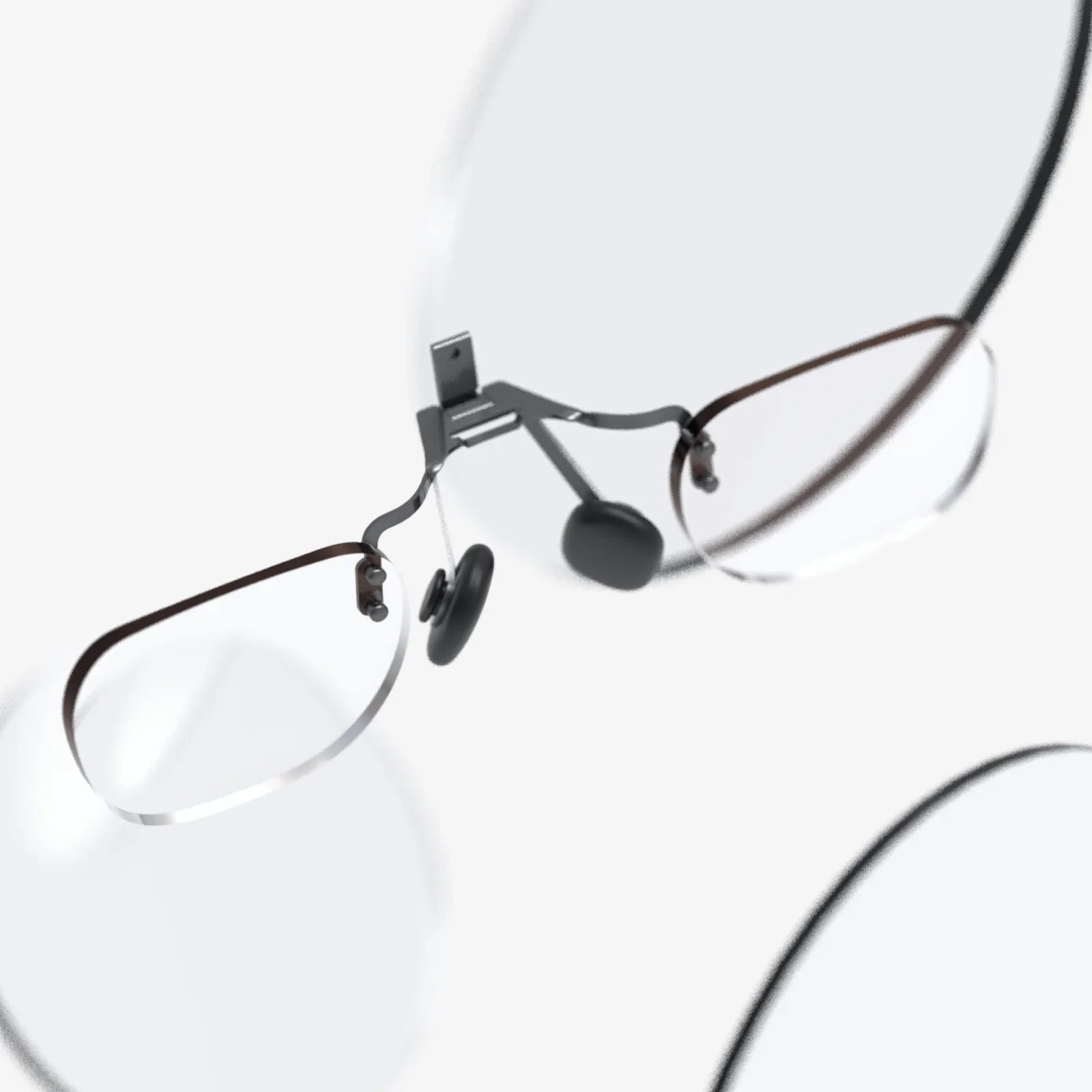
Imagine a world where information doesn’t live on a screen in your hand but is painted onto the very fabric of reality around you. Directions float on the pavement ahead, the history of a building unfolds as you glance at its facade, and a colleague from another continent stands beside you as a photorealistic hologram, pointing to a shared 3D model. This is not a distant science fiction fantasy; it is the imminent future being ushered in by the rapid evolution of augmented reality smartglasses. This technology, once the preserve of clunky prototypes and enterprise applications, is now on the cusp of becoming a seamless, stylish, and indispensable part of our daily lives, promising to fundamentally reshape how we work, learn, connect, and perceive the world itself.
The Architectural Blueprint: How AR Smartglasses See and Think
At their core, augmented reality smartglasses are sophisticated computers worn on the face. Their primary function is to understand the environment and then project digital content that appears to coexist within it. This feat of engineering is achieved through a symphony of advanced components working in perfect harmony.
The optical system is arguably the most critical and challenging element. Unlike virtual reality headsets that block out the world, AR glasses must allow the user to see the real world clearly while simultaneously projecting a bright, sharp digital image. Several technologies are employed to achieve this, including waveguides, micro-LED displays, and holographic optical elements. These systems beam light directly into the user’s eyes, creating the illusion that digital objects are at various distances in the real world, a crucial factor for comfort and immersion.
To anchor these digital objects convincingly, the glasses must possess a deep understanding of their surroundings. This is the job of the sensor suite. A combination of high-resolution cameras, depth sensors (like LiDAR), accelerometers, gyroscopes, and magnetometers constantly scans the environment. These sensors map the physical space in real-time, detecting surfaces, measuring distances, and tracking the user’s precise head movements and orientation. This process, known as simultaneous localization and mapping (SLAM), allows the device to build a persistent 3D map of the room or area, ensuring a virtual vase placed on a real table stays there even if the user walks around it.
Processing this immense stream of spatial data requires serious computational power. This is handled by a miniaturized system-on-a-chip (SoC), which acts as the brain of the glasses. It runs complex computer vision algorithms, handles the user interface, and manages connectivity. Some designs offload heavier processing to a companion device, like a smartphone or a dedicated compute puck, to keep the glasses themselves lightweight and cool.
Finally, connectivity via 5G and Wi-Fi 6 ensures a constant, high-bandwidth link to the cloud, enabling real-time data access, complex AI processing, and seamless multi-user experiences. Voice commands, gesture recognition, and even emerging neural interfaces provide intuitive control, moving beyond the need for keyboards and touchpads.
Beyond Novelty: The Enterprise Revolution Already Underway
While consumer applications capture the imagination, the most significant and proven impact of AR smartglasses to date has been in the enterprise and industrial sectors. Here, the value proposition is clear: they provide workers with critical information hands-free, right in their line of sight, dramatically increasing efficiency, accuracy, and safety.
- Manufacturing and Field Service: A technician repairing a complex machine can see animated assembly instructions overlaid on the equipment, identify faulty components with thermal imaging, and video-call a remote expert who can draw annotations directly into their field of view. This reduces errors, slashes training time, and minimizes downtime.
- Healthcare and Medicine: Surgeons can visualize a patient’s anatomy, such as CT scans or ultrasound data, projected directly onto the surgical site during a procedure. Medical students can learn anatomy by walking around a life-sized, interactive hologram of the human body. This enhances precision and improves outcomes.
- Logistics and Warehousing: Warehouse workers fulfilling orders receive optimal pick-and-pack routes displayed on their glasses, with digital arrows guiding them through the aisles. They can instantly scan items and confirm inventory without ever looking down at a scanner or clipboard, accelerating fulfillment speeds dramatically.
- Design and Architecture: Architects and engineers can place 3D models of their designs into a real-world environment at scale, allowing them to review and iterate in context long before physical construction begins. Clients can take a virtual walkthrough of a building that doesn’t yet exist.
In these professional contexts, the return on investment is tangible and measurable, driving widespread adoption and fueling the technological advancements that will eventually trickle down to consumer-grade devices.
The Dawning of a New Social and Consumer Reality
The true paradigm shift will occur when this technology transcends the workplace and becomes as ubiquitous as the smartphone. The potential consumer applications are vast and will redefine everyday experiences.
Navigation will evolve from a 2D map to a 3D pathway integrated into the sidewalk. Travelers will gain a superpower: looking at a street sign, menu, or historical plaque and seeing an instant translation or a wealth of contextual information. Shopping will be transformed; users will try on clothes virtually, see how a new sofa would look in their living room, or get personalized promotions as they walk through a store.
The very nature of social connection and entertainment is poised for a revolution. Imagine watching a sports game where live stats and player profiles hover over the action, or attending a concert where spectacular digital effects are unique to your perspective. Social media will cease to be a separate app and become a layer on reality—a digital graffiti artists can leave for friends to find in specific locations, or a way to see reviews and tips left by others at a restaurant.
This vision of an ambient computing future, where technology recedes into the background and contextually relevant information surfaces only when needed, represents the next major computing platform. It promises a more intuitive and immersive relationship with the digital world, one that enhances rather than interrupts our physical lives.
Navigating the Chasm: Challenges on the Road to Ubiquity
For all its promise, the path to mainstream adoption of AR smartglaces is fraught with significant technical, social, and ethical hurdles that must be overcome.
Technical Hurdles: The holy grail is a pair of glasses that are socially acceptable—indistinguishable from regular eyewear in terms of form factor, weight, and battery life. Current battery technology remains a constraint, often limiting intensive use to a few hours. Display technology must become brighter for outdoor use while consuming less power. Achieving true photorealistic passthrough with high-resolution cameras, if that is the chosen method, introduces latency that can cause nausea, a problem that must be solved.
The Privacy Paradox: This is perhaps the most profound challenge. Smartglasses with always-on cameras and microphones represent a unprecedented surveillance tool. The potential for constant, surreptitious recording raises alarming questions about individual privacy in public and private spaces. Societies will need to establish new norms and potentially robust regulations. Will it be acceptable to record someone without their knowledge? How will data be stored and used? These are not technical questions but societal ones that demand urgent and thoughtful public discourse.
The Digital Divide and Accessibility: As with any transformative technology, there is a risk of exacerbating existing inequalities. Will access to this augmented layer of information become a prerequisite for success in education and employment, creating a new class of information-haves and have-nots? Conversely, the technology holds immense potential for accessibility, offering new tools for people with visual or hearing impairments to navigate the world more easily.
Information Overload and Mental Wellbeing: The constant barrage of notifications from our smartphones is already a source of stress and distraction. An immersive, always-present digital layer could magnify this problem exponentially, making it harder to disconnect and be present in the moment. Designing for attention and user wellbeing will be a critical discipline for developers in this new medium.
A Canvas for the Future: The Invisible Revolution
The development of augmented reality smartglasses is more than just the next product cycle; it is a foundational technology that will create a new canvas for human creativity, communication, and cognition. It represents a fundamental shift in the human-computer interface, from something we look at to something we look through. The companies and creators who learn to paint on this new canvas—who understand how to design spatial experiences that are helpful, magical, and respectful—will define the next era of digital interaction. The real world is about to get a lot more interesting. The stage is set, and the curtain is rising on a reality where the only limit is the imagination of those who dare to augment it.
Share:
Is Augmented Reality Artificial Intelligence? The Symbiotic Future of Perception and Cognition
Augmented Reality Experiences Canyongross: The Future of Retail is Here