


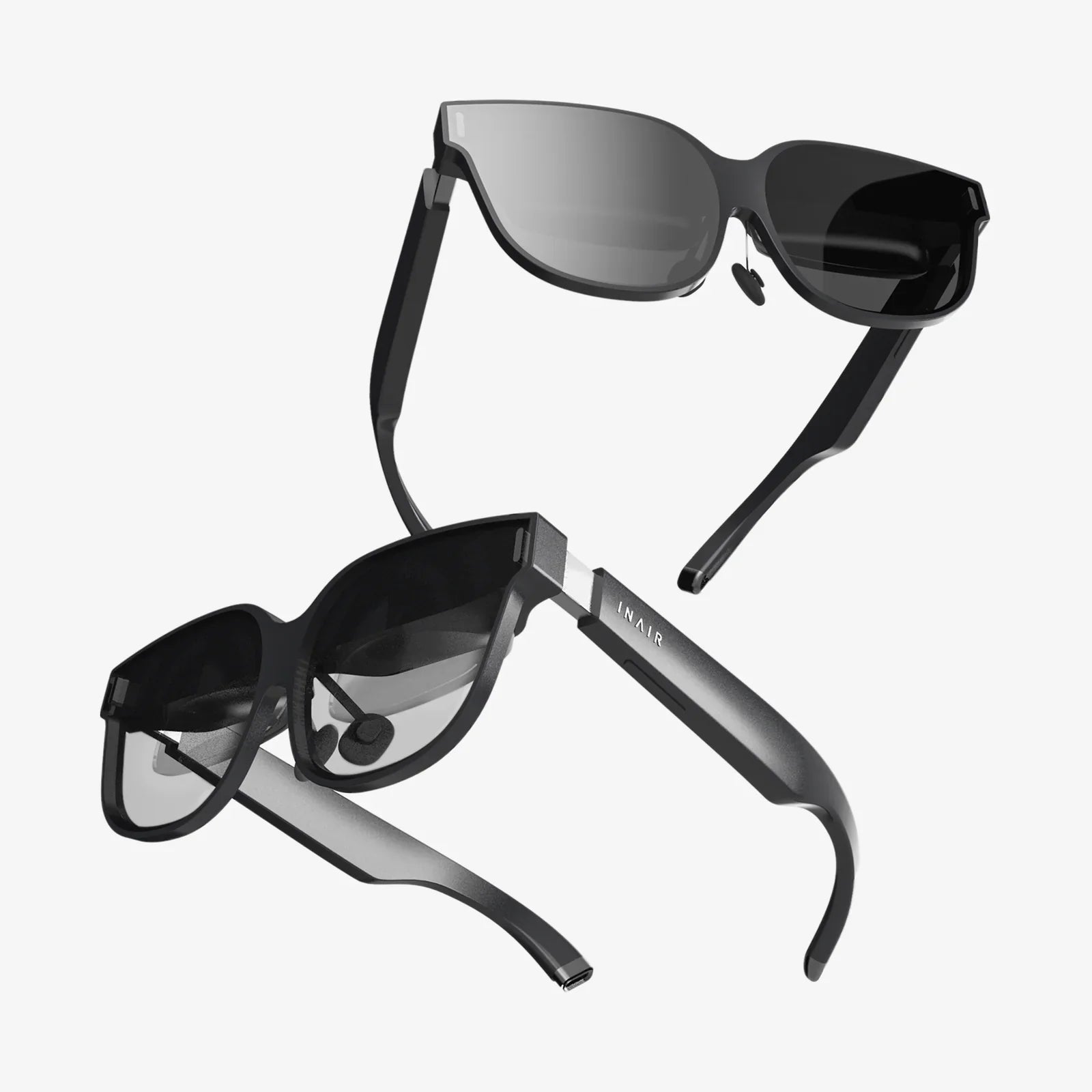
Imagine a world where information doesn’t just live on your screen but is seamlessly painted onto the fabric of your reality, where digital guides appear on the street in front of you, historical figures reenact battles on your coffee table, and complex repair instructions are overlaid directly onto the machinery you’re fixing. This is the promise of augmented reality smartphone glass, a technology that is quietly, yet rapidly, moving from the realms of futuristic fantasy into the palm of your hand. This isn't a distant dream for specialized equipment; it's the next evolutionary leap for the most ubiquitous device in human history—the smartphone—and it’s poised to fundamentally alter how we perceive, interact with, and understand the world around us.
The Foundation: Understanding the Technology
At its core, augmented reality (AR) is the real-time integration of digital information with a user's environment. Unlike virtual reality (VR), which creates a completely artificial world, AR enhances your existing reality by superimposing computer-generated perceptual information onto it. The smartphone has become the primary gateway to this enhanced world, primarily due to its powerful suite of sensors and cameras.
The magic of AR on a smartphone is orchestrated by a sophisticated symphony of hardware and software. It begins with the device's camera, which acts as its eyes, continuously capturing the real world. Advanced computer vision algorithms then process this visual data in real-time, identifying flat surfaces like tables and floors, recognizing objects, and even mapping the entire geometry of a room. This process, known as simultaneous localization and mapping (SLAM), allows the phone to understand its position in space relative to its surroundings.
The device's accelerometer, gyroscope, and magnetometer (the compass) work in tandem to track the precise orientation and movement of the phone. This ensures that a digital dinosaur placed in your living room stays anchored to the spot, even as you walk around it, and that informational overlays remain stable and connected to the real-world objects they describe. The immense processing power of the modern smartphone's chipset handles these complex calculations instantaneously, rendering high-fidelity 3D graphics and animations that are composited onto the live camera feed displayed on the screen.
This creates the powerful illusion that the digital and physical worlds coexist in the same space. You are not looking at a screen; you are looking through a window into an enhanced version of reality. The smartphone screen becomes a lens, a viewfinder into a world where data has a context and a place.
The "Glass" Factor: From Screen to Lens
The term "smartphone glass" in this context is a conceptual leap. It refers not to the physical Gorilla Glass protecting the display, but to the transformative idea of the phone's screen becoming a transparent interface—a pane of smart glass through which we view an augmented world. While dedicated AR glasses that are truly transparent are a separate product category, the smartphone is the critical stepping stone, the training wheels, and the development platform that is normalizing AR for the mass market.
This paradigm shift is profound. We are evolving from a model of pull information, where we actively search for data on our devices, to a model of push information, where contextually relevant data presents itself to us exactly when and where we need it. The smartphone, in this AR mode, ceases to be a distraction. Instead, it becomes a tool for deeper engagement with our immediate environment, making us more present, not less.
Transforming Everyday Experiences
The most immediate impact of augmented reality smartphone glass is on our daily routines and leisure activities. It is democratizing access to powerful contextual computing, turning mundane tasks into engaging experiences.
Navigation and Exploration
Forget squinting at a tiny blue dot on a static map. AR navigation overlays giant, floating arrows onto the live view of the street in front of you, directing you to turn left at the next corner. It can highlight the entrance to a subway station or display the name and rating of a restaurant as you point your phone at it. This creates an intuitive and immersive guidance system that blends seamlessly with your surroundings, reducing cognitive load and making it almost impossible to get lost.
Retail and Try-Before-You-Buy
The retail sector is being revolutionized. Imagine pointing your phone at your living room wall to see how a new piece of art would look hanging there, or at an empty corner to place a virtual bookshelf to check for size and style. Furniture retailers now allow customers to see photorealistic 3D models of sofas, tables, and chairs in their own homes at true-to-life scale. Fashion apps let you "try on" sunglasses, watches, and makeup through your front-facing camera. This reduces purchase uncertainty and returns, creating a more confident and satisfying shopping experience.
Gaming and Entertainment
The gaming world was introduced to the potential of AR smartphone glass by the phenomenon that was Pokémon GO. It showed millions of people that game characters could inhabit their local parks and streets. This has expanded into more complex tabletop games where the board comes to life on your kitchen table, horror games where ghosts invade your home, and interactive storybooks where characters leap out of the pages. Beyond gaming, museums are creating AR exhibits where skeletons of dinosaurs become fleshed-out and animated, and filmmakers are developing new forms of interactive storytelling that blend the narrative with the viewer's physical space.
Social Connectivity and Content Creation
Social media platforms have deeply integrated AR features. Face filters that add bunny ears, cartoonish effects, or sophisticated makeup are a ubiquitous form of AR. But it goes deeper. World-effect filters can change the entire environment around you, making it snow indoors or filling your room with virtual balloons. This has spawned a new creative medium, allowing users to not just capture reality but to enhance and play with it, creating shareable content that is unique to their time and place.
Revolutionizing Industries and Professional Workflows
While consumer applications are flashy, the most significant value of augmented reality smartphone glass is being realized in enterprise and industrial settings. Here, it is boosting efficiency, enhancing safety, and reducing errors.
Manufacturing, Maintenance, and Repair
In complex fields, technicians can use a smartphone to look at a piece of machinery and see digital annotations highlighting components, step-by-step repair instructions overlaid directly onto the parts they need to adjust, and safety warnings. This allows for hands-free access to crucial information, drastically reducing training time and error rates. An experienced engineer in a different country can see what a local technician sees and draw arrows and notes directly into their field of view to guide them through a complex procedure.
Healthcare and Medicine
Medical students can use AR on a tablet or phone to explore detailed, interactive 3D models of the human anatomy, peeling back layers of muscle and tissue without needing a physical cadaver. Surgeons can use AR for pre-operative planning, overlaying CT scan data such as tumor locations onto a patient's body to guide incisions with greater precision. It can also assist in vein visualization, making it easier to find veins for injections, particularly in patients where they are difficult to see.
Education and Training
Textbook learning is being transformed into an immersive experience. A student studying astronomy can point their phone at the sky to see the names and constellations of stars. A history student can point their device at a historical photograph in a textbook to see a video reenactment play out. Chemistry students can combine virtual elements to see the reactions happen in 3D on their desk. This contextual, interactive learning dramatically improves comprehension and retention.
Architecture, Engineering, and Construction (AEC)
Architects and clients can walk through a physical construction site and use a smartphone to view the full-scale 3D model of the future building superimposed onto the empty lot, allowing them to understand scale, sightlines, and design choices in real-world context. This facilitates better communication and decision-making long before the first brick is laid, saving time and costly changes later.
Challenges and the Road Ahead
Despite its immense potential, the widespread adoption of augmented reality smartphone glass faces several significant hurdles.
Technical Limitations: Battery life remains a primary concern, as running the camera, GPS, and processors at full tilt for AR is incredibly power-intensive. The accuracy of surface detection and object recognition, while impressive, is not yet perfect and can fail in suboptimal lighting or with complex textures. There is also a persistent "jitter" or latency in some applications, where digital objects don't stay perfectly locked in place, breaking the immersion.
User Interface and Design: Designing intuitive interfaces for AR is a monumental challenge. How does a user interact with a floating menu? How do we avoid information overload, where the real world is cluttered with distracting digital spam? Creating user experiences that feel natural and helpful, rather than intrusive and cumbersome, is the key to long-term adoption.
Privacy and Security: AR applications, by their very nature, are constantly scanning and analyzing your environment. This raises critical questions about data collection. What visual data is being captured? Where is it stored? How is it used? The potential for unauthorized surveillance and the creation of detailed behavioral profiles is a serious concern that requires robust ethical frameworks and transparent policies.
The Social Hurdle: There is the lingering social awkwardness of holding up a phone to interact with the world. While this is becoming more normalized, the ultimate goal for many is a pair of comfortable, stylish, and socially acceptable glasses that provide a seamless AR experience. The smartphone is the crucial bridge to that future, acclimatizing users to the principles of AR until the hardware becomes invisible.
A Glimpse into the Future
The development of augmented reality smartphone glass is a continuous process. We are moving towards:
- Improved Sensors: LiDAR scanners, once found only on high-end devices, are becoming more common, providing instant and incredibly accurate depth mapping, making digital object placement more stable and realistic.
- 5G Connectivity: The high bandwidth and low latency of 5G networks will allow for more complex AR rendering to be processed in the cloud, reducing the burden on the device's hardware and enabling even more detailed and persistent AR experiences.
- AI Integration: Smarter artificial intelligence will allow AR systems to not just see surfaces but truly understand scenes—recognizing specific products, interpreting human gestures for control, and predicting user intent to deliver information before it's even asked for.
- The Path to True AR Glasses: Every innovation in smartphone AR directly paves the way for standalone AR glasses. The algorithms, developer tools, and user experiences being refined on phones today will form the foundation for the next generation of wearable computing, where the "glass" will be literal.
The journey of augmented reality is not about replacing our reality with a digital one; it's about enhancing human capability. It's about making us smarter, more efficient, more creative, and more connected to the context of our surroundings. Augmented reality smartphone glass is the key that is unlocking this future today, transforming the device in your pocket from a portal to the internet into a lens for a richer, more informed, and astonishing world. The boundary between the physical and digital is blurring, and what emerges will change everything.
Your smartphone's camera is no longer just for capturing memories—it's the viewfinder for the next layer of reality, waiting to be unlocked. The apps you use every day are already embedding this technology in ways you might not even notice, from trying on a new lipstick shade to finding your way in a new city. This invisible revolution is already underway, and the only question that remains is not if it will change your life, but how soon you will start to look at the world through a new, augmented lens. The future is not something we wait for; it's something we build, and it's already appearing, pixel by pixel, on the screen you hold in your hand.
Share:
Online Virtual Meeting Spaces Are Redefining Collaboration and Connection in the Digital Age
What Are AR Contact Lenses - The Future of Vision and Information