


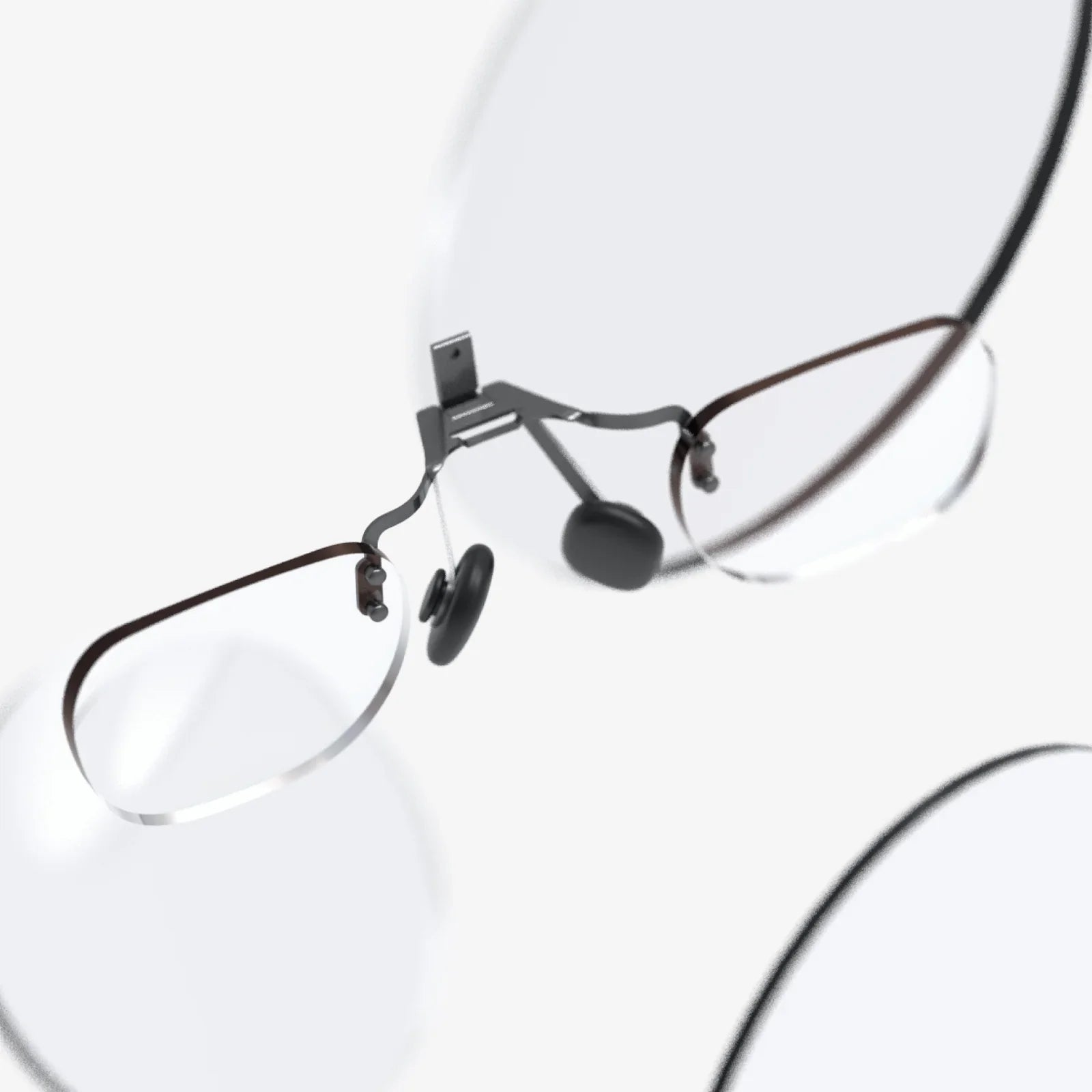
Imagine a world where the digital and the physical are no longer separate realms but a single, unified experience. This is the promise of augmented reality space, a technological revolution that is quietly weaving itself into the fabric of our daily lives, poised to redefine everything from how we work and learn to how we connect and create.
The Architectural Blueprint of a New Reality
At its core, augmented reality space is not merely a visual overlay; it is a sophisticated, interactive layer of information seamlessly integrated into our perception of the real world. Unlike its cousin, virtual reality, which seeks to replace reality entirely, AR aims to augment and enhance it. This is achieved through a complex interplay of hardware and software. Sensors—including cameras, LiDAR, accelerometers, and gyroscopes—constantly scan the physical environment, mapping its geometry, understanding its surfaces, and tracking the user's position and gaze within it. This real-time environmental understanding is the bedrock upon which persistent digital content can be anchored, allowing virtual objects to coexist with physical ones, obeying the laws of physics and perspective.
Beyond the Novelty: Practical Applications Reshaping Industries
The true power of augmented reality space is revealed not in flashy demos but in its profound practical applications. Across numerous sectors, it is solving real-world problems with unprecedented efficiency and clarity.
Revolutionizing Enterprise and Manufacturing
On the factory floor, technicians wearing AR-enabled devices can see digital schematics overlaid directly onto the complex machinery they are repairing. Animated arrows guide them through intricate assembly processes, reducing errors and slashing training times. Remote experts can see what the on-site worker sees and annotate their field of view in real-time, drawing circles around components and providing guidance from thousands of miles away, effectively teleporting knowledge to the point of need.
Transforming Education and Training
In the classroom, augmented reality space brings textbooks to life. Students can dissect a virtual frog, walk through a historically accurate reconstruction of ancient Rome, or witness a 3D model of the solar system orbit around them. This immersive, kinesthetic learning fosters deeper understanding and retention. For medical students, it allows for practicing complex surgical procedures on detailed holographic patients, building muscle memory and confidence without any risk.
Redefining Retail and Design
The retail experience is being utterly transformed. Shoppers can visualize how a new sofa would look in their living room, accurately scaled and colored, before making a purchase. They can "try on" clothes, glasses, or makeup virtually. For architects and interior designers, AR provides the ultimate tool for client presentations, allowing them to walk clients through a full-scale, holographic model of a building long before the foundation is ever poured.
The Invisible Infrastructure: Cloud Anchors and the AR Cloud
For augmented reality space to evolve from a solitary experience to a shared, persistent one, it requires a foundational digital infrastructure often referred to as the AR Cloud. Think of it as a 1:1 scale digital twin of the real world, a mirror universe of data and content. This is enabled by technologies like cloud anchors, which allow digital content to be persistently pinned to a specific geographic location. This means that one user can place a virtual sculpture in a public park, and days later, another user can discover and interact with it using their device. This shared, persistent layer unlocks the potential for collaborative experiences, location-based games, and new forms of social interaction and storytelling that are tied to specific places.
Navigating the Uncharted: Challenges and Ethical Considerations
The path to a fully realized augmented reality space is fraught with significant challenges. Technologically, achieving perfect spatial awareness—where digital objects interact flawlessly with their environment, including occluding behind real objects and responding to changing lighting conditions—remains a formidable hurdle. Device limitations, such as battery life, processing power, and form factor, also present obstacles to widespread, all-day adoption.
Beyond the technical, a host of ethical and societal questions demand careful consideration. The concept of attention and digital addiction takes on a new dimension when advertisements and notifications can be injected directly into your visual field. The collection of continuous, real-time spatial data raises immense privacy concerns; who owns the data of your home once it has been scanned and mapped? Furthermore, the potential for an ever-present layer of information creates a risk of reality fragmentation, where two individuals in the same physical location experience entirely different digital realities, potentially deepening social and political divides. Establishing a clear ethical framework and robust digital rights will be crucial for navigating this new frontier responsibly.
The Future is Already Here: A Glimpse of What's to Come
The evolution of augmented reality space is accelerating towards a future where the technology becomes as ubiquitous and invisible as the smartphone. We are moving towards sleek, socially acceptable eyewear that will replace our current handheld screens. The interface will shift from touch and swipe to gesture, voice, and eventually, neural input, creating a truly intuitive connection between human intent and digital action.
This technology will become the primary interface for the emerging concept of the metaverse—a network of persistent, shared virtual spaces. AR will act as the bridge, the portal that allows the metaverse to spill out into our world and our world to be enriched by the metaverse. It will enable new forms of art, storytelling, and social connection that we are only beginning to imagine.
The journey into the augmented reality space is more than a technological shift; it is a fundamental reimagining of the human experience. It presents a canvas upon which we will paint the future of work, education, and social interaction. The boundaries between atoms and bits are dissolving, and we are all stepping into the new world that is emerging in their place. The question is no longer if this future will arrive, but how we will choose to shape it.
We stand at the precipice of a new dimension, one where information is not confined to screens but is woven into the very world around us. The potential to enhance human capability, democratize knowledge, and create magical new experiences is limitless. The next great digital frontier isn't in some distant galaxy; it's right here, waiting to be unlocked, all around you.
Share:
Spatial Augmented Reality Examples: Illuminating the Future of Interaction
Augmented Reality AR Development: Building the Next Digital Layer on Our World