


Imagine a world where digital information doesn't just live on a screen but is seamlessly woven into the fabric of your physical reality—where a mechanic sees a holographic overlay of an engine's components, a surgeon visualizes a patient's anatomy in real-time during a procedure, and a historian walks through a fully reconstructed ancient city. This is the promise of augmented reality, and it’s not a distant sci-fi fantasy. It’s happening now, creating an unprecedented demand for a new kind of expert: the AR specialist. The journey to an augmented reality specialization is a journey to the forefront of the next computing revolution, and this guide is your first step into that expansive new world.
Defining the Digital Layer: What is Augmented Reality?
Before delving into the specialization, one must understand the core technology. Augmented reality (AR) is an interactive experience that enhances the real world by superimposing computer-generated perceptual information—often across multiple sensory modalities, including visual, auditory, haptic, somatosensory, and olfactory—onto a user's view of their environment. Unlike Virtual Reality (VR), which creates a completely artificial environment, AR users remain in their own world, simply augmented with contextual digital content.
The magic of AR lies in its three core components: a combination of real and virtual worlds, real-time interaction, and accurate 3D registration of virtual and real objects. This trifecta allows for a persistent and interactive experience that is grounded in the user's immediate space. An augmented reality specialization, therefore, is not just about understanding one piece of software; it's about mastering the entire stack of technologies that make this seamless fusion possible, from the algorithms that understand the physical world to the design principles that make digital overlays intuitive and useful.
The Anatomy of an AR Specialist: Core Skills and Disciplines
An augmented reality specialization is inherently interdisciplinary. It sits at the convergence of several established fields, demanding a diverse and deep skill set. It's less of a single job title and more of a spectrum of expertise.
Technical Prowess: The Engine Room
On the technical side, the foundation is built upon robust software development skills. Proficiency in programming languages like C#, C++, and Java is paramount, as they are the workhorses of most development environments and game engines. A deep understanding of 3D mathematics—linear algebra, vector math, trigonometry, and matrices—is non-negotiable. This is the language of spatial computing, essential for placing, transforming, and interacting with virtual objects in real space.
Furthermore, expertise in game engines is arguably the most critical technical skill. These platforms provide the rendering power, physics simulations, and asset pipelines necessary to build complex AR experiences. Developers must become masters of these environments, understanding their AR-specific toolkits for plane detection, light estimation, and occlusion. Beyond pure development, knowledge of computer vision is crucial. This subfield of artificial intelligence enables the device to see and interpret the world, recognizing images, tracking objects, and mapping environments—the very eyes of any AR system.
Creative and UX Design: The Human Connection
Technical execution is useless without thoughtful design. This is where the discipline of User Experience (UX) and User Interface (UI) design for spatial computing comes in. An AR designer isn't designing for a static, rectangular screen but for the infinite canvas of the real world. This requires a new set of principles.
Designers specializing in AR must consider ergonomics, user safety (avoiding placing objects where a user might walk into them), and context-aware interfaces. They must answer complex questions: How does a menu appear in 3D space? How do you provide feedback for a gesture-based interaction? How do you guide a user's attention without being intrusive? This specialization involves creating intuitive, minimalist, and helpful overlays that enhance a task rather than complicate it. A strong grasp of 3D modeling, animation, and sound design is also part of this creative toolkit, as these assets form the building blocks of the digital layer.
The Strategic Mindset: Bridging Technology and Business
Finally, a truly valuable AR specialist understands the why behind the what. This involves product management and strategic thinking. Specialists must be able to identify genuine problems that AR can solve, rather than forcing the technology for its own sake. They need to conduct market analysis, define user personas for AR contexts, and develop viable business cases. This requires an understanding of hardware limitations, platform-specific considerations, and the overall competitive landscape. This strategic layer ensures that an AR experience is not just technologically impressive but also commercially viable and genuinely valuable to the end-user.
Educational Pathways: Building Your AR Expertise
The path to an augmented reality specialization is more accessible than ever, though it requires dedication and a proactive approach. Traditional four-year degrees in Computer Science, Software Engineering, or Game Development provide an excellent foundation, particularly if they offer modules in graphics programming, computer vision, or human-computer interaction.
However, the field is moving so rapidly that alternative pathways have become incredibly valuable. Numerous online platforms offer comprehensive courses and nanodegrees specifically focused on AR development. These programs, often created in collaboration with industry leaders, provide hands-on, project-based learning that is directly applicable to real-world challenges. They allow aspiring specialists to build a portfolio of work that demonstrates their skills with specific tools and concepts.
Beyond formal courses, self-directed learning is a cornerstone of AR mastery. This involves delving into the documentation of major development platforms, participating in developer forums and communities, and following key influencers and research labs pushing the boundaries of the technology. Attending conferences, either virtually or in person, is also invaluable for networking and staying abreast of the latest trends. Ultimately, the best education is a combination of structured learning and relentless experimentation—building prototypes, testing them in the real world, and iterating based on feedback.
Industry Applications: Where AR Specialists Make an Impact
The value of an augmented reality specialization is proven in its vast and growing range of applications across nearly every sector. Specialists are not confined to the entertainment industry; they are becoming vital players in enterprise, healthcare, education, and retail.
- Industrial Manufacturing & Field Service: AR provides remote expert assistance, where an off-site expert can see what a field technician sees and annotate their view with instructions. It also enables complex assembly guidance, with digital work instructions overlaid directly on machinery, reducing errors and training time.
- Healthcare: AR is revolutionizing medical training, allowing students to practice procedures on virtual patients. It aids in surgery planning by projecting 3D scans of a patient's anatomy onto their body and enhances patient education by visually explaining complex conditions.
- Retail & E-Commerce: Specialists create virtual try-on experiences for clothes, glasses, and makeup, as well as apps that allow customers to visualize furniture and home decor in their own space before purchasing.
- Education & Training: From interactive historical recreations to complex mechanical simulations, AR creates immersive learning experiences that improve engagement and knowledge retention.
- Architecture, Engineering, and Construction (AEC): Professionals can visualize full-scale building models on-site, clash detection between systems, and project holographic blueprints, streamlining the entire design and construction process.
The Future Horizon: Trends Shaping AR Specialization
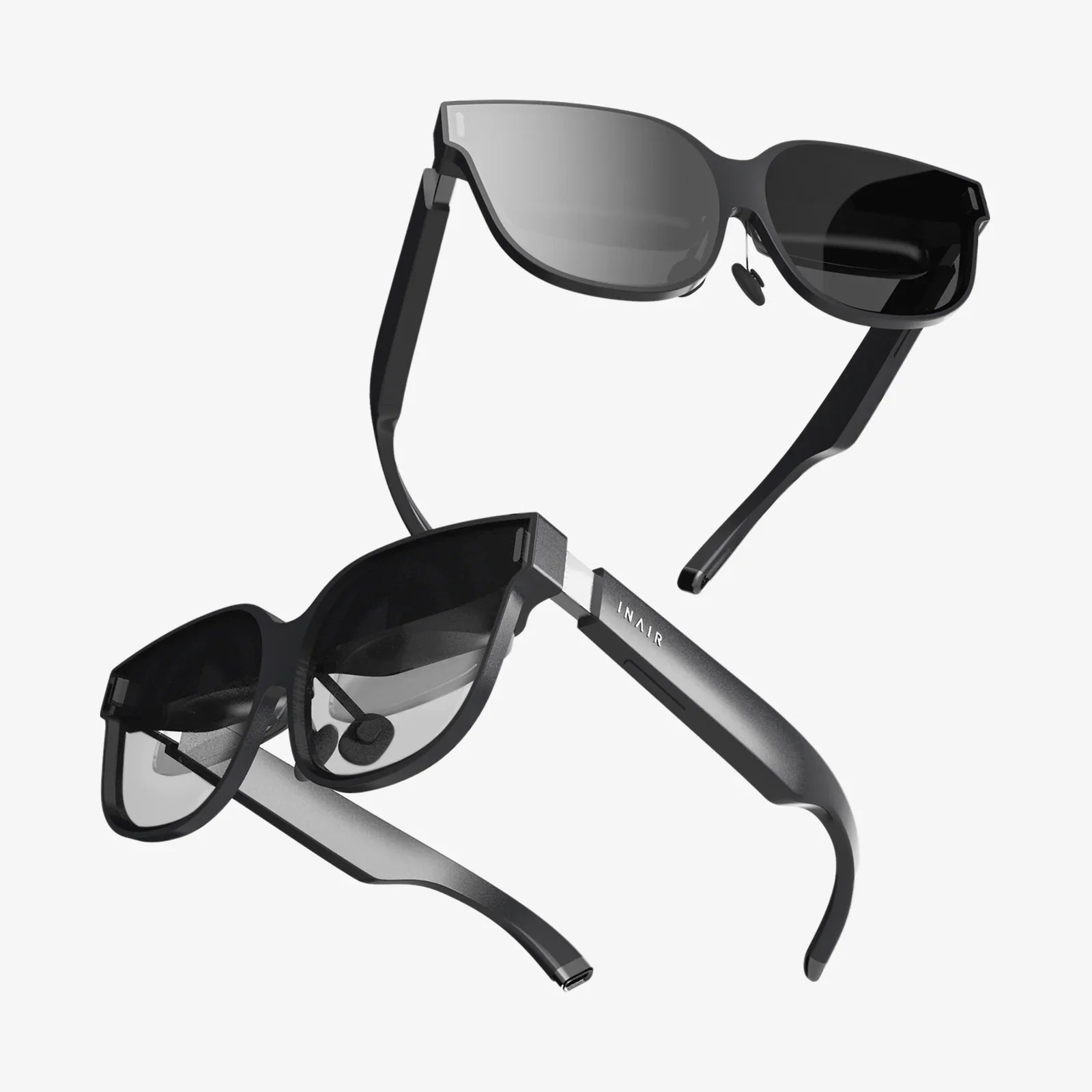
The field of AR is not static; it is accelerating. An augmented reality specialization means committing to lifelong learning, as several key trends are poised to redefine the landscape. The eventual arrival of true consumer-grade AR glasses—lightweight, powerful, and socially acceptable—will be a watershed moment, moving AR from a smartphone accessory to a always-available platform. This will require new design paradigms for persistent interfaces.
The integration of Artificial Intelligence and Machine Learning will make AR experiences smarter and more context-aware. Imagine an AR system that not only sees a table but understands that it's a dining table and can suggest a virtual centerpiece, or that can recognize a specific car model and display its internal parts. Furthermore, the development of the AR cloud—a persistent, shared digital copy of the real world—will enable multi-user experiences that are anchored to specific locations, paving the way for shared gaming, navigation, and social interaction. Finally, the rise of WebAR, which delivers AR experiences through a web browser without needing a dedicated app, will drastically lower the barrier to entry for users and create new opportunities for specialists to reach massive audiences instantly.
Navigating the Challenges and Ethical Considerations
Pursuing an augmented reality specialization also involves grappling with significant challenges. Technical hurdles like achieving robust tracking in dynamic or low-feature environments, managing battery consumption, and ensuring cross-device compatibility remain. From a design perspective, avoiding user fatigue, preventing real-world dangers (like walking into traffic), and designing for accessibility are critical concerns.
Perhaps more profound are the ethical questions. AR specialists will play a key role in deciding how digital content interacts with our perception of reality. Issues of data privacy are immense, as AR devices by their nature continuously scan and understand our personal spaces. The potential for intrusive advertising, where every surface becomes a billboard, is a real threat. There are also concerns about reality blurring, digital vandalism in the AR cloud, and the societal impact of a world where people are constantly immersed in a digital layer. A responsible specialist must be an advocate for ethical design, prioritizing user well-being and privacy in their work.
The path to becoming an AR specialist is demanding, requiring a fusion of technical skill, creative vision, and strategic acumen. It's a commitment to building the bridge between our atoms and our bits. But for those who choose to specialize, the reward is a career at the epicenter of the next great technological shift, with the power to fundamentally change how we work, learn, play, and see the world itself. Your reality is waiting to be augmented; the only question is whether you will be the user or the architect.
Share:
How Does Augmented Reality Work: The Magic of Merging Realities
When Did Augmented Reality Come Out? The Untold History of a Digital Revolution