


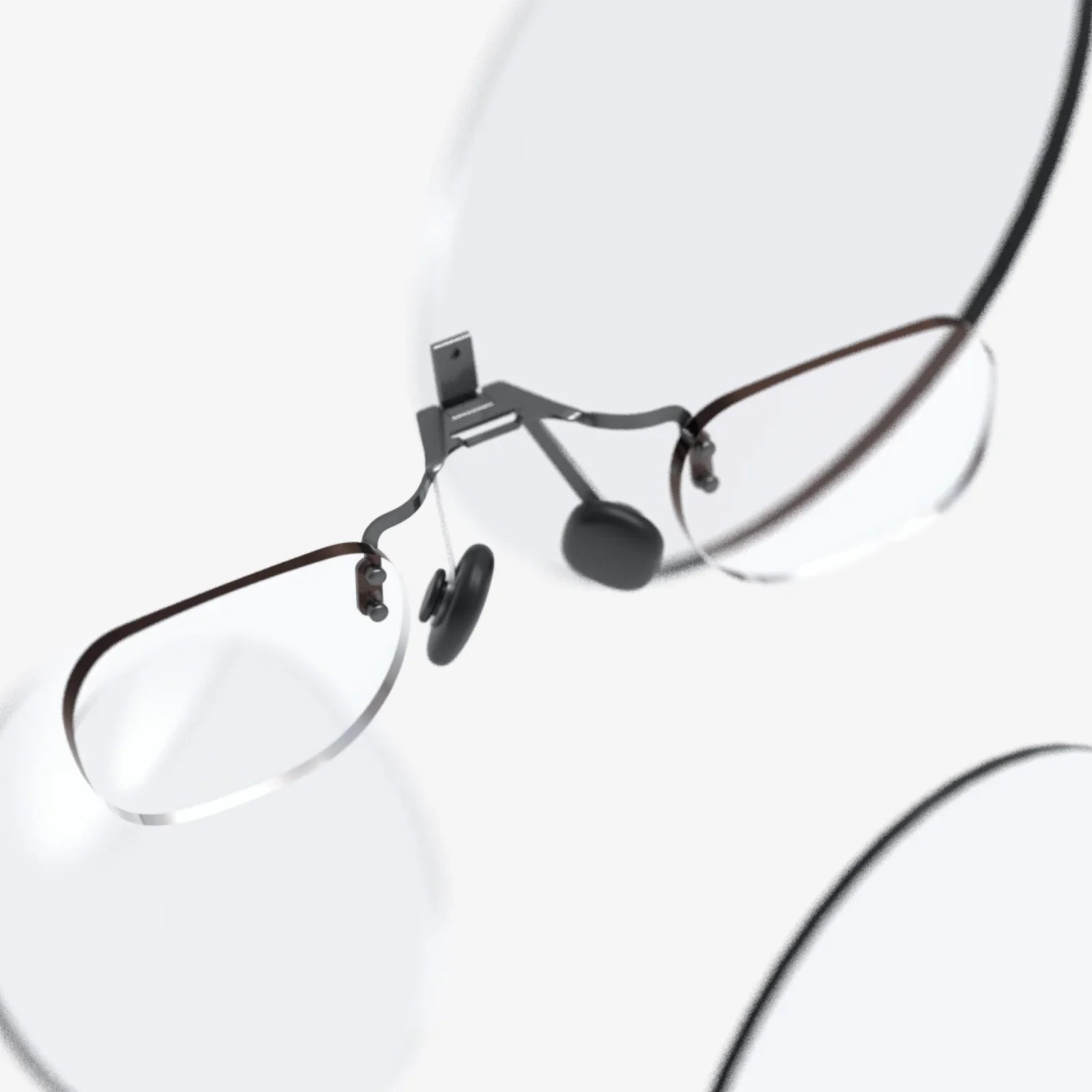
Imagine a world where the line between the digital and the physical doesn't just blur—it disappears. Where information, guidance, and entertainment are not confined to screens but are painted onto the very fabric of our reality, accessible with a glance. This is the promise of augmented reality, a technology rapidly evolving from a novelty into a fundamental layer of human-computer interaction. But this seamless magic doesn't happen by accident; it is meticulously engineered, built upon a complex and robust augmented reality structure that acts as the invisible blueprint for our digitally-enhanced future. Understanding this architecture is key to unlocking its vast potential, from revolutionizing how we work and learn to reshaping our social interactions.
The Foundational Pillars: Hardware and Software Symbiosis
At its core, the augmented reality structure is a sophisticated dance between specialized hardware and powerful software, each component playing a critical role in creating a convincing and interactive experience.
The Hardware Layer: Our Window to an Enhanced World
The hardware forms the physical gateway through which users perceive the augmented world. This layer is far more than just a display; it is a suite of sensors and processors working in concert.
- Sensors: These are the eyes and ears of the device. Cameras capture the live video feed of the user's environment. Inertial Measurement Units (IMUs), including accelerometers and gyroscopes, track the precise orientation and movement of the device. Depth sensors, like time-of-flight cameras or LiDAR scanners, map the three-dimensional geometry of the space, understanding the distance to objects and surfaces. This sensor fusion is crucial for stable placement of digital content.
- Processors (CPU/GPU/VPU): The raw data from sensors is meaningless without immense computational power. The Central Processing Unit (CPU) handles general computations and system operations. The Graphics Processing Unit (GPU) is paramount, rendering high-fidelity 3D models and complex animations in real-time. A Vision Processing Unit (VPU) is often dedicated specifically to the intense task of computer vision, processing the camera feed to understand the environment.
- Displays:
This is the final output, the component that literally projects the digital onto the physical. Display technologies vary widely:
- Optical See-Through: Used in many smart glasses, these employ waveguides or holographic optical elements to project light directly into the user's eyes, allowing them to see the real world naturally with digital overlays superimposed.
- Video See-Through: Common on smartphones and tablets, this method uses the device's camera to capture the real world and then displays the combined real-world video and digital graphics on a standard screen.
- Projection-Based AR: Here, digital content is projected directly onto physical surfaces (e.g., turning a blank wall into an interactive touchscreen).
The Software Layer: The Brain Behind the Illusion
If hardware is the body, software is the brain and nervous system. This layer is responsible for interpreting sensor data, making sense of the environment, and managing the digital content.
- Computer Vision and SLAM: This is the true magic trick. Simultaneous Localization and Mapping (SLAM) algorithms are the cornerstone of modern AR. They allow the device to both map an unknown environment (creating a 3D mesh of the space) and localize itself within that map in real-time. This is how a virtual dinosaur can know to hide behind your real sofa. Computer vision also handles object recognition, identifying specific items like a product box or a machine part to trigger relevant AR experiences.
- AR Software Development Kits (SDKs): These are the toolkits that empower developers to build AR applications without starting from scratch. They provide pre-built functions for tracking, surface detection, and lighting estimation, dramatically accelerating development and ensuring a consistent level of performance across different devices and operating systems.
- Content Management and Rendering Engine: This subsystem manages the digital assets—the 3D models, animations, sounds, and videos—and uses the rendering engine to draw them into the user's view with correct perspective, scale, and, crucially, lighting that matches the real world to enhance believability.
The Critical Workflow: From Perception to Projection
The augmented reality structure functions through a continuous, high-speed loop. It begins with data acquisition, where all sensors simultaneously capture information about the environment and the device's movement. This data is then fused together and processed by the SLAM and computer vision algorithms to create a coherent understanding of the world: where are the flat surfaces? What are the key feature points? Where is the device located in this map?
Once the environment is understood, the system can precisely anchor digital content. The rendering engine then takes over, calculating how the virtual object should look from the user's specific viewpoint, applying realistic shadows and occlusions ( ensuring a virtual cup sits *on* a real table, not floating above it). Finally, the composed image is delivered to the display, completing the illusion. This entire process happens dozens of times per second, creating the fluid and responsive experience that defines high-quality AR.
Connectivity and Cloud Integration: Expanding the AR Horizon
While some AR experiences are self-contained, the most powerful applications are those connected to larger networks. Cloud computing plays a vital role in enhancing the augmented reality structure.
- Offloading Processing: Complex tasks like large-scale 3D model rendering or detailed object recognition can be offloaded to powerful cloud servers, reducing the burden on the often power-constrained mobile device and enabling more sophisticated experiences.
- Persistent AR and Multi-User Experiences: For digital content to remain anchored in a specific location for hours, days, or even years (a concept known as persistent AR), and for multiple users to see and interact with the same digital objects simultaneously, a cloud-based "spatial anchor" service is essential. The cloud acts as a shared memory, storing the digital map of a location and the coordinates of all virtual objects within it.
- Dynamic Content Delivery: The cloud allows for real-time updating of AR content. Imagine pointing your device at a historical monument and seeing information that updates with the latest archaeological findings, all pulled live from a database.
Architectural Challenges and Future Directions
Building this intricate augmented reality structure is not without significant challenges. Engineers and developers constantly grapple with the trade-offs between performance, power consumption, form factor, and cost. Achieving photorealistic rendering that perfectly matches real-world lighting in real-time remains a holy grail. Latency—the delay between a user's movement and the update of the display—must be minimized to prevent motion sickness. Furthermore, creating a standardized and interoperable framework for the spatial web, where AR experiences can work seamlessly across different platforms and devices, is a critical next step for mass adoption.
The future of this architecture points towards even greater integration. We are moving towards smaller, lighter, and more powerful wearable devices. Machine learning and AI will become deeply embedded within the structure, enabling more intelligent and context-aware interactions. The concept of the "digital twin"—a perfect virtual replica of a physical object or system—will become a primary content source for enterprise AR, allowing for sophisticated simulation and monitoring. Ultimately, the augmented reality structure will evolve to become as ubiquitous and invisible as the infrastructure that powers the internet today, a foundational utility for our daily lives.
Transforming Industries Through Structural Innovation
The implications of a mature augmented reality structure extend far beyond gaming and filters. It is poised to fundamentally reshape entire sectors.
- Manufacturing and Field Service: Technicians can wear AR glasses that overlay schematics, animation instructions, and safety warnings directly onto the machinery they are repairing, guiding them through complex procedures hands-free and reducing errors.
- Healthcare: Surgeons can visualize patient anatomy, such as CT scans or MRI data, projected directly onto the patient's body during procedures, improving accuracy. Medical students can practice on virtual cadavers, and patients can use AR to better understand their conditions and treatments.
- Retail and E-Commerce: Customers can visualize how furniture will look and fit in their living room or how clothes will look on their body before making a purchase, bridging the gap between online and physical shopping.
- Education and Training: Complex abstract concepts, from molecular biology to historical events, can be brought to life as interactive 3D models, creating immersive and engaging learning experiences.
- Architecture and Construction: Architects and clients can walk through full-scale holographic models of buildings before a single brick is laid. On construction sites, AR can project building plans onto the unfinished structure to verify alignment and prevent costly mistakes.
This is not a distant future; these applications are being deployed today, powered by the relentless refinement of the underlying architectural framework. The augmented reality structure is the unsung hero, the complex engine humming in the background, making the extraordinary seem effortless.
The true power of this technology lies not in the flashy graphics alone, but in its ability to contextualize information, to make the implicit explicit, and to augment not just reality, but human capability itself. As this architectural foundation becomes more robust, standardized, and integrated into our world, it will cease to be a technology we use and simply become a lens through which we see, understand, and improve everything around us. The blueprint is being drawn, and it promises to construct a reality limited only by our imagination.
Share:
Define AR and VR: Unraveling the Digital Realities Reshaping Our World
AI Assisted Glasses Are Redefining Human Sight and Connection