


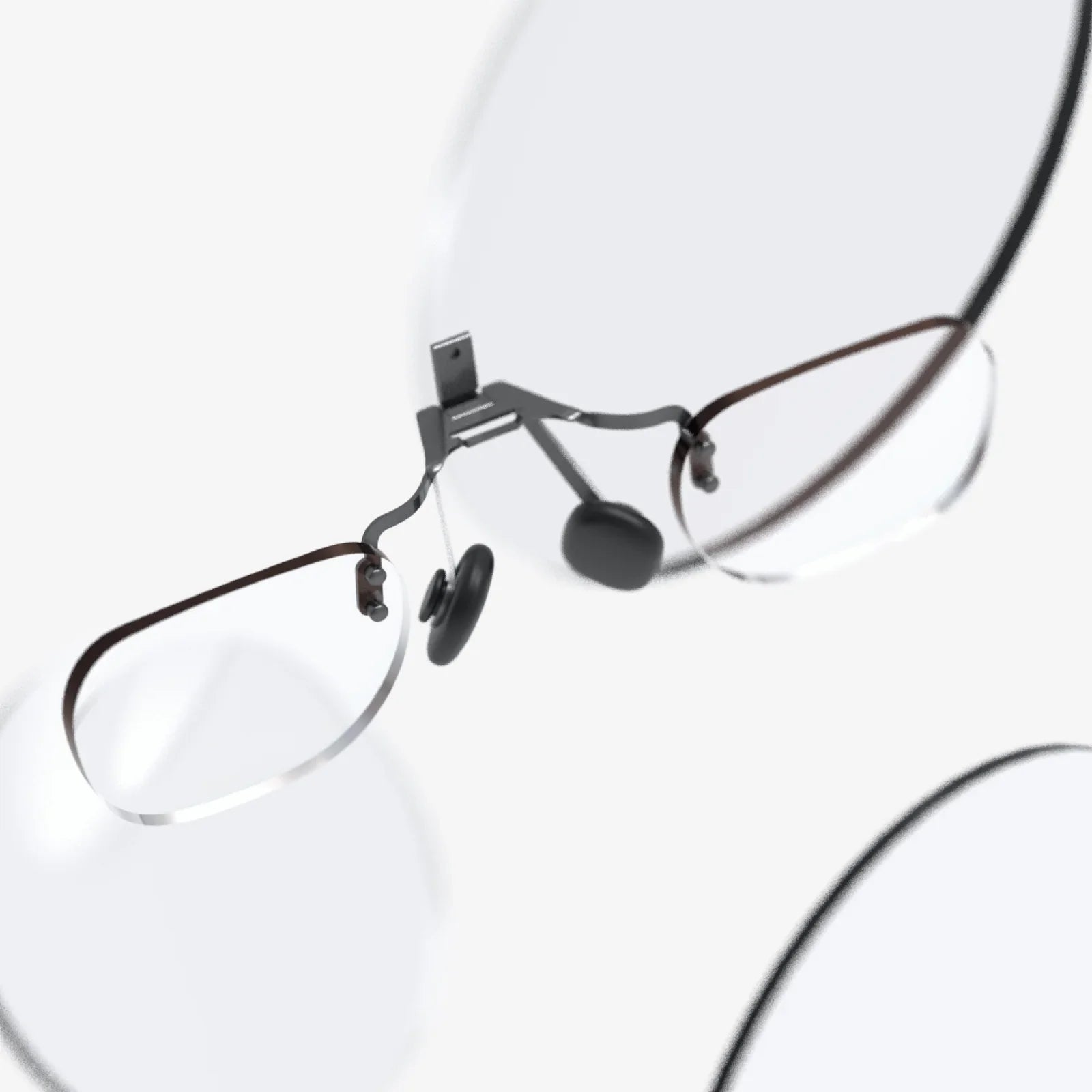
Imagine a world where digital information doesn't just live on a screen but is seamlessly woven into the fabric of your everyday life, where instructions float over a complex machine you're repairing, historical figures reenact battles on the very ground they were fought, and the distance between a loved one feels a little smaller because they can appear, as a lifelike hologram, sitting on your sofa. This is not a distant science fiction fantasy; it is the emerging reality being built today through advanced augmented reality systems. This technology promises to fundamentally reshape how we work, learn, connect, and interact with the world around us, blurring the lines between the digital and the physical in ways we are only beginning to comprehend.
The Core Mechanics: How an Augmented Reality System Perceives and Projects
At its essence, an augmented reality system is a sophisticated ensemble of hardware and software designed to superimpose computer-generated sensory input—be it visual, auditory, or even haptic—onto a user's perception of the real world. Unlike virtual reality, which creates a fully immersive digital environment, AR enhances reality by adding a layer of contextual and interactive data.
The magic begins with a process called scene capture. Using a combination of cameras, sensors, and advanced optics, the system continuously scans the user's environment. This is far more complex than simply taking a video feed. The system must understand the geometry of the space, a concept known as spatial mapping. It identifies flat surfaces like floors and tables, recognizes objects, and calculates distances in real-time. This is achieved through a fusion of data from complementary technologies:
- Computer Vision: Algorithms analyze the video feed to identify patterns, objects, and markers.
- Simultaneous Localization and Mapping (SLAM): This is the true powerhouse behind most modern AR. SLAM allows the system to simultaneously map an unknown environment while keeping track of its own location within that space. It's what allows digital objects to stay anchored to a physical point, even as you move around.
- Inertial Measurement Units (IMUs): These sensors, including accelerometers and gyroscopes, track the movement and rotation of the device or headset, providing crucial data to supplement the visual tracking.
Once the environment is understood, the system must then render and align the digital content. This involves generating high-fidelity 3D models, animations, or information panels and then projecting them into the user's field of view with precise alignment. The technology for this projection varies:
- Optical See-Through: Often used in head-mounted displays, this method uses semi-transparent mirrors or waveguides to reflect digital images into the user's eyes while allowing them to see the real world directly through the lenses. The digital light is composited with the real-world light.
- Video See-Through: Here, cameras capture the real world, and the system digitally composites the AR elements onto this video feed before displaying it on a screen in front of the user's eyes. This allows for more control over the blend but can sometimes introduce a slight latency.
- Projection-Based AR: This method projects digital imagery directly onto physical surfaces, turning a wall into a touchscreen or a table into an interactive strategy map, without requiring the user to wear any headset.
Finally, the system must enable interaction. This is where the experience moves from passive viewing to active engagement. Users can interact with the digital overlays through gesture recognition (using cameras to track hand movements), voice commands, touch-sensitive surfaces, or dedicated controllers, creating a truly immersive and intuitive interface.
Beyond Novelty: The Practical Applications Reshaping Industries
While early consumer adoption was often driven by entertainment, the true transformative power of augmented reality systems is being realized in enterprise and industrial applications, where they are solving real-world problems and delivering tangible value.
Revolutionizing Manufacturing and Field Service
On the factory floor and in the field, AR is becoming an indispensable tool. Technicians wearing AR glasses can see digital work instructions overlaid directly onto the machinery they are assembling or repairing. Complex wiring diagrams can be projected onto the actual panels, eliminating constant glances back and forth at a paper manual or tablet. This hands-free access to information drastically reduces errors, slashes training time for new employees, and improves overall efficiency. Remote experts can see what a field technician sees through a live video feed and annotate the real-world view with arrows, notes, and diagrams to guide them through a complex procedure, effectively teleporting their expertise anywhere in the world without the cost and delay of travel.
Transforming Healthcare and Medicine
The stakes in healthcare are incredibly high, and AR systems are rising to the challenge. Surgeons can use AR overlays to visualize a patient's anatomy, such as the precise location of tumors or blood vessels, directly on the patient's body during procedures, enhancing precision and improving outcomes. Medical students can practice complex surgeries on detailed, interactive holograms of human anatomy, gaining valuable experience in a risk-free environment. AR is also aiding in physical rehabilitation, guiding patients through exercises with correct form, and in pharmacy, helping to ensure the accurate compounding of medications.
Redefining Retail and Interior Design
The days of wondering how a new sofa will look in your living room are over. Augmented reality systems allow consumers to project life-sized 3D models of furniture, appliances, and decor into their own homes before making a purchase. They can walk around the virtual object, see how it fits with their existing space, and even change colors and fabrics in real-time. This not only boosts consumer confidence but also significantly reduces return rates for retailers. Similarly, architects and interior designers can use AR to walk clients through a proposed design long before construction begins, fostering better communication and collaboration.
Enhancing Education and Training
Education is being transformed from a passive activity into an interactive, experiential journey. Instead of reading about ancient Rome, students can use an AR system to walk through a digitally reconstructed Forum on their classroom table. Mechanics-in-training can practice on a holographic engine, taking it apart and reassembling it countless times without needing a physical part. This learning-by-doing approach, facilitated by immersive visualizations, dramatically improves knowledge retention and engagement.
The Invisible Interface: The Quest for Seamless Integration
The ultimate goal for any augmented reality system is to become an invisible interface—one that feels like a natural extension of our own cognition and senses, not a piece of technology we must consciously operate. Reaching this zenith requires overcoming significant technological and human-factor hurdles.
The hardware must become smaller, lighter, more powerful, and socially acceptable. Bulky headsets will give way to sleek glasses and eventually to contact lenses or other forms of technology that disappear entirely. Battery life remains a critical constraint; for all-day use, systems will need to become vastly more power-efficient or leverage new charging paradigms. Furthermore, the latency—the delay between a user's movement and the update of the AR display—must be reduced to imperceptible levels to prevent user discomfort and ensure the digital objects feel truly locked in place.
Perhaps the most daunting challenge is creating a unified and intuitive interaction paradigm. How do we naturally manipulate digital objects that have no physical form? While gesture and voice control are promising, they can be imprecise or socially awkward in public settings. The development of neural interfaces, which interpret brain signals, or sophisticated haptic feedback systems that simulate touch, could provide the missing link for truly seamless interaction.
Finally, the issue of data privacy and security looms large. An AR system that is constantly scanning and recording your environment is, by its nature, a powerful surveillance tool. Robust frameworks must be established to determine who owns this environmental data, how it can be used, and how to protect users from malicious digital graffiti or unauthorized data collection. The digital layer over our world must be secure and respectful of personal boundaries.
The Future is Overlaid: A World Transformed by Contextual Computing
Looking ahead, the evolution of augmented reality systems points toward a future of contextual computing, where technology anticipates our needs and provides information precisely when and where it is needed. Your AR glasses could translate foreign street signs in real-time as you walk, highlight the name of a constellation when you look up at the night sky, or remind you of a colleague's name as you approach them at a conference.
This will be powered by a convergence of AR with other transformative technologies. The massive data processing required for complex AR experiences will be handled in the cloud and delivered seamlessly via 5G and future 6G networks, enabling incredibly rich and shared experiences without burdening the local device. Artificial intelligence will act as the brain of the AR system, intelligently parsing the world, understanding user intent, and serving up the most relevant information without explicit commands.
We are moving toward the concept of a persistent digital twin of our world—a constantly updated 1:1 scale model of reality that exists in the cloud. AR devices will tap into this twin, allowing for shared experiences where millions of users can see and interact with the same digital objects and information, anchored to specific locations, forever changing social interaction, navigation, and entertainment. The path forward is not about escaping our reality, but about enhancing it, enriching our perception, and unlocking human potential in ways we are only beginning to imagine.
The doorway to a world infinitely enriched with data, narrative, and connection is not on the horizon—it's being installed, pixel by pixel, right before our eyes. The next time you look at an empty space, consider what could be there; soon, you'll only need to glance through the right lens to see a universe of possibility waiting to unfold.
Share:
Is Augmented Reality AI? The Symbiotic Future Unfolding Before Our Eyes
Augmented Reality Guidance: The Invisible Hand Reshaping Our World