


- by wangfred
Augmented Reality Technology: Bridging Our Digital and Physical Worlds
- by wangfred
Imagine a world where the line between the digital and the physical blurs into irrelevance, where information is not something you seek on a screen but an intuitive layer painted directly onto your surroundings. This is the promise of augmented reality technology, a seismic shift in human-computer interaction that is poised to revolutionize everything from how we learn and work to how we connect and play. It’s not just about seeing digital dragons in your living room; it’s about enhancing human capability and perception in ways we are only beginning to comprehend.
At its essence, augmented reality technology is a suite of systems that superimposes computer-generated sensory input—be it sound, video, graphics, or GPS data—onto a user's view of the real world. Unlike its cousin, virtual reality, which aims to replace reality entirely, AR seeks to augment and enrich it. This magic is performed through a sophisticated dance of hardware and software.
The process begins with sensors and cameras that scan the immediate environment. These components act as the eyes of the system, capturing the physical world's details. This visual data is then processed by sophisticated simultaneous localization and mapping (SLAM) algorithms. SLAM is the true brain behind the operation; it localizes the device without any prior knowledge of the environment while simultaneously mapping the structure of the surroundings. It answers the critical questions: "Where am I?" and "What is around me?"
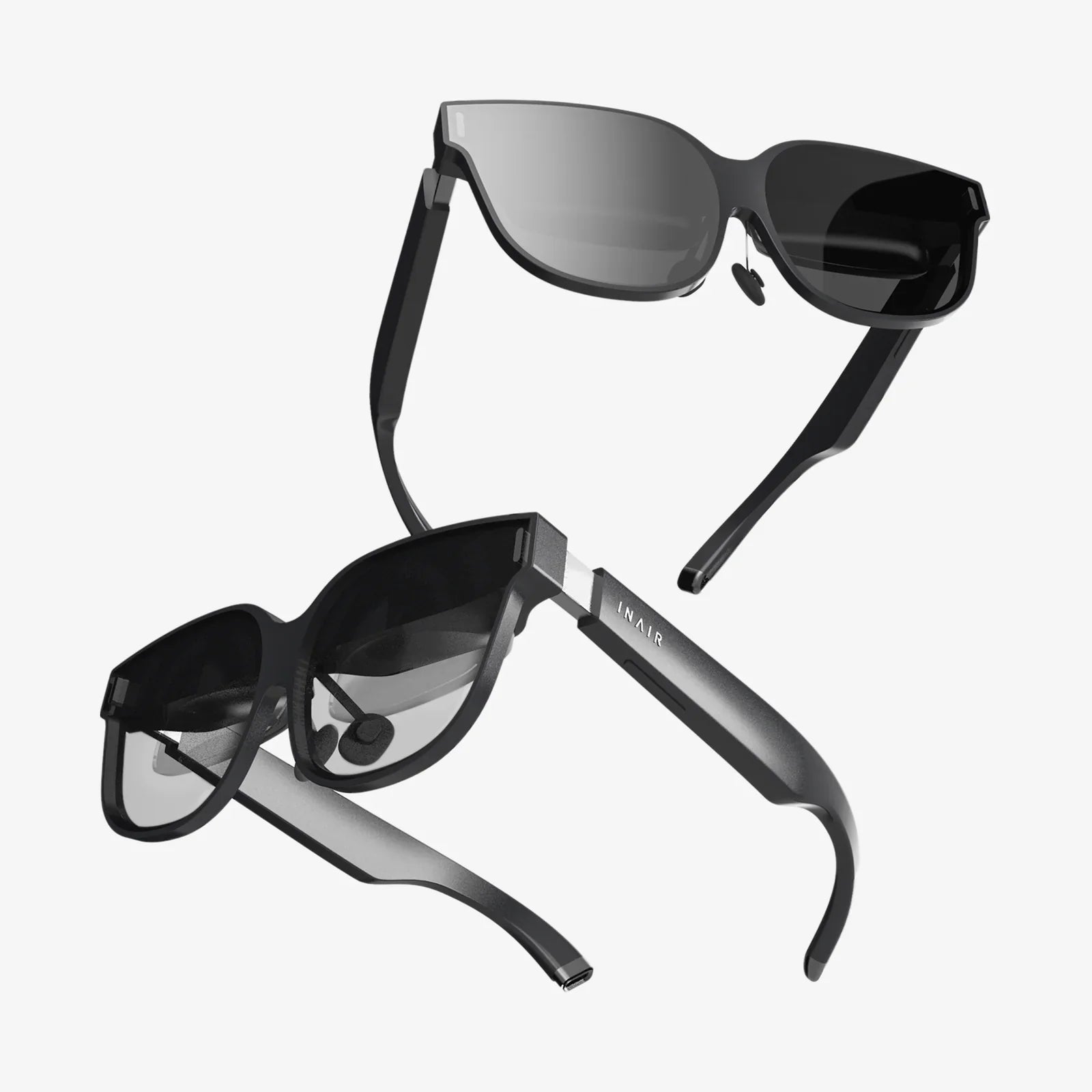
Once the environment is understood, the AR software decides where and how to place the digital content. This is where projection and registration come into play. The digital object must be perfectly anchored to a point in the physical world, maintaining its position and perspective as the user moves. This creates the convincing illusion that the holographic object is truly present. Finally, this composite view is rendered in real-time on a display. This can be a screen on a handheld device, smart glasses with translucent lenses, or even advanced retinal projection systems.
The true power of augmented reality technology is revealed not in isolated gimmicks but in its profound utility across diverse sectors, solving real-world problems and creating new paradigms for efficiency and understanding.
The classroom is being fundamentally transformed. Instead of static diagrams in a textbook, students can explore a beating human heart in three dimensions, watching blood flow through chambers and valves. History lessons can become immersive experiences, with historical figures and events playing out on a student's desk. For complex vocational training, the implications are staggering. Mechanics can see wiring diagrams overlaid directly on an engine block, surgeons can practice procedures on hyper-realistic holographic patients, and factory workers can receive step-by-step visual instructions without ever looking away from their task. This hands-on, visual learning drastically improves knowledge retention and skill acquisition.
The age of guessing whether a new sofa will fit in your living room or if a shade of lipstick will suit you is ending. Augmented reality technology allows consumers to project virtual products into their physical space. You can see how a new coffee table looks in your actual lounge, try on watches and glasses virtually, and even visualize a new coat of paint on your walls. This "try before you buy" capability bridges the gap between online shopping's convenience and in-store shopping's certainty, reducing return rates and dramatically enhancing consumer confidence.
In the high-stakes world of medicine, AR is proving to be a lifesaving tool. It is revolutionizing medical imaging by projecting CT scans and MRI data directly onto a patient's body, giving surgeons an X-ray-like view during procedures and allowing for incredibly precise incisions. It aids in complex rehabilitation by creating interactive exercises that motivate patients. Furthermore, it serves as a powerful tool for patient education, helping doctors explain conditions and procedures in a visually intuitive way that a patient can truly understand.
On the factory floor, AR is a cornerstone of Industry 4.0. Technicians wearing smart glasses can see schematics, safety information, and performance data while keeping their hands free to work. Remote experts can see what a field technician sees and provide guidance by drawing annotations directly into their field of view, enabling complex problem-solving from thousands of miles away. This reduces downtime, minimizes errors, and streamlines complex assembly and maintenance processes in fields from aerospace to energy.
For AR to reach its full, seamless potential, it cannot exist solely on a device. It requires a robust, invisible backbone of high-speed connectivity, edge computing, and cloud resources. The immense data processing required for high-fidelity AR experiences often exceeds the capabilities of a mobile processor. By offloading this computation to powerful cloud servers via high-bandwidth, low-latency networks like 5G, devices can become lighter, more affordable, and more power-efficient. This cloud-based model also allows for persistent AR experiences—digital content that remains anchored to a location, viewable and interactable by multiple users over time, essentially creating a shared digital layer over our world.
As with any powerful technology, the path forward is not without its obstacles and profound questions. The widespread adoption of augmented reality technology brings several critical challenges to the forefront.
Privacy and Data Security: AR devices, by their very nature, are data collection powerhouses. They have continuous cameras, microphones, and sensors mapping the world and the people in it. This raises monumental privacy concerns. Who owns this data? How is it stored and used? The potential for unauthorized surveillance and data breaches creates a significant hurdle for public trust.
Digital Addiction and Reality Blurring: If we are constantly enhancing our reality with digital filters and information, do we risk devaluing the un-augmented world? There is a genuine concern about technology addiction and our ability to be present in the moment. Furthermore, the ability to alter perception could be misused for misinformation or manipulative advertising, making it increasingly difficult to distinguish fact from fiction.
The Social Divide and Accessibility: The cost of advanced AR hardware could create a new digital divide, separating those who can afford an augmented world from those who cannot. This has implications for education, employment, and social interaction. Ensuring this technology is developed and deployed in an inclusive and equitable manner is a paramount concern for policymakers and developers alike.
The trajectory of augmented reality technology points toward a future where digital interfaces become increasingly invisible and intuitive. We are moving toward lightweight, socially acceptable eyewear that will eventually replace smartphones as our primary gateway to digital information. The concept of the spatial web or metaverse—an interconnected web of augmented experiences layered over the physical world—is quickly evolving from science fiction into a tangible goal for the next iteration of the internet.
In this future, information will be contextual and ambient. Walking through a city, historical facts about a building will appear as you look at it, navigation arrows will be painted onto the sidewalk, and a friend's virtual note could be left on a park bench for you to find. This will require breakthroughs in display technology, battery life, AI understanding, and network infrastructure, but the pace of innovation suggests this future is not far off.
The ultimate potential of augmented reality technology is not to distract us from the real world but to empower us within it. It promises to expand human cognition, making us smarter, more capable, and more connected to the vast stores of human knowledge. It has the power to turn every space into a classroom, every object into a teacher, and every challenge into an opportunity for collaborative, visualized problem-solving. The world is about to get a major software update, and it will change absolutely everything.
Share:
Virtual Reality Headset Bad For Eyes: An In-Depth Look at the Visual Risks
What Is Virtual Reality and Digital Media: The Symbiotic Revolution Reshaping Our World