


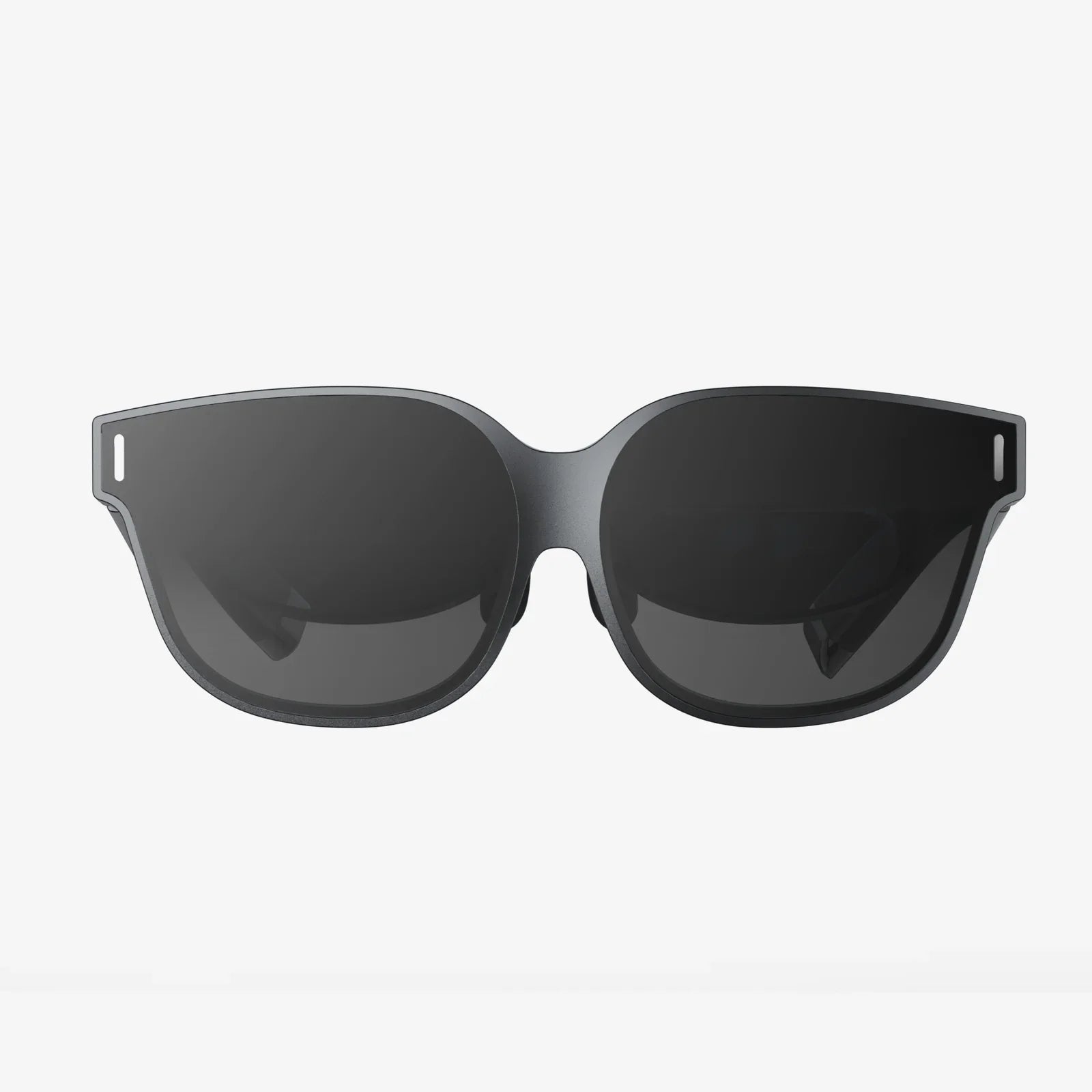
Imagine a world where digital information doesn't just live on a screen but is seamlessly woven into the fabric of your everyday life. This is the promise and the power of augmented reality (AR), a technology that is rapidly moving from science fiction to an integral part of our personal and professional landscapes. It’s not about escaping into a virtual world; it’s about enhancing the one we already inhabit.
The Core Principle: Superimposing the Digital onto the Physical
At its most fundamental level, augmented reality is a technology that overlays computer-generated perceptual information onto the user's view of the real world. Unlike Virtual Reality (VR), which creates a completely artificial environment for the user to immerse themselves in, AR takes the existing environment and adds to it. The goal is to create a unified, interactive experience where digital objects coexist and interact with the real world in real-time. This is achieved through a sophisticated interplay of hardware and software components designed to capture, process, and project information.
The Technological Pillars of AR
The creation of a convincing and functional AR experience rests on several key technological pillars. These components work in concert to perceive the environment, understand the user's position within it, and render digital content appropriately.
Sensing and Perception
For a digital object to sit convincingly in the real world, the AR system must first understand its surroundings. This is accomplished through a suite of sensors:
- Cameras: Act as the eyes of the device, continuously capturing video of the real world. This video feed is the canvas upon which digital content is overlaid.
- Depth Sensors (LiDAR, ToF): These sensors project infrared light patterns and measure the time it takes for the light to return, creating a precise 3D depth map of the environment. This allows the system to understand the geometry of a space, enabling digital objects to be occluded by real-world objects and to interact more realistically with surfaces.
- Inertial Measurement Units (IMUs): Comprising accelerometers, gyroscopes, and magnetometers, IMUs track the device's orientation, rotation, and acceleration. This provides crucial data for determining the device's position and movement with high speed and low latency.
- GPS and RFID: Used primarily in outdoor and large-scale AR applications, these technologies provide coarse location data to anchor digital content to specific geographic points.
Processing and Computation
The raw data from the sensors is meaningless without significant computational power to interpret it. This processing involves several complex algorithms:
- Simultaneous Localization and Mapping (SLAM): This is the cornerstone technology for most modern AR. SLAM algorithms allow a device to simultaneously map an unknown environment while tracking its own location within that map in real-time. It creates a persistent spatial understanding, which is essential for placing and locking digital objects in place.
- Computer Vision: This field of AI enables the system to identify and classify objects within the camera's view. Through techniques like object recognition and image tracking, the AR system can trigger specific digital interactions when it sees a particular object or image (e.g., a magazine page or a product box).
- Rendering Engines: Once the environment is understood and the user's position is known, powerful rendering engines generate the photorealistic 3D graphics, animations, and interfaces that are composited onto the user's view. This requires balancing high visual fidelity with the real-time performance necessary to avoid latency-induced motion sickness.
Display Technologies
How the augmented view is presented to the user defines the AR experience. Display technologies fall into several categories:
- Optical See-Through (OST): Used in smart glasses and headsets, OST displays use semi-transparent mirrors or waveguides to project digital imagery directly into the user's eyes while allowing them to see the real world through the lens. This creates a more direct and natural blend of real and virtual.
- Video See-Through (VST): Common in smartphones and tablets, VST uses the device's camera to capture the real world and then displays the combined real-world video feed and digital overlay on a screen. While more accessible, it can sometimes create a slight lag or a mediated feeling.
- Projection-Based AR: This method projects digital light directly onto physical surfaces, effectively turning any wall or table into a display. It can be used for interactive projections that respond to touch or movement.
- Retinal Projection: An emerging technology that beams light directly onto the user's retina, potentially allowing for high-resolution imagery on very small, lightweight devices.
The AR Hardware Spectrum: From Handheld to Head-Worn
AR experiences are delivered through a range of devices, each offering a different balance of immersion, convenience, and capability.
Smartphones and Tablets
These are the most widespread and accessible AR platforms. Leveraging their high-resolution cameras, powerful processors, and ubiquitous nature, mobile devices have introduced billions of users to AR through social media filters, gaming, and retail apps. Their primary limitation is the VST experience, which requires holding the device up and can feel less immersive than head-worn alternatives.
Smart Glasses and Headsets
This category represents the future of truly hands-free, persistent AR. Ranging from lightweight glasses focused on notifications and basic information to more powerful headsets designed for enterprise and industrial use, these devices utilize OST or advanced VST displays. They are designed for all-day wear and offer a more seamless integration of digital content into the user's field of view, making them ideal for complex tasks that require contextual information.
Specialized and Emerging Hardware
Beyond consumer devices, AR is being built into specialized equipment like helmets for soldiers and firefighters, visors for surgeons, and wearable devices for factory technicians. These are often ruggedized, offer specialized sensors, and are tailored for mission-critical applications where AR can provide a significant life-saving or efficiency advantage.
A World Augmented: Practical Applications Across Industries
The value of AR is not theoretical; it is already delivering tangible benefits across a diverse range of sectors.
Enterprise and Industrial
This is where AR is having its most immediate and profound impact. In manufacturing and field service, technicians can use AR glasses to see digital work instructions overlaid on the machinery they are repairing, view schematics hands-free, and even remote video call an expert who can annotate their real-world view. This reduces errors, slashes training time, and improves first-time fix rates. In logistics and warehousing, AR can display optimal picking routes and inventory information directly in a worker's vision, dramatically accelerating order fulfillment.
Healthcare
AR is revolutionizing medical training and practice. Medical students can practice procedures on detailed, interactive 3D holograms of human anatomy. Surgeons can use AR headsets to visualize critical information like patient vitals or 3D scans of tumors directly in their line of sight during an operation, without looking away at a monitor. It can also assist in complex tasks like vein detection for injections and providing therapeutic guidance for patients.
Retail and E-Commerce
AR is closing the gap between online shopping and the in-store experience. Customers can use their smartphones to see how a piece of furniture would look in their living room, how a new shade of paint would appear on their walls, or how a pair of glasses fits their face before making a purchase. This "try before you buy" capability reduces return rates and increases consumer confidence.
Education and Training
AR transforms static learning materials into dynamic, interactive experiences. A history textbook page can come alive with a 3D historical figure, a geography lesson can include an interactive globe floating above the page, and chemistry students can safely manipulate and combine virtual molecules. This interactive model enhances engagement and improves knowledge retention.
Navigation and Tourism
Instead of looking down at a phone map, imagine walking through a city with directional arrows and points of interest floating on the sidewalk in front of you. AR can provide intuitive, context-rich navigation both indoors and outdoors. Tourists can point their device at a monument to see historical information, reconstructions, and related stories overlaid on the live view.
Challenges and the Road Ahead
Despite its rapid advancement, AR technology still faces significant hurdles on its path to mass adoption. A primary challenge is hardware: creating devices that are socially acceptable, comfortable for all-day wear, visually compelling, and affordable remains a formidable engineering task. Battery life, field of view, and display brightness are ongoing areas of intense research. Furthermore, developing a robust and intuitive user interface for a 3D, spatial computing environment—often called the "holy grail" of AR—is still in its early stages. How do users interact with floating menus and digital objects without a traditional mouse and keyboard? Solutions involving hand tracking, voice control, and gaze tracking are being actively developed. Finally, the creation of a pervasive AR ecosystem raises critical questions about data privacy, security, and digital litter. The constant capture of a user's environment and the potential for persistent digital graffiti in public spaces require thoughtful ethical frameworks and regulation.
The Future is Layered with Possibility
The trajectory of AR points toward a future of ubiquitous computing, often described as "spatial computing" or the "metaverse." We are moving toward always-available, context-aware digital assistants that provide information exactly when and where we need it. The line between the physical and digital will continue to blur, enabling new forms of communication, collaboration, and creativity. Future advancements in 5G/6G connectivity, artificial intelligence, and micro-optics will dissolve the remaining technical barriers, paving the way for AR experiences that are as commonplace and indispensable as the smartphone is today.
We stand at the threshold of a new layer of reality, one where our digital and physical selves are no longer separate. This isn't about replacing the world we know, but about enriching it with a dynamic tapestry of information, connection, and imagination, forever changing how we work, learn, play, and see everything around us.
Share:
Augmented Reality Made Easy: A Beginner's Guide to the Digital Overlay
Customized Prescription AI Glasses: The Future of Personalized Vision and Assistance