


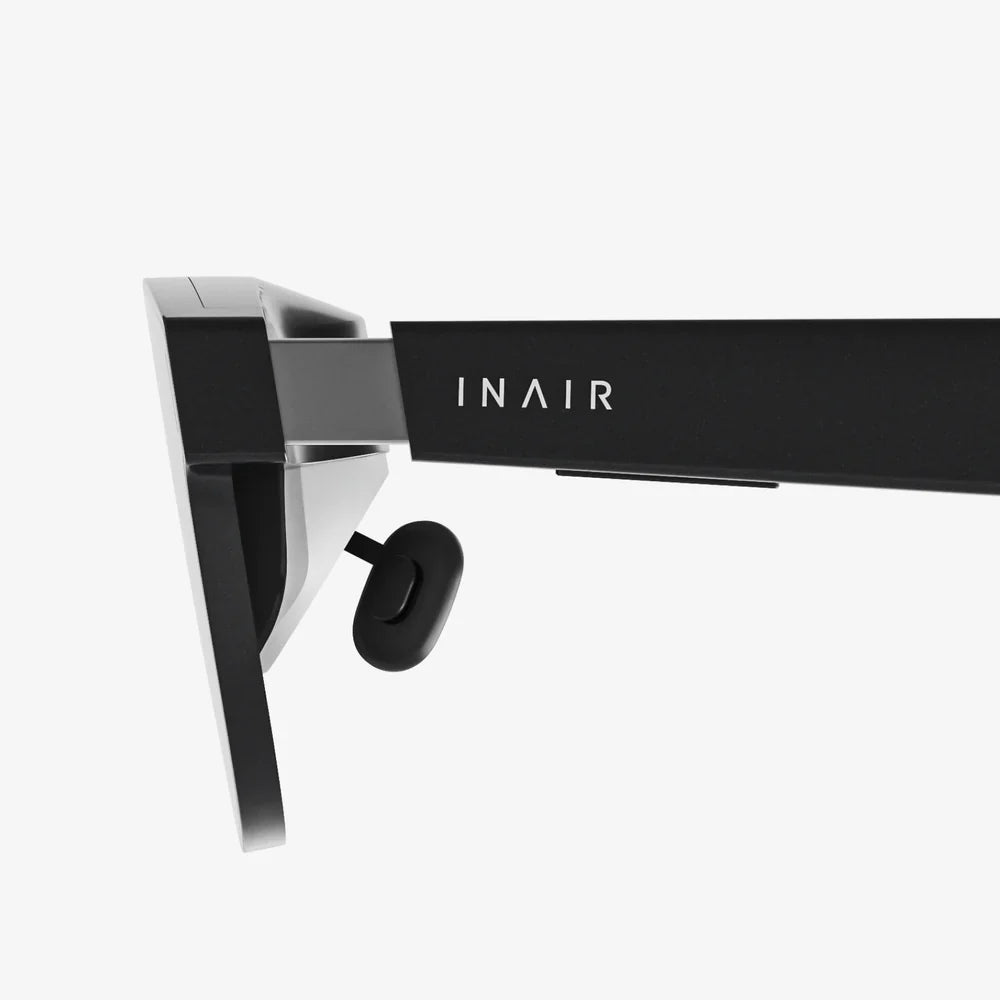
Imagine a world where the line between the digital and the physical doesn't just blur—it disappears. Where information, entertainment, and utility are not confined to screens but are painted onto the very fabric of your reality, accessible with a glance, a gesture, or a spoken word. This is the promise of augmented reality, a technology that is quietly, yet profoundly, revolutionizing how we work, learn, play, and connect. It’s not about escaping our world, but about enhancing it, and the revolution is already underway, waiting for you to look up and see it.
Beyond the Hype: Defining the Digital Layer
At its core, augmented reality (AR) is a technology that superimposes a computer-generated overlay—comprising images, sounds, text, and other data—onto a user's view of the real world. Unlike virtual reality (VR), which creates a completely immersive, artificial environment, AR takes your existing environment and adds to it. The goal is not to replace reality but to supplement it, creating a composite view that is richer and more interactive.
This is achieved through a sophisticated interplay of hardware and software. Cameras and sensors scan the physical environment, while sophisticated algorithms perform critical tasks like simultaneous localization and mapping (SLAM) to understand the geometry of the space and track the user's position within it. This digital understanding allows virtual objects to be placed and anchored with astonishing accuracy, making them appear as if they truly belong in the real world. The final piece is the display technology, which projects this synthesized reality to the user, most commonly through the screen of a smartphone or tablet, or more immersively, through specialized glasses or headsets.
The Engine Room: How AR Weaves the Digital Tapestry
The magic of AR feels like wizardry, but it is underpinned by a complex stack of technologies working in perfect harmony. The process can be broken down into a few key stages.
Perception and Mapping
It all begins with perception. An AR device uses its cameras, depth sensors, LiDAR scanners, and inertial measurement units (IMUs) to constantly 'see' and understand the world around it. It identifies flat surfaces like floors and tables, detects edges, and measures distances. This data is used to create a real-time 3D map of the environment. This process, known as world tracking, is what allows a virtual character to hide behind your real sofa or a digital tape measure to accurately gauge the length of your wall.
Registration and Tracking
For the illusion to be believable, virtual objects must stay locked in place. This is registration. If you place a virtual lamp on a real end table and then walk around the room, the lamp must remain precisely on that table from every angle. Advanced tracking algorithms use the mapped environment and continuous sensor data to maintain this perfect alignment, adjusting the virtual object's perspective in real-time as the user moves.
Rendering and Display
Once the system knows where to put something and how it should look from the user's viewpoint, it must render the object with realistic lighting, shadows, and occlusion (where real objects correctly block the view of virtual ones). This rendered composite is then displayed to the user. On a smartphone, this is simply shown on the screen. With optical see-through headsets, transparent lenses allow you to see the real world directly, while miniature projectors beam light onto the lenses to create the virtual images that appear within your field of view.
Transforming Industries: The Practical Power of AR
The theoretical potential of AR is vast, but its most compelling evidence lies in its practical, real-world applications that are solving problems and creating value today.
Revolutionizing Enterprise and Manufacturing
Perhaps the most mature adoption of AR is in industrial settings. Technicians wearing AR glasses can see interactive repair instructions overlaid directly onto the malfunctioning machinery in front of them, highlighting which bolt to turn and which wire to check. This reduces errors, slashes training time, and allows less experienced workers to perform complex tasks. In manufacturing, digital work instructions guide assemblers through each step, improving quality and efficiency. Designers and architects can project full-scale 3D models of new products or buildings into a physical space, enabling collaborative review and identifying design flaws long before physical prototypes are built.
Redefining Retail and E-Commerce
The 'try-before-you-buy' dilemma of online shopping is being solved by AR. Customers can now use their smartphone cameras to see how a new sofa would look in their living room, how a pair of glasses fits their face, or how a shade of paint changes the mood of a room. This not only boosts consumer confidence and reduces return rates but also creates an engaging and novel shopping experience that bridges the gap between the digital and physical store.
Advancing Healthcare and Medicine
In medicine, AR is literally providing surgeons with X-ray vision. By overlaying CT scans or MRI data onto a patient's body during surgery, surgeons can 'see' beneath the skin to locate tumors, blood vessels, and critical structures with unparalleled precision, minimizing risk and improving outcomes. AR is also a powerful tool for medical training, allowing students to interact with detailed, holographic models of human anatomy, and for patient education, helping to visually explain complex procedures and conditions.
Enhancing Education and Training
Textbooks become living, breathing entities with AR. Students can point a device at a page about the solar system and watch the planets orbit around them, or dissect a virtual frog without the need for a physical lab. This interactive, immersive form of learning boosts engagement and retention. From mechanics to soldiers, AR provides safe, repeatable, and cost-effective training simulations for high-stakes professions.
The Human Dimension: Social and Ethical Considerations
As with any transformative technology, the rise of AR brings a host of profound social and ethical questions that society must grapple with.
The Privacy Paradox
An AR device is, by its nature, a perceptual device. It is always watching, always listening, always scanning its environment to function. This raises immense privacy concerns. If your glasses are continuously recording the world, what happens to that data? Who owns it? Could you be identified and tracked in public by corporations or governments? The potential for constant, passive surveillance is a significant threat that requires robust legal and ethical frameworks to mitigate.
The Reality Divide
There is a risk that AR could create a new digital divide—not just in terms of who has access to the technology, but in terms of shared experience. If everyone is consuming a personalized digital layer over reality, will we lose our common ground? Will public spaces become a cacophony of competing virtual advertisements and personal avatars? Managing this new digital public square to ensure it remains inclusive and navigable is a critical challenge.
Digital Addiction and Mental Health
If we thought smartphone addiction was a problem, always-available AR could take it to another level. The potential for companies to design ever-more compelling and attention-hogging experiences is high. This constant stimulation could lead to increased anxiety, an inability to be present in the moment, and a further erosion of the line between work and life. Ensuring that AR is designed to augment human well-being, not detract from it, will be paramount.
The Next Frontier: The Future of Augmented Reality
The AR we see today on phones is merely the primitive precursor to a much more seamless future. The ultimate goal is a pair of lightweight, socially acceptable glasses that can replace all other screens in our lives. This will require breakthroughs in display technology, battery life, and network connectivity (likely 5G/6G).
We are moving towards the concept of the spatial web, where the internet is not a separate place we visit on a page, but a layer of information and experience mapped onto our world. Your AR glasses will recognize a restaurant and instantly display its menu and reviews. A navigation arrow will be painted onto the sidewalk, guiding you to your destination. A history buff could look at an ancient ruin and see it digitally reconstructed to its former glory. The world itself will become the user interface.
Furthermore, the convergence of AR with Artificial Intelligence will be transformative. AI will act as an intelligent filter for the AR world, proactively surfacing the information you need, translating foreign languages in real-time, and identifying objects and people, all while learning from your context and preferences to become a truly personalized assistant.
The journey ahead is as thrilling as it is uncertain. The technology promises to unlock human potential in ways we are only beginning to imagine, turning every blank space into a canvas for creativity, every challenge into an opportunity for digital assistance, and every interaction into a potentially richer experience. The door to this enhanced world is now open, and the first step through is as simple as looking through the right lens.
Share:
Open AR: Unlocking a New Dimension of Reality and Reshaping Our World
AR History: How Augmented Reality is Revolutionizing Our Perception of the Past