


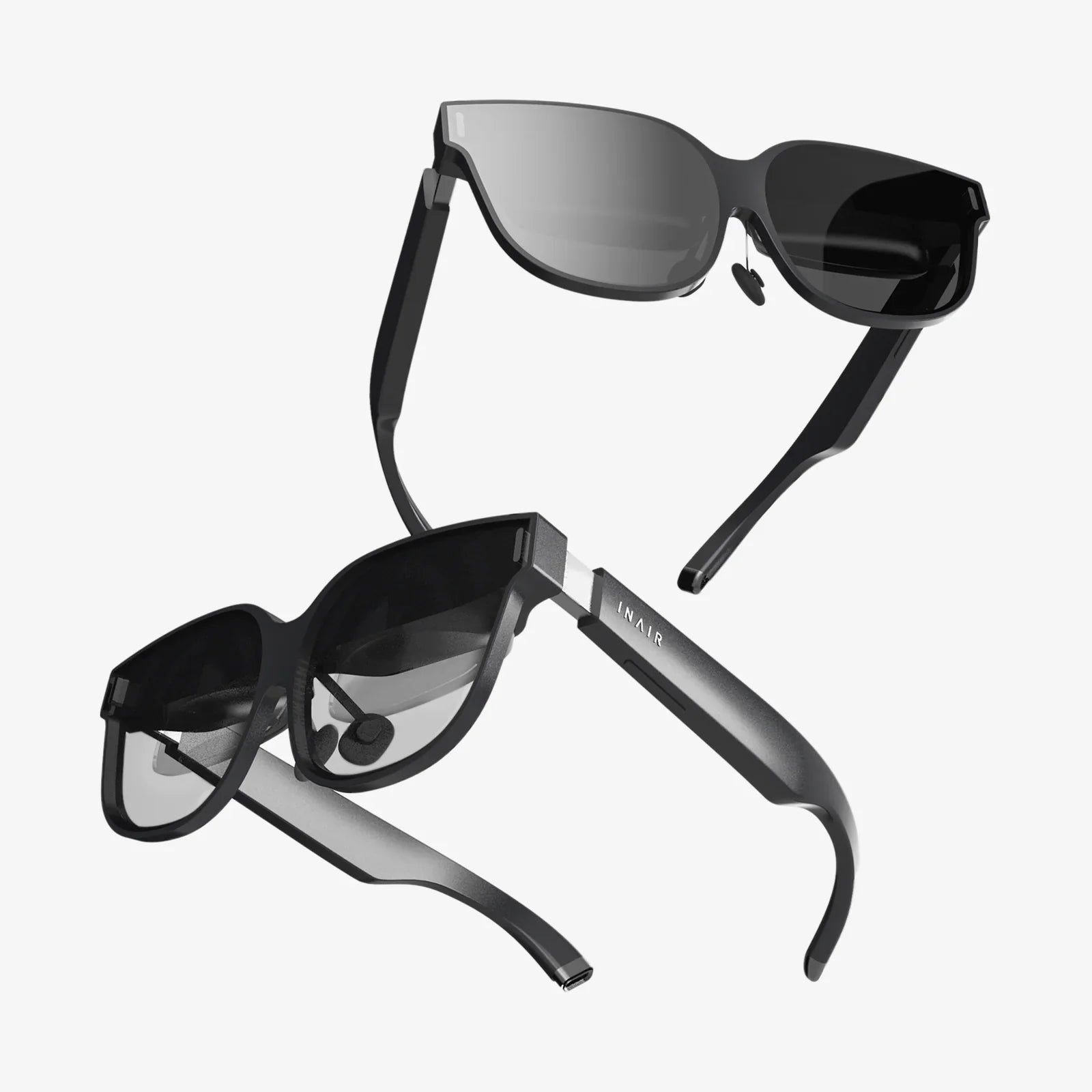
Imagine a world where digital information doesn’t just live on a screen but is seamlessly woven into the fabric of your reality. Directions float on the street in front of you, historical facts pop up as you gaze at a monument, and a virtual dinosaur roars in your living room. This is the promise of augmented reality (AR), a technology poised to revolutionize how we work, learn, and play. But a critical battle is brewing over the gateway to this new dimension: will you access it through the powerful computer already in your pocket, or will you strap on a dedicated pair of high-tech glasses? The choice between augmented reality through a phone and through a wearable device is more than a matter of convenience; it’s a decision that will shape the very evolution of this transformative technology.
The Democratized Portal: Augmented Reality Through Your Smartphone
For the vast majority of people, their first and only experience with AR has been through their smartphone. This is no accident. The modern smartphone is a technological marvel, a convergence of precisely the components needed for compelling AR: high-resolution cameras, powerful processors, sophisticated inertial measurement units (IMUs), GPS, and a vibrant, tactile screen.
The primary advantage of phone-based AR is its unparalleled accessibility and low barrier to entry. With over six billion smartphones in use globally, the audience for AR applications is virtually limitless. There is no need for a significant additional hardware purchase. A user can simply download an app and instantly experiment with AR, from trying on virtual makeup to visualizing new furniture in their home. This massive installed base is a powerful lure for developers, encouraging them to create a rich and diverse ecosystem of applications across gaming, social media, retail, and education.
Furthermore, the familiarity and intuitive nature of a smartphone cannot be overstated. Users already understand how to hold, point, and interact with their devices. The interaction model—tapping, swiping, and pinching on a screen—is second nature. This eliminates the steep learning curve often associated with new technology, allowing the AR experience itself to take center stage rather than the mechanics of controlling it.
However, this approach comes with significant ergonomic and experiential compromises. The most glaring is the "handheld problem." AR through a phone is an active, not a passive, experience. It requires a user to consciously hold up their device, perpetually framing the world through a small window. This is fatiguing for extended use and effectively cuts the user off from their environment, as one hand and their visual attention are monopolized by the device. It creates a divide between the user and the augmented world, breaking the promised immersion.
Technologically, phone-based AR is also constrained by its sensor limitations. While adequate for many applications, the phone’s single camera and IMU struggle with precise depth sensing and environmental understanding compared to the advanced sensor arrays (LiDAR, depth sensors, dedicated SLAM cameras) found on dedicated wearables. This can lead to digital objects that don’t occlude correctly behind real-world objects or that jitter and drift, undermining the illusion of a stable augmented layer.
The Immersive Ideal: Augmented Reality Through Wearables
Wearable AR, typically in the form of smart glasses, represents the purist’s vision for the technology. The goal is to make the augmentation persistent, contextual, and hands-free, effectively becoming an integrated layer of the user’s perception.
The most profound benefit of a wearable device is true immersion and seamless integration. By projecting images directly onto the user’s retina or through transparent waveguides, digital content appears to exist in the world at a fixed point in space. Your hands are free to interact naturally with both the physical and digital elements. This enables a continuous experience where information is available at a glance, without the deliberate act of pulling out a phone. It transforms AR from a novelty app into a constant, useful companion for tasks like navigation, receiving notifications, or accessing real-time data during complex repairs.
Dedicated wearables are engineered from the ground up for AR, allowing for a far more advanced and robust sensor suite. They often feature outward-facing cameras for simultaneous localization and mapping (SLAM), depth sensors for accurate object placement, and eye-tracking cameras for intuitive interaction and dynamic focus. This superior sensing allows for more complex and stable interactions. A digital character can convincingly walk behind your real-world couch, and a virtual interface can be locked to a wall without wobbling.
Wearables also unlock new, more natural modalities of interaction. Instead of touchscreens, users can employ voice commands, hand gestures tracked by onboard cameras, or even subtle eye movements. This multimodal approach feels more like interacting with the world and less like operating a computer, further reducing the friction between the user and the digital content.
Yet, the wearable path is fraught with its own immense challenges. The foremost is hardware and form factor
This leads directly to the second major challenge: cost and market adoption. High-end AR wearables are currently niche, professional-grade tools with price tags to match. This limits their user base, which in turn discourages widespread consumer application development, creating a chicken-and-egg problem. Without a mass market, it’s difficult to justify the investment needed to drive down costs and improve the technology for the mass market. Beyond the surface-level comparison lies a deeper technical struggle that defines the capabilities and limitations of each platform. Processing Power and Thermal Management: Sophisticated AR requires immense computational power for tasks like environmental mapping, object recognition, and rendering high-fidelity 3D graphics. Smartphones benefit from their relatively large form factor, which allows for powerful chipsets and passive cooling. A wearable device, constrained by size and weight, faces a severe thermal and power budget. Solutions often involve splitting processing between the device itself (on-device) and the cloud (off-device), but this introduces latency and requires a constant, high-bandwidth connection, which isn’t always available. The Perpetual Battle: Battery Life: This is arguably the biggest practical constraint. AR is notoriously power-hungry, activating the camera, sensors, GPS, and screen or display continuously. A smartphone running a demanding AR app can see its battery drained in under an hour. Wearables face an even more dire situation, needing to last a full day on a battery small enough to fit in an eyeglass frame. Breakthroughs in battery technology and extreme power efficiency are prerequisites for wearable AR’s success. The Unwritten Rule: Social Acceptance: Technology doesn’t exist in a vacuum; it exists in society. Walking around holding up your phone is generally accepted, if a bit awkward. Walking around with a camera on your face, however, raises significant concerns about privacy, recording, and social etiquette. The success of wearable AR is contingent on it becoming invisible—both technologically and socially. The design must be fashionable and non-intrusive, and it must incorporate clear signals (like a "recording" light) to alleviate the anxiety of those around the user. The narrative of phone vs. wearable is not necessarily a winner-take-all battle. Instead, we are likely witnessing a transitional phase. The smartphone has acted as a crucial stepping stone, popularizing the concept of AR, funding developer innovation, and teaching us what users truly want and need from these experiences. In the near term, we will see a symbiotic relationship where the smartphone acts as the processing hub or "brain" for a simpler, more display-focused wearable. This hybrid model leverages the power and battery of the phone while providing the glasses with a more immersive form factor. This bridges the gap while standalone wearable technology continues to mature. Looking further out, the trajectory is clear. As the fundamental constraints of battery, processing, and miniaturization are overcome, the wearable form factor will inevitably become the dominant paradigm. It is simply the best vessel for delivering on the core promise of augmented reality: a world where the digital and physical coexist seamlessly, enhancing our capabilities without isolating us in a screen. The device in your pocket opened the door to a new world, but it’s the device on your face that will finally allow you to step through.The Technical Chessboard: Processing, Battery, and Social Acceptance
Glimpsing the Horizon: A Convergent Future
Share:
Digital Electronics Products: The Unseen Revolution Reshaping Our Daily Lives
Copilot AI Computer: Your Digital Partner in the Modern World