


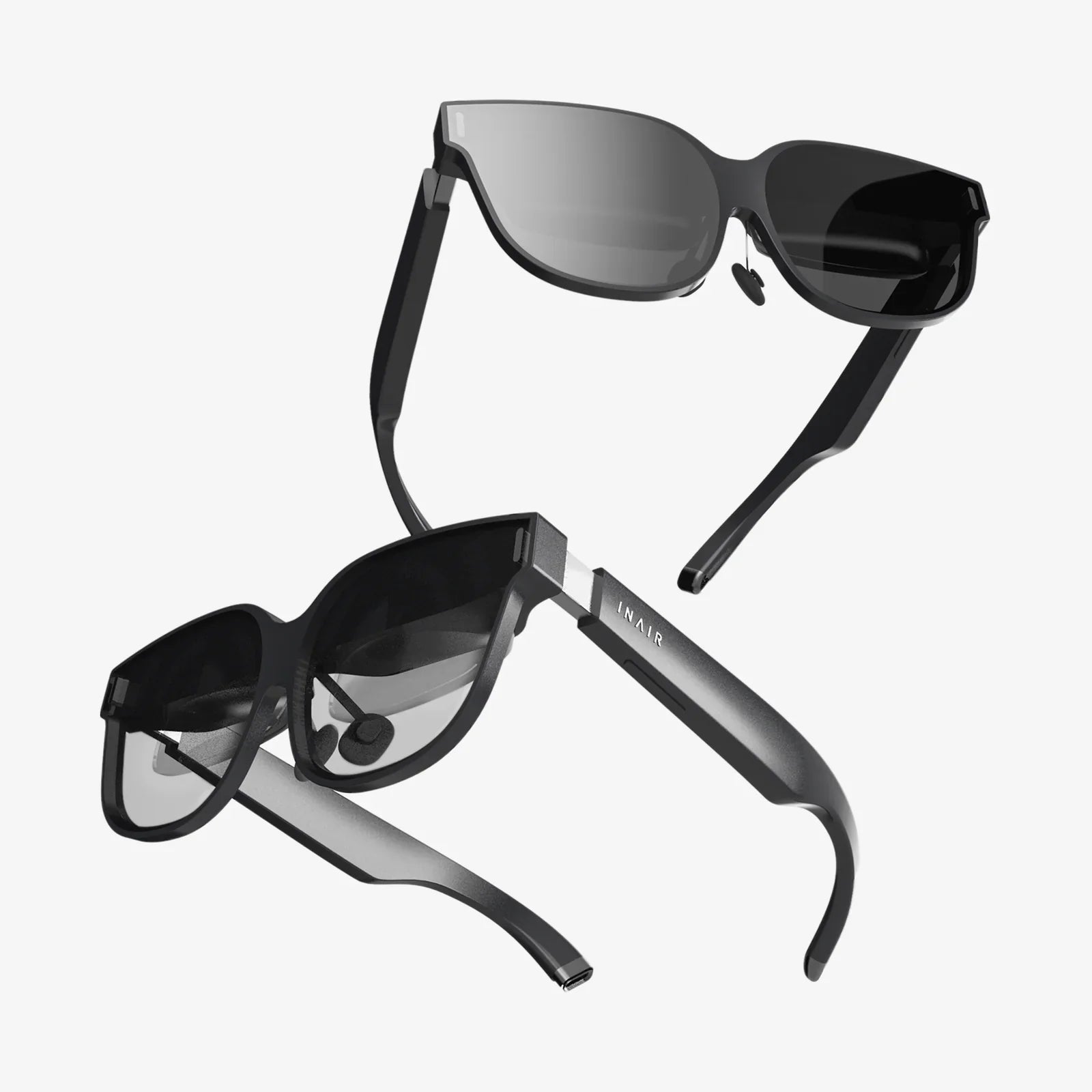
Imagine a world where digital information doesn't just live on a screen but is seamlessly woven into the fabric of your physical reality. You look at a complex machine and see animated repair instructions overlaid directly onto its components. You walk through a historic city and watch ancient structures rebuild themselves before your eyes. You try on a new piece of furniture, visualizing its exact fit and color in your living room before you buy. This is no longer the stuff of science fiction; it is the present and future being built through widespread augmented reality usage. This technology is quietly revolutionizing how we work, learn, shop, and play, offering a new lens through which to perceive and interact with our environment.
Beyond the Novelty: Defining the Augmented World
At its core, augmented reality (AR) is a technology that superimposes computer-generated perceptual information—be it visual, auditory, haptic, or somatosensory—onto the user's view of the real world. Unlike virtual reality, which creates a completely immersive digital environment, AR enhances the real world by adding a digital layer to it. This is typically achieved through devices like smartphones, tablets, smart glasses, and heads-up displays.
The magic of AR usage lies in its three core capabilities:
- Combination of Real and Virtual Worlds: It seamlessly blends digital objects with the physical environment in real-time.
- Real-Time Interaction: Users can interact with and manipulate the augmented content instantly.
- 3D Registration: Digital objects are accurately tracked and anchored to specific points in the physical space, making them appear as if they truly belong.
The Engine Room: Industrial and Manufacturing Applications
While consumer-facing filters often grab headlines, the most profound impact of augmented reality usage is happening on factory floors, in warehouses, and at remote job sites. Here, AR is solving real-world problems with immense efficiency gains.
Revolutionizing Assembly and Maintenance
Technicians equipped with AR smart glasses can see digital work instructions, schematic diagrams, and animated guidance overlaid directly onto the equipment they are servicing. This hands-free access to information drastically reduces errors, slashes training time for new employees, and improves first-time fix rates. A complex wiring diagram can be projected onto the actual panel, with step-by-step highlights guiding each connection, eliminating the need to constantly look back and forth between a physical manual and the task at hand.
Supercharging Design and Prototyping
Engineers and designers are using AR to visualize 3D models of new products at full scale within a real-world context. This allows for early detection of design flaws, ergonomic assessments, and collaborative reviews without the costly process of building physical prototypes. A team can walk around a life-size model of a new engine, inspecting it from every angle and making iterative changes in the digital realm before any metal is ever cut.
Optimizing Logistics and Warehousing
In massive distribution centers, AR is streamlining the picking and packing process. Warehouse workers wearing AR glasses can see the most efficient route through the aisles displayed in their field of view, with digital arrows guiding them to the exact shelf location. The system can also highlight the correct item and confirm the quantity, significantly speeding up order fulfillment and reducing picking errors to almost zero.
Transforming the Retail and E-Commerce Experience
The retail sector has been an early and enthusiastic adopter of consumer-facing augmented reality usage, fundamentally changing how people shop.
The "Try Before You Buy" Revolution
One of the most powerful applications is virtual try-on. Using a smartphone camera, shoppers can see how sunglasses look on their face, how a shade of paint would transform their living room wall, or how a new sofa would fit in their space. This not only enhances customer confidence and reduces purchase hesitation but also dramatically lowers return rates, a major pain point for online retailers. The ability to visualize products in a personal context bridges the gap between the intangible online catalog and the tangible physical world.
Interactive Marketing and In-Store Navigation
Brands are creating immersive AR marketing campaigns that allow users to unlock interactive content by scanning product packaging or in-store displays. Furthermore, large retail stores are implementing AR wayfinding apps that help customers navigate vast spaces to find the products they need, enhancing the overall shopping experience and reducing frustration.
A New Dimension in Healthcare and Medicine
The stakes in healthcare are incredibly high, and augmented reality usage is rising to the challenge, providing tools that enhance precision, improve outcomes, and empower patients.
Surgical Precision and Medical Training
Surgeons are beginning to use AR headsets to overlay critical information—such as a patient’s vital signs, 3D reconstructions of tumors, or the precise location of blood vessels—directly into their line of sight during procedures. This allows for minimally invasive surgery with greater accuracy and less distraction. Medical students are using AR to practice complex procedures on hyper-realistic digital holograms, gaining valuable experience in a risk-free environment.
Enhanced Patient Education and Rehabilitation
Doctors can use AR models to explain complex medical conditions and treatment plans to patients, making abstract concepts visually understandable. In physical therapy, AR games and exercises can motivate patients during repetitive rehabilitation routines, turning painful recovery into an engaging activity that encourages adherence to treatment plans.
Reshaping Education and Remote Collaboration
Augmented reality usage is breaking down the walls of the classroom and the boardroom, creating dynamic, interactive, and collaborative learning environments.
Immersive Learning Experiences
Textbook diagrams of a human heart become a beating, interactive 3D model that students can explore from the inside out. Historical events can be reenacted on a student’s desk. Complex mathematical concepts can be visualized as tangible structures. AR transforms passive learning into an active discovery process, improving engagement and knowledge retention across all age groups and subjects.
The Rise of the Virtual Workspace
Remote collaboration is elevated with AR. Instead of a flat video call, distributed teams can meet in a shared virtual space where 3D models, data visualizations, and schematics can be manipulated by all participants as if they were physically present. A expert located across the globe can see what a local technician sees and provide guidance by drawing annotations directly into the technician's field of view, effectively giving them "x-ray vision" and remote hands.
Navigating the Challenges and Ethical Considerations
Despite its immense potential, the path to ubiquitous augmented reality usage is not without significant obstacles and serious questions that society must address.
Technical and Social Hurdles
For AR to become truly mainstream, devices need to become smaller, more powerful, more socially acceptable (moving beyond clunky headsets), and offer longer battery life. There are also concerns about digital distraction and safety—walking while immersed in an AR experience could pose risks in urban environments. Furthermore, the digital divide could widen if access to advanced AR tools becomes a prerequisite for education or employment.
The Privacy Paradox
AR devices, by their very nature, are equipped with cameras and sensors that constantly scan and interpret the user's environment. This raises profound privacy concerns. Who has access to the video feed from your glasses? How is data about your home, workplace, and daily habits being collected and used? The potential for persistent surveillance and unauthorized data harvesting is a critical issue that requires robust legal and ethical frameworks.
The Blurring Line Between Reality and Fiction
As the digital layer becomes more convincing, the potential for misinformation, manipulation, and even new forms of cybercrime increases. Malicious actors could overlay false information or dangerous instructions onto the real world. The concept of "authentic" reality may become contested, requiring new forms of digital literacy to discern truth from augmentation.
The Future is Augmented: What Lies Ahead?
The trajectory of augmented reality usage points toward a future where the technology becomes as integrated into our daily lives as the smartphone is today. We are moving toward lightweight, stylish glasses that will replace our phones as the primary portal to digital information. This will give rise to the spatial web, where digital content is mapped to physical locations, creating a persistent layer of intelligence over the world.
In this future, navigation will be intuitive, with directions painted onto the street. Learning will be a continuous, contextual process, with information appearing when and where you need it. Our social interactions will be enhanced with shared digital experiences and personalized avatars. The way we work with digital data will shift from two-dimensional screens to three-dimensional holograms that we can manipulate with our hands.
The ultimate promise of augmented reality is not to escape our world, but to enrich it. It offers a powerful tool to enhance human intelligence, extend our capabilities, and deepen our understanding of the complex world around us. The challenge, and the opportunity, lies in shaping this technology to serve humanity, ensuring it amplifies our reality for the better, creating a future that is not only more efficient and productive but also more insightful, connected, and wondrous.
We stand at the precipice of a fundamental shift in human-computer interaction, one where the boundary between the digital and the physical dissolves. The question is no longer if augmented reality will redefine our daily lives, but how quickly we will adapt to its immense possibilities and navigate its profound implications. The next time you raise your smartphone, remember you're not just holding a camera—you're holding a window into a world where every surface can become a screen, every object can tell a story, and your reality is limited only by your imagination.
Share:
Technology of Augmented Reality: Overlaying a Digital World onto Our Physical Reality
What Is XR, AR, and VR? The Ultimate Guide to Immersive Technologies