


- by wangfred
Augmented Reality VR Apps: Merging Digital and Physical Realms
- by wangfred
Imagine a world where the line between the digital and the physical isn't just blurred—it's artistically erased. A world where information doesn't live on a screen in your pocket but is painted onto the very fabric of your reality, accessible with a glance, a point, or a spoken word. This is the promise and the profound power of augmented reality VR apps, a technological symphony that is quietly orchestrating a revolution in how we work, learn, play, and connect. This isn't a distant sci-fi fantasy; it's a burgeoning present, and it's poised to redefine everything we know.
To understand the unique value of augmented reality apps, we must first distinguish them from their close cousin, Virtual Reality (VR). While often grouped under the umbrella of "immersive technologies," their core philosophies differ significantly.
Virtual Reality is an exercise in substitution. It uses a head-mounted display, typically fully enclosing the user's field of vision, to block out the physical world and transport them to a completely computer-generated environment. Whether exploring a fantasy landscape, conducting a virtual meeting on Mars, or undergoing immersive training for a high-risk job, VR's power lies in its ability to create presence elsewhere.
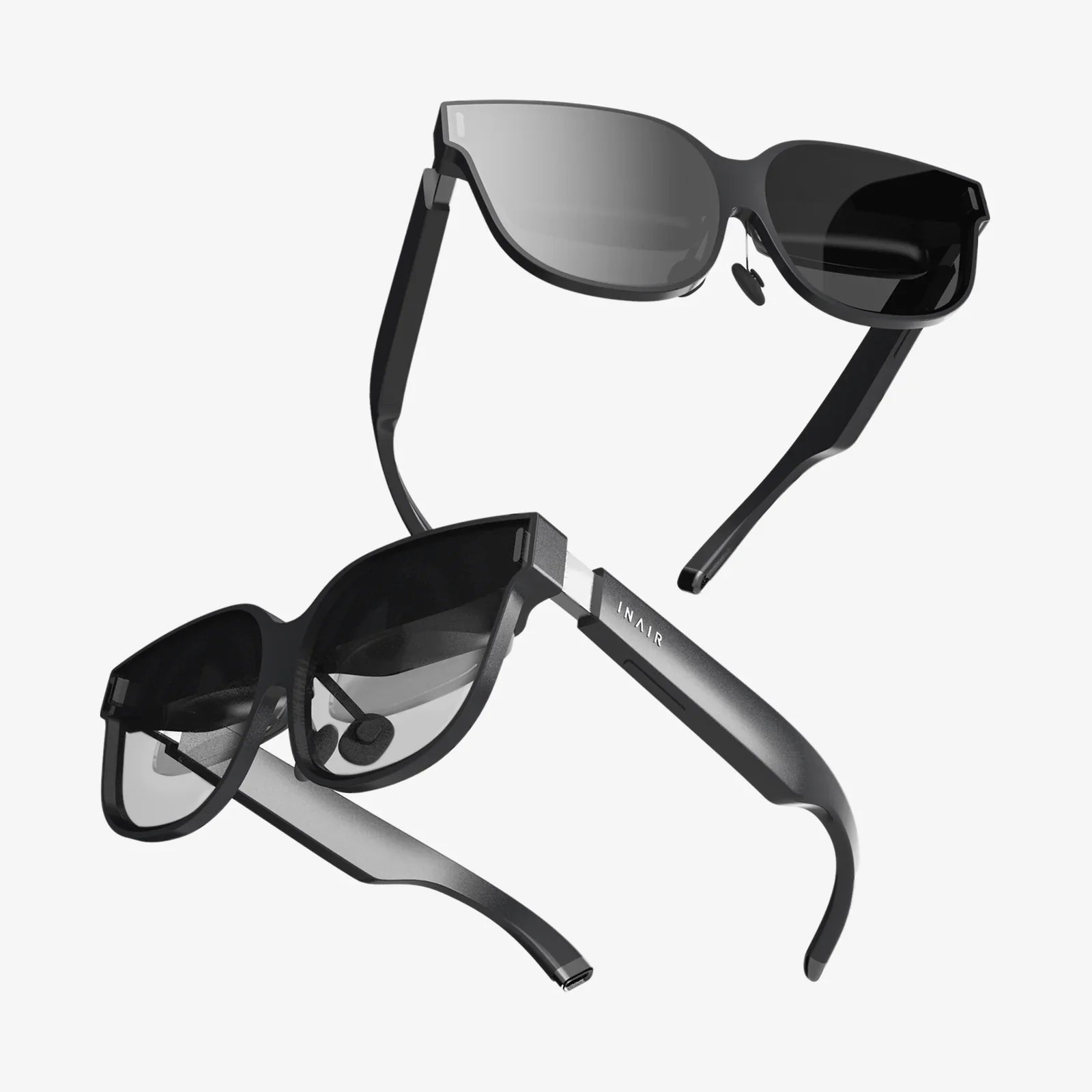
Augmented Reality, in contrast, is an exercise in augmentation. It does not seek to replace the real world but to enhance it. Through the lens of a smartphone, tablet, or, more powerfully, AR glasses or headsets, digital information—3D models, text, animations, data streams—is superimposed onto the user's view of their immediate surroundings. The real world remains the central stage, but the set pieces and actors are digitally enhanced.
The term augmented reality VR apps often refers to the growing category of applications that leverage the powerful, immersive hardware of VR systems to deliver AR experiences. These are often called "mixed reality" or "passthrough AR" experiences. By using high-resolution cameras on the outside of a VR headset to feed a live video feed of the real world to the displays inside, these devices can function as powerful AR platforms. This convergence represents the most exciting frontier, combining the full immersion of VR with the contextual relevance of AR.
The seamless magic of placing a virtual dinosaur in your living room or having a navigation arrow hover over the road ahead is underpinned by a complex orchestra of technologies working in perfect harmony.
This is the core technology that allows a device to understand its environment. Using cameras and sensors, the app scans the surroundings to identify flat surfaces (like floors and tables), edges, and unique feature points. This process, often called SLAM (Simultaneous Localization and Mapping), allows the device to both map the environment and understand its own position within it. This precise spatial awareness is non-negotiable; without it, virtual objects would drift, wobble, or fail to anchor convincingly.
Once the environment is mapped, the app must maintain the illusion. This involves relentless tracking through a combination of:
In real-time, the app must generate high-fidelity 3D graphics and composite them perfectly into the user's perspective. This requires immense processing power to handle lighting, shadows, and physics, ensuring the virtual object appears to be lit by the same sun shining through your window and casts a believable shadow on your carpet.
While consumer games often grab headlines, the most profound impact of augmented reality VR apps is happening in enterprise and professional fields, where they are solving real-world problems and driving efficiency.
Engineers and designers are using AR to visualize and interact with 3D prototypes at full scale before a single physical part is manufactured. Car designers can project a life-size model of a new vehicle into an empty studio, walk around it, and make adjustments to the digital clay. Architects can walk clients through a photorealistic 3D model of a building, overlayed onto the actual construction site, allowing for changes before the foundation is even poured. This "digital twin" paradigm is reducing waste, saving millions in prototyping costs, and drastically accelerating time-to-market.
A technician arriving to repair a complex piece of machinery no longer needs to lug around massive paper manuals or squint at a PDF on a small phone. Using AR glasses, they can see interactive schematics overlaid directly onto the equipment in front of them. Animated arrows can point to specific components, step-by-step instructions can hover next to a screw that needs tightening, and a remote expert can see what the on-site technician sees and draw digital annotations directly into their field of view to guide them. This reduces errors, cuts down on site visits, and empowers less-experienced workers to perform complex tasks.
In healthcare, the stakes are high, and the technology is rising to the challenge. Medical students are using AR to practice complex surgical procedures on virtual patients, receiving instant feedback on their technique without risk. Surgeons in the operating room can use AR headsets to view critical patient information—like MRI scans or vital signs—without looking away from the surgical field. This can improve precision and reduce cognitive load. Furthermore, AR is being used to greatly improve the accuracy of vein finding for injections and to provide therapeutic experiences for patients dealing with pain and anxiety.
The way we shop is undergoing a radical transformation, moving from guesswork to certainty.
Furniture retailers were among the first to popularize this. Apps now allow you to see how a new sofa will look and fit in your actual living room, adjusting for color and scale in real-time. The same principle applies to home decor, appliances, and even paint colors. The fashion industry is close behind, with virtual try-on for glasses, makeup, and clothing becoming increasingly sophisticated, reducing return rates and increasing consumer confidence.
Brands are moving beyond static posters and video ads to create immersive AR experiences. A movie poster can come to life, playing a trailer when viewed through a smartphone. A product on a store shelf can reveal its origin story, user reviews, or detailed specifications when scanned. This creates a memorable, interactive connection between the consumer and the product, transforming passive observation into active engagement.
Beyond the professional sphere, augmented reality VR apps are weaving their way into the fabric of our daily routines and social interactions.
Forget tilting and rotating a 2D map on your phone. The next generation of navigation uses AR to overlay giant, floating directional arrows onto the live view from your camera, showing you exactly which way to walk. It can highlight your destination building and display useful information about nearby restaurants and points of interest, all contextually placed in the world around you. This is especially powerful in dense urban environments or complex indoor spaces like airports and museums.
Education is being transformed from a passive to an active experience. History students can witness historical events unfold in their schoolyard. Biology students can dissect a virtual frog or walk through a detailed 3D model of the human heart. Astronomy apps can label constellations and planets simply by pointing a device at the night sky. This contextual, immersive learning dramatically improves retention and engagement.
The concept of the "metaverse" is deeply tied to AR. The goal is not to live in a virtual world but to bring a persistent layer of digital content and shared experiences into our real world. Friends could meet up and play a virtual board game on a real park table. Remote colleagues could collaborate around a 3D holographic model as if they were in the same room. Digital art and sculptures could be placed in public spaces for everyone to enjoy. This shared spatial canvas has the potential to redefine community and collaboration.
For all its promise, the widespread adoption of augmented reality faces significant hurdles that developers, companies, and society must address.
While smartphone-based AR is accessible, it is a compromised experience, requiring users to hold up a device. The true potential lies in wearable glasses that are socially acceptable, comfortable for all-day use, powerful, and offer a wide field of view. The challenge is packing the necessary processing power, battery life, and display technology into a form factor that people will actually want to wear. Current efforts are making rapid progress, but the "holy grail" of AR glasses—comparable to regular eyewear—is still on the horizon.
An AR device, by its very nature, is a sensor platform. It is constantly scanning and analyzing its environment, which raises profound privacy questions. Who has access to the continuous video feed of a user's life? How is spatial data about your home and workplace stored and used? The industry must establish clear, transparent, and user-centric privacy frameworks to avoid a dystopian future of constant surveillance and data exploitation.
High-quality AR experiences require powerful, and often expensive, hardware and fast, reliable data connections. There is a real risk that these technologies could exacerbate existing social and economic inequalities, creating a divide between those who can afford to access this augmented layer of reality and those who cannot. Ensuring that the benefits of AR are accessible and equitable is a critical challenge.
The trajectory is clear. The clumsy, novelties of yesterday are giving way to robust, indispensable tools for tomorrow. We are moving toward a world of always-available, contextual information—a world where the internet doesn't exist on a screen but is seamlessly integrated into our perception. The keyboard and mouse will fade in relevance, replaced by gesture, gaze, and voice as our primary interfaces with the digital realm. This shift represents a fundamental change in our relationship with technology, from something we use to something we wear and experience.
The revolution will not be televised; it will be projected onto your living room wall, displayed on your glasses, and integrated into your workflow. It will make the impossible possible, the complex simple, and the distant immediate. The fusion of our physical and digital lives through augmented reality VR apps is not just an incremental step in tech evolution; it is the foundation of a new platform that will be as transformative as the mobile phone. The question is no longer if this future will arrive, but how quickly we can adapt to its incredible potential and navigate its challenges to build a world that is not just smarter, but more intuitive, connected, and human.
Share:
Best AR VR Glasses 2025: The Ultimate Guide to the Future of Immersion
Augmented Reality Maintenance Solution: Revolutionizing Industrial Operations