


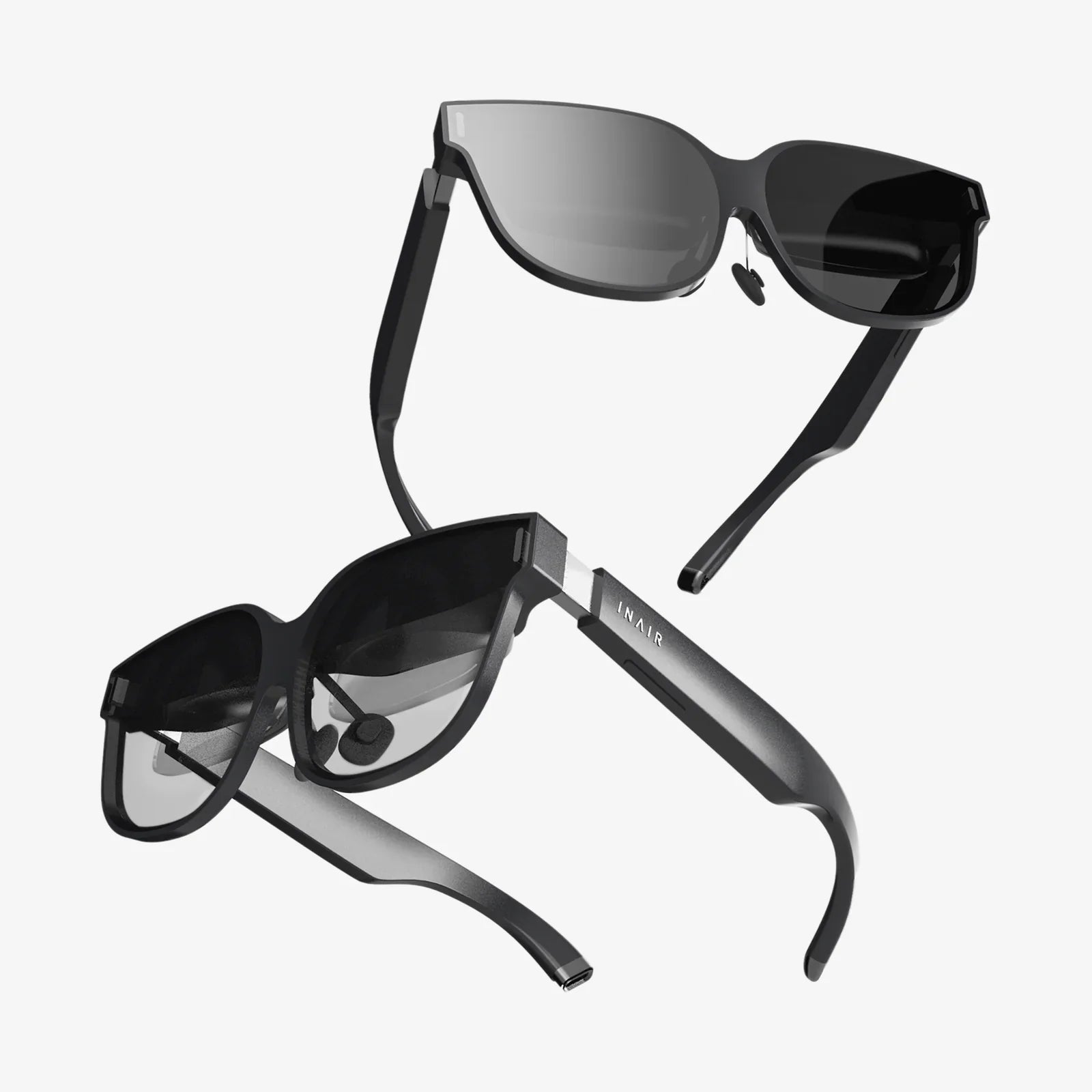
Imagine a world where your digital life seamlessly intertwines with your physical one, where information floats before your eyes, virtual colleagues sit across your real desk, and learning history means walking through a digitally reconstructed ancient Rome. This is no longer the realm of science fiction; it is the imminent future being forged by the rapid and convergent advancements in augmented reality and virtual reality. These technologies are poised to revolutionize everything from how we work and learn to how we connect and play, and the pace of change is nothing short of breathtaking. The line between what is real and what is virtual is not just thinning—it is being actively redrawn, and the implications are as profound as they are exciting.
The Great Convergence: From Separate Paths to a Unified Future
For years, AR and VR were discussed as distinct, albeit related, fields. Virtual Reality offered total immersion, transporting users to entirely computer-generated environments, often through bulky, tethered headsets. Its primary domain was entertainment and specialized training simulations. Augmented Reality, in contrast, sought to overlay digital information onto the real world, typically through smartphone screens or early-stage smart glasses, with popular applications being simple filters and game elements like those seen in mobile games.
The most significant development in recent years is the erosion of this hard boundary. The technological stacks underlying both AR and VR are converging. They share core components: advanced optics, high-resolution displays, spatial audio, inside-out tracking, and powerful onboard processors. This shared foundation is leading to the development of a new class of hardware: mixed reality (MR) headsets. These devices can function across a spectrum, from full VR immersion to rich AR overlays, all within a single, untethered device. This isn't just a minor iteration; it's a fundamental shift that unlocks a universe of new applications by acknowledging that the most powerful experiences often lie not in pure digital or pure physical realms, but in their sophisticated blend.
Hardware Revolution: The Machines Making It Possible
The dream of seamless mixed reality has been hamstrung for years by hardware limitations. The recent breakthroughs, however, are solving these historical constraints at an astonishing rate.
Seeing the Light: Breakthroughs in Display and Optics
The quest for visual fidelity is paramount. Early VR headsets suffered from the "screen door effect," where users could see the gaps between pixels, shattering the illusion of reality. Modern micro-OLED and LCD displays now offer resolutions so high that the virtual world appears crisp and lifelike. Furthermore, innovations in pancake lenses have dramatically reduced the size and weight of headsets, making them more comfortable for prolonged use.
For AR, the challenge is even greater: projecting bright, vibrant digital images that are visible in a sunlit environment. Waveguide technology, which uses microscopic structures to bend light into the eye, and Laser Beam Scanning (LBS) are emerging as leading solutions. These allow for sleek, glasses-like form factors that can superimpose convincing holograms onto the real world without blocking the user's natural view.
Mapping the World: The Rise of Spatial Computing
A headset must understand its environment to place digital objects convincingly within it. This is achieved through a combination of sophisticated sensors—including high-resolution cameras, depth sensors (like LiDAR), and inertial measurement units (IMUs). These sensors work in concert to create a real-time 3D map of the surroundings, a process known as simultaneous localization and mapping (SLAM).
This spatial awareness is the bedrock of compelling AR and MR experiences. It allows a virtual character to hide behind your real sofa, a digital instruction manual to snap onto a physical machine, or a virtual wall to block your path in a game. The environment is no longer a passive backdrop but an active participant in the experience.
Untethered Power: Processing and Connectivity
The shift from PC-tethered VR to standalone headsets has been a game-changer for accessibility and freedom. This is powered by custom-built chipsets, often derived from mobile processors but heavily optimized for the intense demands of spatial computing. These Systems-on-a-Chip (SoCs) integrate the CPU, GPU, and dedicated AI processors to handle tracking, rendering, and understanding the world all at once.
Looking ahead, the rollout of high-speed, low-latency 5G and future 6G networks will further augment this processing power. Complex rendering tasks can be offloaded to cloud servers, enabling photorealistic graphics and incredibly complex simulations on relatively lightweight devices, effectively creating a wireless tether to infinite computational power.
Software and Ecosystem: Building the Metaverse Brick by Digital Brick
Powerful hardware is useless without sophisticated software to drive it. The development of robust platforms and creation tools is democratizing the building of immersive experiences.
Development Platforms and Game Engines
The widespread adoption of powerful game engines has been a massive accelerant for AR and VR development. These engines provide the foundational tools for building 3D worlds, complete with physics, lighting, and audio. Their support for AR/VR SDKs (Software Development Kits) means developers can build once and deploy across multiple device types, drastically reducing development time and complexity.
The Interoperable Dream: Open Standards and the Metaverse
A critical software development is the push toward open standards. The vision of a persistent, interconnected metaverse—a collective virtual shared space—relies on digital assets and identities being portable across different platforms and experiences. Initiatives are working to create standards for avatars, asset formats, and identity management. This interoperability is crucial for moving beyond walled-garden experiences and creating a truly unified digital layer over our physical world, where your virtual purchases and persona can travel with you from a social app to a workplace tool to a game.
Transforming Industries: Real-World Applications Today
While entertainment captures headlines, the most profound AR and VR developments are happening in enterprise and industrial sectors.
Revolutionizing the Frontline Worker
In fields like manufacturing, maintenance, and surgery, AR is providing a superpower: X-ray vision and an encyclopedic knowledge overlay. A technician wearing AR glasses can see step-by-step repair instructions superimposed directly onto the engine they are fixing, with arrows pointing to specific components. A surgeon can have a patient's vital statistics and 3D scan data visible in their periphery during an operation. This "see-what-I-see" capability also allows remote experts to guide on-site workers by drawing annotations into their field of view, collapsing geographical barriers and preserving institutional knowledge.
The Future of Education and Training
VR creates the ultimate safe-to-fail environment. Medical students can practice complex procedures on virtual patients. Aspiring mechanics can disassemble and reassemble virtual engines millions of times without cost or risk. History students can witness historical events unfold around them. This experiential learning leads to drastically improved knowledge retention and skill acquisition compared to traditional textbooks or videos. AR, meanwhile, can bring textbook diagrams to life, allowing students to interact with 3D models of the human heart or a DNA strand.
Reimagining Retail and Design
The try-before-you-buy concept is being redefined. With AR, shoppers can see how a new sofa would look in their living room, how a pair of glasses fits their face, or how a new shade of paint changes a room's ambiance—all from their smartphone or headset. In architecture and interior design, clients can don a VR headset and take a full-scale walkthrough of a building that hasn't been constructed yet, allowing for design changes before a single foundation is poured.
The Human Factor: Social Connection and the Path to Adoption
The success of any technology hinges on its social adoption. A key development area is making these technologies more intuitive, comfortable, and socially acceptable.
Beyond the Isolating Headset: Avatars and Presence
Early VR was criticized for being isolating. Today, a massive focus is on social connection. Advancements in avatar technology are moving beyond cartoonish representations to realistic, expressive digital humans driven by eye-tracking and facial tracking, capturing a user's subtle expressions to convey true emotional presence. This makes meetings in virtual boardrooms or concerts in virtual venues feel genuinely social and engaging, fostering a sense of shared space that video calls cannot replicate.
The Quest for the "Killer App" and Mainstream Comfort
The form factor of the hardware remains a barrier. The industry's holy grail is a pair of stylish, lightweight glasses that can deliver high-quality AR/VR experiences. While we are not there yet, each generation of hardware brings us closer. The "killer app"—the application that drives mass adoption—may not be a single game or product but a combination of indispensable utility. It could be the seamless integration of your digital workspace into your physical one, a revolutionary new fitness and wellness platform, or a fundamentally new way to create and consume social media that makes current smartphones feel archaic.
Navigating the New Reality: Ethical and Societal Considerations
With great power comes great responsibility. As these technologies become more woven into the fabric of daily life, they raise critical questions that society must address.
Data Privacy and Security in a Mapped World
Headsets that continuously scan and map our homes, offices, and public spaces generate unprecedented amounts of intimate data. This data is incredibly valuable and incredibly sensitive. Who owns this spatial data? How is it stored and used? Robust regulations and transparent corporate policies are urgently needed to prevent a dystopian future of perpetual surveillance and data exploitation.
The Digital Divide and Accessibility
There is a real risk that immersive technologies could exacerbate existing social and economic inequalities. If crucial services, education, and employment opportunities migrate into these spaces, ensuring equitable access becomes a matter of social justice. Developers must also prioritize accessibility from the ground up, creating experiences that are usable by people with a wide range of physical and cognitive abilities.
Blurring Realities: Psychological and Physical Effects
The long-term psychological effects of spending significant time in blended realities are not yet fully understood. How does it impact our sense of self, our memory, and our relationships with the physical world and each other? Furthermore, physical side effects like simulator sickness, eye strain, and ergonomic issues remain areas of active research and development to mitigate.
We stand at the precipice of a new era, one defined not by the devices in our pockets but by the digital layer we will perceive through intelligent glasses and headsets. The developments in augmented and virtual reality are not merely about better graphics or more immersive games; they are about rearchitecting the very interface between humanity and information. The challenges of privacy, accessibility, and psychological impact are significant, but the potential to enhance human capability, connection, and understanding is staggering. The next great leap in computing is here, and it's not on a screen—it's all around us, waiting to be unlocked.
Share:
Highest Resolution VR Headset - A New Era of Digital Realism
New VR Headset 2025: The Dawn of a Hyper-Realistic Digital Epoch