


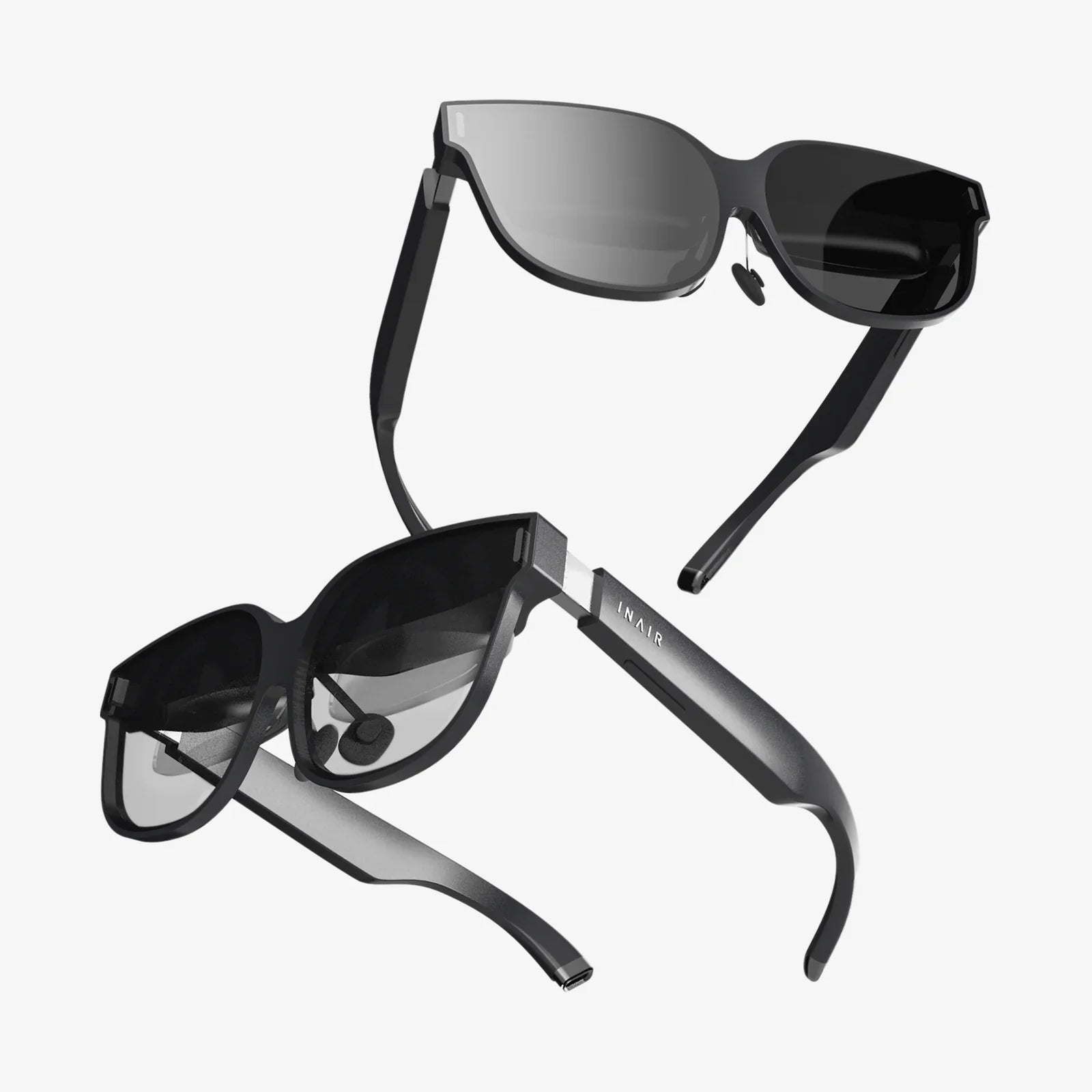
- by wangfred
Augmented Reality vs Machine Learning: The Silent War for the Future of Experience
- by wangfred
Imagine a world where your surroundings don't just inform you but actively collaborate with you—where your glasses highlight the exact engine part needing repair, guided by an invisible, intelligent mind that has already diagnosed the problem. This isn't a choice between a flashy visual overlay and a hidden algorithmic brain; it's the powerful, inevitable fusion of Augmented Reality and Machine Learning, two technologies locked in a silent war for dominance yet destined to become the ultimate partnership. The tension between what we see and what the machine knows is defining the next era of human-computer interaction, and understanding this dynamic is key to unlocking the future.
Before dissecting their interplay, we must first understand these giants on their own terms. They operate in fundamentally different realms yet share a common goal: to enhance human capability.
Augmented Reality (AR) is a technology that superimposes a computer-generated overlay—comprising images, sounds, haptic feedback, and data—onto a user's real-world view. Unlike Virtual Reality (VR), which creates a fully immersive digital environment, AR starts with the real world and enhances it. Its primary function is perceptual; it is concerned with the presentation of information in a spatially and contextually relevant manner. The core technological stack involves:
AR's value proposition is immediacy and context. It answers the question: "Based on where I am and what I'm looking at, what information is most relevant to me right now?"
Machine Learning (ML), a dominant subset of artificial intelligence, is the science of enabling computers to learn and make decisions without being explicitly programmed for every task. Its primary function is cognitive; it is concerned with the analysis of data to find patterns, make predictions, and generate insights. ML algorithms improve automatically through experience by processing vast amounts of data. Its core processes involve:
ML's value proposition is prediction and automation. It answers the question: "Based on all the data I have seen, what is most likely to happen or what is the optimal decision?"
This fundamental difference in purpose creates a clear dichotomy, often leading to the "versus" framing. We can break down their contrasting roles across several axes.
| Axis | Augmented Reality (AR) | Machine Learning (ML) |
|---|---|---|
| Primary Domain | Perception & Interface | Cognition & Analysis |
| Key Question | "Where and how should I show this information?" | "What information should I show and why?" |
| Input | Spatial data, camera feed, user location | Historical and real-time datasets |
| Output | Visual/Audio overlay in a real-world context | Prediction, classification, recommendation |
| User Experience | Interactive, immersive, and contextual | Often invisible, operating in the background |
| Core Strength | Enhancing human perception and action | Automating human reasoning and decision-making |
An AR system without ML can perfectly map a room and place a static 3D model on a table. It excels at the "how" of display. An ML system without AR can analyze a million medical scans and identify a tumor with superhuman accuracy. It excels at the "what" and "why." One is the eyes, the other is the brain. This is the source of their perceived competition: a battle for relevance in solving a problem. However, this view is myopic.
The true magic, and the real future of technology, lies not in their separation but in their symbiosis. ML provides the intelligence, and AR provides the intuitive interface for that intelligence. Together, they create systems that are greater than the sum of their parts.
A basic AR app can recognize a predefined image target. But an AR app powered by ML is transformative. Instead of being limited to a specific catalog of objects, an ML model trained on millions of images can recognize virtually any object in real-time.
Here, ML answers "what is that and what's wrong with it?" and AR answers "how do I show the technician how to fix it?"
ML thrives on personalization. It can learn a user's preferences, habits, and behaviors. AR provides the perfect canvas to deliver this personalized information contextually.
ML answers "what does this user want/need to know?" and AR answers "how and where do I present it in their immediate environment?"
The combination is revolutionizing education and training. ML can assess a user's performance in real-time, while AR provides the guided, hands-on practice.
The AR/ML synergy is not a futuristic concept; it's actively transforming industries today.
ML algorithms analyze medical imagery (MRIs, X-rays) to detect diseases with incredible accuracy. AR then takes these insights into the operating room. Surgeons can wear AR headsets that project the ML-identified tumor boundaries directly onto their field of view of the patient, essentially giving them "X-ray vision" to ensure precise excision while minimizing damage to healthy tissue.
As mentioned in the technician example, predictive maintenance powered by ML analytics on IoT sensor data, combined with AR-guided repair, is revolutionizing industrial upkeep. This synergy reduces errors, slashes training time for new workers, and aims for the holy grail of zero unplanned downtime.
ML-powered recommendation engines suggest products you'll love. AR allows you to "try them on" virtually from your home. You can see how a sofa looks in your actual living room, scaled perfectly by AR, or how a pair of glasses looks on your face, with the ML model perhaps suggesting a similar style in a different color based on your past purchases.
This powerful convergence is not without its challenges. The path forward is fraught with technical and ethical hurdles that must be navigated carefully.
The development of these technologies must be accompanied by a robust framework of ethics and regulations that prioritize human well-being over unchecked innovation.
The discourse shouldn't be about Augmented Reality versus Machine Learning, but rather Augmented Reality powered by Machine Learning. One without the other is powerful but incomplete. AR without intelligence is a hollow spectacle, a puppet without a puppeteer. ML without a intuitive interface is a genius trapped in a black box, its insights inaccessible in the moments we need them most. Together, they form the backbone of a new paradigm of computing, one that moves beyond screens and keyboards to weave intelligence directly into the fabric of our physical lives. The next time you see a digital arrow on the street guiding your way, remember—it's not just pointing a direction; it's the visible tip of a vast, intelligent iceberg, a glimpse into a future where our environment doesn't just house us, but understands and assists us in ways we are only beginning to imagine.