Imagine a world where the barriers between the Deaf and hearing communities simply melt away, where language is no longer a hurdle but a bridge, built not of concrete and steel, but of light and data. This is the promise held within the convergence of two of the most exciting technological frontiers of our time: Augmented Reality (AR) and Virtual Reality (VR), specifically engineered for American Sign Language (ASL). This isn't just a tale of competing gadgets; it's a story of human connection, redefining accessibility, and empowering a vibrant linguistic community through immersive digital experiences.
Demystifying the Realms: AR and VR Defined
Before we delve into their profound implications for ASL, it's crucial to establish a clear understanding of these two distinct, though often conflated, technologies.
Virtual Reality (VR) is the technology of complete immersion. By wearing a headset, the user is visually and audibly transported to a completely computer-generated environment. The physical world is replaced entirely. You can find yourself standing on the surface of Mars, exploring the depths of the ocean, or sitting in a perfectly simulated classroom. The key principle is isolation from your immediate surroundings and immersion into a new one.
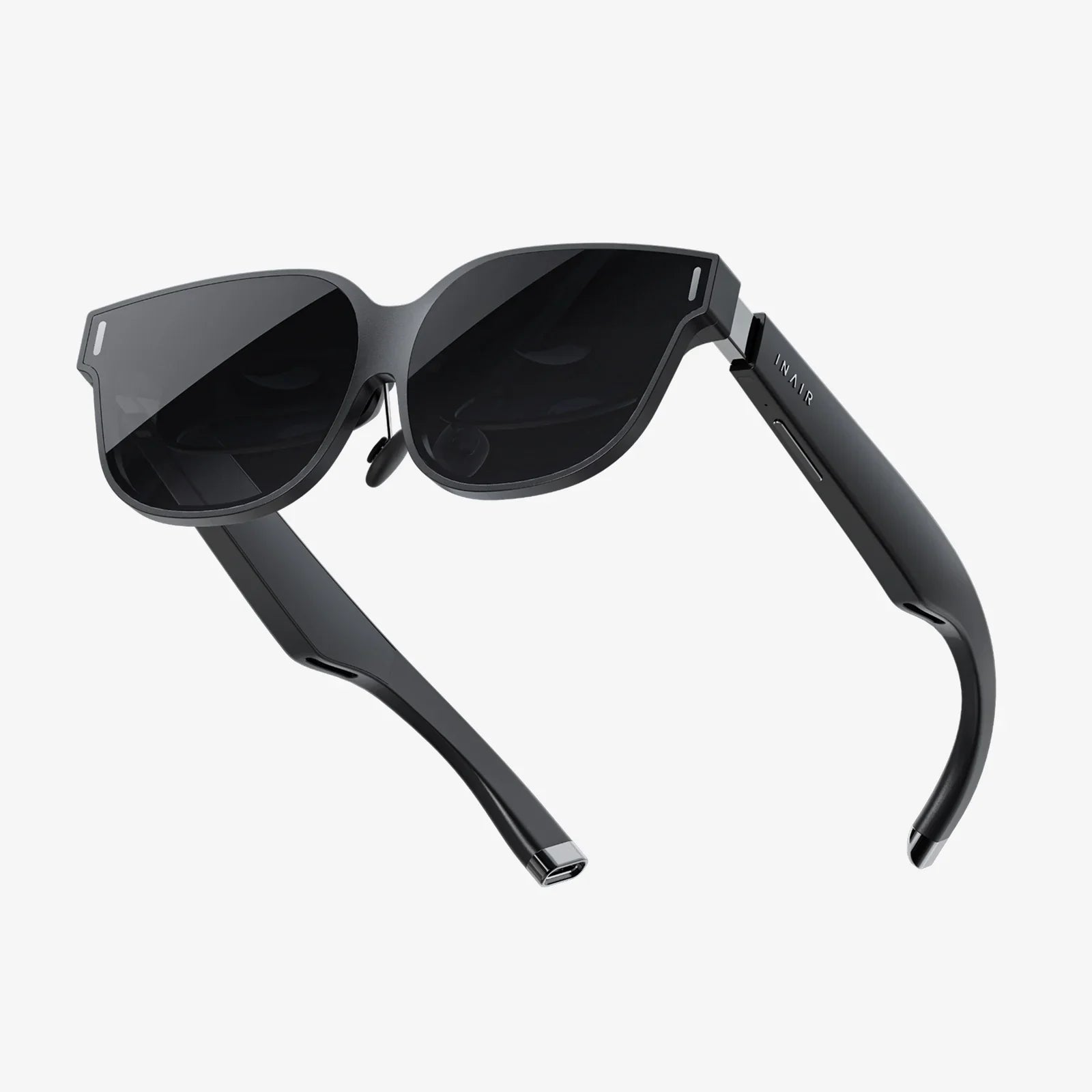
Augmented Reality (AR), on the other hand, does not seek to replace the world but to enhance it. AR overlays digital information—images, text, 3D models—onto the user's view of their real-world environment through a device. This device can be a smartphone, a tablet, or, more effectively, a pair of smart glasses. The digital elements appear to coexist with the physical world. Think of popular mobile games that placed fantastical creatures in your local park or navigation arrows superimposed on the street in front of you. The key principle here is integration and contextual enhancement.
The Unique Nuances of American Sign Language
To appreciate why these technologies are so revolutionary, one must understand that ASL is not simply English conveyed through hand gestures. It is a complete, natural language with its own complex grammar, syntax, and nuances. It is a profoundly visual-spatial language.
-
Manual Parameters: This includes handshape, movement, palm orientation, and location.
-
Non-Manual Signals: Perhaps the most critical and often overlooked aspect by hearing people, these include facial expressions, eyebrow movement, eye gaze, head tilts, and body shifts. These signals provide grammatical context, such as denoting a question versus a statement, and convey tone and emotion.
-
Spatial Grammar: Signers set up people and objects in a signing space in front of them and can refer back to these points. The language uses this space to show relationships, directionality, and movement.
This spatial and visual richness makes ASL particularly challenging to capture and transmit accurately through traditional 2D video calls, which often flatten depth, crop important non-manual signals, and suffer from lag and low resolution—all of which can lead to significant miscommunication.
Virtual Reality: The Immersive Classroom and Social Sanctuary
VR's strength lies in its ability to create controlled, distraction-free environments perfect for deep learning and rich social interaction.
Revolutionizing Education and Practice
VR can transport a student to a virtual classroom designed from the ground up for visual learning. Imagine practicing signs with an infinitely patient, hyper-accurate virtual tutor that can provide real-time feedback on your handshape and movement. Complex linguistic concepts, like the use of signing space, can be visualized and interacted with in 3D, making them far easier to grasp than from a textbook or 2D video.
For hearing students and professionals learning ASL, VR offers safe, repeatable scenarios to practice conversations—ordering coffee, a doctor's consultation, a parent-teacher conference—without the pressure of a real-world interaction. This can drastically reduce the anxiety associated with language acquisition and build confidence.
The Promise of Expressive Social Connection
This is where VR's potential becomes truly profound. Current social platforms and video calls are poor substitutes for in-person conversation for ASL users. VR social platforms, populated by user avatars, can change this.
Advanced motion capture technology can map a user's signs, facial expressions, and body language onto their digital avatar in near real-time. This means two people across the globe can meet in a virtual space and have a conversation in ASL that captures the full breadth of their expression. The sense of presence—the feeling of actually being with another person—is powerful. It can mitigate the social isolation that sometimes accompanies hearing loss and create thriving online communities centered around ASL and Deaf culture.
Augmented Reality: The Invisible Interpreter and Contextual Guide
If VR is the immersive sanctuary, AR is the practical tool for navigating the real world. Its power is in providing contextual information without removing the user from their environment.
Real-Time Interpretation Overlay
The most direct application for AR is real-time captioning and sign language interpretation. Imagine a Deaf individual attending a university lecture or a business conference. Through a pair of lightweight AR glasses, they could see a real-time transcript of the speaker's words floating in their field of view. More advanced systems could render a virtual ASL interpreter in the corner of their vision, translating the spoken content seamlessly.
This technology would empower individuals to participate fully in events without the logistical challenge and potential stigma of arranging for a human interpreter to be physically present. The assistance is personal, immediate, and unobtrusive.
Enhancing Daily Navigation and Interaction
AR's utility extends far beyond interpretation. Navigation arrows could be superimposed onto the street to guide a user to their destination. At a grocery store, AR could highlight products on a shelf that are on sale or align with a dietary restriction. In a museum, exhibits could come alive with signed explanations from a virtual guide.
For language learning in the wild, AR could label objects in the environment with their corresponding ASL sign, creating an always-on learning opportunity. This contextual, just-in-time information layer seamlessly bridges the digital and physical worlds, making everyday life more accessible and informed.
The Critical Showdown: AR vs. VR for ASL Applications
Choosing between AR and VR is not about declaring one superior; it's about matching the technology to the specific need.
| Factor |
Virtual Reality (VR) |
Augmented Reality (AR) |
| Primary Environment |
Fully digital, simulated world |
Enhanced real world |
| Ideal For |
Deep learning, practice, socializing, immersive experiences |
Real-world navigation, live translation, contextual information |
| Social Interaction |
High (through expressive avatars in shared virtual spaces) |
Medium (supplements real-world interaction but doesn't replace it) |
| Mobility & Safety |
Low (user is stationary and blind to surroundings) |
High (user remains aware and can navigate their environment) |
| Hardware |
Headsets that block out the world |
Smart glasses, smartphones, tablets |
VR excels in creating optimal conditions for focused learning and rich, expressive social connection unbounded by geography. AR excels in providing assistance and information within the context of a user's actual daily life, making the existing world more accessible.
Current Challenges and the Path Forward
Despite the exciting potential, significant hurdles remain before widespread adoption becomes a reality.
Technological Limitations: For AR, the holy grail is a pair of stylish, lightweight, and powerful glasses with all-day battery life—a feat of engineering that has not yet been consumer-ready. For both AR and VR, accurate and low-latency tracking of the intricate, rapid movements of ASL is extremely challenging. Any delay or misreading can break communication.
Accessibility and Cost: High-end VR and AR equipment is expensive, creating a risk that these empowering technologies could become a luxury, exacerbating inequality rather than alleviating it. The technology must be affordable and comfortable for long-term use.
The Human Element - Cultural Considerations: Technology must be developed with the Deaf community, not just for it. This is paramount. Solutions must be culturally competent, respecting the linguistic nuances of ASL and the identity of Deaf culture. The goal should be to empower and connect, not to fix or isolate. There is also a valid concern that an over-reliance on automated translation could potentially diminish the demand for and value of skilled human interpreters in certain contexts.
The path forward requires collaboration between engineers, linguists, designers, and the Deaf community. Investment in research and development must prioritize accuracy, affordability, and cultural sensitivity.
The dialogue between Augmented Reality and Virtual Reality is not a battle for supremacy. In the context of American Sign Language, they are two sides of the same coin, two powerful brushes painting a new future for accessibility. VR builds new worlds where ASL can thrive without constraints, while AR weaves a supportive digital fabric into the world we already inhabit. Together, they hold the key to dismantling communication barriers, fostering deeper understanding between communities, and unlocking the full, expressive power of a visual language in a digital age. The hands that shape this future will be both human and digital, working in concert to create a world that truly listens, not just with ears, but with eyes.


Share:
How to Use VR Headset with Android: The Ultimate Immersive Guide
Extended Reality Statistics: The Definitive Data on the XR Revolution