


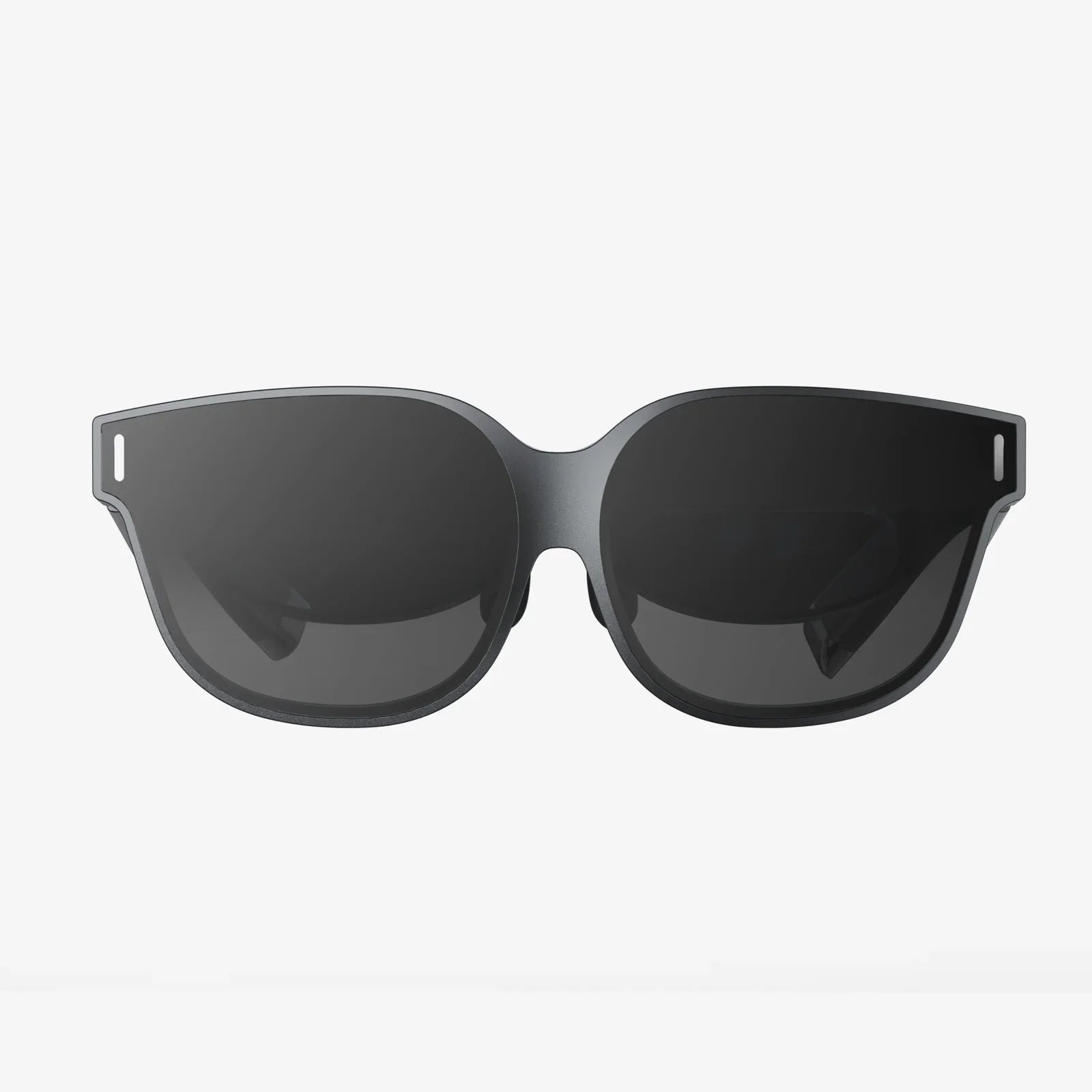
Imagine a world where information doesn’t live on a screen in your hand but is seamlessly painted onto the fabric of your reality. Where directions appear as a glowing path on the sidewalk before you, where the name and story of a colleague you just met float discreetly beside their face, and where a complex engine repair is guided by holographic arrows and instructions overlaid on the machinery itself. This is the promise, and increasingly the reality, of augmented reality wearable electronics. This technological convergence is not merely an incremental step in gadget evolution; it represents a fundamental shift in the human-computer interface, poised to dissolve the barrier between the digital and the physical and redefine our perception of the world around us.
The Confluence of Vision and Technology
At its core, augmented reality (AR) is the real-time integration of digital information with a user's environment. Unlike virtual reality (VR), which creates a completely artificial experience, AR enhances the real world by superimposing computer-generated perceptual information onto it. Wearable electronics provide the vessel for this enhancement, moving computing power from our desks and pockets directly onto our bodies, and most importantly, into our field of vision. The magic of AR wearables lies in a sophisticated symphony of components working in perfect harmony.
Advanced optical systems, like waveguide combiners and micro-displays, project digital images directly into the user's eye, aligning them with the real world. A suite of sensors—including high-resolution cameras, inertial measurement units (IMUs), depth sensors, and LiDAR scanners—constantly maps the environment, understanding its geometry, surfaces, and lighting. This spatial mapping is processed by powerful, miniaturized chipsets that perform simultaneous localization and mapping (SLAM), anchoring digital objects persistently and accurately in physical space. All of this is powered by compact yet enduring battery technology, making untethered, all-day use an achievable goal.
Transforming the Industrial and Medical Landscapes
While consumer applications often capture the public imagination, the most profound and immediate impact of AR wearables is occurring in enterprise and professional settings. Here, the technology is solving real-world problems, boosting efficiency, enhancing safety, and reducing errors.
The Future of Work is Overlaid
In manufacturing and field service, AR wearables are revolutionizing complex tasks. A technician repairing a sophisticated piece of equipment can see a digital twin of the machinery, with animated step-by-step instructions overlaid directly onto the components they are handling. They can access schematics hands-free, stream a live video feed to a remote expert who can annotate their view with guidance, and instantly identify parts using object recognition. This reduces downtime, minimizes training requirements, and drastically cuts error rates. For logistics and warehouse operations, workers equipped with AR smart glasses can see optimal picking routes, instantly locate items with visual cues, and verify orders without consulting a handheld scanner, streamlining the entire supply chain.
A New Vision for Healthcare
The healthcare sector stands to benefit enormously. Surgeons can use AR wearables to visualize critical patient data, such as heart rate and blood pressure, without looking away from the operating field. More advanced applications allow for the projection of 3D reconstructions from CT or MRI scans directly onto a patient's body, providing an “X-ray vision” effect that enhances precision during procedures. For medical training, students can interact with detailed, life-size holograms of human anatomy, and for patients, AR can provide innovative physical therapy guides or help those with low vision navigate their surroundings more confidently.
The Social and Consumer Realm: A Double-Edged Sword
The integration of AR wearables into daily social life presents a fascinating array of possibilities and significant challenges. The concept of the “metaverse”—a persistent network of shared 3D virtual spaces—is intrinsically linked to AR. Wearables will be the primary portal, allowing users to place persistent digital art in their homes, play immersive games that transform their living room into a battlefield or a puzzle room, and interact with virtual social avatars of friends who are physically elsewhere.
However, this always-on, digitally augmented existence raises critical questions. The issue of privacy becomes paramount. Devices with always-watching cameras and microphones continuously scanning environments could lead to unprecedented levels of data collection. The societal norms around recording and displaying information in public will need to be renegotiated. The “attention economy” could reach a new extreme, with digital notifications and content constantly competing for our focus against the real world. There is a genuine risk of digital overload and a further diminishment of present-moment awareness. Furthermore, the digital divide could evolve into a perceptual divide, where a socio-economic class with access to AR information holds a significant advantage over those without.
Overcoming the Hurdles to Ubiquity
For AR wearables to transition from niche professional tools to mainstream consumer devices, several formidable hurdles must be cleared. The current generation of devices, while impressive, often faces a trade-off between performance, form factor, and battery life. The ideal consumer AR glasses must be as lightweight, comfortable, and socially acceptable as regular eyeglasses. This requires breakthroughs in nano-optics, battery density, and thermal management.
Beyond hardware, the software and connectivity ecosystem is just as crucial. Ultra-reliable, high-bandwidth, low-latency wireless networks like 5G and eventually 6G are essential for streaming rich AR content and enabling real-time cloud processing and multi-user experiences. Finally, and perhaps most challengingly, we need to develop intuitive and natural user interfaces. Relying on hand gestures or voice commands can be inefficient or socially awkward. The holy grail is a seamless neural interface, but until then, developers must create interaction models that feel effortless and enhance, rather than interrupt, our natural behavior.
The Road Ahead: A Blended Future
The evolution of augmented reality wearable electronics points toward a future of contextual and ambient computing. Our devices will become increasingly aware of our surroundings and our intentions, providing information and functionality precisely when and where it is needed, then receding into the background. They will act as intelligent assistants, language translators, memory aids, and creative tools, all integrated into our natural perception.
We are moving toward a world where the question will not be whether to use technology, but how to best blend it with humanity to augment our innate abilities. The potential to enhance education, expand creativity, bridge cultural gaps, and solve complex problems is staggering. The path forward requires not just technological innovation, but careful and inclusive consideration of the ethical, social, and psychological implications of this powerful new layer of reality. The screen is fading, and the world itself is becoming the interface. The age of augmented humanity is dawning, and it will change everything.
This isn't just about smarter glasses; it's about crafting a new lens through which we will all see, understand, and interact with the universe. The boundary between atoms and bits is blurring, and the resulting fusion will unlock human potential in ways we are only beginning to imagine. The next great platform for human experience isn't a device you hold—it's the world you already live in, waiting to be unlocked.
Share:
3D Spatial Display The Future of Visual Technology is Here and It's Volumetric
AI-Powered App Developers Are Reshaping the Entire Mobile Ecosystem