


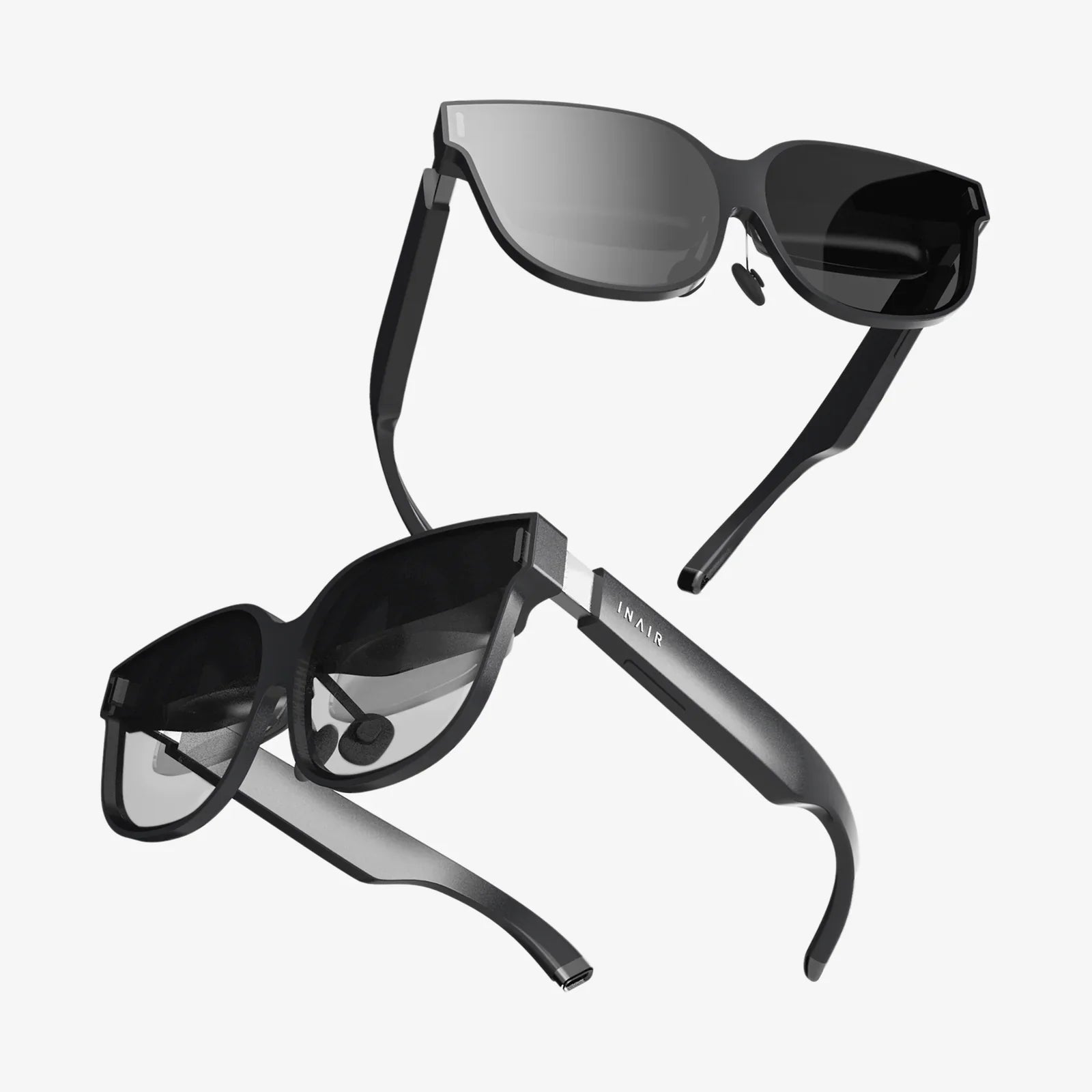
Imagine a world where information doesn’t live on a screen in your hand, but is seamlessly woven into the very fabric of your perception. Where directions appear as a glowing path on the sidewalk, a colleague’s avatar joins your meeting from across the globe as if sitting across the table, and the history of a landmark unfolds before your eyes as you gaze upon it. This is the promise, and the impending reality, of the augmented reality wearable eye display—a technology not merely vying for a place in your pocket, but for a permanent residence in your field of vision, forever altering the human experience.
Beyond the Screen: Defining the Paradigm Shift
The fundamental leap of an augmented reality (AR) wearable eye display is its move away from the mediated experience of traditional computing. For decades, we have interacted with digital information through a screen—a distinct rectangle that serves as a window into another world. We must look at it, shifting our attention away from our physical surroundings. The AR eye display shatters this paradigm. It aims to make the digital layer an innate, contextual, and immediate part of our reality. It’s not about looking at a device; it’s about the device enhancing what you are already looking at.
This is achieved through a sophisticated symphony of hardware. Miniaturized projection systems, often using waveguides or holographic optical elements, paint digital images directly onto the user’s retina. Advanced sensors, including LiDAR, depth sensors, and high-fidelity cameras, continuously scan the environment to understand spatial geometry, surfaces, and objects. Powerful onboard processors, fueled by increasingly efficient chipsets, act as the brain, processing this sensor data in real-time to perfectly align and anchor digital content to the physical world. All of this is packaged into a form factor designed to be worn all day, moving from a conspicuous gadget to an unobtrusive, even fashionable, accessory.
The Engine Room: How the Magic is Woven
The illusion of seamless augmentation rests on several critical technological pillars. Failure in any one of them breaks the immersion and utility of the experience.
Visual Fidelity and Photonics
The challenge is immense: project bright, high-resolution, full-color images that can be seen clearly in diverse lighting conditions, from a dark room to direct sunlight. Early headsets struggled with a narrow field of view, making digital objects feel like they were viewed through a mail slot. Modern waveguides—thin, transparent glass or plastic substrates with etched nanostructures—guide light from a micro-display to the eye, allowing for wider fields of view and slimmer designs. The holy grail is achieving "visual pass-through" so perfect that the digital overlay is indistinguishable from reality, with no lag, no screen-door effect, and perfect occlusion (where a virtual cup can convincingly hide a real book behind it).
Spatial Mapping and Persistence
For digital content to feel real, it must understand and respect the physical world. This is the role of simultaneous localization and mapping (SLAM) algorithms. Using data from sensors, the device constructs a precise 3D map of the environment on the fly. This allows a virtual character to walk behind your real sofa, or a digital sticky note to stay pinned to your physical refrigerator, even if you leave the room and come back hours later. This concept of persistence is crucial; the device remembers the world it mapped, creating a persistent digital layer over our physical spaces.
Intuitive Interaction
How do you interact with a interface that has no physical form? The clumsy controllers of VR have no place in the fluidity of AR. The goal is a shift to implicit, natural interaction paradigms. This includes:
- Eye-Tracking: Simply looking at an interface element to select it, enabling incredibly fast and effortless navigation.
- Hand Tracking: Using cameras to track finger movements and gestures, allowing you to pinch, grab, and manipulate virtual objects as if they were there.
- Voice Commands: A ubiquitous and powerful tool for complex commands and summoning assistants.
- Neural Interfaces (Emergent): Research into non-invasive methods to detect neural signals could eventually lead to control via thought alone.
Transforming Industries: The Professional Frontier
While consumer applications capture the imagination, it is in enterprise and industrial settings that AR wearables are already proving their immense value, solving real-world problems and boosting efficiency.
The Industrial Metaverse on the Factory Floor
Imagine a technician tasked with repairing a complex, unfamiliar piece of machinery. Instead of juggling a physical manual or a tablet, digital instructions are overlaid directly onto the equipment. Animated arrows highlight the specific bolt to turn, torque values float next to it, and a remote expert can see what the technician sees and draw annotations directly into their field of view to guide them. This reduces errors, slashes training time, and minimizes downtime, representing billions in saved costs for manufacturing, energy, and aerospace sectors.
Revolutionizing Design and Medicine
Architects and engineers can walk through full-scale 3D models of their designs before a single foundation is poured, identifying spatial issues and experiencing the flow of a building in a way blueprints can never convey. In medicine, surgeons can have patient vitals, MRI scans, and critical data visualized in their periphery during procedures, maintaining focus without looking away. Medical students can practice complex surgeries on detailed holographic anatomies, accelerating learning in a risk-free environment.
Weaving AR into the Social Fabric: The Consumer Horizon
The long-term vision is for AR wearables to become as ubiquitous as smartphones, fundamentally changing how we socialize, learn, and navigate daily life.
The Death of Distance and New Social Norms
Remote communication will evolve from flat video calls into shared spatial experiences. Instead of seeing a grid of faces on a screen, you could have life-sized, photorealistic avatars of friends or family sitting in your living room, watching a movie with you on your virtual screen, or touring a museum together from across the world. This has the potential to profoundly combat loneliness and reshape our concept of presence. However, it also raises new questions of etiquette. Is it rude to have a private AR notification pop up while talking to someone in person? How do we manage attention when we are constantly straddling two realities?
Contextual Computing and the Invisible Interface
The device will act as a contextual genius. Walk past a restaurant, and its menu and reviews subtly appear. Gaze at a foreign language sign, and it instantly translates. Forget a name at a party? It might discreetly prompt you. This creates a world of infinite, immediate information, but it also demands a new level of trust in the algorithms curating our reality. The concept of search will evolve from something you actively do to something that happens proactively based on what you see and hear.
The Thorny Path: Ethical and Societal Challenges
This powerful technology does not arrive without significant risks and dilemmas that society must grapple with urgently.
The Privacy Apocalypse
An always-on, internet-connected camera worn on your face is arguably the most intimate surveillance device ever conceived. The potential for data collection is staggering: everything you look at, how long you look at it, your biometric responses, the people you meet, the places you go. Who owns this data? How is it used? The risk of corporate surveillance for hyper-targeted advertising, or government surveillance for social control, is unprecedented. Robust, forward-thinking regulation and transparent data policies are not optional; they are a prerequisite for public adoption.
Reality Ownership and Digital Vandalism
If we all share a persistent digital layer over our cities, who gets to control it? Could a public park be littered with obstructive virtual advertisements? Could your home be virtually "tagged" with offensive graffiti by others that only some people can see? The fight over digital real estate could become as contentious as physical urban planning. Concepts of digital property rights and community standards for the AR cloud will need to be established.
The Attention Economy's Final Frontier
If we thought smartphones were distracting, AR wearables represent the ultimate battleground for our attention. With notifications and information constantly in our periphery, the ability to be present in the un-augmented moment could become a rare luxury. The risk of creating two distinct classes of reality—one for those who can afford to "unplug" and one for those constantly bombarded by digital stimuli—is a real social concern. Cultivating digital wellness and mindfulness will be more critical than ever.
Gazing into the Crystal Ball: The Next Decade and Beyond
The current generation of devices are merely the primitive precursors to what is coming. The trajectory points toward increasingly normalized form factors—moving from glasses to eventually contact lenses or even direct retinal implants. Processing will shift from the device to the edge and cloud, leveraging 5G/6G connectivity for limitless computing power. The user interface will become more neural, moving from conscious gestures to subconscious intention.
The ultimate endpoint is the Mirrorworld—a term coined by futurist Kevin Kelly—a precise, real-time 1:1 digital copy of the entire physical world, populated with data, experiences, and people. This would be the foundational platform for the next era of human civilization, a seamless blend of atoms and bits where the line between the physical and digital is irrevocably erased.
The augmented reality wearable eye display is not just another product cycle; it is a fundamental shift in the human-computer relationship. It promises to augment our abilities, erase limitations of distance, and unlock new forms of creativity and connection. Yet, it simultaneously challenges our core concepts of privacy, reality, and self. The technology itself is inevitable. The shape of the world it creates is not. It is a canvas upon which we will paint our future, and the brush is in our hands. The question is no longer if this future will arrive, but what we will choose to build—and what we will choose to preserve—when it does.
Share:
Artificial Intelligence Summary: The Future of Information Consumption
Artificial Intelligence Tools for Business: The Ultimate Guide to Unlocking Unprecedented Growth and Efficiency