


- by wangfred
Augmented Reality Wearables News: The Invisible Revolution Reshaping Our World
- by wangfred
Imagine a world where information doesn't live on a screen in your hand, but floats seamlessly in the air around you, accessible with a glance, a whisper, or a subtle gesture. This isn't the distant future of science fiction; it's the emerging present, heralded by the latest wave of augmented reality wearables news. The race to perfect our digital sixth sense is accelerating at a breathtaking pace, promising to dissolve the barrier between the physical and the digital in ways we are only beginning to comprehend. The next computing platform isn't something you'll tap and swipe—it's something you'll wear and live within.
While consumer applications often grab headlines, the most significant and tangible impact of augmented reality wearables is currently unfolding in enterprise and industrial settings. Recent developments highlight a surge in adoption across sectors like manufacturing, logistics, field service, and healthcare. The news from this front isn't about futuristic speculation; it's about solving real-world problems with staggering efficiency gains.
On factory floors, technicians are using smart glasses to see digital work instructions overlaid directly onto the machinery they are repairing, freeing their hands and reducing errors. Warehouse workers are being guided by AR visuals to the exact shelf location for an item, optimizing pick-and-pack processes and cutting training time for new employees from weeks to days. Surgeons are collaborating with remote specialists during complex procedures, with patient vitals and 3D anatomical models visible in their field of view without ever looking away from the operating table.
The news here is a consistent narrative of return on investment. Companies are reporting double-digit percentage increases in productivity, dramatic reductions in error rates, and enhanced safety protocols. This robust enterprise foundation is crucial, as it provides the funding, real-world testing, and iterative improvement necessary to drive the technology toward a more polished and affordable consumer future.
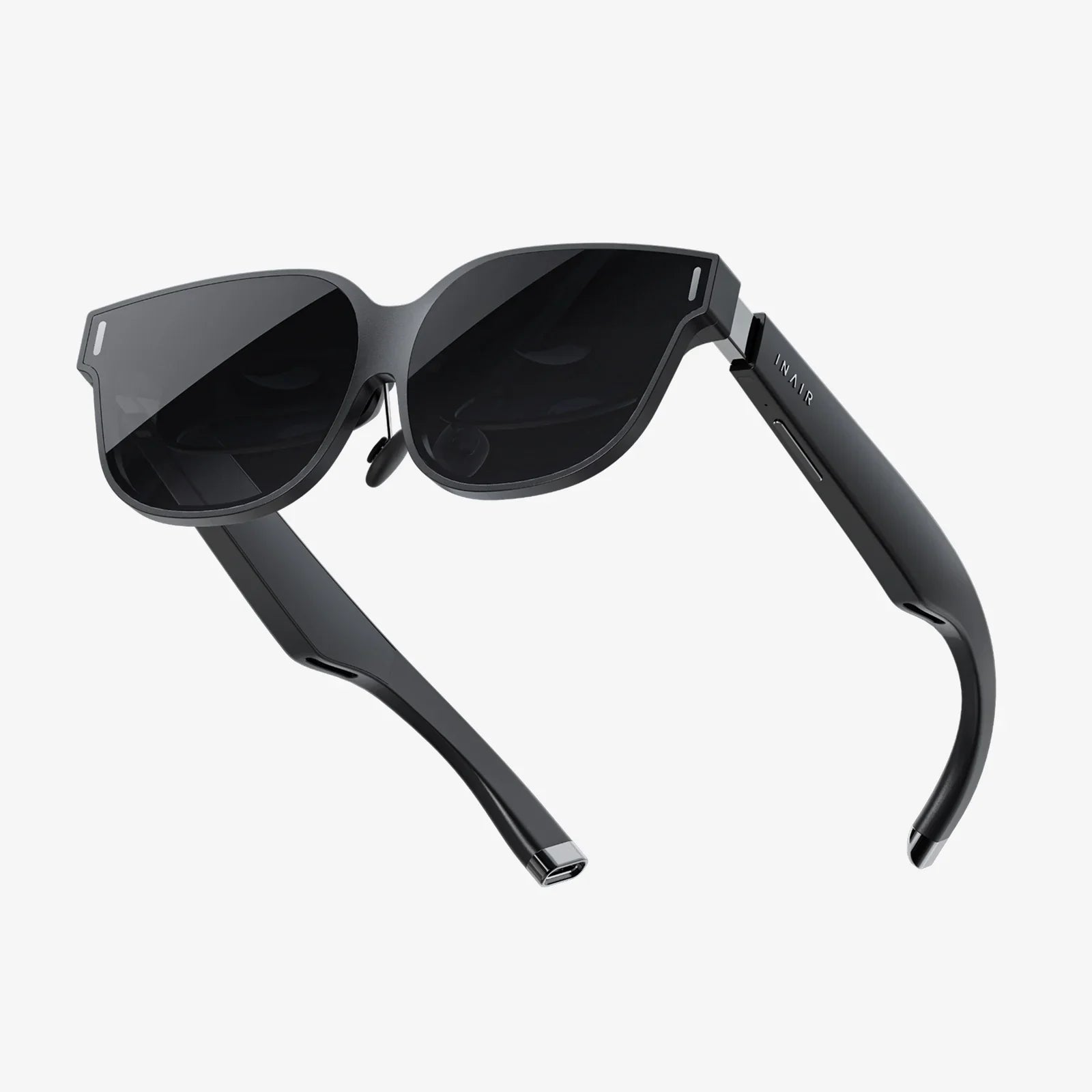
For years, the biggest barrier to widespread AR adoption has been the hardware itself. Bulky headsets, limited field of view, short battery life, and a distinct lack of style have confined most devices to niche enthusiasts and professionals. However, recent augmented reality wearables news suggests this is changing faster than many anticipated.
The industry's holy grail is a device that is socially acceptable—glasses that look no different from the fashionable eyewear people already choose to wear. Breakthroughs in waveguide technology, which pipe light to the eye using incredibly thin transparent lenses, are making this possible. We're seeing prototypes and early-stage products that are significantly lighter, more powerful, and far less obtrusive than their predecessors.
Furthermore, the concept of a unified device is evolving. The latest news points to an ecosystem of wearables, from full-featured glasses for immersive experiences to simpler, audio-focused smart glasses for all-day wear that provide contextual information through sound and simple notifications. This multi-tiered approach acknowledges that different tasks and social contexts require different levels of technological immersion, a key insight for mainstream adoption.
Hardware is only half the story. The most powerful AR glasses are useless without a rich layer of software and content—a persistent digital world anchored to our physical one. This infrastructure, often called the AR Cloud or the spatial web, is the subject of intense development and investment, and news from this domain is just as critical as hardware announcements.
Imagine walking through a city and seeing historical facts pop up about buildings, navigation arrows painted onto the sidewalk, or reviews hovering over restaurant doors. For this to work seamlessly for millions of users simultaneously, an immense amount of spatial mapping and data anchoring is required. Companies and open-source consortiums are racing to create this shared, real-time 3D map of the world.
Development tools are also becoming more sophisticated and accessible, empowering a new generation of creators to build AR experiences without needing a background in advanced computer vision. This democratization of content creation is essential for moving beyond novelty apps to building truly useful and engaging applications that will define the daily utility of AR wearables.
The next evolution in augmented reality wearables news involves a shift from purely visual augmentation to a more holistic, multimodal experience. The goal is contextual computing: a system that understands your environment, your intentions, and your needs to deliver the right information at the right time, without you having to ask.
This involves the deep integration of other sensors. Microphones will listen not just for voice commands, but for ambient sounds to infer context—are you in a busy office, a quiet library, or a moving vehicle? Cameras will continuously scan the environment not just to place digital objects, but to identify people, objects, and text. Incoming news suggests a strong focus on on-device AI processing, using neural processing units (NPUs) to handle these tasks instantly and privately, without needing to send constant data streams to the cloud.
The interface, too, is evolving. While touchpads on temple stems and hand-tracking are common today, research into more intuitive input methods is booming. This includes advanced voice assistants, subtle electromyography (EMG) sensors that detect nerve signals to interpret finger gestures without visible movement, and even eventually, direct brain-computer interfaces for thought-based control.
As with any transformative technology, the path forward is not without significant challenges. The most pressing news surrounding augmented reality wearables often revolves around privacy, security, and ethics. A device that has always-on cameras and microphones, constantly scanning and recording the environment, represents a paradigm shift in data collection.
The potential for misuse is substantial. Unprecedented forms of surveillance, data harvesting, and even new avenues for advertising and spam in our physical spaces—so-called "spamification of reality"—are genuine concerns. The latest discussions among policymakers, tech leaders, and ethicists focus on building privacy-first principles into the very architecture of these devices.
Key to this will be transparent user control, clear visual indicators when recording is active, and a heavy reliance on processing data on the device itself rather than storing it on remote servers. The societal conversation about establishing norms and regulations for this new medium is just beginning, and its outcome will be as important as any technological breakthrough in determining the shape of our augmented future.
Analyzing the trajectory of recent announcements and product cycles, the roadmap for augmented reality wearables is becoming clearer. In the immediate term, we will see continued refinement in enterprise-grade devices, delivering greater comfort, longer battery life, and more robust software solutions.
The next few years will likely bring the first truly consumer-ready devices that balance capability, style, and price. These will initially gain traction in specific use cases like fitness, navigation, and remote collaboration, gradually expanding into broader daily use. The true inflection point will arrive when the digital layer becomes so seamlessly integrated and valuable that leaving the house without your AR wearables will feel like leaving your smartphone behind feels today—possible, but distinctly limiting.
This isn't merely about replacing the smartphone; it's about transcending it. It's about changing the fundamental nature of our interaction with technology from something we actively use to something that passively empowers us. The stream of augmented reality wearables news is no longer about a niche interest—it's the early chronicle of the next great platform shift, one that will redefine human-computer interaction and, in doing so, quietly reshape every aspect of our lives.
The whispers of this revolution are growing louder with each passing news cycle, moving from the labs of tech giants and ambitious startups into the hands of workers, creators, and eventually, everyday consumers. The boundary between what is real and what is digital is not just blurring; it's being deliberately and intelligently redesigned. The question is no longer if you will eventually wear this technology, but how soon you will be ready to embrace the extraordinary new layer of reality it will unlock—and what you will create once you do.
Share:
Cheap AR Technology: The Democratization of Digital Experience
Cheap AR Technology: The Democratization of Digital Experience