


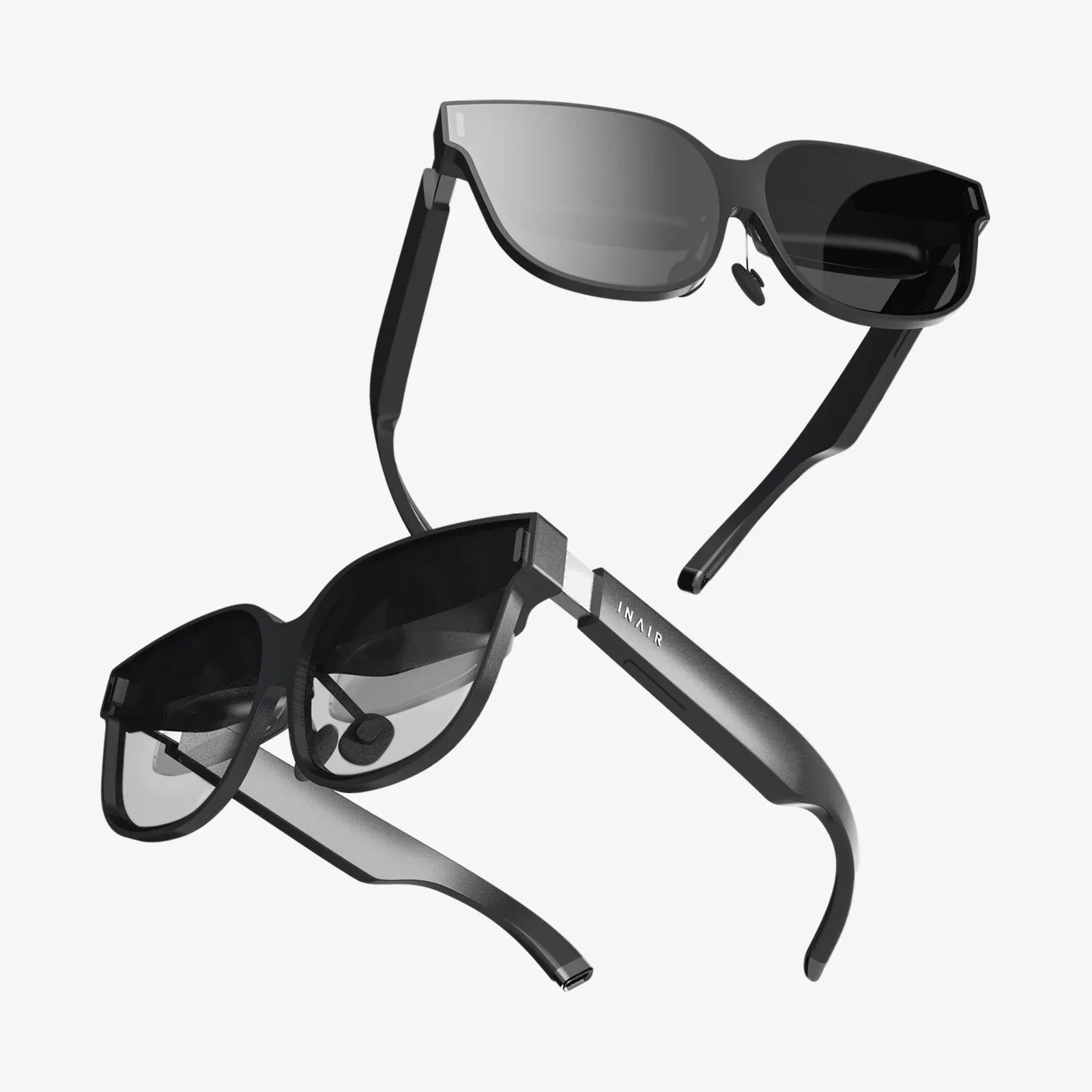
Imagine a world where information doesn’t live on a screen in your hand but is seamlessly woven into the fabric of your reality. Where directions float on the pavement before you, the history of a monument unfolds as you gaze upon it, and a colleague from another continent stands beside you as a photorealistic hologram, collaborating on a physical prototype. This is not a distant science fiction fantasy; it is the imminent future being built today through the rapid evolution of augmented reality wearables. This technological leap promises to be as transformative as the smartphone, but instead of a device we look down at, it is one that looks out at the world with us, augmenting our potential in ways we are only beginning to comprehend.
Beyond the Gimmick: Defining the Augmented Layer
To understand the profound implications of AR wearables, we must first move beyond the perception of them as mere gaming accessories or novel filters. At its core, augmented reality is the real-time overlay of digital information—images, data, 3D models, text—onto the user’s view of the physical world. Unlike Virtual Reality (VR), which seeks to replace reality with a simulated one, AR aims to enhance and enrich the world we already inhabit.
AR wearables are the hardware conduits for this digital layer. They range from sophisticated smart glasses with transparent waveguide displays that project imagery directly onto the retina, to more futuristic concepts like smart contact lenses or neural interfaces. The ultimate goal is ubiquity and invisibility—technology that fades into the background, becoming an extension of our own cognition and perception without the intrusive bulk of current designs.
The Architectural Pillars of AR Wearables
The magic of a seamless AR experience rests on a complex foundation of integrated technologies, each advancing at a breakneck pace.
Spatial Mapping and Computer Vision
For digital content to interact convincingly with the real world, the device must understand its environment. This is achieved through a suite of sensors—LiDAR, depth sensors, high-resolution cameras, and inertial measurement units (IMUs). These components work in concert to create a precise, real-time 3D map of the surroundings. This process, known as simultaneous localization and mapping (SLAM), allows the wearable to place a virtual object on a physical table and have it stay there, even as the user moves around it. Advanced computer vision algorithms can identify objects (“this is a chair”), understand surfaces (“this is a horizontal plane”), and even recognize gestures and people.
The Display: Windows to the Augmented World
The display technology is perhaps the most critical and challenging hurdle. The ideal AR display must be bright enough to be seen in daylight, high-resolution enough to be legible, and transparent enough not to obstruct the user’s view. Current technologies like waveguide optics and microLED projectors are making great strides, miniaturizing the components while increasing field of view and clarity. The holy grail is a pair of glasses that look entirely normal but can, on command, transform the entire world into an interactive canvas.
Processing Power and Connectivity
Processing the immense amount of visual data and rendering complex graphics in real-time requires immense computational power. Early solutions rely on tethered processing units or offloading tasks to a paired smartphone. However, the trend is toward standalone devices with onboard processors specifically designed for AR workloads, leveraging edge computing and eventually, ubiquitous 5G and future 6G connectivity for cloud-based processing, ensuring low latency and high-speed data transfer.
Intuitive Interaction Modalities
How do you interact with a interface that has no screen to touch? AR wearables are pioneering new forms of human-computer interaction. Voice commands via integrated assistants offer a hands-free solution. Hand gesture recognition allows users to manipulate virtual objects as if they were physically present—pinching, dragging, and rotating with their fingers. More advanced prototypes are exploring gaze tracking, where simply looking at a virtual button can activate it, and even subvocalization, detecting the electrical signals from vocal cords when you talk to yourself without making a sound.
Transforming Industries: The Enterprise Revolution
While consumer applications capture the imagination, the most immediate and impactful adoption of AR wearables is occurring in enterprise and industrial settings. Here, the value proposition is clear: increased efficiency, reduced errors, and enhanced safety.
The Future of Field Service and Maintenance
A technician tasked with repairing a complex piece of machinery no longer needs to juggle physical manuals, laptops, or call a remote expert. Wearing AR glasses, they can see digital schematics overlaid directly onto the equipment in front of them. Annotations and arrows can guide them step-by-step through a procedure. A remote senior engineer can see exactly what the technician sees and draw virtual circles and instructions into their field of view, drastically reducing downtime and the need for travel.
Revolutionizing Design and Manufacturing
Architects and engineers can walk through full-scale 3D models of their designs long before a single foundation is poured, identifying spatial conflicts and design flaws. On the factory floor, assembly line workers can receive real-time instructions and part locations overlaid onto their workspace, streamlining complex assembly processes and drastically reducing error rates in logistics and warehousing by visually highlighting items and pathways.
Healthcare: Enhancing Precision and Empathy
In healthcare, the applications are life-changing. Surgeons can have vital signs, MRI data, or ultrasound imagery projected directly into their visual field during procedures, keeping their focus entirely on the patient. Medical students can learn anatomy by exploring detailed, interactive holograms of the human body. Furthermore, AR can aid in physical therapy by guiding patients through movements with perfect form and providing motivation through gamified exercises.
The Social and Consumer Frontier
As the technology matures and becomes socially acceptable, its invasion of our daily lives will be profound.
Redefining Social Connection
Social media will evolve from a feed on a screen to a shared layer of experience. Friends could leave virtual notes and artwork for you to discover in your favorite park. Watching a major sporting event could mean having live stats and player information appear around your living room, or even making it feel as if the game is happening on your coffee table. The concept of a “phone call” could be replaced by a spatial communication where a person’s lifelike hologram is present in your space, enabling a depth of connection that video calls cannot match.
The Ultimate Personal Assistant
Imagine walking through a foreign city and having translations of street signs appear instantly. Your glasses could recognize a person you met at a conference years ago and discreetly display their name and key details. They could provide nutritional information about food on a menu, guide you through a recipe with instructions floating above your ingredients, or remind you that you need milk when you walk past the dairy aisle.
New Realities for Entertainment and Storytelling
The very nature of narrative and gaming will be upended. Instead of playing a game on a TV, you could defend your living room from an alien invasion or solve a puzzle that spans your entire home. Directors will create immersive stories that unfold in your environment, blurring the line between audience and participant in unprecedented ways.
Navigating the Invisible Minefield: Ethical and Societal Challenges
This powerful technology does not arrive without significant risks and ethical dilemmas that society must urgently address.
The Privacy Apocalypse
An always-on, internet-connected camera and microphone worn on your face represents an unprecedented privacy challenge. The potential for constant surveillance, both by corporations and governments, is staggering. The data collected—what you look at, for how long, your biometric responses, your daily routines—would be the most intimate dataset ever assembled. Robust regulatory frameworks and transparent data policies will be non-negotiable to prevent a dystopian future of perpetual monitoring.
The Digital Divide and Access
If AR wearables become the primary portal to information, social connection, and economic opportunity, a new, stark digital divide could emerge. Those who cannot afford or choose not to adopt this technology risk being left behind, unable to access essential services or fully participate in a society that operates on an augmented plane.
Reality Ownership and Digital Vandalism
Who owns the augmented layer of a public space? Could a corporation cover a city in virtual advertisements that only their subscribers can see? The potential for “digital graffiti” or malicious AR content—from obscene imagery placed in a playground to fake obstacles on a road—poses a serious threat to public safety and the integrity of shared reality. Establishing digital property rights and security protocols will be a monumental task.
The Erosion of Attention and Authenticity
There is a genuine concern that the constant barrage of digital stimuli could further erode our ability to be present, to focus, and to engage in deep thought. If we can constantly customize and filter our reality, do we risk losing a shared sense of truth and a common experience of the world? The technology that promises to enhance our reality could, if misused, ultimately distance us from it.
The Path Forward: A Deliberate Ascent
The development of augmented reality wearables is not merely a technical challenge; it is a philosophical and societal one. Its success will not be determined solely by the brilliance of its engineers but by the wisdom of its architects and the vigilance of its users. We must approach this invisible revolution not with blind enthusiasm or fearful rejection, but with cautious optimism and proactive deliberation. The goal must be to build an augmented world that is inclusive, ethical, and human-centric—one that amplifies our best qualities rather than diminishes our humanity. The hardware will continue to shrink, the displays will get sharper, and the software smarter, but the ultimate measure of this technology’s success will be how effortlessly it helps us unlock our own potential and connect more deeply with the world, and each other, not as we see it, but as we dare to imagine it could be.
The horizon is no longer a distant line but a canvas waiting to be painted. The tools to redefine human experience are being forged in labs today, promising a future where the boundary between the digital and the physical dissolves into a seamless dance of information and imagination. This isn't just about what we will see through our glasses; it's about how we will fundamentally re-see ourselves and our place in the world, forever altered by the invisible layer of possibility waiting to be unlocked.
Share:
Augmented Reality Tech Support is Revolutionizing How We Solve Problems
Augmented Reality Tech Support is Revolutionizing How We Solve Problems