


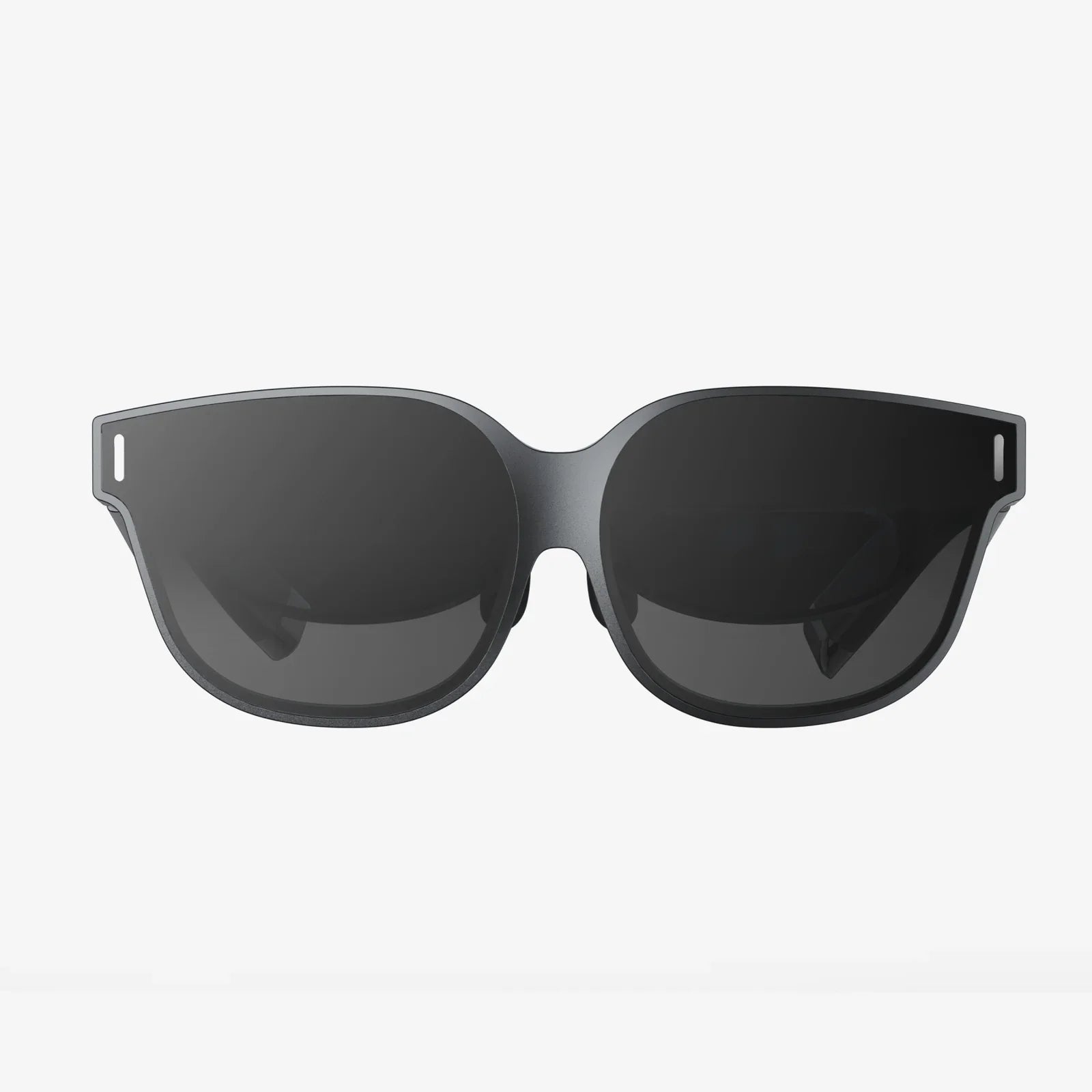
Imagine pointing your smartphone at a static poster and watching it burst into life with a dynamic, interactive video. Or visualizing a new piece of furniture in your living room, perfectly scaled and styled, before you ever click ‘buy’. This isn’t a glimpse into a distant sci-fi future; it’s the reality being built today, not within the confines of a specialized app, but directly within the web browser you use every day. The era of the augmented reality web application has arrived, and it is poised to fundamentally reshape our digital interactions by dissolving the barrier between the physical world and the infinite potential of the web.
The Democratization of Augmented Reality
For years, augmented reality (AR) was a technology of immense potential shackled by significant friction. Experiencing AR typically meant finding, downloading, and installing a dedicated application from a digital store. This process created a substantial barrier to entry, limiting AR's use to high-value, repeat-use cases. The augmented reality web application shatters this model. By leveraging the universal access of web browsers, WebAR allows users to engage with immersive content instantly via a simple URL or by scanning a QR code. This frictionless access is the key to its transformative power, enabling mass adoption and opening up a world of possibilities for single-use, spontaneous, and widespread AR experiences.
How WebAR Works: The Magic Behind the Curtain
The seamless experience of an augmented reality web application is powered by a sophisticated blend of web technologies. Unlike native apps, which are built for specific operating systems, WebAR runs on a foundation of open web standards, making it inherently cross-platform.
Core Enabling Technologies
- WebGL (Web Graphics Library): This JavaScript API is the workhorse, rendering high-performance 2D and 3D graphics directly within the browser without the need for plugins. It allows for the complex 3D models and animations that form the core of AR experiences.
- WebRTC (Web Real-Time Communication): This technology provides access to the device’s camera feed, which is essential for capturing the real world and overlaying digital content onto it in real-time.
- Device Orientation and Motion APIs: These APIs allow the web application to understand how the user is moving their device, enabling experiences that are responsive to tilting, rotating, and shifting perspectives.
- WebXR Device API: This is the modern, standardized API designed specifically for both augmented and virtual reality on the web. It provides a unified interface for developers to create immersive experiences that can work across a wide range of hardware, from smartphones to advanced AR headsets.
The User Journey: Simplicity Itself
- A user encounters a QR code on a product, a link in an email, or an icon on a website.
- They click the link or scan the code, which opens their default mobile browser.
- The browser requests camera permissions (a standard practice for any video-calling site).
- Upon granting access, the user points their camera at the designated target or their surrounding environment.
- The augmented reality web application instantly recognizes the world and superimposes the digital content, creating a seamless blend of real and virtual.
Transformative Applications Across Industries
The true power of the augmented reality web application lies in its versatility. Its frictionless nature makes it a powerful tool for marketing, education, retail, and beyond.
Retail and E-commerce: Try Before You Buy, Digitally
The retail sector is being revolutionized. Customers can now see how a new sofa would look in their actual living room, how a pair of glasses fits their face, or how a new shade of paint transforms a wall—all from their browser. This drastically reduces purchase hesitation and minimizes returns, creating a more confident and satisfied customer. Virtual try-ons for apparel, accessories, and makeup are becoming standard practice, all powered by WebAR that requires no app download.
Marketing and Advertising: Engaging Campaigns That Pop
Marketers are leveraging WebAR to create unforgettable interactive campaigns. A print ad can become an immersive video game; a product package can tell a brand’s story through animation; a billboard can offer a hidden, interactive experience to those who scan it. This creates deep engagement, fosters brand recall, and provides valuable analytics on user interaction, all while being incredibly easy for the consumer to access.
Education and Training: Bringing Concepts to Life
Imagine a biology student pointing their phone at a textbook diagram of the human heart and watching it beat in a detailed, interactive 3D model. Or a mechanic seeing a repair manual’s instructions overlaid directly onto the engine they are working on. WebAR makes learning experiential and interactive, improving knowledge retention and understanding of complex spatial concepts. It allows for safe, cost-effective training simulations for fields from medicine to engineering.
Navigation and Tourism: Overlaying Directions on the Real World
WebAR can overlay directional arrows and information directly onto a user’s live camera view of a street, making indoor and outdoor navigation intuitive. Tourists can point their devices at a monument, a restaurant, or a historic building to see reviews, historical facts, or menus pop up, enriching their real-world exploration without needing to juggle multiple apps.
Advantages Over Native AR Applications
While native apps still have their place for deeply complex, recurring-use cases, the augmented reality web application offers distinct and powerful advantages.
- No Installation Required: The biggest advantage. Users engage instantly, eliminating the friction of app stores.
- Broad Reach and Instant Updates: A single WebAR experience works on both iOS and Android devices. Updates are deployed server-side and are instantly available to all users without requiring them to download new versions.
- Linkability and Shareability: WebAR experiences are just URLs. They can be easily shared via social media, text message, email, or QR codes, enabling viral marketing campaigns.
- Lower Development and Maintenance Costs: Developing one WebAR experience is often more efficient than building and maintaining two separate native apps for different platforms.
Challenges and The Path Forward
The journey is not without its hurdles. The performance of WebAR is inherently tied to the device's hardware and browser capabilities. Complex 3D experiences can be demanding on battery life and processing power. Furthermore, while WebXR is a fantastic standard, browser support, though rapidly improving, can still be fragmented. However, the trajectory is overwhelmingly positive. As smartphone processors become more powerful and browsers continue to optimize for these immersive experiences, these limitations will continue to fade. The future points towards even more sophisticated experiences with improved environmental understanding, persistent AR worlds that exist in specific locations, and seamless integration with the emerging spatial web.
The barrier between our physical reality and the digital universe is not just thinning; it’s becoming a permeable membrane, and the augmented reality web application is the portal. This isn’t about putting a digital layer on top of our world for the sake of novelty; it’s about enhancing human understanding, simplifying complex tasks, and creating moments of genuine wonder and utility. The next time you pick up your phone, remember—the power to reshape your reality is no longer locked in an app store; it’s waiting for you, just a click away in your browser.
Share:
Make Augmented Reality: A Comprehensive Guide to Building Your Own AR Experiences
Make Augmented Reality: A Comprehensive Guide to Building Your Own AR Experiences