


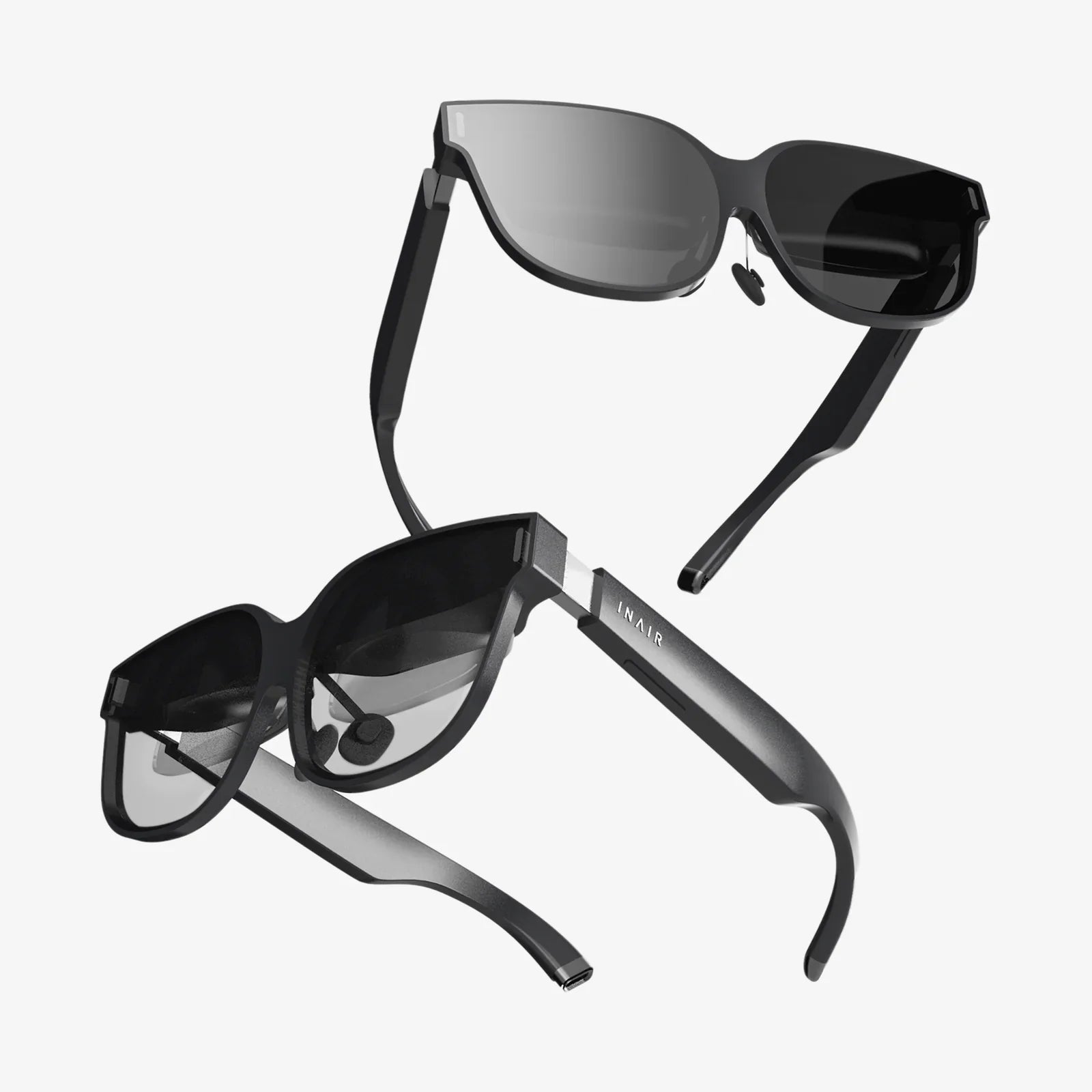
Imagine a world where the digital and the physical are no longer separate realms but a single, intertwined experience—where information is overlaid onto your surroundings, virtual meetings feel as tangible as face-to-face conversations, and learning is an immersive, interactive journey. This is not a distant science fiction fantasy; it is the emerging reality being built today through the rapid convergence of augmented, virtual, and the broader spectrum of extended reality technologies. This technological fusion is poised to revolutionize every facet of our lives, from how we work and learn to how we connect and heal, fundamentally reshaping our perception of reality itself.
Demystifying the Spectrum: From Augmented to Virtual
While often grouped together, augmented reality (AR), virtual reality (VR), and the encompassing term extended reality (XR) represent distinct points on a continuum of immersive technology. Understanding their unique characteristics is the first step toward appreciating their collective power.
Virtual Reality (VR) is the most immersive of the three. It functions as a digital occlusion device, completely replacing the user's real-world environment with a simulated one. Through a head-mounted display (HMD) that tracks head and sometimes eye movements, users are transported into entirely computer-generated worlds. This can range from a photorealistic recreation of a historical site to a abstract, impossible landscape defying the laws of physics. The primary goal of VR is to create a profound sense of presence—the undeniable feeling of "being there." This makes it exceptionally powerful for applications like pilot training simulations, therapeutic exposure therapy, and, of course, deeply engaging video games.
Augmented Reality (AR), by contrast, does not seek to replace the world but to enhance it. It acts as a digital overlay device, superimposing computer-generated information—images, text, 3D models—onto the user's view of their physical surroundings. This is most commonly experienced today through smartphone cameras, where apps can place virtual furniture in your living room or display navigation arrows on the street in front of you. More advanced AR is delivered through transparent glasses or lenses, allowing for hands-free interaction. The magic of AR lies in its contextuality; the digital content is directly relevant to what the user is looking at and where they are located. This seamless blending is why AR is often seen as the more practical and immediately applicable technology for everyday use in navigation, maintenance, and retail.
Bridging these two worlds is a concept often referred to as Mixed Reality (MR). MR is more than a simple overlay; it represents a true merger where digital and physical objects coexist and interact in real-time. In a robust MR experience, a virtual character could sit on your real couch, casting a realistic shadow, or you could use a real-world tool to manipulate a digital component. This requires advanced sensors and cameras to deeply understand and map the environment, a capability that is rapidly becoming more accessible. The term Extended Reality (XR) has emerged as an umbrella term encompassing all these technologies—VR, AR, and MR—reflecting the growing convergence and blurring of lines between them.
The Technological Engine Room: Sensors, Chips, and Connectivity
The seamless experience promised by AR and VR is powered by a complex symphony of hardware and software advancements. Several key technologies act as the fundamental building blocks.
Display Technology: At the heart of any HMD is its display. For VR, high-resolution, fast-switching LCD or OLED screens are placed mere centimeters from the eyes, requiring precise lenses to focus the image and create a wide field of view. A critical metric is pixels-per-degree (PPD), which must be high enough to eliminate the "screen door effect" and create a believable image. For AR, the challenge is different. Transparent waveguides or microLED projectors beam light directly into the user's eye, allowing them to see the real world with digital additions. The quest is for brightness, clarity, and a form factor that is socially acceptable and comfortable for all-day wear.
Tracking and Sensing: Immersion is impossible without accurate tracking. Inside-Out Tracking uses cameras and sensors on the device itself to map the environment and understand its position within it, freeing the user from external beacons. Outside-In Tracking, using external sensors placed in a room, can offer higher precision for professional applications. Additionally, Simultaneous Localization and Mapping (SLAM) algorithms are the software brains that process camera and sensor data in real-time to create a spatial map of the environment, allowing digital objects to be placed and remain locked in position.
Processing Power and 5G: Rendering complex 3D graphics at high frame rates (90Hz or higher is standard for comfort) requires immense processing power. While standalone headsets have sophisticated mobile chipsets, there is a constant trade-off between performance, battery life, and heat. This is where edge computing and next-generation connectivity like 5G come in. By offloading heavy rendering tasks to powerful cloud servers, devices can become lighter, cheaper, and have longer battery life, with the low latency of 5G ensuring the experience remains smooth and responsive.
Haptics and Interaction: The illusion breaks if you can't interact naturally with the digital world. Controllers have evolved from simple wands to sophisticated devices with finger tracking, haptic feedback, and adaptive triggers. The next frontier is hand-tracking, which uses cameras to see and interpret the user's hands, allowing for gesture-based control without any physical device. Advanced haptic suits and gloves aim to simulate the feeling of touch, from a gentle breeze to the impact of a virtual punch, completing the sensory immersion.
Transforming Industries: Practical Applications Today
The value of AR and VR is being proven not in hypotheticals, but in tangible, real-world applications that are solving problems and creating new opportunities across the global economy.
Healthcare and Medicine: The medical field is undergoing a revolution powered by immersion. Surgeons use AR overlays to visualize a patient's anatomy, such as CT scans or vital signs, directly on their body during procedures, improving precision and reducing error. VR is a powerful tool for medical training, allowing students to practice complex surgeries in a risk-free environment. Furthermore, VR has proven highly effective in pain management, distracting patients during painful treatments, and in mental health therapy, helping individuals confront and manage phobias, PTSD, and anxiety through controlled, immersive exposure.
Manufacturing and Field Service: On the factory floor and in the field, AR is a game-changer for efficiency and accuracy. Technicians wearing AR glasses can see schematics, animated repair instructions, and expert guidance overlaid directly on the malfunctioning equipment they are fixing, drastically reducing downtime and training needs. Complex assembly processes are streamlined with digital work instructions showing the exact placement of parts, reducing errors for even the most intricate tasks. Designers and engineers use VR to prototype and interact with full-scale 3D models of vehicles or buildings long before any physical prototype is built, identifying design flaws early and saving millions.
Education and Training: These technologies are unlocking powerful new pedagogical methods. Instead of reading about ancient Rome, history students can take a VR field trip to walk its streets. Biology students can step inside a human cell to explore its organelles. This experiential learning leads to dramatically improved knowledge retention. From training retail employees on new point-of-sale systems to preparing soldiers for the complexities of the battlefield in hyper-realistic simulations, VR and AR provide safe, scalable, and effective training environments that were previously impossible.
Retail and Commerce: The "try before you buy" paradigm is being redefined. AR apps allow consumers to see how a piece of furniture would look in their home, how a new shade of paint would transform a room, or how a pair of glasses would fit their face—all from their smartphone. This not only enhances consumer confidence and reduces product returns but also creates engaging, novel shopping experiences that bridge the gap between online and in-store retail.
The Road Ahead: Challenges and the Future Vision
Despite the incredible progress, the path to ubiquitous AR and VR adoption is not without significant hurdles that technologists are racing to overcome.
Technical Hurdles: For AR to become an all-day wearable, the devices must become smaller, lighter, and more power-efficient—approaching the form factor of standard eyeglasses. This requires breakthroughs in battery technology, display miniaturization, and thermal management. Improving visual fidelity and solving issues like vergence-accommodation conflict (where the eyes struggle to focus on virtual objects) are crucial for long-term comfort. Furthermore, creating compelling and realistic virtual worlds requires vast amounts of 3D content, driving the need for better authoring tools and perhaps AI-assisted content generation.
Social and Ethical Considerations: As these technologies become more integrated into daily life, they raise profound questions. How do we prevent the creation of a deeper digital divide between those who can afford access and those who cannot? What does privacy mean when devices with always-on cameras and microphones are continuously mapping our homes and offices? The potential for hyper-realistic misinformation or deepfakes in an immersive medium is a serious concern. Establishing ethical guidelines, robust security protocols, and inclusive design principles is not an option but a necessity for a healthy future.
The long-term vision, often called the "metaverse," is a persistent network of interconnected virtual spaces focused on social connection. While the ultimate form of this concept is debated, it is clear that AR and VR will be the primary gateways. This points toward a future where our digital and physical identities, assets, and experiences are seamlessly stitched together, creating new economies, forms of art, and methods of human connection that we are only beginning to imagine.
The convergence of augmented virtual and augmented reality is far more than a technological trend; it is a fundamental shift in the human-computer interface. It represents a move away from screens we look at and toward experiences we live inside. As the hardware shrinks, the software gets smarter, and the networks get faster, this once-niche technology is exploding into the mainstream, promising to augment our capabilities, virtualize our limitations, and ultimately, redefine the very fabric of our reality. The door between worlds is now open, and stepping through it is an opportunity to reshape existence itself.
Share:
Does a VR Headset Hurt Your Eyes? The Comprehensive Guide to Eye Strain and Visual Comfort in Virtual Reality
Best VR Headset for the Money: The Ultimate 2024 Buyer's Guide to Maximizing Your Immersion