


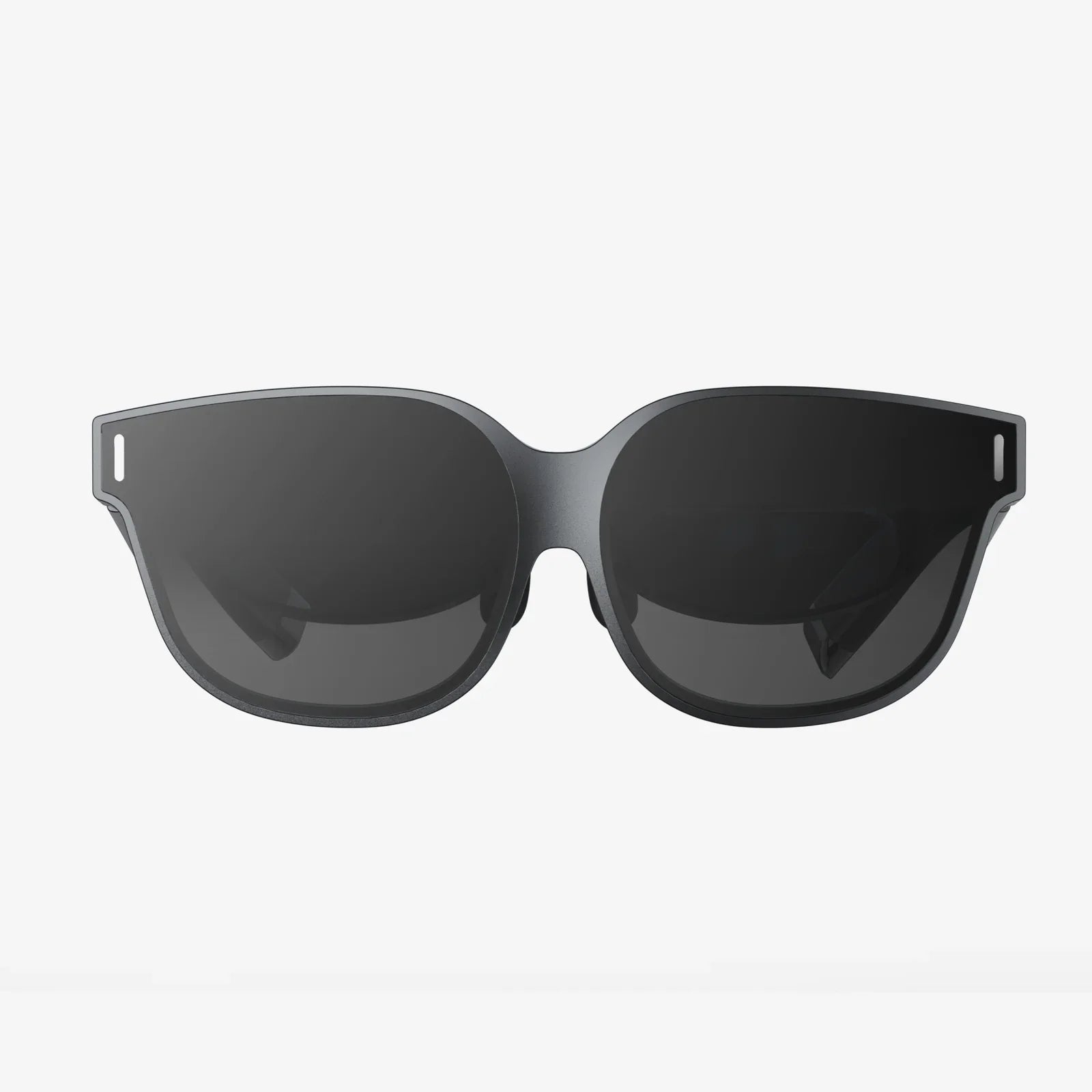
Imagine a world where the digital and physical don't just coexist but are seamlessly, magically intertwined—a world where information dances before your eyes, historical figures walk you through ancient ruins, and your living room transforms into a command center for intergalactic travel. This isn't a distant sci-fi fantasy; it's the palpable, accelerating reality being forged at the intersection of Augmented and Virtual Reality. The collective gasp of wonder, the sheer 'wow' moment experienced when these technologies truly click, is more than just a novelty; it's the sound of the future snapping into focus. We are standing on the precipice of a fundamental shift in how we compute, communicate, and comprehend our universe, driven by the powerful fusion of AR and VR.
The Convergence of Two Realities: Beyond the Buzzwords
To understand the 'wow,' we must first move beyond the jargon. For years, Augmented Reality (AR) and Virtual Reality (VR) have been discussed as separate, parallel paths. VR is an immersive, digital substitute for reality. By donning a headset, you are transported to a completely computer-generated environment, effectively blocking out the physical world. Its power lies in total immersion—whether for gaming, training simulations, or virtual tourism, you are there.
Augmented Reality, conversely, layers digital information onto our physical world. Through the lens of a smartphone, tablet, or, more powerfully, transparent glasses, digital objects and data appear to coexist with our reality. A dinosaur might stomp through your park, navigation arrows might be painted onto the street, or assembly instructions might hover over a piece of machinery.
The 'Augmented Virtual Reality Wow' moment is born when this binary distinction begins to blur into a spectrum of mixed reality (MR). We are entering an era where devices will not be solely AR or VR but will dynamically adapt. Imagine a headset that allows you to see your real-world desk and hands (AR) but can instantly transform your entire surroundings into a virtual boardroom with avatars of your colleagues (VR), all within the same session. This seamless transition, this fluid dance between augmentation and full virtuality, is what elicits that profound sense of wonder and possibility.
Architecting the Wow: The Technologies Powering the Fusion
This seamless experience isn't magic; it's engineering marvels working in concert. Several key technologies have matured to make this possible.
Advanced Display Systems and Passthrough Technology
The window to these fused realities is the display. Modern VR headsets are increasingly equipped with high-resolution color passthrough cameras. Instead of simply blocking out the world, these cameras feed a live video feed of your surroundings into the headset, overlaying digital content on top of it with incredibly low latency. This creates a high-fidelity augmented reality experience within a VR device, effectively erasing the hard line between the two. The 'wow' comes from the precision and realism with which a virtual television can be mounted on your real wall or a digital character can sit convincingly on your physical sofa.
Spatial Mapping and Scene Understanding
For digital objects to interact believably with the physical world, the device must understand the environment. Using a combination of cameras, LiDAR (Light Detection and Ranging), and depth sensors, these headsets scan a room, creating a intricate 3D mesh map in real-time. This allows the system to understand geometry, surfaces, and obstacles. A virtual ball can thus realistically bounce off your real coffee table, and a digital character can walk around your chair, occluded by it as they pass behind. This understanding of spatial physics is fundamental to selling the illusion and generating the 'wow.'
Precise Tracking and Haptic Feedback
Immersion is shattered if your virtual hands drift or feel disconnected. Inside-out tracking, using cameras and sensors on the headset itself to track controllers and your hands without external beacons, has become remarkably precise. Even more impactful is the rise of hand-tracking, allowing you to use your natural gestures to manipulate digital objects. Couple this with evolving haptic feedback in controllers and even gloves, which provide a sense of touch—the weight of a virtual object, the texture of a surface—and the brain is effortlessly convinced it's interacting with something real. This multi-sensory engagement is a huge contributor to the awe-inspiring effect.
The Wow in Action: Transformative Applications Across Industries
The true measure of this technology is not in its specs but in its impact. The 'Augmented Virtual Reality Wow' is already moving beyond entertainment and is poised to revolutionize core aspects of our lives.
Revolutionizing Education and Training
Learning is transitioning from passive observation to active participation. Medical students can practice complex surgical procedures on hyper-realistic virtual patients, with haptic feedback simulating the resistance of tissue, before ever touching a scalpel. Mechanics can see interactive repair guides overlaid on the actual engine they are working on. History students can don a headset and stand in the Roman Forum, watching it be rebuilt around them as a virtual guide explains its history. This experiential learning creates deep, visceral understanding—a 'wow' of comprehension that a textbook could never provide.
Redefining Remote Work and Collaboration
The video call grid is a primitive tool. The future of remote collaboration is a shared virtual space. Colleagues from across the globe can gather around a virtual 3D model of a new building design, able to walk through it, make changes that everyone sees instantly, and interact as if they were in the same room. Architects and engineers can visualize structural loads as shimmering force fields over their designs. This shared presence, this ability to collaborate with data and models in a natural, spatial way, creates a 'wow' of connection and productivity, making distance irrelevant.
Unlocking New Frontiers in Healthcare
The applications in healthcare are profound and deeply human. Surgeons can use AR overlays during operations to see critical patient data, like MRI scans, directly superimposed on their field of view without looking away. Phobia therapy can be conducted in safe, controlled virtual environments, gradually exposing patients to their triggers. Rehabilitation can be gamified, with patients performing physical therapy exercises in engaging virtual worlds that track their progress with perfect precision. The 'wow' here is not just technological; it's the wonder of improved outcomes, reduced pain, and saved lives.
The Future of Retail and Design
The days of guessing if a new couch will fit in your living room are over. AR apps allow you to place true-to-scale 3D models of furniture, appliances, and art into your space, seeing how it looks and fits before you buy. Car buyers can configure a vehicle and then take a virtual drive in it. Fashion retailers offer virtual try-ons for clothes and accessories. This empowerment of the consumer, this ability to preview life with a product, creates a 'wow' of confidence and convenience that is reshaping commerce.
Navigating the Challenges: The Path Forward
For all the 'wow,' significant hurdles remain before this technology becomes ubiquitous. The hardware needs to become smaller, lighter, more comfortable, and less power-hungry—evolving from today's headsets to a form factor resembling everyday eyewear. The 'social acceptance' barrier is real; walking around in public with a conspicuous device is still a hurdle for many.
Furthermore, critical questions around data privacy, security, and ethical design must be addressed. These devices map our homes and our behaviors in intimate detail. Who owns that data? How is it used? The digital divide is another concern; we must ensure this transformative technology does not become a luxury that further separates socioeconomic classes.
The most significant challenge, however, is content. The hardware is a canvas waiting for its artists. We need developers, designers, and storytellers to dream up the killer applications that will move this technology from a fascinating novelty to an indispensable utility. The potential is limitless, waiting for creative minds to unlock it.
The gasp of wonder you feel when you first witness a hologram in your living room or step onto the surface of Mars from your bedroom is more than just a thrill—it's a glimpse into a new paradigm of human experience. This 'Augmented Virtual Reality Wow' is the early tremor of a seismic shift, signaling a future where our digital and physical selves are no longer separate, but harmoniously integrated. The journey from niche curiosity to central pillar of our daily lives is underway, and it promises to be one of the most fascinating and transformative stories of our time. Get ready to say 'wow' a lot more often.
Share:
Convert 2D Image to 3D: A Comprehensive Guide to Techniques and Tools
Smart Buy Glasses Virtual Try On: The Ultimate Guide to Finding Your Perfect Frames