


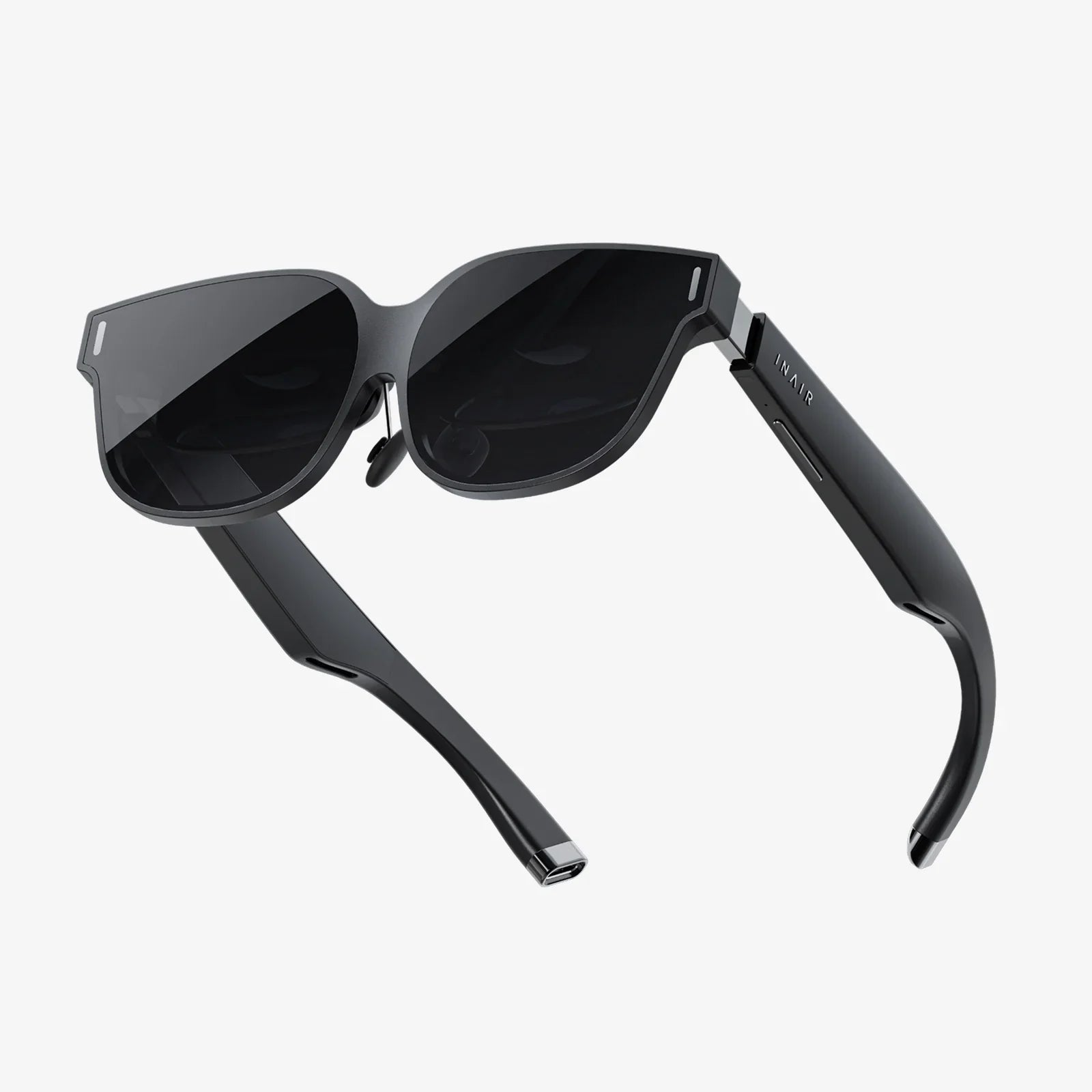
- by wangfred
Augmented VR Apps: The Seamless Fusion of Digital and Physical Worlds
- by wangfred
Imagine a world where the digital and the physical are no longer separate realms viewed through different screens, but a single, unified experience where information, entertainment, and utility are woven directly into the fabric of your reality. This is the promise, and increasingly the reality, of a new class of applications quietly revolutionizing our interaction with technology. Forget choosing between augmenting your world or escaping it; the future lies in a seamless fusion of both.
The term itself, Augmented VR, might seem like a contradiction or a simple mashup of two better-known acronyms: Augmented Reality (AR) and Virtual Reality (VR). However, it represents a distinct and powerful convergence. To understand it, we must first briefly delineate the established territories.
Traditional Virtual Reality is an immersive, fully digital experience. By wearing a headset, the user is transported to a computer-generated environment, completely occluding the physical world. It's a paradigm of isolation, perfect for deep simulation, gaming, and virtual training scenarios where the real world is a distraction.
Augmented Reality, in contrast, overlays digital information onto the user's view of the real world. Through a smartphone screen or smart glasses, users can see data, images, or 3D models anchored to their physical surroundings. It enhances reality rather than replacing it, making it ideal for navigation, instruction, and visualizing products in your space.
Augmented VR apps occupy the middle ground, and it is a vast and fertile ground. They are immersive experiences that utilize the core principle of VR—a controlled, stereoscopic, head-tracked environment—but they use the real world as their foundation and canvas. Instead of generating an entirely new world, they scan, understand, and then augment the user's actual environment in real-time. Think of it not as escaping to a virtual world, but bringing the power and flexibility of a virtual world into your own.
Creating these seamless blends of real and virtual is a monumental technical challenge. It requires a sophisticated stack of technologies working in perfect harmony.
This is the foundational layer. An Augmented VR app must first perceive and comprehend the world it is entering. Using a combination of cameras, depth sensors (like LiDAR), and inertial measurement units (IMUs), the device constructs a detailed, three-dimensional map of the immediate environment. It doesn't just see a flat surface; it understands the geometry of the room, identifies key feature points, distinguishes the floor from the walls, and recognizes objects like tables, chairs, and sofas. This digital twin of the physical space allows virtual objects to be placed with stunning accuracy, enabling them to interact with the environment—occluding behind real objects, casting consistent shadows, and appearing truly present.
For the illusion to hold, the digital overlay must remain locked in place as the user moves. This is known as tracking and anchoring. Using simultaneous localization and mapping (SLAM) algorithms, the device constantly updates its own position and orientation within the spatial map it created. If you place a virtual lamp on your real desk, advanced pose tracking ensures that lamp stays on that exact spot on the desk, from every angle, whether you walk around it, crouch down, or lean in for a closer look. This persistent anchoring is what sells the reality of the experience.
The virtual elements themselves must be visually convincing. This goes beyond high-polygon counts. Modern rendering engines for Augmented VR are tasked with a complex job: analyzing the real-world environment's lighting conditions—the color temperature, intensity, and direction of light sources—and replicating those conditions on the virtual objects. This process, known as photorealistic rendering or light estimation, ensures a virtual object reflects light and casts shadows in perfect harmony with its surroundings, avoiding the jarring, brightly-lit-CG-object-in-a-dim-room effect that breaks immersion.
While the potential for games and entertainment is enormous (imagine a strategy game where your entire living room becomes the battlefield), the most profound impact of Augmented VR apps is being felt in enterprise and professional fields.
In automotive and aerospace design, engineers can project a full-scale, 3D model of a new engine or fuselage component right onto the factory floor. They can walk around it, peer inside it, and see how it integrates with existing physical assemblies long before a single piece of metal is cut. This allows for rapid prototyping, identifying design clashes, and streamlining complex manufacturing processes, saving immense amounts of time and capital.
Training for high-stakes professions is being transformed. Medical students can practice intricate surgical procedures on a virtual patient that is perfectly aligned with a physical mannequin, providing both tactile feedback and crucial visual overlay of anatomical data. Field technicians learning to repair a complex piece of machinery can see animated, step-by-step instructions and diagnostic data overlaid directly on the equipment itself, guided remotely by an expert who can see their view and draw annotations into their world.
An architect can walk a client through a life-sized, fully interactive model of their new home while it's still on the drawing board. They can change the materials of the walls with a gesture, see how the light from the windows moves throughout the day, and validate spatial planning decisions in real-time. On the construction site, workers can see the underlying blueprint—electrical conduits, plumbing, structural supports—superimposed on the unfinished building, drastically reducing errors and improving efficiency.
Augmented VR apps are poised to make video calls obsolete for complex collaborative work. Instead of looking at a 2D screen, remote participants can be represented as photorealistic avatars in your physical space. You can collaboratively manipulate 3D models, review life-sized holograms of products, and draw diagrams in mid-air that remain anchored to the room for everyone to see. It creates a powerful sense of “co-presence,” as if your colleague is truly there with you, breaking down the barriers of geography.
For all its promise, the widespread adoption of Augmented VR faces significant hurdles that developers and hardware manufacturers are racing to overcome.
The hardware itself needs to become more socially acceptable and comfortable. Current generation headsets, while powerful, are often bulky, have limited battery life, and can cause eye strain or motion sickness in some users. The holy grail is a pair of stylish, lightweight glasses that can deliver a high-fidelity experience all day long—a goal that is still several years and several technological breakthroughs away.
Perhaps the most critical challenge is creating intuitive and natural user interfaces. How do you interact with a world that is half-real, half-digital? Voice commands, hand-tracking gestures, and simple controllers are the current methods, but the ideal UI will feel as effortless as touching a real object. This requires incredibly robust and responsive gesture recognition technology that can understand user intent without frustration.
Furthermore, the creation of a robust and shared spatial web—a universal framework that allows digital content to be persistently anchored to locations and accessible across different devices and platforms—is essential. Without it, we risk a fragmented experience where digital artifacts are locked into specific apps or hardware ecosystems.
Finally, the elephant in the room: privacy and data security. These devices are essentially equipped with always-on cameras and sensors that map our most intimate spaces—our homes and offices. Establishing clear, transparent, and ironclad rules about how this incredibly detailed spatial data is collected, used, and stored is non-negotiable for public trust.
The trajectory is clear. We are moving away from interfaces based on isolated rectangles of glass (screens) and towards interfaces that use the entire world as their canvas. Augmented VR apps are the key that unlocks this paradigm. They represent a shift from consuming content to experiencing it within the context of our lives.
In the coming years, we will stop “using AR” or “playing in VR” and simply interact with a digitally-augmented layer of our reality as a natural part of everyday life. Your walk to work will be enhanced with navigational cues and information about the history of the buildings you pass. Your workspace will be a dynamic environment of virtual screens and data visualizations tailored to your tasks. Learning a new skill, from cooking to car repair, will involve interactive guides projected onto your tools and ingredients.
This is not a distant sci-fi fantasy. The foundational technologies are here today, evolving at a breakneck pace within cutting-edge applications. The line between what is real and what is digital is blurring, and Augmented VR apps are the artists carefully and deliberately painting that new, hybrid reality. The next time you look around your room, don't just see what is there; try to imagine what could be.
Share:
Mr. Reality: The Unseen Architect of Our Digital Lives
Mr. Reality: The Unseen Architect of Our Digital Lives