


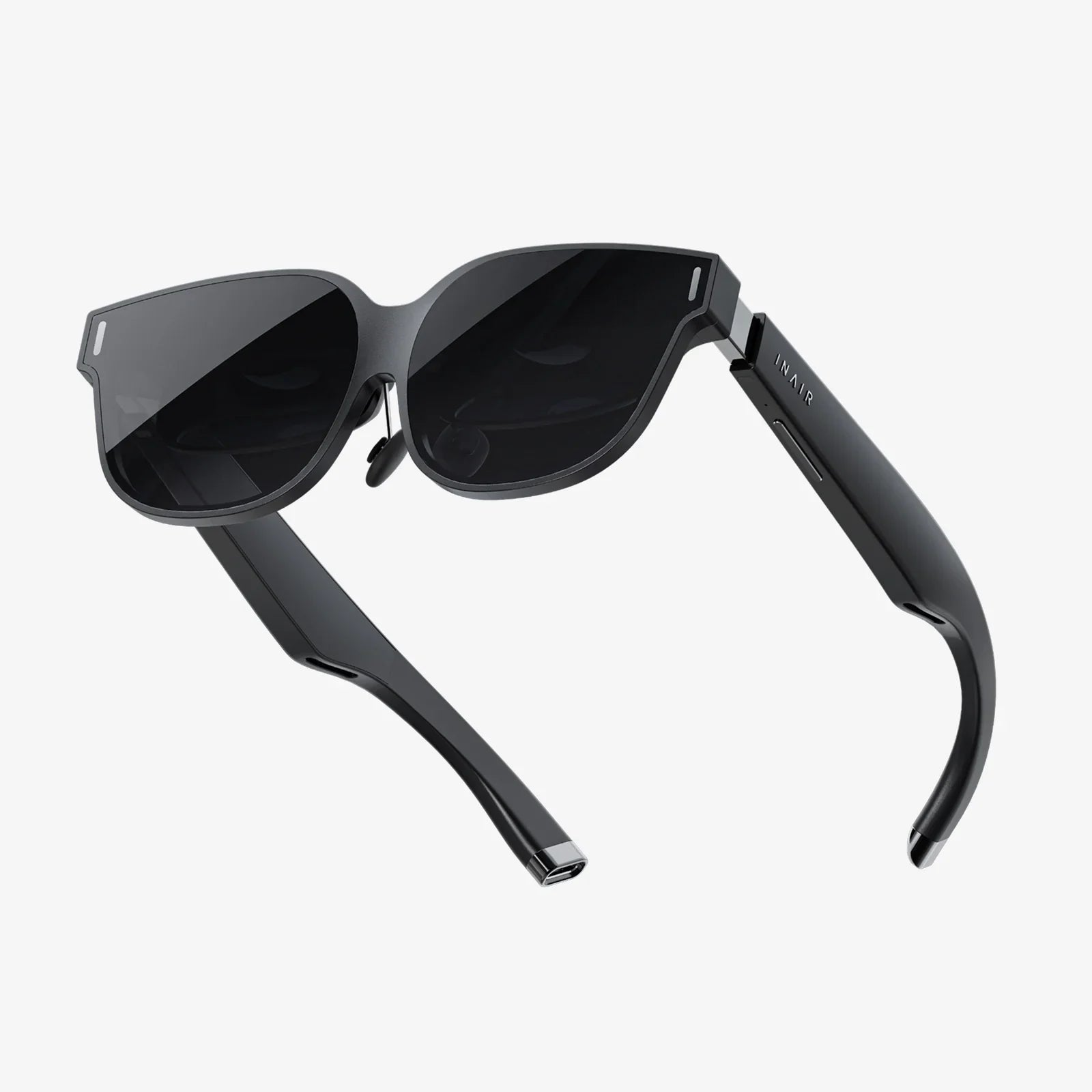
- by wangfred
Augmented VR Experience: Blending Realities for a Transformative Future
- by wangfred
Imagine a world where the digital and the physical are not separate realms, but a single, seamless continuum. Where information doesn't just live on a screen but is painted onto the very fabric of your reality, and virtual objects don't feel like visitors in your world but permanent, interactive residents. This is no longer the stuff of science fiction; it is the burgeoning reality being forged by the development of the Augmented VR Experience, a technological synthesis that promises to fundamentally alter our interaction with computing, information, and each other. This convergence is poised to be the most significant interface shift since the advent of the smartphone, and it’s happening now.
To understand the Augmented VR Experience, we must first move beyond the common, and often confused, definitions of its component parts. Virtual Reality (VR) is typically understood as a fully immersive, digital experience that occludes the physical world, transporting the user to a computer-generated environment. Augmented Reality (AR), by contrast, overlays digital information—images, text, 3D models—onto the user's view of their real-world surroundings through a device like a smartphone or transparent lens.
The Augmented VR Experience, however, is a hybrid paradigm. It is not merely AR inside a VR headset. It is a sophisticated blend where high-fidelity, immersive virtual environments are dynamically infused with real-world context, or conversely, where our physical world is deeply augmented with persistent and interactive virtual content. This is achieved through a combination of advanced technologies:
This technological stack transforms the headset from a portal to another world into a window into a blended one, creating a spectrum of reality where the lines are intentionally and productively blurred.
The user experience of a mature Augmented VR environment is where the true magic lies. It’s a feeling of empowerment and fluidity that is difficult to convey until experienced firsthand.
Put on a headset and the real world fades into view, not as a dim, grainy imitation, but as a bright, clear video feed. With a gesture, you summon a sprawling, panoramic web browser and pin it to your living room wall. Another gesture pulls up a 3D model of a human heart, which you place floating in the center of the room. You can walk around it, peel back its layers, and examine its structure—all while still being completely aware of your physical surroundings. You see your real hands reach out and manipulate the model. You can take a sip of coffee from your very real desk without removing the headset, because the system recognizes the mug and your hand, and the virtual interface intuitively gets out of your way.
This persistent blending is key. Virtual screens and tools don't disappear when you turn them off; they simply become dormant, waiting patiently in their designated physical space for you to reactivate them later. Your virtual workspace is as permanent and organized as your physical desk. This creates a profound sense of continuity and spatial memory, drastically reducing the cognitive load associated with traditional digital multitasking across multiple 2D monitors.
The potential of this technology extends far beyond consumer entertainment. Its most profound impact will be felt across professional and industrial landscapes, solving real-world problems with unprecedented efficiency.
Imagine an automotive design team collaborating on a full-scale, 3D model of a new car engine. In an Augmented VR space, they can all inhabit the same virtual garage, seeing the engine and each other's avatars. But crucially, one engineer can also walk over to their physical desk, grab a real prototype component, and hold it up next to the virtual engine to check for fit and scale. Architects can walk clients through a life-sized, photorealistic model of a new building, with virtual structures perfectly aligned within the empty physical lot, allowing for changes to be visualized and approved on the spot.
Surgeons could practice complex procedures on a patient-specific, virtual anatomy overlay that is perfectly registered onto a medical mannequin or even a real operating theater, providing an invaluable risk-free training ground. Medical students could study intricate anatomical structures in 3D, interacting with them as if they were tangible objects in their lecture hall. Therapists are already using similar blends for exposure therapy, allowing patients to confront fears in a controlled environment that still feels grounded in safety.
The concept of "remote work" is transformed. Instead of a grid of faces on a video call, colleagues from across the globe are projected as life-like avatars into your physical office. You can collaboratively interact with the same 3D data model, a virtual whiteboard, or a physical prototype on your desk. They can point, draw, and manipulate objects in your space as if they were standing right next to you. This shared spatial context fosters a level of collaboration and presence that flat screens cannot hope to achieve, effectively collapsing geographic distance.
From mechanics learning to repair a jet engine to historians walking through a reconstructed ancient city superimposed onto an archaeological dig site, the educational possibilities are limitless. This technology enables experiential, kinesthetic learning—learning by doing—in a safe, scalable, and incredibly engaging way. Complex abstract concepts in fields like physics, chemistry, and biology become tangible, interactive experiences.
For all its promise, the widespread adoption of Augmented VR Experiences faces significant hurdles that must be overcome.
Technical Hurdles: The computational demand is immense. Delivering high-resolution passthrough video with ultra-low latency is critical to prevent user discomfort or nausea. The video feed must be perfectly aligned with the user's head movements in real-time, a challenge that requires immense processing power and optimized algorithms. Battery life, form factor, and weight of the headsets also need to improve for all-day usability.
The Social Hurdle: Wearing a headset is currently an isolating act. It cuts the user off from the subtle nuances of non-verbal cues in face-to-face interaction. For this technology to become a seamless part of daily life, it must evolve to be more socially acceptable and inclusive. Future devices may become as unobtrusive as a pair of eyeglasses, but until then, the social dynamic of wearing a headset in shared spaces remains a barrier.
The Privacy Paradox: This is perhaps the most critical challenge. A device that is constantly capturing high-fidelity video and depth data of your home, your office, and your life is a privacy minefield. The amount of intimate data collected is staggering—from the layout of your home to your daily routines, what you read, and even your facial expressions. Robust, transparent, and user-centric data policies are non-negotiable. Users must have absolute control over their data, with clear understanding of what is being recorded, how it is used, and where it is stored. The industry must prioritize building trust through privacy-by-design principles from the ground up.
Looking ahead, the trajectory of the Augmented VR Experience points toward a world where this blended layer of reality becomes as ubiquitous and essential as the mobile internet is today. We will not live in fully virtual worlds, but we will increasingly interact with a digital stratum that is seamlessly integrated into our physical existence.
This will evolve from head-worn devices to more elegant solutions like smart contact lenses or neural interfaces, further minimizing the barrier between the user and the experience. The digital world will cease to be a destination we visit and instead will become a utility we wear, an always-available enhancement that provides context, information, and connection precisely when and where we need it.
This technological evolution promises to augment not just our reality, but our very humanity—expanding our creativity, amplifying our intelligence, and deepening our connections. It has the potential to make us more present in our physical world by intelligently managing digital distractions, rather than trapping us in a virtual one. The goal is not to escape reality, but to make it richer, more efficient, and more profoundly understood.
The door to this blended world is now open, offering a glimpse of a future where our digital and physical lives finally converge into one coherent, interactive, and astonishingly powerful whole. The next computing platform isn't on your desk or in your pocket; it's all around you, waiting to be unlocked.