


- by wangfred
Augmented vs Alternative Reality: A Deep Dive into Our Digital Future
- by wangfred
Imagine a world where the digital and the physical are no longer separate realms, where information dances before your eyes and entire universes are conjured from the void. This isn't the distant future; it's the burgeoning present, powered by two revolutionary technologies that are reshaping human experience: Augmented Reality and Alternative Reality. The choice between augmenting our world and escaping to another is one of the most profound technological crossroads of our generation, promising to redefine everything from how we work and learn to how we connect and perceive truth itself.
At first glance, the terms might seem interchangeable, but they represent fundamentally different philosophies of digital interaction. Understanding this distinction is crucial to grasping their potential and pitfalls.
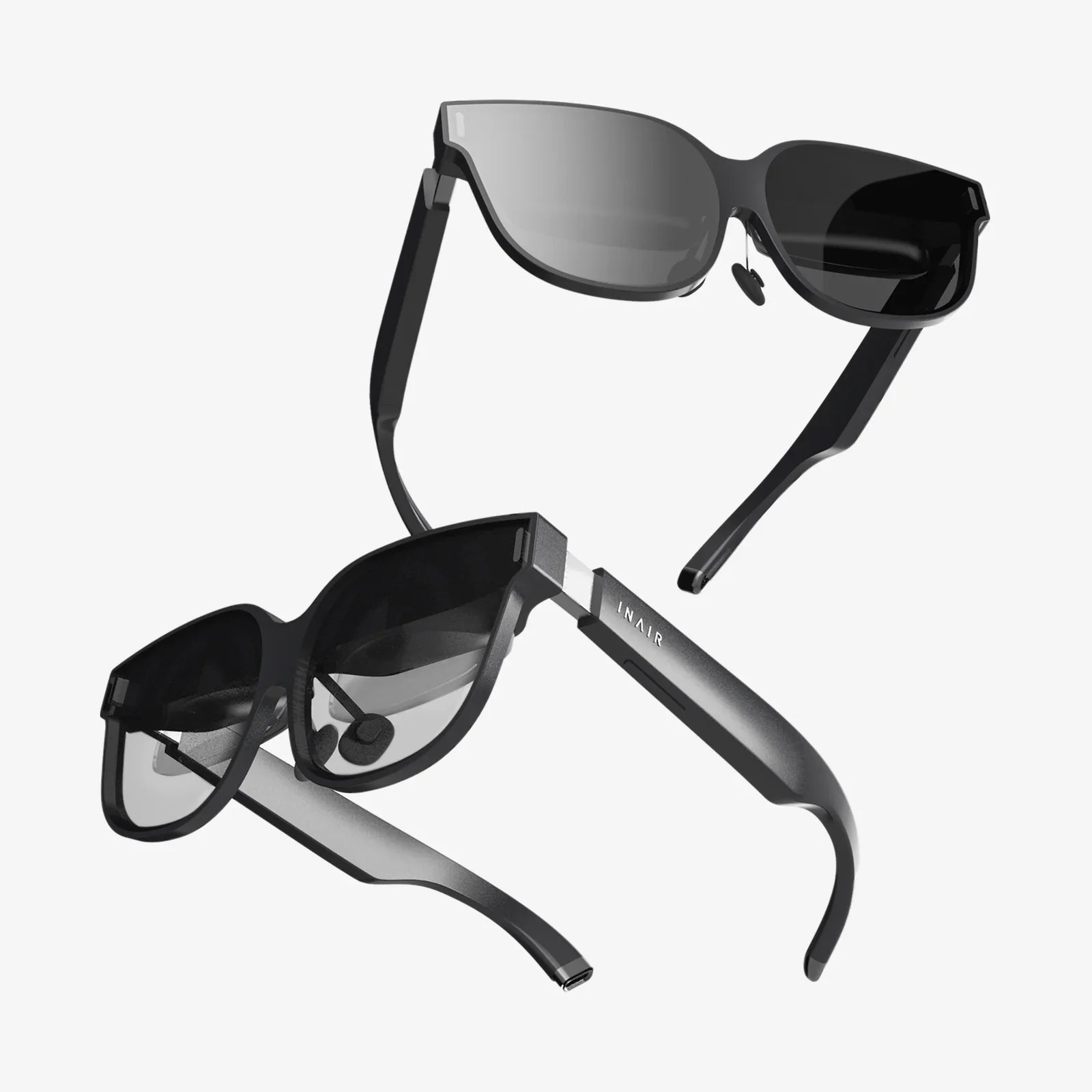
Augmented Reality is a technology that superimposes a layer of digital information—be it images, text, data, or 3D models—onto the user's real-world environment. The core principle of AR is enhancement, not replacement. It uses the existing world as a canvas and adds a digital stratum of interactivity. A user remains present in their physical surroundings but has their perception enriched with contextual computer-generated inputs. This is typically experienced through device screens like smartphones and tablets, or more immersively through transparent glasses or lenses.
Herein lies a critical nuance. "Alternative Reality" is often used colloquially as a catch-all, but it technically encompasses two distinct concepts: Virtual Reality and the broader philosophical idea of constructed realities.
For the purpose of this exploration, we will consider the "augmented vs alternative" dichotomy as primarily between AR (enhancing the real) and VR (replacing the real), while acknowledging the wider implications of alternative digital existences.
The magic of these experiences is powered by a sophisticated blend of hardware and software, with significant overlap but also key divergences in their technical requirements.
Augmented Reality relies on a complex dance of sensors and algorithms to seamlessly blend the digital and physical.
Virtual Reality's primary goal is convincing the user's brain that the synthetic world is real, a feat known as achieving "presence."
Precise tracking is non-negotiable. Inside-out tracking uses cameras on the headset itself to map the room, while outside-in tracking uses external sensors placed in the room to pin-point the headset and controllers' location with extreme accuracy, preventing the disorienting lag or drift that can break immersion.
The potential of these technologies extends far beyond entertainment. They are powerful tools driving innovation across the global economy.
As these technologies weave themselves into the fabric of daily life, they raise profound questions about our humanity, our society, and our perception of reality.
VR offers incredible potential for connection across vast distances, fostering empathy by allowing us to "walk in someone else's shoes" in a literal, simulated sense. However, it also carries the risk of the "experience machine"—a retreat into idealized virtual worlds at the expense of engaging with the often-messy real one. This could exacerbate social isolation and alienation.
AR promises a world of limitless information, but who controls that information? An AR layer owned by a corporation could turn our entire visual field into a personalized advertising space. The constant scanning of our environments also raises monumental privacy concerns. If our devices are always watching and analyzing our homes, offices, and cities, the potential for surveillance is unprecedented.
As AR becomes more sophisticated, distinguishing between what is real and what is digitally added will become increasingly difficult. This has implications for trust, evidence (e.g., the validity of AR-enhanced video footage), and even our shared sense of objective reality. The rise of deepfakes is a primitive precursor to this challenge.
The most exciting development is not the triumph of one over the other, but their convergence. We are already seeing the emergence of Mixed Reality (MR) and Extended Reality (XR)—umbrella terms for experiences that blend the physical and digital along a spectrum.
Future devices might start in VR, fully immersing you for a meeting or game, and then seamlessly transition to AR, allowing digital meeting notes or game characters to persist in your physical office when you need to talk to a colleague. The boundary will dissolve, creating a fluid continuum of digital interaction.
This fusion will be powered by advancements in artificial intelligence, 5G/6G connectivity for low-latency cloud processing, and more natural interfaces like brain-computer interfaces that will allow us to manipulate digital objects with our thoughts, making the technology feel less like a tool and more like an extension of our own cognition.
The journey into these new realities is already underway, a silent revolution happening not in distant labs but in our pockets, on our faces, and in our minds. The path we choose—to augment our world with wisdom or escape to alternatives of our own design—will fundamentally define the human story of the 21st century, challenging us to harness these powerful tools not just for economic gain, but for building a future that remains profoundly, and meaningfully, human.
Share:
Augmented Reality AR Construction: The Future of Building is Transparent
Augmented Reality AR Construction: The Future of Building is Transparent