


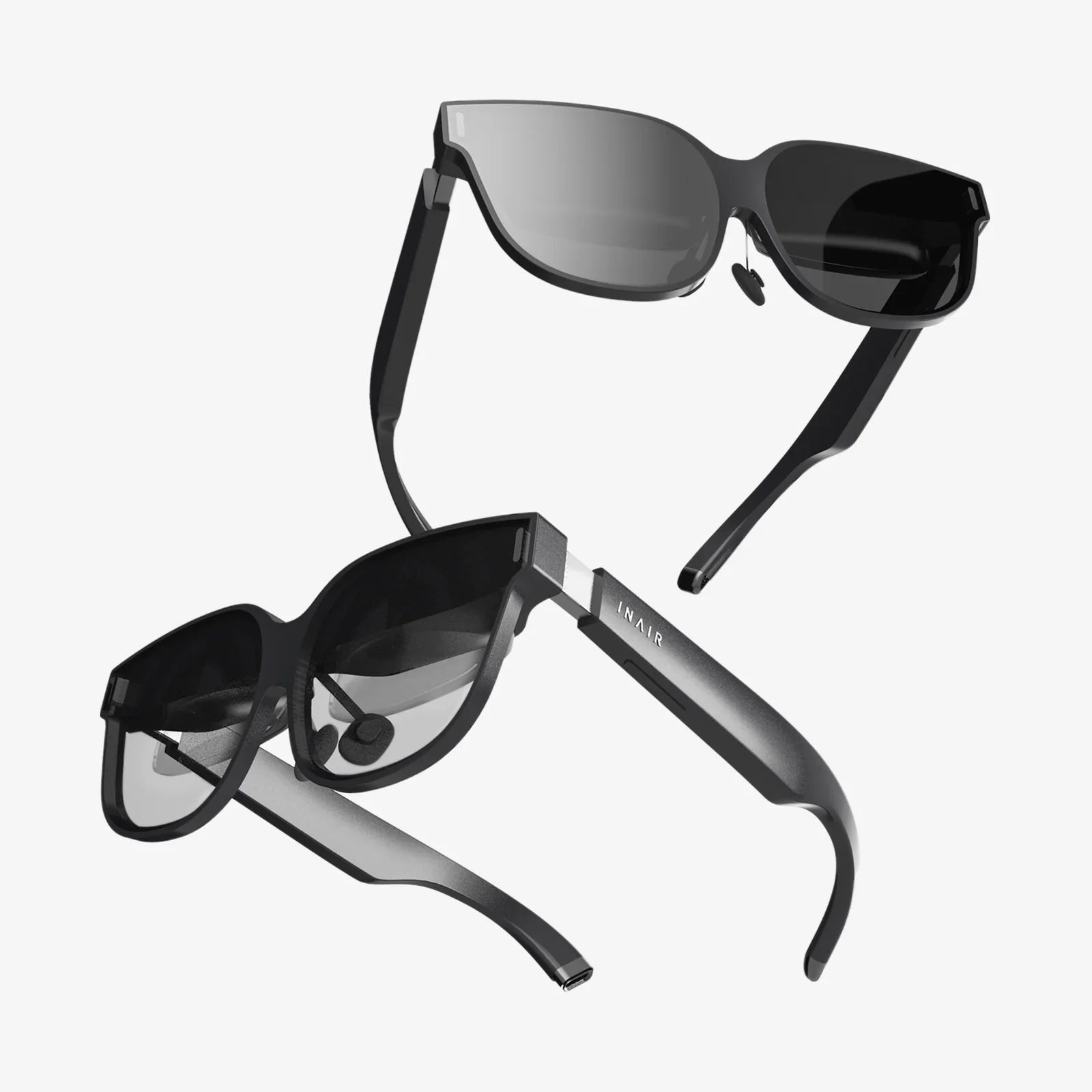
Imagine a world where digital information doesn’t live behind a screen but is seamlessly woven into the fabric of your reality. Directions float on the street in front of you, historical figures reenact battles on the very ground they occurred, and a new sofa appears in your living room before you ever click ‘buy.’ This isn’t a glimpse into a distant future; it is the reality being built today by widely available AR technology. This revolutionary capability is no longer locked away in research labs or expensive, specialized hardware. It’s here, it’s accessible, and it’s quietly transforming everything from how we shop and learn to how we connect and work, all from the powerful computers we carry in our pockets.
Demystifying the Magic: How AR Technology Actually Works
At its core, Augmented Reality is a technology that superimposes a computer-generated image, video, or 3D model onto a user's view of the real world. Unlike Virtual Reality (VR), which creates a completely artificial environment, AR enhances the real world by adding digital elements to it. The magic of available AR technology lies in its sophisticated blend of hardware and software.
Modern smartphones and tablets are equipped with a suite of sensors that make this possible. The camera acts as the eye, capturing the live environment. The accelerometer and gyroscope understand the device’s orientation and movement in space. Finally, powerful onboard processors and advanced algorithms work in tandem to execute a process called simultaneous localization and mapping (SLAM). SLAM allows the device to understand its position relative to the world around it and map the environment's geometry in real-time. This precise understanding is what allows a digital dinosaur to convincingly walk across your kitchen floor or a piece of furniture to sit stably in the corner of your room, perfectly occluded by your real-world coffee table.
The most accessible form of this is marker-based AR, which uses a predefined image (a QR code or a specific logo) to trigger and anchor the digital overlay. A more advanced and increasingly common form is markerless AR, which uses SLAM to place objects on any surface without a pre-set trigger, offering a much more natural and flexible user experience. This combination of powerful, ubiquitous hardware and increasingly sophisticated software is what has moved AR from a novel gimmick to a truly available technology.
Beyond Gaming: The Pervasive Impact of AR Across Industries
While a popular mobile game famously brought AR into the mainstream consciousness, its applications extend far beyond entertainment. Available AR technology is solving real-world problems and creating new paradigms in sectors across the economy.
Revolutionizing Retail and E-Commerce
The retail landscape is being utterly transformed. Try-before-you-buy has evolved from a luxury to an expectation. Shoppers can now use their smartphone cameras to see how a pair of glasses fits their face, how a new shade of lipstick complements their skin tone, or how a watch looks on their wrist. In the home goods sector, apps allow users to place true-to-scale 3D models of furniture, appliances, and décor into their actual living spaces. This drastically reduces purchase anxiety and product returns, creating a more confident consumer and a more efficient supply chain. Virtual showrooms are also becoming common, allowing brands to showcase entire product lines without the overhead of physical inventory on display.
Transforming Education and Training
AR is turning learning from a passive activity into an interactive, immersive experience. Anatomy students can explore a detailed, interactive human body that floats above their textbook. History classes can witness historical events unfold on their classroom desk. Mechanics in training can see step-by-step repair instructions overlaid directly onto the engine they are working on, highlighting exactly which bolt to turn next. This hands-on, visual form of instruction dramatically improves knowledge retention and comprehension, making complex subjects more accessible and engaging for learners of all ages.
Enhancing Industrial and Field Work
In fields like manufacturing, logistics, and maintenance, AR is a powerhouse for efficiency and accuracy. Warehouse workers equipped with AR smart glasses can see digital pick lists and optimal navigation paths superimposed on their view of the warehouse shelves, speeding up fulfillment and reducing errors. Field service technicians can have a remote expert see what they see through their camera and annotate their live view with arrows and notes, guiding them through a complex repair without the expert needing to be physically present. This not only saves immense time and travel costs but also empowers less-experienced workers to perform complex tasks correctly the first time.
Reimagining Healthcare and Medicine
The stakes in healthcare are high, and AR is rising to the challenge. Surgeons can use AR overlays to visualize a patient’s anatomy, such as veins, tumors, or bone structures, directly on the patient’s body before making an incision, increasing precision and safety. Medical students can practice procedures on virtual patients, gaining valuable experience without risk. AR is also being used for physical therapy, guiding patients through exercises with proper form, and for patient education, helping doctors explain complex conditions and procedures in a visually intuitive way.
The Engine of Accessibility: Why AR is Available to Everyone
The single greatest driver behind the AR revolution is the smartphone. The widespread global adoption of powerful, sensor-rich smartphones has created a massive installed base of AR-ready devices overnight. Consumers do not need to invest in expensive new hardware; the portal to augmented experiences is already in their hand. This has created a powerful feedback loop: a large audience of users encourages developers to create more AR applications, and the proliferation of compelling apps further demonstrates the value of the technology, fueling its growth.
Furthermore, tech giants and software developers have created robust software development kits (SDKs) and platforms that democratize AR creation. These tools abstract away the incredibly complex underlying math and computer vision algorithms, allowing developers without PhDs in robotics to build sophisticated AR experiences. Cloud computing also plays a crucial role, offprocessing heavy rendering tasks and storing vast libraries of 3D models, making experiences richer without overburdening the mobile device. This combination of ubiquitous hardware, developer-friendly software, and powerful cloud infrastructure is the trifecta that has made advanced AR truly available to the masses.
Navigating the New Frontier: Challenges and Considerations
Despite its rapid advancement, the widespread adoption of available AR technology is not without its hurdles and ethical considerations.
Privacy and Data Security: AR applications, by their very nature, have an intimate view of the user's environment. The constant processing of camera feeds and mapping of personal spaces raises significant questions about data collection, storage, and usage. Who owns the 3D map of your living room? How is that data secured? Establishing clear, transparent, and ethical data policies is paramount for earning and keeping user trust.
Digital Addiction and Reality Blur: As digital layers become more integrated into our perception, there is a potential for increased screen time and a further blurring of the lines between the digital and physical worlds. The psychological effects of perpetually mediating reality through a device are not yet fully understood, necessitating a conversation about digital wellness and mindful usage.
The Social Contract and Public Safety: The concept of augmented etiquette is emerging. Is it disruptive to use AR applications in social settings? What are the safety implications of walking down a street engrossed in an AR experience? Society will need to develop new social norms and potentially new regulations to ensure that the augmentation of our world is done responsibly and safely for everyone.
The Invisible Future: Where Available AR is Headed Next
The current smartphone-based paradigm is just the beginning. The next evolutionary step is the development of true wearable AR glasses that are socially acceptable, comfortable, and powerful. The goal is to move beyond holding a rectangle of glass to having a persistent, hands-free overlay on reality. This will unlock even more powerful and seamless applications, from real-time language translation subtitles appearing on people’s faces to constant, contextual information about the buildings and history around you.
We are also moving towards a more collaborative and shared AR experience, often referred to as the AR cloud. This is a persistent, digital copy of the real world that allows multiple users to share and interact with the same digital objects in a specific location simultaneously. Imagine architects and clients walking through a life-size, digital model of a building before a single brick is laid, or friends leaving virtual notes and artwork for each other in a public park. This will transform AR from a personal tool into a shared platform for communication and collaboration.
Furthermore, the convergence of AR with Artificial Intelligence will create systems that are not just interactive but truly intelligent and contextual. An AI-powered AR system could analyze what it sees through your camera, understand your goals, and proactively offer information and assistance, acting as an ultimate personal guide and assistant woven seamlessly into your life.
The revolution is not on the horizon; it’s already unfolding in the palm of your hand. Available AR technology is dismantling the barrier between the digital and the physical, offering a new lens—literally and figuratively—through which to learn, work, shop, and play. It promises a future where information is contextual, intuition is enhanced, and our interaction with the world is limited only by our imagination. The device in your pocket is your ticket in; all you have to do is look up and see the world anew.
Share:
New Glasses With Screen: The Dawn of Pervasive Personal Computing
Top VR Goggles: An In-Depth Guide to Immersive Technology