


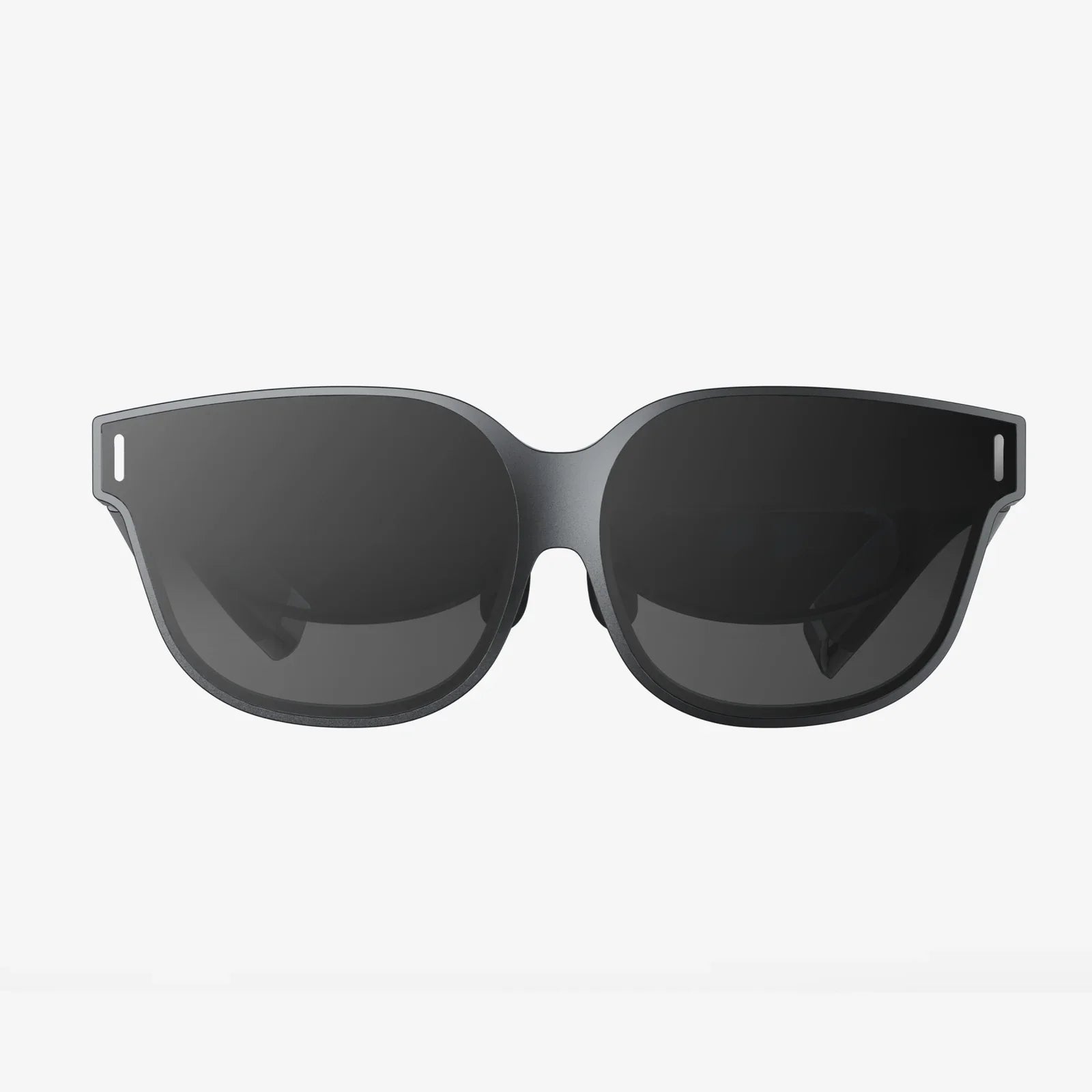
Imagine a world where digital information doesn’t just live on a screen but is seamlessly woven into the fabric of your physical reality, enhancing everything from how you work and learn to how you play and connect. This is the promise of augmented reality (AR), a technology rapidly moving from science fiction to everyday life. It’s not about escaping our world but about making it richer, more informative, and infinitely more interactive. The journey into this exciting domain begins with a solid grasp of the fundamentals.
Defining the Digital Overlay: What Exactly is Augmented Reality?
At its simplest, augmented reality is a technology that superimposes a computer-generated image, video, or 3D model onto a user's view of the real world. Unlike Virtual Reality (VR), which creates a completely artificial digital environment, AR uses the existing environment and overlays new information on top of it. The key differentiator is that AR supplements reality, rather than completely replacing it.
This is often achieved through a device—be it a smartphone, tablet, smart glasses, or a headset—that acts as a lens. This device uses a camera to capture the real world, processors to understand it, and a display to project relevant digital content onto it. The result is a composite view that blends the physical and the digital in real-time.
The Core Components: The Building Blocks of an AR Experience
Every functional AR system, regardless of its complexity or form factor, relies on a few fundamental components working in harmony.
Hardware: The Eyes and Brain
The hardware suite is the physical foundation. It includes sensors like cameras to see the world, depth sensors and LiDAR to understand it in three dimensions, and IMUs (Inertial Measurement Units) containing accelerometers and gyroscopes to track the movement and orientation of the device itself. All this sensor data is fed to a processor, the brain of the operation, which performs the heavy computational lifting required for tracking and rendering. Finally, a display presents the final merged reality to the user, which can range from a standard smartphone screen to advanced optical projection systems in dedicated headsets.
Software and Algorithms: The Invisible Magic
If hardware is the body, software is the nervous system. This includes the operating system that manages the device's resources and, most crucially, the sophisticated algorithms that power the AR experience. These algorithms handle critical tasks like simultaneous localization and mapping (SLAM), which allows the device to both map an unknown environment and track its own position within that environment simultaneously. This is essential for anchoring digital objects persistently in the real world. Computer vision algorithms are also used to perform object recognition, allowing the AR system to identify specific items, like a piece of machinery or a printed image, and trigger corresponding digital interactions.
Content: The Digital Layer
This is the actual digital information—the augmentations—that users see and interact with. This content can be incredibly diverse: a simple text label identifying a landmark, a hyper-realistic 3D model of a new piece of furniture placed in your living room, an animated character dancing on your kitchen table, or a complex set of holographic instructions overlaid onto a car engine. The creation of this 3D content is a field in itself, often utilizing game engines known for their powerful real-time 3D rendering capabilities.
How It Works: The Technical Symphony of Tracking and Rendering
The process of creating a convincing AR experience is a continuous loop of perception, processing, and projection.
1. Perception: Seeing the World
The journey begins with the device's sensors capturing the physical environment. The camera provides a 2D video feed, while depth sensors and LiDAR add a crucial third dimension by measuring distances and creating a detailed depth map of the surroundings. The IMU provides high-frequency data on how the device is moving and rotating.
2. Processing: Making Sense of It All
This raw sensor data is processed to understand the environment and the device's place within it. Using SLAM technology, the device constructs a sparse geometric map of the space, identifying key feature points on surfaces. It then tracks its own movement relative to these points. This ensures that when you move, the digital object doesn't slide around unrealistically but stays "locked" to its intended position in the physical world. Furthermore, if the system is designed for it, computer vision algorithms can analyze the camera feed to recognize predefined images, objects, or surfaces, triggering specific AR content.
3. Projection: Blending the Real and Digital
Once the device understands its environment and position, it renders the appropriate digital content. This rendering must be perfectly aligned with the user's perspective and happen in real-time with extremely low latency to maintain the illusion. The final composite image—a blend of the live camera feed and the rendered graphics—is then displayed to the user. In optical see-through systems, like many smart glasses, digital light is projected directly onto the transparent lenses, allowing the user to see the real world naturally with the graphics overlayed on top.
Marker-Based vs. Markerless AR: Finding an Anchor
A critical concept in AR is understanding how digital content is anchored to the real world. This is primarily divided into two approaches.
Marker-Based AR (Image Recognition)
This was one of the earliest forms of AR. It relies on a predefined visual marker, often a black-and-white QR-like code or a specific image. The device's camera scans the environment for this specific pattern. Once recognized, the software triggers the associated digital content to appear, usually superimposed on top of the marker. Its strength is its reliability and simplicity, but its weakness is its dependency on a specific trigger object that must always be present and in view.
Markerless AR (The Future)
This is the more advanced and flexible approach, enabled by GPS, digital compasses, and SLAM. It allows digital content to be placed anywhere in the environment without a physical marker. This includes:
- Surface Tracking: Placing a virtual vase on a physical table.
- Plane Detection: Identifying horizontal (floors, tables) and vertical (walls) surfaces to serve as anchors.
- Geolocation AR: Using GPS data to pin digital information to specific geographic locations, like directions on a street or historical information about a building.
Markerless AR offers a much more natural and immersive experience, as the digital world becomes a persistent part of the physical one.
Applications Across Industries: More Than Just Games
While popularized by entertainment, the true power of AR lies in its practical, transformative applications across countless sectors.
Retail and E-Commerce
AR is revolutionizing shopping. Customers can use their smartphones to see how a new sofa would look in their living room, "try on" watches or makeup virtually, or see additional product information by simply pointing their camera at an item on a shelf. This bridges the gap between online convenience and in-store confidence, reducing purchase hesitation and return rates.
Manufacturing and Field Service
In industrial settings, AR smart glasses can provide technicians with hands-free access to complex repair manuals, schematics, and expert remote assistance. Digital arrows and instructions can be overlaid directly onto machinery, guiding a worker through an assembly process or highlighting a component that needs maintenance. This drastically reduces errors, improves training speed, and enhances safety.
Healthcare and Medicine
Medical students can explore detailed, interactive 3D models of human anatomy. Surgeons can use AR projections to visualize a patient's anatomy, such as the precise location of tumors or blood vessels, directly onto the patient during a procedure, improving accuracy and outcomes. It can also aid in vein detection for injections and provide visual guides for physical therapy exercises.
Education and Training
AR brings learning to life. A history textbook can make historical figures emerge from the page, a astronomy app can overlay constellations in the night sky, and a chemistry app can show interactive 3D models of molecules. This interactive, visual learning enhances engagement and improves knowledge retention for students of all ages.
Navigation and Maps
Instead of looking at a 2D map on a phone, AR navigation apps can overlay directional arrows, street names, and points of interest directly onto the live view of the street in front of you. This creates an intuitive and context-rich guidance system, making it easier to navigate complex airports, city centers, or large campuses.
The Future and Challenges: Where Do We Go From Here?
The future of AR is moving towards smaller, more powerful, and socially acceptable hardware—think everyday eyeglasses rather than bulky headsets. The convergence of AR with Artificial Intelligence (AI) and 5G connectivity will unlock even more powerful experiences, enabling real-time object recognition, language translation overlaid on signs, and complex, shared multi-user experiences with ultra-low latency.
However, significant challenges remain. There are hardware limitations in achieving all-day battery life, sufficient processing power, and a wide field of view in a small form factor. Creating compelling and useful content at scale is another hurdle. Furthermore, serious questions around privacy, data security, and the social implications of a digitally mediated world need to be addressed as the technology becomes more pervasive.
From its humble beginnings as a novel gimmick, augmented reality has matured into a powerful tool with the potential to fundamentally alter our perception of and interaction with reality. The magic isn't in the pixels themselves, but in their elegant fusion with our world, offering a new lens through which to see, learn, and accomplish. This is just the beginning; the real world is waiting to be augmented.
Share:
Augmented Reality Planning: The Future of Design, Construction, and Urban Development
AR Headset vs VR Headset: The Ultimate Guide to Immersive Technologies