


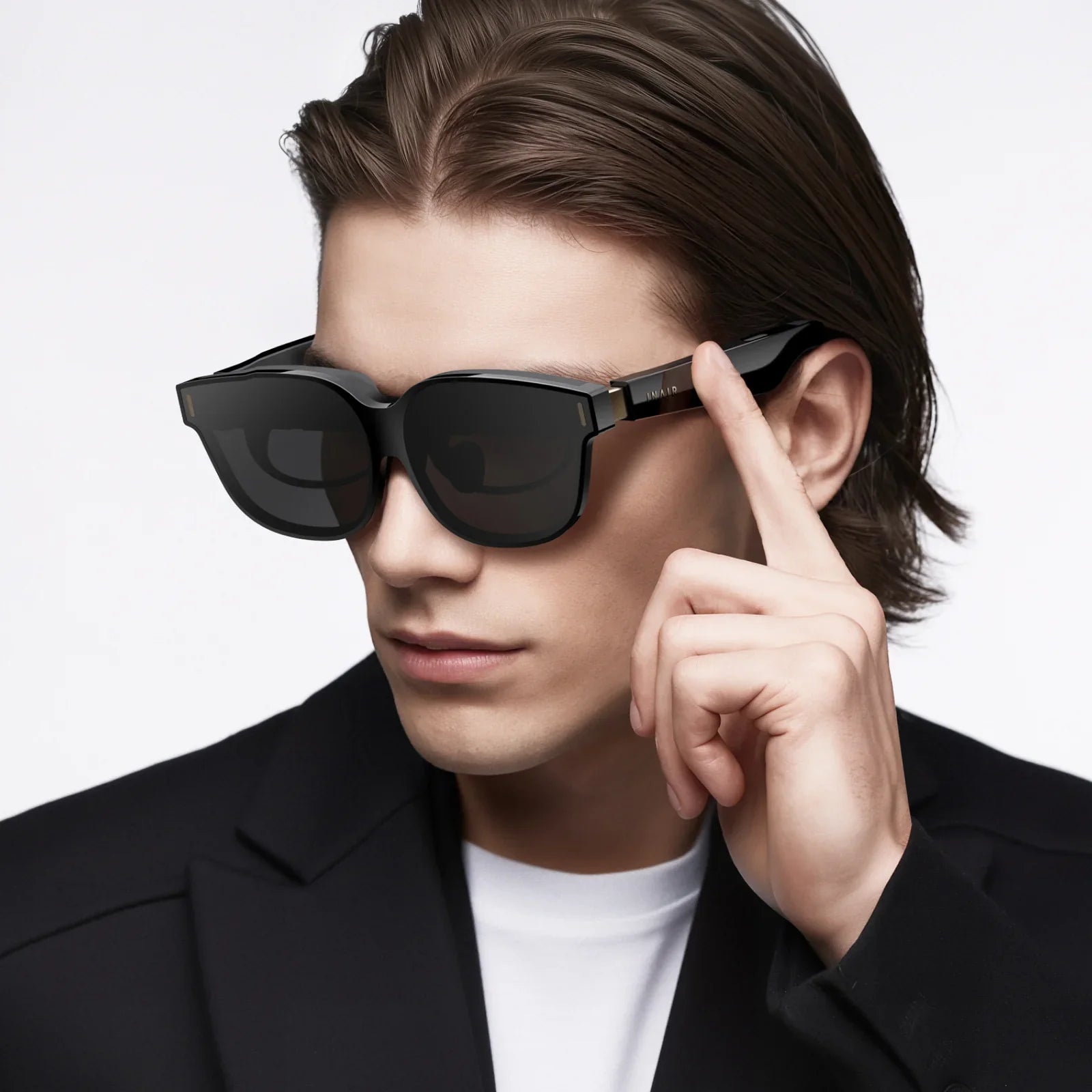
Imagine stepping through a portal into another world, where digital creations possess tangible depth and fantasy landscapes stretch out before you with breathtaking realism. This is the promise of modern three-dimensional technology, a promise fulfilled not by a screen alone, but by the critical portal you wear on your face: the 3D goggles. The quest for the best 3D goggles is about more than just a purchase; it's about selecting the key that will unlock entirely new dimensions of entertainment, creativity, and productivity. The right pair can transform pixels into presence and data into experiences, making the choice one of the most important for any tech enthusiast looking to step into the future.
The Core Technologies Behind the Magic
Not all 3D goggles are created equal. The experience they deliver is fundamentally shaped by the underlying technology they employ. Understanding these core principles is the first step toward identifying the best pair for your needs.
Active Shutter 3D Technology
This technology operates on a precise, synchronized flicker. The goggles themselves contain liquid crystal shutters over each eye. These shutters rapidly alternate between transparent and opaque states, working in direct sync with the display source. The display shows the image for the right eye, then the left eye, in a successive pattern. When the right-eye image is displayed, the left lens darkens to block the view, and vice versa. This happens at such a high speed—typically 120Hz per eye—that the brain seamlessly merges the two separate images into a single, cohesive 3D picture.
Pros: This method is known for delivering full high-definition resolution to each eye, resulting in a very sharp and high-quality image. It generally offers a good sense of depth and pop-out effects.
Cons: The goggles require power, usually from an internal battery that needs periodic charging. They can also be susceptible to flicker, which may cause eye strain or headaches for some users, especially in darker environments. Furthermore, they require a compatible display that supports the high refresh rate and synchronization protocol.
Passive Polarized 3D Technology
Where active systems use timing, passive systems use light polarization. The display shows both the right-eye and left-eye images simultaneously, but each is projected with a different light polarization (often circular polarization). The lenses of the goggles are correspondingly polarized filters. The right lens only allows light polarized for the right eye to pass through, effectively blocking the left-eye image from reaching the right eye, and the left lens does the same for its respective image.
Pros: These goggles are typically very lightweight, comfortable, and inexpensive. They require no batteries or electronics, making them simple and reliable. They are also largely immune to the flicker associated with active systems.
Cons:The main drawback is a halving of vertical resolution. Since the two images are displayed on alternate lines on the screen, each eye effectively receives only half the total resolution, which can lead to a slightly less sharp image compared to active systems, especially if the viewer sits too close to the screen.
Autostereoscopic Technology (The No-Goggles Future)
This emerging technology aims to eliminate the need for head-worn apparatus altogether. Autostereoscopic displays use special optical elements, like lenticular lens sheets or parallax barriers, placed over the screen to direct different images to the viewer's left and right eyes based on their position in front of the display. Some advanced systems even use eye-tracking to adjust the image in real-time as the viewer moves.
Pros: The ultimate convenience—no goggles required. This offers a more natural and social viewing experience.
Cons: This technology is still in its relative infancy for consumer markets. It often requires the viewer to be in a specific "sweet spot" to perceive the 3D effect correctly, limiting movement. The technology is also complex and expensive, making it rare in consumer products.
Key Features to Evaluate When Choosing
Beyond the core technology, several critical features separate adequate 3D goggles from exceptional ones. These factors directly impact comfort, visual fidelity, and overall satisfaction.
Field of View (FOV)
Measured in degrees, the Field of View is arguably the single most important factor for immersion. It determines how much of your vision is occupied by the virtual environment. A narrow FOV feels like looking through a binocular or a window, constantly reminding you that you are wearing a device. A wide FOV, often 100 degrees or more, fills your peripheral vision, creating a powerful sensation of actually being inside the digital world. For truly immersive applications, a wider FOV is almost always superior.
Resolution and Pixel Density
In the context of 3D goggles, resolution is paramount. Because the display is magnified so close to your eyes, any deficiency in pixel density becomes glaringly obvious, manifesting as a "screen door effect"—where you can see the faint lines between pixels, as if looking through a fine mesh screen. Higher resolutions, such as 4K per eye or beyond, are essential for creating a crisp, clear, and believable image that allows for long-duration use without visual fatigue.
Refresh Rate and Low Persistence
The refresh rate, measured in Hertz (Hz), indicates how many times per second the image on the display updates. A higher refresh rate (90Hz, 120Hz, or even 144Hz) is crucial for smooth motion and responsiveness, which in turn reduces latency-induced motion sickness. Coupled with this is a technology called low persistence. Instead of leaving an image illuminated for the entire frame time, the display flashes it very briefly. This eliminates motion blur when you turn your head, as your brain isn't left with a lingering image from the previous frame. This combination is a cornerstone of comfortable virtual reality.
Tracking: Degrees of Freedom (DoF)
Tracking defines how the goggles understand your movement. There are two primary types:
- 3DoF (Three Degrees of Freedom): Tracks rotational movement only—pitch (nodding yes), yaw (shaking no), and roll (tilting your head). This is sufficient for experiences where you are seated and looking around, like watching a 360-degree video.
- 6DoF (Six Degrees of Freedom): Tracks both rotation and translational movement—leaning forward, crouching, ducking, and moving side-to-side. This is the gold standard for immersive VR, as it allows you to physically move within the virtual space, making the experience profoundly more realistic and engaging. This is typically achieved through external sensors or inside-out tracking using built-in cameras.
Ergonomics and Comfort
Technical specs are meaningless if the device is unbearable to wear. The best 3D goggles are a marvel of ergonomic design. Key considerations include:
- Weight Distribution: The weight should be balanced to avoid pressure on the cheeks or the bridge of the nose.
- Head Straps: Adjustable, padded straps (often a rigid halo design or flexible straps) are essential for a secure and comfortable fit.
- Interpupillary Distance (IPD) Adjustment: A physical or software adjustment that allows you to match the distance between the lenses to the distance between your pupils. Proper IPD adjustment is critical for visual clarity and avoiding eye strain.
- Materials: Padded, breathable foam facial interfaces that can be replaced or cleaned are a must for hygiene and comfort, especially during extended sessions.
Audio Integration
Immersive audio is half the experience. Many high-end goggles feature built-in spatial audio speakers that direct sound to your ears without actually covering them, preserving comfort and situational awareness. Others include high-quality built-in headphones or 3.5mm jacks for your own preferred audio solution. Spatial audio, which makes sounds come from specific directions in the 3D space, is a key feature for presence.
Matching Goggles to Your Primary Use Case
The "best" goggles are entirely dependent on what you intend to do with them. A perfect pair for a cinephile might be overkill for a casual gamer, and vice versa.
For the Hardcore Gamer
Gamers demand performance above all else. The priority list includes:
- High Refresh Rate & Low Latency: Essential for fast-paced action and to prevent nausea. 90Hz is a minimum; 120Hz or higher is the target.
- 6DoF Tracking: Non-negotiable. You need to be able to dodge, lean, and physically interact with the game world.
- High Resolution: To spot distant enemies and appreciate detailed environments.
- Wide Field of View: For maximum immersion and peripheral awareness.
- Robust Controllers: While not part of the goggles themselves, they are part of the ecosystem and must offer precise, responsive tracking.
For the Cinephile and Media Consumer
For someone who wants a personal, theater-sized screen for movies, sporting events, or 360-degree documentaries, the needs shift:
- Maximum Resolution and Pixel Density: The screen door effect is the enemy of film immersion. The highest possible resolution is the top priority to replicate the crispness of a cinema screen.
- OLED Displays: For deep, inky blacks and a high contrast ratio, which is crucial for movie watching.
- Comfort for Long Sessions: Lightweight design and balanced ergonomics are critical for watching a two-hour film.
- 3DoF is Often Sufficient: For watching media, you typically don't need to walk around; rotational tracking is enough to look around a virtual theater.
For the Professional and Creator
Architects, designers, engineers, and medical professionals use 3D goggles for visualization, training, and design review. Their requirements are stringent:
- Extreme Clarity and Precision: The ability to see fine details in a 3D model or anatomical scan is paramount. This demands ultra-high resolution.
- Accurate Color Reproduction: For design and prototyping, colors must be true-to-life.
- Inside-Out Tracking with Wide Range: The ability to walk around a virtual object or environment is crucial for review.
- Software Ecosystem: Compatibility with professional-grade software is more important than gaming performance.
The Future of 3D Viewing Technology
The evolution of 3D goggles is moving at a breakneck pace. The devices we consider cutting-edge today will be obsolete in a few years. Several key trends are shaping the next generation:
- Varifocal Lenses: Current goggles have a fixed focal distance, which causes a conflict between vergence (your eyes pointing inward) and accommodation (your eyes focusing). This is a primary source of eye strain. Next-gen prototypes feature varifocal lenses that dynamically adjust their focus based on what you are looking at, creating a much more natural and comfortable visual experience.
- Eye-Tracking: This technology not only enables foveated rendering (drastically reducing rendering load by only fully rendering the area where you are directly looking) but also enables more intuitive UI interaction and advanced social avatars in virtual spaces.
- Haptic Feedback and Facial Expression Tracking: Future systems will include haptic pads to simulate touch on the face and internal cameras to track your eye movements and facial expressions, translating them onto your digital avatar for unparalleled social presence.
- Miniaturization and Form Factor: The ultimate goal is a pair of goggles as sleek and lightweight as sunglasses. Advances in pancake lenses and micro-OLED displays are steadily driving the industry toward this goal, paving the way for all-day wearable computing.
Your journey into the third dimension is a personal one, shaped by your dreams of exploration, creation, or simply unparalleled entertainment. The best 3D goggles are not defined by a brand name or a marketing slogan, but by their flawless alignment with your vision. They are the silent, powerful conduit between your reality and the infinite possibilities of a digital universe. By prioritizing the technology that matters most for your intended experience and demanding excellence in comfort, clarity, and immersion, you aren't just buying a piece of hardware—you are securing your passport to worlds yet unexplored, stories yet untold, and perspectives yet unimagined. The gateway awaits; all you need to do is choose the right key.
Share:
Virtual Office Home Office: The Definitive Guide to Mastering the Remote Work Revolution
Best Augmented Glasses: The Ultimate Guide to Seeing a New Reality