


- by wangfred
Best Affordable AR Glasses 2025: The Ultimate Buyer's Guide to the Future on a Budget
- by wangfred
Imagine a world where digital information doesn't live trapped behind a screen but flows seamlessly into your physical reality, enhancing everything you see, learn, and do. This is the promise of augmented reality, a future once reserved for high-budget sci-fi films and tech billionaires. But what if you could slip on a pair of sleek, comfortable glasses and step into that future today, without needing to remortgage your home? The year 2025 has ushered in a revolutionary wave of AR eyewear that shatters the old paradigms of cost and complexity, bringing truly immersive and practical augmented reality into the realm of the everyday consumer. The hunt for the best affordable AR glasses is no longer a fantasy; it's a very real and exciting shopping decision.
For years, augmented reality technology faced a significant bottleneck: the astronomical cost of high-quality components. Micro-optics, waveguide displays, spatial sensors, and powerful miniaturized processors were exotic, low-yield technologies. However, 2025 marks a tipping point. Massive investment in manufacturing, breakthroughs in optical design, and economies of scale have finally converged.
Manufacturers have moved beyond the costly and bulky prototypes of the past. The current generation leverages streamlined, modular designs that are cheaper to produce and assemble. Furthermore, intense competition in the sector has driven innovation not just in features, but in cost-reduction strategies. Companies are now focused on creating a compelling user experience at a mainstream price point, understanding that widespread adoption is the true key to long-term success, not niche, high-margin products.
Before diving in, it's crucial to define our terms. "Affordable" in 2025 does not mean "cheap" or "low-quality." Instead, it signifies a class of devices typically priced significantly below professional-grade AR headsets, making them accessible to a broad audience. We're talking about a price range that aligns with premium smartphones, positioning them as the next essential personal computing device.
Similarly, "best" is a multifaceted term. It's no longer just about raw technical specifications. The best affordable AR glasses of 2025 balance a suite of critical factors:
The heart of any AR glasses is its display system. In 2025, two technologies dominate the affordable segment: advanced waveguide optics and MicroLED projectors. Waveguides use microscopic gratings to pipe light from projectors at the temples directly into your eyes, allowing for a sleek design. Look for glasses offering full-color, high-resolution displays with a wide field of view (FOV). While early models had FOVs comparable to a postage stamp, 2025's affordable options provide a much more immersive canvas, suitable for watching movies or navigating complex data overlays.
Brightness is also critical. A minimum of 1000 nits is now standard for good visibility in indoor environments, with higher-end models pushing 2000+ nits for flawless performance in direct sunlight. This ensures your digital content isn't washed out by the world around you.
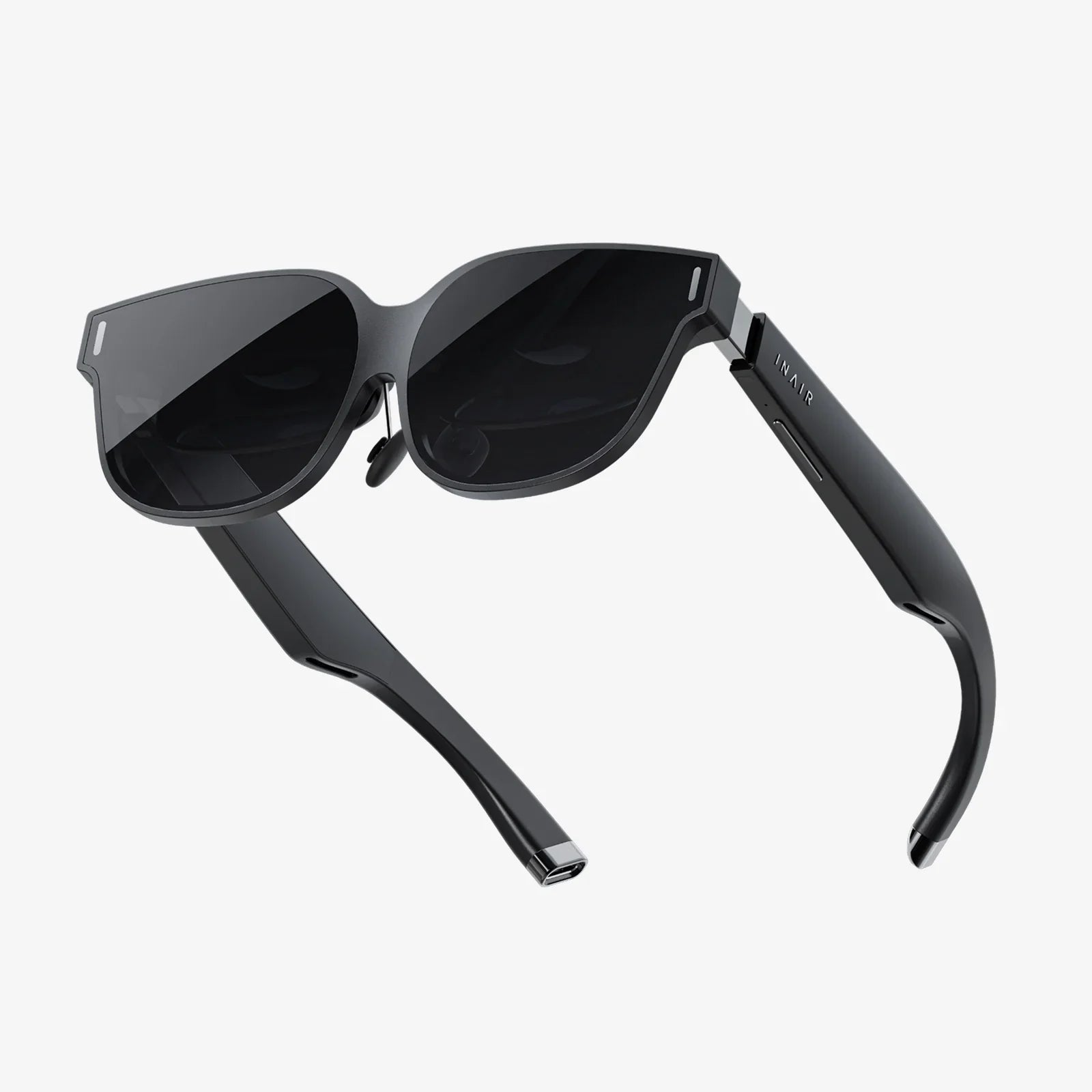
The era of looking like a cyborg is over. The best models of 2025 prioritize a minimalist, fashionable aesthetic. Think frames similar to contemporary designer eyewear, with technology so discreet it's almost invisible to an observer. Weight distribution is engineering marvel, ensuring no pressure points on the nose or ears. Many offer customizable options, including magnetic clip-on prescription lenses, so users don't have to choose between clear vision and augmented vision.
This is a fundamental differentiator in how AR glasses function:
The "best" choice depends on your use case. For media consumption with a phone in your pocket, tethered is fine. For unimpeded mobility, standalone is king.
True AR requires understanding the world. This is achieved through a suite of onboard sensors: high-resolution cameras, depth sensors (like LiDAR or structured light), and inertial measurement units (IMUs). These sensors create a real-time 3D map of your environment, allowing digital objects to snap onto your table, occlude behind your couch, or react to your physical space.
Interaction is equally important. Look for models supporting multiple intuitive input methods: precise hand-tracking that lets you pinch and manipulate digital objects, voice commands for quick actions, and a responsive touchpad built into the temples for subtle control.
Battery technology remains a challenge, but smart design has overcome it. The best affordable glasses in 2025 offer solutions ranging from 8-10 hours of continuous use from a sleek, integrated battery to ultra-fast charging that provides a full day's power in just a 15-minute break. Some models use a clever dual-battery system: a small cell in the frames for essential functions, supplemented by a larger, hot-swappable battery pack that clips onto the end of the temple.
Hardware is meaningless without software. The ecosystem in 2025 has exploded, delivering tangible value across numerous domains.
Ready to take the plunge? Use this checklist to guide your decision:
The trajectory is undeniable. The innovations driving the best affordable AR glasses of 2025—smarter sensors, more efficient chips, and novel optical solutions—are only accelerating. We are rapidly moving towards a future where always-available, context-aware computing is as normal and indispensable as the smartphone is today. The barriers of cost, design, and utility have finally been overcome, opening a gateway to a new dimension of human-computer interaction. This isn't just about watching a bigger screen; it's about enhancing human potential, bridging gaps in understanding, and overlaying a layer of magic and efficiency onto the world we already know and love.
Stop imagining the future and start seeing it for yourself. The next generation of affordable AR glasses is waiting to redefine your reality, offering a portal to a world where information, creativity, and connection are seamlessly interwoven with your everyday life, all from a device that fits in your glasses case and doesn't demand a fortune. The digital and physical worlds have begun their final merger, and you have a front-row seat.