


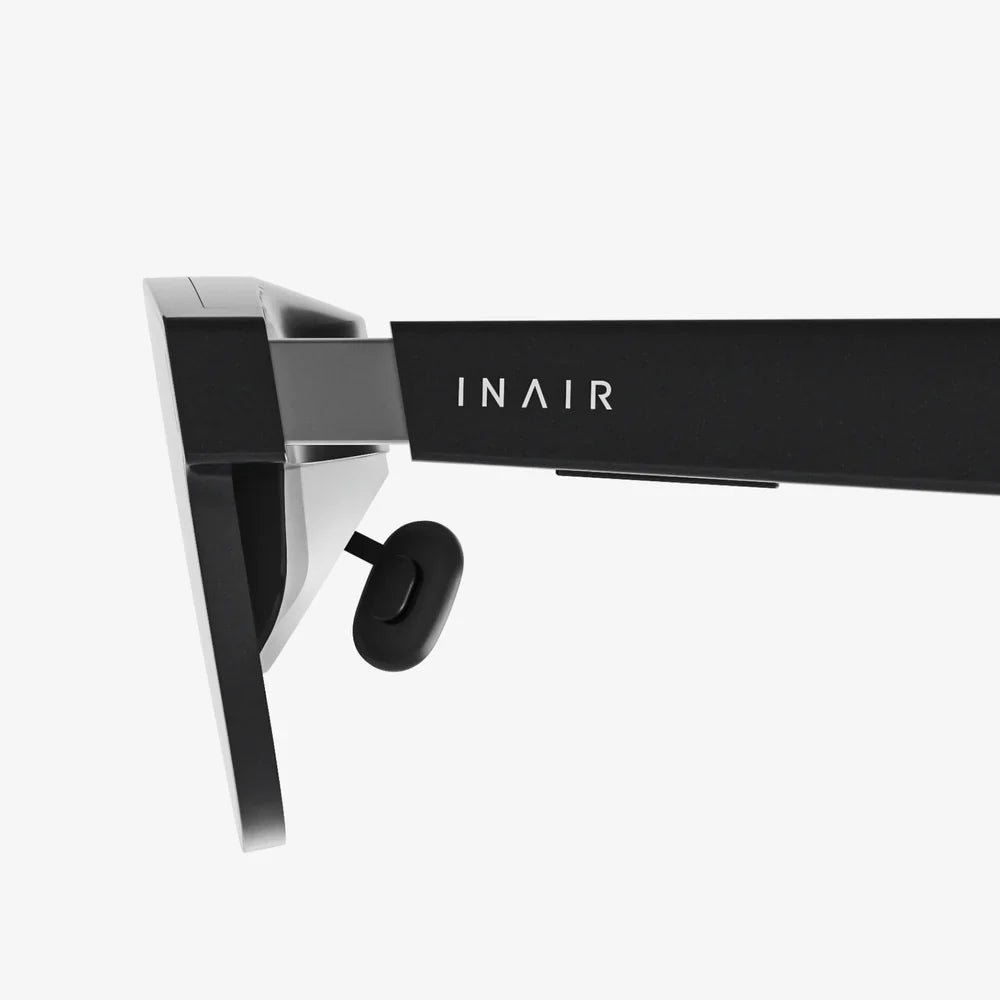
Imagine a world where your glasses do more than just help you see clearly—they see for you, understand your environment, translate languages in real-time, and connect you to a digital universe without ever needing to look down at a screen. This is no longer the realm of science fiction; it is the exciting and rapidly evolving present of the best AI eye glasses. This comprehensive guide delves deep into the technology, applications, and profound implications of wearing a computer on your face, exploring how these devices are poised to revolutionize everything from daily convenience to accessibility for millions.
The Convergence of Optics and Intelligence
The journey to creating the best AI eye glasses began with the simple goal of miniaturization. For decades, technologists dreamed of wearable computers, but the hardware was too bulky, the batteries too weak, and the processing power insufficient. The breakthrough came not from a single invention, but from a convergence of several technological waves. The smartphone revolution perfected tiny sensors, high-resolution micro-displays, and efficient system-on-a-chip processors. Simultaneously, the field of artificial intelligence, particularly deep learning and computer vision, achieved stunning advances in object recognition, natural language processing, and augmented reality overlays.
AI eye glasses represent the pinnacle of this convergence. They are not merely cameras attached to frames or screens placed in front of eyes. True AI spectacles integrate a sophisticated suite of hardware:
- High-Resolution Cameras: Acting as the eyes of the system, these cameras continuously capture the wearer's visual field.
- Microphones and Speakers: For auditory input and output, enabling voice commands and audio feedback.
- Inertial Measurement Units (IMUs): Including gyroscopes and accelerometers to track head movement and orientation.
- Advanced Displays: Using technologies like waveguide optics or micro-LEDs to project digital information directly onto the lenses, creating a seamless blend of the physical and digital worlds.
- Onboard AI Processors (NPUs): Specialized neural processing units that handle the immense computational load of real-time AI algorithms directly on the device, ensuring low latency and protecting user privacy.
- Connectivity Modules: 5G and Wi-Fi for cloud connectivity when needed, though the trend is toward powerful edge computing.
This hardware symphony is conducted by sophisticated software—AI models trained on massive datasets to understand scenes, identify objects, transcribe speech, and generate contextual information instantly and accurately.
Beyond Vision Correction: A Multitude of Use Cases
The applications for AI-powered eyewear are as diverse as they are transformative. They extend far beyond a novelty gadget for tech enthusiasts, reaching into critical areas of life, work, and health.
Revolutionizing Accessibility and Assistive Technology
Perhaps the most profound impact of this technology is in the realm of accessibility. For the visually impaired and blind community, AI glasses can act as a powerful visual interpreter.
- Auditory Scene Description: The glasses can narrate the world around the user. They can identify people approaching, read text from signs, documents, or menus aloud, describe room layouts, and even detect emotions on faces.
- Obstacle Avoidance and Navigation: Using depth-sensing cameras, the glasses can map the environment in 3D, warning the user of curbs, low-hanging branches, or objects left on the floor, providing a new layer of spatial awareness and independence.
- Color Identification and Light Detection: For those with color blindness or low vision, the glasses can announce colors or signal when a light is on or off.
Augmenting Professional and Daily Life
For professionals and everyday users, AI glasses offer a hands-free, heads-up platform for productivity and enhanced interaction.
- Real-Time Translation and Transcription: Imagine traveling to a foreign country and seeing subtitles overlaid on real-world conversations. Or being in a meeting where everything said is instantly transcribed and saved, with action items highlighted.
- Contextual Information Retrieval: Look at a landmark to get its history, glance at a complex graph in a presentation to pull up supporting data, or identify a plant species on a hike. The glasses act as a perpetual, intelligent search engine for the physical world.
- Remote Assistance and Collaboration: A field technician can stream their point-of-view to an expert miles away, who can then draw annotations that appear directly in the technician's field of vision, guiding them through a complex repair.
- Hands-Free Tutorials and Guidance: From following a recipe in the kitchen to learning a new repair skill, step-by-step instructions can be displayed right where the user is working.
The Future of Social Interaction and Content Creation
This technology also unlocks new forms of creativity and communication. First-person perspective (POV) content creation becomes effortless, allowing vloggers, athletes, and artists to share their exact viewpoint. Social interactions could be enhanced with features that help remember names and key details about people you meet, reducing social friction.
Navigating the Challenges: Privacy, Design, and Society
With great power comes great responsibility, and the development of AI eyewear is fraught with significant challenges that must be addressed for widespread adoption.
The Privacy Paradox
A device that records audio and video continuously presents an unprecedented privacy dilemma. The very feature that makes it powerful—its always-on, first-person perspective—is also its greatest threat. The best AI eye glasses must be designed with privacy at their core. This includes:
- Clear User Indicators: Visible signals (like a glowing light) when recording or streaming are non-negotiable.
- On-Device Processing: By processing data locally on the device itself instead of sending it to the cloud, the risks of mass surveillance and data breaches are drastically reduced. Data should only be sent to the cloud with explicit user consent and for specific tasks.
- Robust Data Policies: Transparent terms of service that clearly state what data is collected, how it is used, and who it is shared with. Users must have ultimate control over their data.
- Social Acceptance: The "glasshole" stigma from earlier attempts at smart glasses highlights a social barrier. Manufacturers must design devices that are socially discreet and give clear cues to others about when they are in use.
The Design Imperative: Form Meets Function
For people to wear these devices all day, they must first and foremost be excellent glasses. This means:
- Aesthetic Frames: A variety of stylish, customizable frames that suit different face shapes and personal styles.
- All-Day Comfort: Lightweight materials and balanced weight distribution are critical.
- Prescription Integration: Seamlessly incorporating prescription lenses is essential for the vast majority of potential users who need vision correction.
- Battery Life: Achieving a full day of use on a single charge remains a key engineering hurdle, impacting the overall user experience.
Choosing Your Smart Vision Companion
While the market is still young, several key differentiators will define the best AI eye glasses as the technology matures. Prospective users should consider:
- Core Intelligence: The accuracy, speed, and breadth of the AI models. Can it understand context? How well does it perform its primary functions like translation or object detection?
- Display Technology: The quality of the augmented reality overlay. Is it bright enough for outdoor use? Does it obstruct your view? Is the information presented clearly?
- Audio System: The quality of bone conduction or micro-speakers for private audio without headphones.
- Software Ecosystem: The availability of apps and services that expand the device's capabilities over time.
- Privacy Framework: The company's stated policies and technical architecture for handling user data.
The true leaders in this space will be those who successfully balance raw technological power with elegant design, robust privacy protections, and a genuine focus on solving real human problems.
The Road Ahead: A Vision of the Future
The development of AI eyewear is on an exponential trajectory. We can expect future iterations to feature even more advanced displays with wider fields of view, eye-tracking for intuitive control, and AI that moves from reactive to proactive—anticipating user needs based on context and past behavior. The line between our biological senses and digital augmentation will continue to blur, giving rise to a new form of human experience often called "the metaverse," but more accurately described as an enhanced reality.
This technology promises to democratize information and ability in ways we are only beginning to comprehend. It has the potential to break down language barriers, grant superhuman perception to those who need it most, and change the fundamental way we learn, work, and interact with our environment. The best AI eye glasses are not just a new gadget; they are a portal to a more connected, accessible, and intelligent world, offering a glimpse into a future where technology doesn't distract us from reality, but helps us engage with it more deeply and meaningfully than ever before.
Share:
Augmented Reality vs Great Depression: A Vision for Healing Historical Trauma
Pros and Cons Prescription AI Glasses: A Vision of the Future