


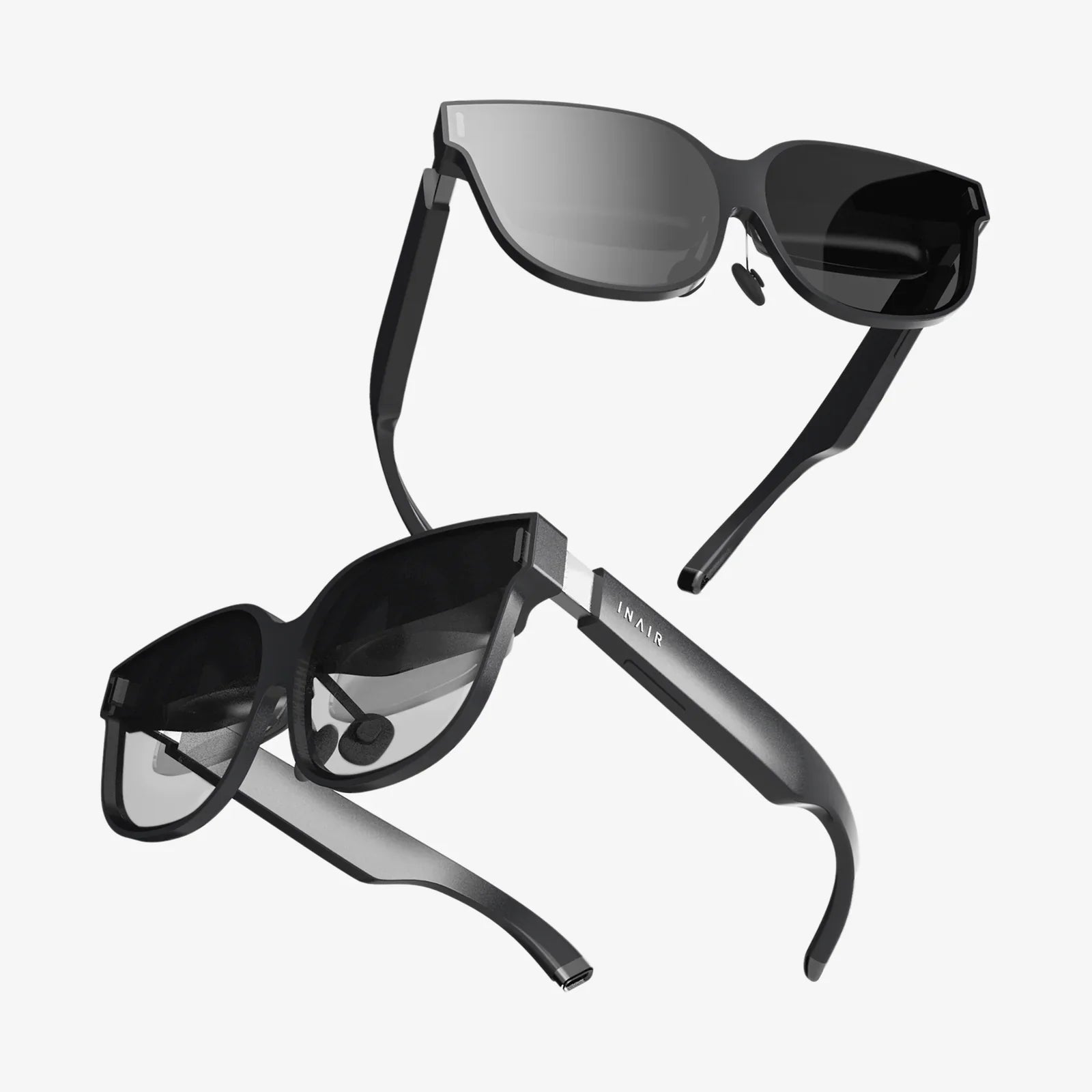
- by wangfred
Best AI Glasses with Video: The Ultimate Guide to a Hands-Free Future
- by wangfred
Imagine a world where your most brilliant ideas, your child's first steps, or that breathtaking sunset on your hike isn't just a memory or a fumbled-for-photo, but a seamlessly recorded, high-definition reality, all while your hands remain free and your eyes stay locked on the moment. This is no longer the stuff of science fiction. The era of the best AI glasses with video is upon us, promising to fundamentally reshape how we interact with information, our environment, and each other. This isn't just about a new gadget; it's about a new lens on life itself, and the future is looking incredibly smart.
At their core, the best AI glasses with video are a marvel of miniaturization and sophisticated engineering, packing a powerful suite of technologies into a form factor designed for all-day wear.
The foundation lies in a trio of critical hardware components. First, discreet, high-resolution cameras are strategically embedded within the frames. These aren't just one but often multiple sensors, capable of capturing first-person perspective (POV) video in stunning clarity, from 1080p to 4K. They work in tandem with a suite of sensors—including accelerometers, gyroscopes, and magnetometers—to understand their position in space, the movement of the wearer, and their orientation.
This constant stream of visual and spatial data is then processed by a dedicated, on-board processing unit. This mini-computer, often powered by advanced neural processing units (NPUs), is the brain of the operation. It handles the immense computational load required for real-time AI tasks without needing to offload everything to the cloud, ensuring low latency and protecting user privacy. This onboard AI is what transforms raw video data into actionable insights and immersive experiences.
To deliver information without a traditional screen, these glasses employ innovative display technologies. Micro-OLED projectors or waveguides beam light directly onto specially coated lenses, creating the illusion of a floating screen in the wearer's peripheral or central vision. This augmented reality (AR) overlay can show text, directions, notifications, or playback the video being recorded. For audio, bone conduction technology is often used, transmitting sound through vibrations in the skull bones directly to the inner ear. This allows the user to hear music, take calls, or receive audio feedback while keeping their ears open to ambient sounds, which is crucial for safety and situational awareness.
The hardware is inert without the intelligence to guide it. The software ecosystem is powered by complex AI models and machine learning algorithms. This includes:
This sophisticated fusion of hardware and software creates a personal AI assistant that sees what you see, understands your context, and empowers you with information hands-free.
The ability to record POV video is just the tip of the iceberg. The true power of these devices lies in how the integrated AI uses that video stream to enable a vast array of transformative applications.
For professionals, these glasses are a game-changer. Imagine a mechanic seeing a highlighted overlay of the correct tool and torque specifications for a repair simply by looking at an engine. An architect could walk through a construction site and see the digital building plans superimposed onto the physical structure, identifying potential clashes before they become costly errors. A doctor could have a patient's vital signs and medical history displayed during a consultation, or even stream a procedure live to colleagues across the globe for remote assistance. For content creators, vloggers, and journalists, they offer the ultimate tool for immersive storytelling, capturing life as it happens without the barrier of a camera.
For navigation, the technology moves beyond a phone screen telling you to "turn left in 200 feet." With AI glasses, arrows and pathways can be painted directly onto the street in front of you. They can recognize landmarks, provide historical information about a building you're viewing, or display reviews and ratings for a restaurant as you walk past it. For travelers, real-time translation transforms the experience, allowing you to read menus, signs, and documents in your native language instantly, breaking down language barriers like never before.
The potential for enhancing accessibility is profound. AI glasses can describe scenes for the visually impaired, reading out text from documents, identifying currency, and recognizing friends as they approach. They can provide real-time captions of conversations for those who are hard of hearing, making social interactions smoother. For anyone learning a new skill—from cooking to playing an instrument—step-by-step instructions can be overlaid onto the real world, guiding your actions without needing to look away at a manual or video.
With this technology rapidly evolving, knowing what to look for is essential. The "best" pair is highly subjective and depends on your primary use case, but several universal factors demand careful consideration.
The quality of the recorded video is paramount. Look for high resolution (at least 1080p, with 4K becoming the new standard), excellent low-light performance, and stable, smooth footage thanks to advanced electronic image stabilization (EIS). Audio capture is equally important; multiple microphones with noise cancellation are crucial for isolating the wearer's voice and ensuring clear audio in recordings and during calls.
Recording high-definition video and running powerful AI models is incredibly power-intensive. Battery life is arguably the biggest constraint. The best devices strive for all-day battery, often achieved through a combination of efficient processors and companion battery packs that can be charged separately. Assess your needs: will you be recording for hours continuously, or in short bursts? Your answer will guide your choice.
Technology that isn't comfortable won't be worn. Weight distribution, fit, and style are critical. The ideal pair should feel no heavier than premium sunglasses and be comfortable for extended periods. Furthermore, their design plays a huge role in social acceptance. The best modern iterations are sleek, stylish, and often indistinguishable from regular eyewear, helping to alleviate the "cyborg" stigma and making them less intimidating in social situations.
The smarts matter just as much as the hardware. Evaluate the responsiveness and capability of the AI assistant. How well does it understand context? How extensive are its skills? Furthermore, consider the companion app and software ecosystem. Is it intuitive? Does it offer robust editing tools for your captured video? Does it integrate with the other services and platforms you use? A closed, limited ecosystem can severely hamper the device's potential.
The advent of always-on, always-recording AI glasses presents perhaps the most significant privacy challenge society has faced since the smartphone. The very feature that makes them powerful—the ability to discreetly capture life—is also their greatest point of contention.
These devices blur the line between public and private recording. Individuals in the background of your video never consented to being filmed. The potential for covert surveillance, data harvesting, and creating permanent records of casual interactions is a legitimate and serious concern. The onus is on manufacturers to build in strong privacy safeguards: physical recording indicators (like a bright LED light), clear audio cues when recording, and strict data anonymization and encryption policies. As a user, it is your ethical responsibility to be transparent about recording and to respect the privacy of those around you, adhering to local laws and social norms.
The data collected by these glasses is incredibly intimate—a visual diary of your life, your routines, your interactions, and your environment. Who owns this data? How is it stored? Is it being used to train AI models? Could it be subpoenaed? These are critical questions. The best providers will have transparent, user-centric data policies that ensure you retain ownership and control over your personal information, with everything processed securely and ethically.
Navigating this new landscape requires a collaborative effort. Policymakers must develop clear, forward-thinking regulations that protect individual rights without stifling innovation. Manufacturers must adopt a "privacy by design" approach, making ethical considerations a core part of their development process. And as users, we must engage in a conscious dialogue about the norms and etiquette of using this technology in shared spaces. The goal is not to stop progress, but to guide it toward a future that is both technologically advanced and respectful of our fundamental human right to privacy.
The journey into a world augmented by intelligent eyewear is just beginning. The best AI glasses with video are more than a mere recording device; they are a portal to a more efficient, informed, and connected existence. They challenge us to reimagine the boundaries of human capability while simultaneously demanding that we confront profound questions about our digital footprint. The potential to enhance every facet of our lives is immense, waiting for you to look up, see the world differently, and capture it all without ever lifting a finger.
Share:
AI Desktop PC: The Definitive Guide to Powering the Next Generation of Computing
Basis of AI: The Foundational Pillars Powering Intelligent Machines