


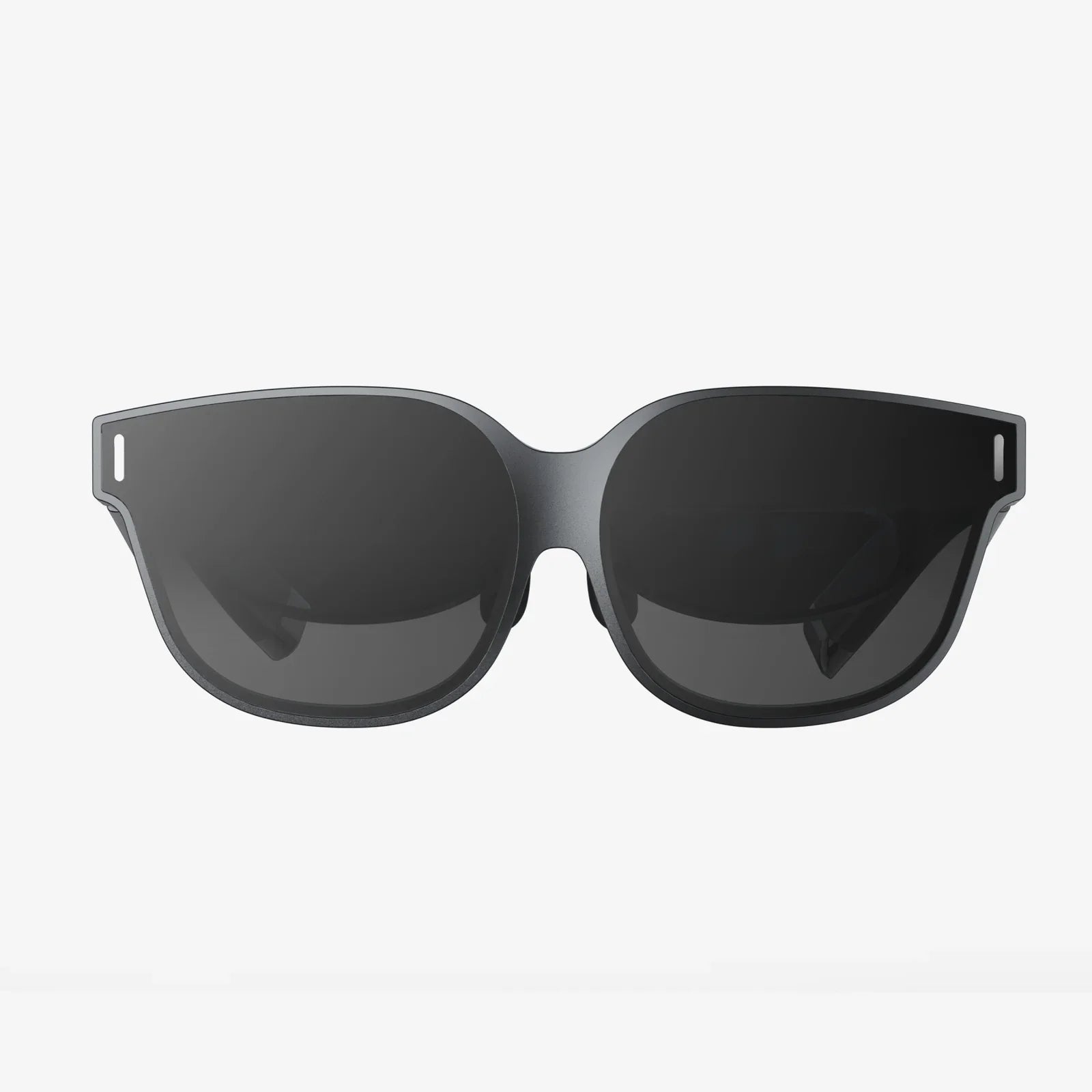
- by wangfred
Best AI Smart Glasses with Display 2025: The Ultimate Guide to Seeing the Future
- by wangfred
Imagine a world where information doesn't live on a screen in your hand but is seamlessly woven into the very fabric of your reality. Where directions float on the sidewalk before you, translations appear instantly over foreign street signs, and the name of that actor you can't quite remember materializes beneath their face on a movie poster. This is no longer the realm of science fiction; it is the promise of the best AI smart glasses with display for 2025, and they are poised to fundamentally change how we interact with the digital and physical worlds. The race to perfect this technology has reached a fever pitch, and the coming year is set to deliver the most sophisticated, powerful, and surprisingly elegant devices we have ever seen.
The journey to the advanced smart glasses of 2025 has been a long and often rocky one. Early iterations were clunky, offered limited functionality, and struggled with a fundamental question: what problem are they actually solving? They were often perceived as expensive toys for tech enthusiasts rather than practical tools. The turning point has been the confluence of several critical technological advancements. Micro-display technology has shrunk to near-invisibility while increasing in resolution and brightness. Battery technology, though still a challenge, has become more energy-dense, allowing for all-day computing to be packed into the slender arms of a pair of glasses. Most importantly, the maturation of artificial intelligence and machine learning has provided the crucial brainpower. AI is no longer a remote cloud-based service; it is now efficiently processed on-device, enabling real-time, context-aware interactions without debilitating lag or privacy-compromising data transmission.
So, what separates the truly exceptional pairs from the mere gadgets in 2025? It’s a sophisticated blend of hardware and software, each component working in perfect harmony.
The core of the experience is the display technology. In 2025, the best offerings have largely moved beyond simple monochromatic data projectors to full-color, high-resolution micro-displays. Two primary technologies dominate:
The hallmark of the best displays in 2025 is their contextual awareness. They automatically adjust brightness based on ambient light conditions and can intelligently dim or highlight information based on where you are looking, reducing cognitive load.
The display is the eyes, but the AI is the brain. This is where the magic happens. The best AI smart glasses of 2025 feature a powerful, integrated neural processing unit (NPU) that handles complex tasks instantly and privately.
In 2025, the best devices understand that if they aren't comfortable and stylish, they will fail. The era of bulky, robotic-looking glasses is over. The leading models are indistinguishable from high-end traditional eyewear. They are lightweight, come in a variety of frame styles to suit personal taste, and most importantly, are offered with prescription lens compatibility from the outset. Battery life remains the final frontier, but the top contenders now easily achieve a full day of moderate use, with sleek magnetic charging cases providing top-ups on the go.
To understand the impact, let's envision a day powered by the best AI smart glasses with display.
Morning: Your glasses gently wake you with a soft light pulse and a summary of your day. As you make coffee, a recipe overlay guides you through trying a new method. Your morning walk is accompanied by navigation cues floating at the edge of your vision, pointing out the best path while your hands remain free.
Workday: In a meeting, your glasses record and transcribe key points, action items materializing in your view. A client calls; their name, title, and last interaction notes appear discreetly. Working on a complex design? You can pull up 3D schematics and manipulate them with hand gestures, collaborating with remote colleagues who see your shared augmented space.
Evening: Cooking dinner, you follow a recipe hands-free. Watching a film, you get instant IMDb information about the actors without reaching for your phone. Reading a book to your child? The glasses can bring illustrations to life with simple animations.
This powerful technology does not arrive without significant questions. The ability to record, analyze, and display information about the world and people around us raises profound privacy concerns. The best manufacturers in 2025 address this head-on with clear, physical recording indicators (like a bright LED light) that cannot be disabled, strict ethical guidelines on data usage, and a strong emphasis on on-device processing to keep personal data local. Societal etiquette will need to evolve—when is it appropriate to use such features? Furthermore, safety is paramount; displays must be designed to augment reality, not obscure it, ensuring users remain fully aware of their physical surroundings, especially when walking or driving.
The best AI smart glasses with display for 2025 represent more than just a new product category; they are the beginning of a fundamental shift in human-computer interaction. They promise a move away from the isolating experience of looking down at a slab of glass and towards a future where technology enhances our perception of the world and connects us to it more deeply. They are tools for unprecedented productivity, catalysts for overcoming human limitations, and gateways to new forms of entertainment and creativity. The technology is finally maturing to the point where it is not defined by its limitations, but by its boundless potential to assist, inform, and inspire.
We stand on the precipice of a new sensory paradigm, one where the digital and physical coalesce into a single, enhanced experience. The question is no longer if this future will arrive, but how quickly we will adapt to and embrace the incredible possibilities sitting right before our eyes. The next evolution of personal computing isn't in your pocket or on your desk—it's on your face, and it's ready to change everything.
Share:
Standalone VR Headset Comparison: An In-Depth Guide to Untethered Freedom
Best VR Headset Comparison: A Deep Dive into the Ultimate Buyer's Guide