


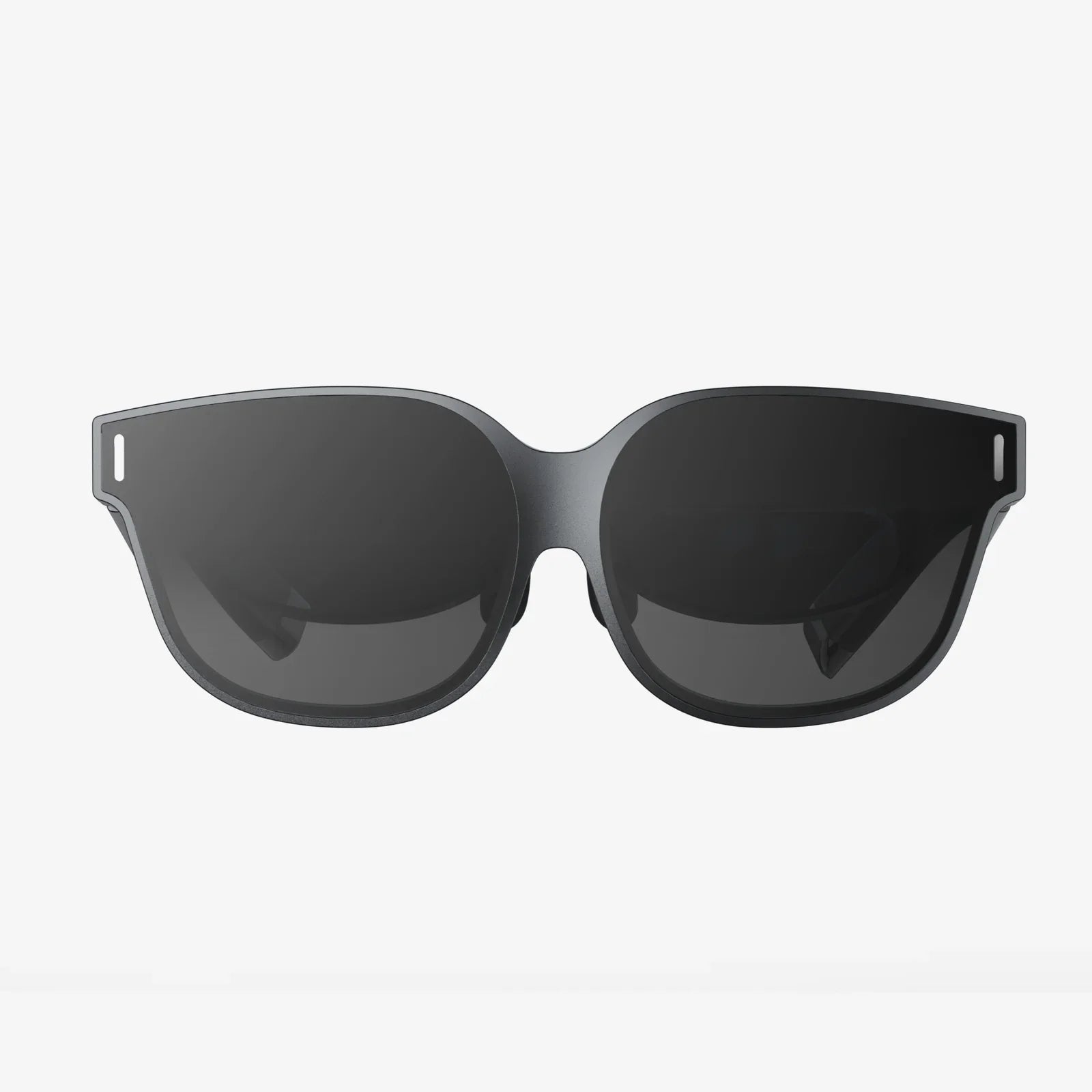
The landscape of wearable technology is shifting dramatically, and if you think smart glasses begin and end with one prominent brand, you're missing the revolution. The year 2025 has ushered in an era of unprecedented innovation in augmented reality eyewear, with a host of compelling alternatives that challenge the status quo. These devices are no longer clunky prototypes or niche developer tools; they are sleek, powerful, and designed for real-world use, offering everything from seamless information overlay to intuitive gesture controls and immersive audio experiences. This guide dives deep into the most exciting options available, helping you navigate a market that is richer and more diverse than ever before.
The Evolving Smart Glasses Ecosystem
The conversation around smart glasses has moved far beyond simple notifications and hands-free photography. In 2025, the core value propositions have crystallized into several distinct categories. Some devices prioritize discreet audio and minimal information display, acting as a seamless extension of your smartphone. Others are fully-fledged augmented reality workstations, projecting high-resolution virtual screens and 3D models into your field of view for professional applications. A third category focuses on lifestyle and social connection, integrating powerful AI assistants and contextual awareness to enhance daily life. Understanding this spectrum is key to identifying which alternative best fits your needs, whether for productivity, creativity, or pure convenience.
Defining the Criteria for the Best Alternatives
What separates a great pair of smart glasses from a merely good one in 2025? Our evaluation is based on a rigorous set of benchmarks. Display technology is paramount—this includes brightness, resolution, field of view, and the ability to function in various lighting conditions. Battery life and performance are equally critical; the best devices last a full day on a single charge without becoming uncomfortably warm. Design and comfort cannot be overlooked, as they must be worn for extended periods. We also weigh the strength of the AI and software ecosystem, the quality of the integrated audio system (often using bone conduction or directional speakers), and the overall value proposition. Privacy features and data handling policies are also significant factors in our assessment.
Top Enterprise and Professional-Grade Contenders
For professionals in fields like engineering, design, medicine, and logistics, smart glasses are transformative tools. The leading alternatives in this space for 2025 are powerhouses of functionality.
One standout model features a stunning microLED display that offers a wide field of view and exceptional clarity, even in bright sunlight. Its strength lies in specialized software suites for remote assistance, allowing experts to guide on-site technicians by drawing annotations directly into their visual field. The design is robust and safety-certified for industrial environments, with a modular magnetic attachment system that lets users switch between prescription lenses and safety frames effortlessly.
Another premier alternative is renowned for its 3D depth-sensing capabilities. This device is unparalleled for architects and designers who need to visualize and manipulate 3D models overlaid onto physical spaces. The spatial mapping is so precise it can be used for measurements and simulations with centimeter accuracy. It runs on a dedicated processing unit worn on a belt, which provides desktop-level computing power, enabling complex AR applications that simpler devices cannot handle.
Leading Consumer-Focused Smart Glasses
The consumer market has blossomed, with several options offering a more refined and accessible experience than ever before.
A particularly popular model has gained a cult following for its focus on seamless audio and minimalist information. Resembling a classic pair of high-end sunglasses, they lack a traditional visual display. Instead, their innovation is a sophisticated bone conduction audio system and a small LED that provides subtle, color-coded notifications. Their integrated AI assistant is contextually aware, proactively delivering information based on your location, calendar, and habits, all managed through intuitive touch controls on the temples. They excel as a all-day wearable that enhances life without overwhelming the user with graphics.
Another strong contender competing directly in the social and lifestyle space boasts a compact, birdbath optic-based color display in the corner of the right lens. It’s perfect for viewing messages, maps, and taking photos and short videos. Its key differentiator is a powerful and privacy-focused on-device AI that processes camera data locally, ensuring personal moments are not streamed to the cloud. The frame designs are highly fashionable, with collaborations from well-known designers, making them a statement piece as much as a tech product.
Innovative Open-Source and Developer Platforms
For tinkerers, researchers, and developers, the open-source ecosystem offers unparalleled flexibility. A prominent project in 2025 provides a fully hackable hardware platform with detailed schematics and a robust software development kit (SDK). These glasses feature a modular design where users can swap out cameras, sensors, and even the display modules themselves. The community around this platform is incredibly active, producing a wide array of experimental applications, from novel navigation interfaces for cyclists to assistive technology for the visually impaired. While they require more technical know-how, they represent the bleeding edge of what's possible in AR, unbounded by corporate roadmaps.
The Critical Considerations: Privacy and Social Acceptance
As this technology becomes more pervasive, two significant hurdles remain: privacy and social etiquette. The best alternatives in 2025 address these concerns head-on. Leading manufacturers have adopted clear, physical privacy indicators—such as bright LED lights that activate whenever the camera is in use—to signal recording to those nearby. Many also implement advanced on-device processing to analyze video feeds without storing or transmitting the raw data, only sending the necessary information (e.g., "the restaurant you asked about is 50 meters ahead"). Social acceptance is growing as the designs become more fashionable and less obtrusive. The most successful models look like ordinary eyewear, helping wearers avoid the "cyborg" stigma that plagued earlier generations of AR gear.
Gazing into the Future: What's Next After 2025?
The trajectory of smart glasses technology points toward even deeper integration into our lives. We are moving toward contact lens displays and even neural interfaces that could render screens obsolete. The role of AI will evolve from a reactive assistant to a proactive partner, anticipating needs and managing digital tasks in the background. The convergence of the digital and physical worlds will become more complete, blurring the lines between working, learning, and playing in an augmented space. The alternatives available today are the foundational stepping stones toward this always-aware, contextually intelligent computing environment that lives on our faces.
Imagine a world where your surroundings intuitively respond to your presence, where information flows seamlessly into your perception without the need to look down at a screen. This is the promise that the best smart glasses of 2025 are starting to deliver right now. The competition is fierce, the innovation is rapid, and the perfect pair for you is out there, waiting to change how you see everything.
Share:
brands that make ai glasses and how they are changing daily life
Pro Virtual Reality App Strategies For Immersive Experiences And Real Results