


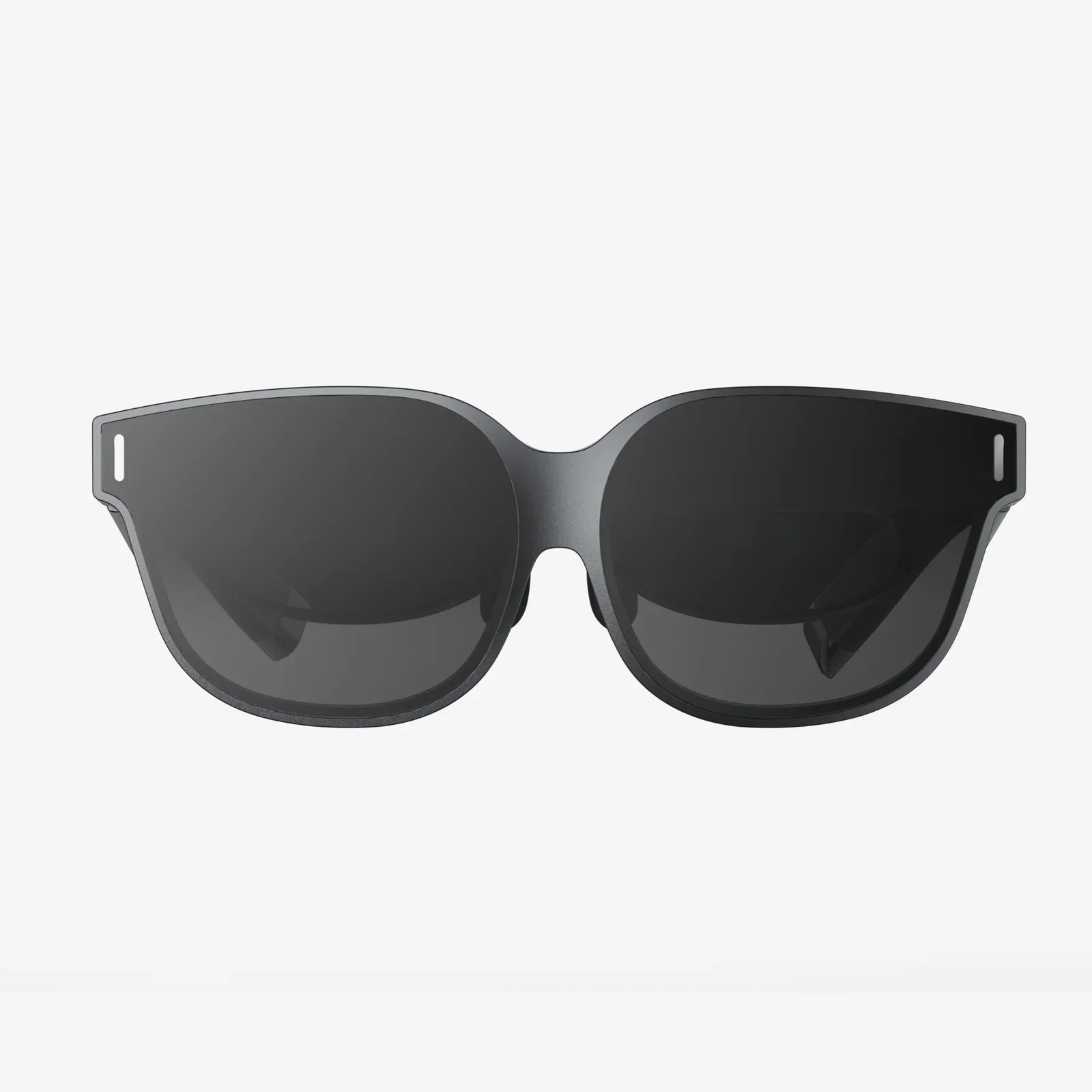
- by wangfred
Best AR Glasses 2025 for Gaming: The Ultimate Portal to Your Next Playthrough
- by wangfred
Imagine leaning around a crumbling concrete pillar, not with a thumbstick, but with your actual body, peering into a virtual battlefield seamlessly overlaid onto your own living room. The enemy's position is highlighted through the wall, your ammo count hovers just below your natural sightline, and a shimmering portal where your coffee table once stood beckons you into a dungeon crawl. This isn't a distant sci-fi fantasy; this is the promise of the best AR glasses for gaming in 2025, and the future is putting on a show you won't want to miss.
The journey to this point has been nothing short of extraordinary. Gaming has evolved from two-dimensional sprites to vast, explorable three-dimensional worlds. We've witnessed the rise of immersive VR, which transports us entirely elsewhere, but often at the cost of isolating us from our physical environment. Augmented reality represents the next logical, and perhaps most profound, step: not escaping our world, but enhancing it. The AR glasses of 2025 are the culmination of years of refinement in micro-optics, sensor fusion, and processing power, finally achieving a form factor and fidelity that makes prolonged, comfortable gaming not just possible, but irresistible.
Cutting through the marketing jargon to find a truly great gaming AR experience requires a focus on a few critical specifications. These are the pillars that will separate the game-changing gear from the gimmicks.
The window to your augmented world must be crystal clear. In 2025, expect high-end consumer models to feature per-eye resolutions that meet or exceed 4K equivalent density, effectively eliminating the dreaded "screen door effect." More crucial than raw resolution, however, is the Field of View (FOV). A narrow FOV feels like looking through a mailbox slot; a generous FOV, now pushing beyond 120 degrees diagonally in premium models, creates a sense of immersion where digital objects feel present in your space, not confined to a small floating box.
This is achieved through advanced waveguide technology. These are the transparent combiner lenses that project the image directly into your eyes. The latest waveguides offer incredible clarity, color uniformity, and brightness, allowing digital content to remain visible even in well-lit rooms. For gamers, this means vibrant, solid virtual objects that don't appear ghostly or faint, ensuring that a towering boss monster actually feels imposing and tangible.
Flawless AR is computationally intensive. It requires understanding the geometry of your room, tracking your precise movements, and rendering complex graphics in real-time. The best 2025 solutions offer a hybrid approach. Some glasses will be tethered to a dedicated processing unit or a powerful gaming console, leveraging their immense horsepower for the heaviest lifting. Others will utilize a robust smartphone connection. The most advanced standalone models now feature incredibly efficient, purpose-built chipsets that handle simultaneous localization and mapping (SLAM) and rendering on-device, minimizing latency—the absolute killer of any AR experience.
If there's a delay between your head movement and the world adjusting on-screen, it leads to disorientation and nausea—a death knell for gaming. In 2025, sub-20 millisecond motion-to-photon latency is the gold standard. This is achieved through a combination of high-speed internal sensors (gyroscopes, accelerometers), outward-facing cameras for positional tracking, and incredibly optimized software. This near-instantaneous response is what sells the illusion, making the digital part of your world feel as responsive and real as the physical part.
Visuals are only part of the story. Spatial audio is what completes the illusion of presence. The best gaming AR glasses of 2025 will feature integrated, high-quality bone conduction or directional speaker systems that pump immersive 3D audio directly into your ears without blocking out ambient sound. This is critical for both immersion and safety; hearing the creak of a virtual floorboard behind you while still being aware of a family member calling your name in the real world is the unique, powerful duality of AR gaming.
A device can have all the power in the world, but if it's uncomfortable to wear, it will gather dust. The leading 2025 models prioritize ergonomics above all else. We're seeing a significant shift away from the bulky, front-heavy designs of the past. New materials like magnesium alloys and advanced polymers make glasses incredibly lightweight, often dipping below 100 grams. Weight distribution is key, with battery packs often moved to separate, pocketable units or cleverly balanced in the stems of the glasses. Interchangeable nose pads and flexible frames ensure a secure yet comfortable fit for a wide range of face shapes, allowing for multi-hour gaming sessions without fatigue.
The hardware is pointless without software that unlocks its potential. 2025 is the year we see a blossoming of titles designed explicitly for augmented reality, moving beyond simple tech demos.
Imagine playing a real-time strategy game where your entire living room floor becomes the battlefield. You can walk around the map, crouch down to get a unit's-eye view, and use pinch-and-drag gestures to command armies. Your couch becomes a mountain range, and your rug a vast ocean. This genre is perfectly suited to AR, offering a tangible, tabletop-like experience on a grand, digital scale.
These are games that seamlessly blend physical and digital elements. A puzzle game might have you placing your glasses on a real-world object to scan it and unlock a digital clue. An action-adventure game could use your actual walls as surfaces to scale, with digital handholds appearing only through your lenses. This genre uniquely leverages the core strength of AR: using your familiar environment as the foundation for the gameplay itself.
Even traditional screen-based games are being enhanced. Imagine playing a racing game on your TV, but with your AR glasses overlaying a holographic dashboard, rear-view mirror, and track map around your screen, extending the game world into your space. Or an RPG where your character's inventory, quest log, and a mini-map are permanently pinned to the edges of your real-world view, accessible without ever pausing the action on your main display.
No device is an island. The best AR gaming experiences in 2025 are part of a cohesive ecosystem. This includes robust digital storefronts curated for AR content, social platforms where you can see and interact with friends' avatars in your space, and cloud save synchronization that lets you pick up your game anywhere. Crucially, cross-platform compatibility is becoming a standard, allowing players using different brands of glasses to game together in shared augmented worlds.
The advancements we see this year are merely a stepping stone. The horizon holds even more exciting possibilities. Research into varifocal and light field displays promises to solve the vergence-accommodation conflict, a visual discrepancy that can cause eye strain, making virtual objects feel even more physically present. Haptic feedback gloves and controllers will evolve to let you "feel" the digital objects you interact with. Eventually, we may see direct neural interfaces that bypass screens altogether, but for now, the advanced AR glasses of 2025 are the most accessible and thrilling portal to this new layer of reality.
The living room arena is waiting, its boundaries defined only by your imagination. The tools to layer dragons over your rug and command starships from your sofa are no longer concepts—they are arriving, polished, powerful, and ready for play. The question is no longer if you will game in augmented reality, but which breathtaking world you'll choose to overlay onto yours first.
Share:
How to Clean AR Lenses: The Ultimate Guide to Safe and Effective Maintenance
Best Wearable AI Device: Your Guide to the Ultimate On-Body Intelligence