


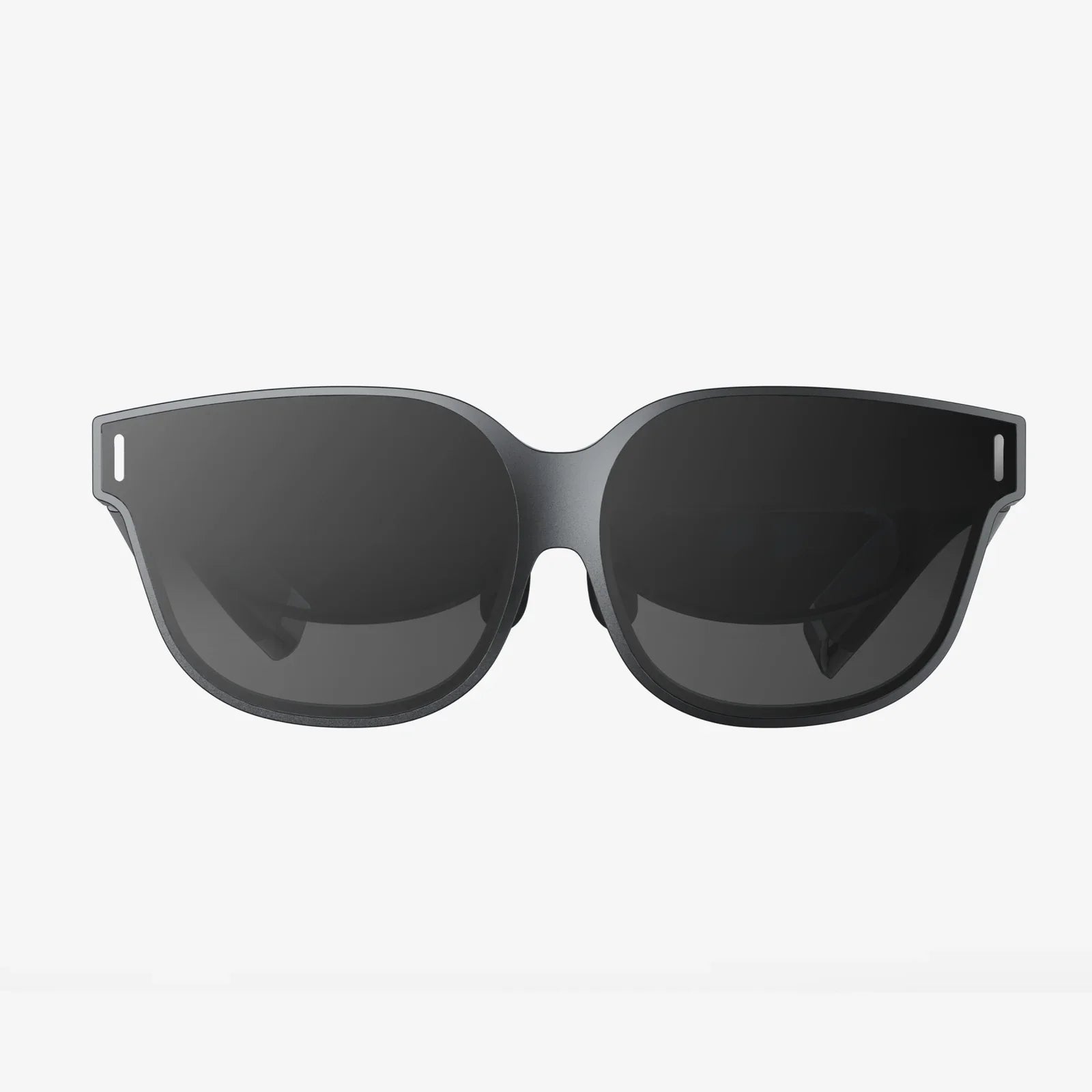
Imagine a world where digital information doesn't just live on your phone's screen but is seamlessly woven into the fabric of your reality. Where directions float on the street before you, messages appear discreetly in your periphery, and your favorite movie plays on a screen that only you can see, as large as a cinema yet invisible to everyone else. This is the promise of augmented reality glasses, and for iPhone users, that future is closer than ever. The quest for the perfect pair of AR glasses to unlock this potential is not just about technology; it's about finding a new way to see, interact with, and understand the world around you.
The Symbiotic Relationship Between AR Glasses and Your iPhone
Unlike standalone virtual reality headsets that aim to create entirely new worlds, most modern augmented reality glasses are designed as companions to your smartphone. For iPhone users, this partnership is particularly powerful. Your iPhone acts as the brain—the powerful computer processing the graphics, running the apps, and connecting to the internet—while the glasses serve as your personalized display and window into the augmented layer of existence.
This design philosophy offers several distinct advantages. It keeps the glasses themselves relatively lightweight and less expensive than a fully self-contained unit. It leverages the incredible processing power and robust ecosystem you already carry in your pocket. And it ensures that your primary communication device, your iPhone, remains at the center of your digital life, just with its visual output dramatically expanded into your field of view.
Decoding the Specs: What Truly Matters for an Immersive Experience?
When evaluating options, it's easy to get lost in a sea of technical jargon. Cutting through the noise requires focusing on a few key specifications that directly impact your daily experience.
Field of View (FOV): The Size of Your Digital Canvas
Think of Field of View as the size of the transparent screen floating in front of you. A larger FOV means a more immersive experience where digital objects feel more present in your world. A smaller FOV can feel like looking through a small window. While a massive FOV is desirable for gaming, a moderate one is often perfectly adequate for productivity and media consumption.
Display Resolution and Brightness: Crystal Clarity in Any Light
High resolution is critical for reading text, watching videos, and preventing eye strain. Look for specifications that promise sharp, pixel-free images. Equally important is brightness, measured in nits. High brightness ensures the display remains clear and visible even in well-lit rooms or outdoors, preventing the image from appearing washed out.
Optical Design: Birdbath, Waveguide, and Beyond
This is the hidden magic behind how light is projected into your eyes. Two common designs are:
- BirdBath Optics (BBO): Often provides vibrant colors and high contrast, making them excellent for media consumption. They can be slightly bulkier but offer a fantastic viewing experience.
- Waveguides: Thinner and more lightweight, resembling traditional glasses more closely. They can sometimes trade off a degree of brightness and color saturation for their sleek form factor.
Audio: Personal Immersion Without Headphones
Many premium models integrate directional speakers that beam sound directly into your ears. This allows you to hear your media clearly while remaining aware of your surroundings—a key feature for both safety and social acceptance. The quality of this audio solution is a major differentiator.
Beyond the Hype: Real-World Use Cases for iPhone Users
The true value of any technology is revealed in its application. For iPhone owners, AR glasses unlock a suite of powerful functionalities.
The Ultimate Portable Theater
This is the most immediate and universally appreciated use case. With a pair of compatible glasses, your iPhone can project a virtual screen that feels anywhere from 100 to 200 inches in size. Whether you're on a long flight, commuting on a train, or just relaxing in your living room without wanting to command the TV, you have a massive, private display ready to go. It transforms your device into a personal cinema, with content from any app on your phone—streaming services, your personal video library, or even live sports.
Supercharged Productivity and Multitasking
Imagine having multiple floating browser windows, a sprawling document, and a video call all visible around you as you work from your kitchen table. AR glasses can turn any space into a multi-monitor workstation. You can follow a recipe with instructions hovering over your mixing bowl, watch a tutorial while fixing a bike, or have your meeting notes visible during a video conference. This ability to layer information onto your tasks is a paradigm shift in mobile productivity.
Immersive Gaming and Interactive Experiences
The iPhone is a gaming powerhouse. AR glasses take this to another level by anchoring game elements into your physical environment. Instead of looking down at your phone to see a character on your desk, you look through your glasses and see it standing there in full scale. This deeper level of immersion makes games like Pokémon GO feel entirely new and opens the door for developers to create even more captivating mixed-reality experiences.
Navigation and Exploration Made Intuitive
Following a blue dot on a map is a thing of the past. With AR glasses, turn-by-turn directions can be overlaid onto the street itself, with giant arrows pointing the way. Look at a restaurant, and its ratings and menu could pop up. Traveling becomes richer as historical information and points of interest are highlighted on the buildings and landscapes you see. It’s contextual computing at its finest.
The Connectivity Conundrum: Wired, Wireless, and the iPhone Factor
How the glasses connect to your iPhone is a fundamental consideration, primarily split into two camps.
The Wired Connection: Reliability and Zero Latency
Many glasses connect via a physical USB-C cable. For iPhones, this typically requires a simple adapter. The benefit is a flawless, high-bandwidth connection with no compression, no latency, and no battery drain on the glasses themselves. The obvious downside is the physical tether, which can feel restrictive.
The Wireless Connection: Untethered Freedom
Wireless models connect via protocols like Miracast or proprietary dongles that plug into the iPhone. This offers complete freedom of movement, which is a huge advantage. The trade-offs can include potential for slight latency (which can be noticeable in fast-paced video or gaming), video compression, and the need for the glasses to have their own battery to power the wireless receiver and displays.
Finding the Perfect Fit: Comfort, Style, and Prescription Considerations
The most powerful glasses are useless if you don't want to wear them. Comfort is paramount.
Weight distribution is key. Well-designed glasses balance the weight so they don't press uncomfortably on your nose or ears, even during extended viewing sessions. Adjustable nose pads and flexible temple arms can make a significant difference. Furthermore, the industry is moving towards designs that look less like tech prototypes and more like fashionable sunglasses or standard eyewear, increasing their social acceptability for use in public spaces.
For those who wear prescription lenses, the solution is critical. Some models offer custom inserts that clip inside the glasses, while others partner with online opticians to create lenses that fit the unique frame. Ensuring your specific vision needs can be met is an essential step before making a purchase.
Navigating the Ecosystem: Compatibility and Future-Proofing
While most glasses function as external displays, the depth of their integration with iOS can vary. It's crucial to verify that the glasses you're considering are explicitly compatible with the iPhone and the specific iOS version you're running. Look for models that support the standard video output protocols of the iPhone to ensure a plug-and-play experience. As spatial computing evolves, choosing glasses from companies with a strong track record of software support will help future-proof your investment as new features and apps are developed.
A Glimpse Into Tomorrow: The Road Ahead for AR and iPhone
The current generation of AR glasses offers a thrilling preview, but the future holds even greater integration. We are moving towards a world where these devices will leverage advanced iPhone sensors like LiDAR for more precise spatial mapping, allowing digital objects to interact with and occlude behind real-world furniture. The line between the device and the glasses will blur further, creating a single, cohesive spatial computing platform. The apps and experiences being developed today are merely the foundation for a fundamentally new way we will use our iPhones—not by looking down at a slab of glass, but by looking out at an augmented world.
The journey to find your ideal augmented reality partner is an exciting one, filled with possibilities that were pure science fiction just a decade ago. It’s about more than just watching a bigger screen; it’s about enhancing your perception, boosting your efficiency, and adding a layer of magic and information to every moment. By focusing on the experience—how you want to use them, how they feel, and how they connect to the powerful device already in your life—you can cut through the technical specs and find the perfect digital lens to expand your reality. The world is about to look very different.
Share:
Low Cost VR Headset - The Ultimate Guide to Affordable Virtual Reality
How to Use VR Headset with iPhone: The Ultimate Immersive Guide