


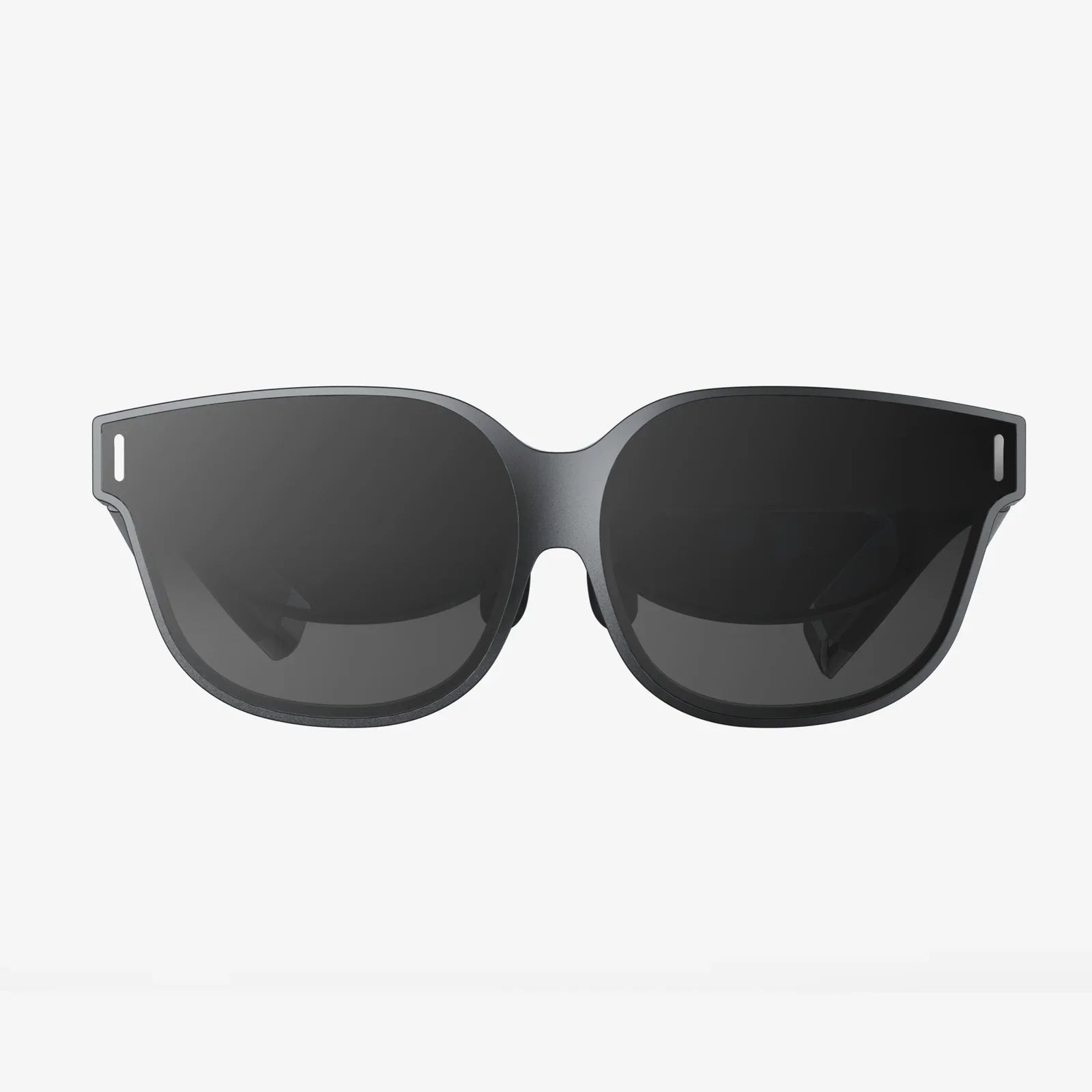
Imagine a world where your IDE isn't confined to a physical monitor, where your debugger floats in three-dimensional space, and your entire digital workspace is as limitless as your imagination. This isn't a scene from a sci-fi movie; it's the rapidly approaching reality for developers exploring the best AR glasses for programming. This nascent technology promises to untether us from our desks, transform our cognitive flow, and fundamentally redefine what it means to build software. For the forward-thinking programmer, the question is no longer if augmented reality will change coding, but when—and which pair of glasses will be the key to unlocking that potential.
The Allure of an Infinite Digital Canvas
Every developer knows the struggle. You're deep in a complex problem, your flow state is pristine, and then you hit the wall: a cluttered desktop, too many tabs, and the constant, jarring context-switching between a terminal, a browser, documentation, and your communication apps. The traditional multi-monitor setup, while a step forward, is still a physical and visual constraint. The core promise of AR glasses is the creation of a boundless, virtual workspace that exists all around you.
This isn't just about having more screens; it's about having the right screens, in the right place, at the right time. Imagine:
- Effortless Multi-Tasking: Your primary code editor is fixed directly in front of you. To your left, a virtual terminal runs your build processes. To your right, your API documentation is pinned to the wall. A glance is all it takes to shift context, without ever moving your hands from the keyboard.
- Contextual Awareness: Your communication apps (Slack, Teams) or calendar notifications could appear as subtle, translucent panes in your peripheral vision, only expanding when you choose to focus on them. This drastically reduces the disruptive, attention-snatching nature of traditional notifications.
- A Truly Portable Office: Your entire development environment becomes location-agnostic. Whether you're on your couch, at a coffee shop, or in a corporate office hot-desk, your perfect, personalized setup is always one click away, projected onto the world around you.
The psychological shift is profound. Instead of looking at a computer, you begin to feel like you are inside it, interacting with your code as a tangible element of your environment.
Critical Technical Specifications for the Developer
Not all AR glasses are created equal, especially for the demanding visual and computational tasks of a programmer. When evaluating the best AR glasses for programming, several technical factors move from being nice-to-have to absolutely critical.
1. Display Resolution and Field of View (FoV)
This is arguably the most important specification. Reading text for hours on end requires a high-resolution, high-pixel-density display to prevent eye strain and ensure characters are sharp and legible. A low-resolution display will result in blurry text and a frustrating experience. Equally crucial is the Field of View (FoV). A narrow FoV is like looking through a small window; your virtual screens feel constrained and small. A wider FoV allows for larger, more immersive virtual displays that can truly replace physical monitors. The holy grail is a combination of "retina"-level resolution per eye and a FoV that approaches the human visual range.
2. Form Factor and Comfort
Developers wear their tools for extended, uninterrupted sessions. A heavy, bulky, or poorly balanced headset will cause neck strain and become unbearable after an hour. The ideal pair should be as close to standard eyewear as possible—lightweight, comfortable for all-day wear, and preferably offering prescription lens inserts for those who need them. Overheating is another common issue with early-stage technology; the device must remain cool against the skin.
3. Connectivity and Ecosystem
How do the glasses connect to your computational power? Some act as standalone devices, others as "dumb" displays that tether to a powerful laptop or desktop computer, and a newer category leverages a companion processing unit. The best solution depends on your need for mobility versus raw power. Furthermore, the operating system and software ecosystem are paramount. Is there robust developer support? Can you easily sideload applications? An open platform is far more valuable to a programmer than a closed, walled-garden approach.
4. Input Modalities
You can't code with a game controller. Efficient input is a significant challenge in AR. The most effective method for programming remains a physical Bluetooth keyboard and trackpad, with the glasses accurately tracking their position in space to allow virtual hands to interact with them. Voice control can be useful for simple commands ("open file," "run build"), and hand-tracking is improving rapidly for gestural navigation. The best devices will offer a flexible combination of all these input methods.
5. Battery Life
Pushing high-resolution displays and processing complex spatial data is power-intensive. A device that can't last through a standard workday (or at least a solid 4-5 hour coding session) without needing a recharge becomes a major inconvenience. The location of the battery—whether it's in the glasses frame itself or in a separate pack—also impacts comfort and portability.
Weighing the Pros and Cons for Development Work
Like any emerging technology, AR for programming comes with a set of compelling advantages and notable challenges that are important to consider before making an investment.
The Advantages
- Unprecedented Focus: By blocking out visual distractions in your physical environment and allowing you to curate your digital field of view, AR glasses can create a "deep work" bubble that is incredibly powerful for maintaining flow state.
- Ergonomic Flexibility: You are no longer locked into a single posture, staring straight ahead at a fixed monitor. You can position virtual screens at comfortable angles, look up, down, or to the side, and work from a recliner or standing desk without reconfiguring your entire setup.
- Space Efficiency and Portability: They eliminate the need for multiple physical monitors, decluttering your desk and making a high-productivity setup possible from anywhere.
- Future-Proofing: Early adopters are not just buying a display; they are learning the interface paradigm of the future. The skills and workflows developed now will be invaluable as the technology matures.
The Challenges
- The Technology is Still Maturing: Even the best devices on the market today have trade-offs. You may be dealing with limited FoV, "screen-door effect," or software that still feels like a beta product. It requires a high tolerance for experimentation and troubleshooting.
- Social Isolation: Wearing a headset can be an isolating experience in a collaborative office environment, making impromptu conversations more awkward. This is less of an issue for remote workers.
- Potential for Eye Strain: While improving, focusing on bright images projected close to the eye for long periods can cause fatigue for some users. Taking regular breaks is essential.
- Cost of Entry: High-end AR glasses represent a significant financial investment, placing them currently in the realm of enthusiasts and early adopters.
Envisioning the Future: Beyond Virtual Monitors
While the immediate use case is virtual monitors, the long-term potential of AR for programming is far more revolutionary. We are moving towards truly spatial computing where code and data structures are no longer confined to a flat plane.
Imagine debugging a complex distributed system by visually walking through a 3D graph of service dependencies, seeing traffic flow in real-time. Data visualization could become an immersive experience, allowing you to step inside your datasets. Architectural diagrams could be life-sized models you walk around and manipulate with your hands. Code itself could be represented in new, more intuitive visual formats that leverage spatial relationships to convey logic and structure.
This future is being built today by the developers who are experimenting, pushing the boundaries, and providing feedback on the current generation of hardware. They are the pioneers charting the course for how the next generation of software will be created.
The journey into spatial computing is beginning, and it starts on your face. The best AR glasses for programming are more than just a novel peripheral; they are a passport to a new dimension of development, offering a glimpse into a future where our digital and physical realities merge to create a canvas for creation that is, finally, boundless. The only limit will be the code you can imagine.
Share:
What Is Space Engineering Called? A Deep Dive into the Final Frontier's Foundational Discipline
Stream Audio Wirelessly: The Ultimate Guide to Untethered Sound