


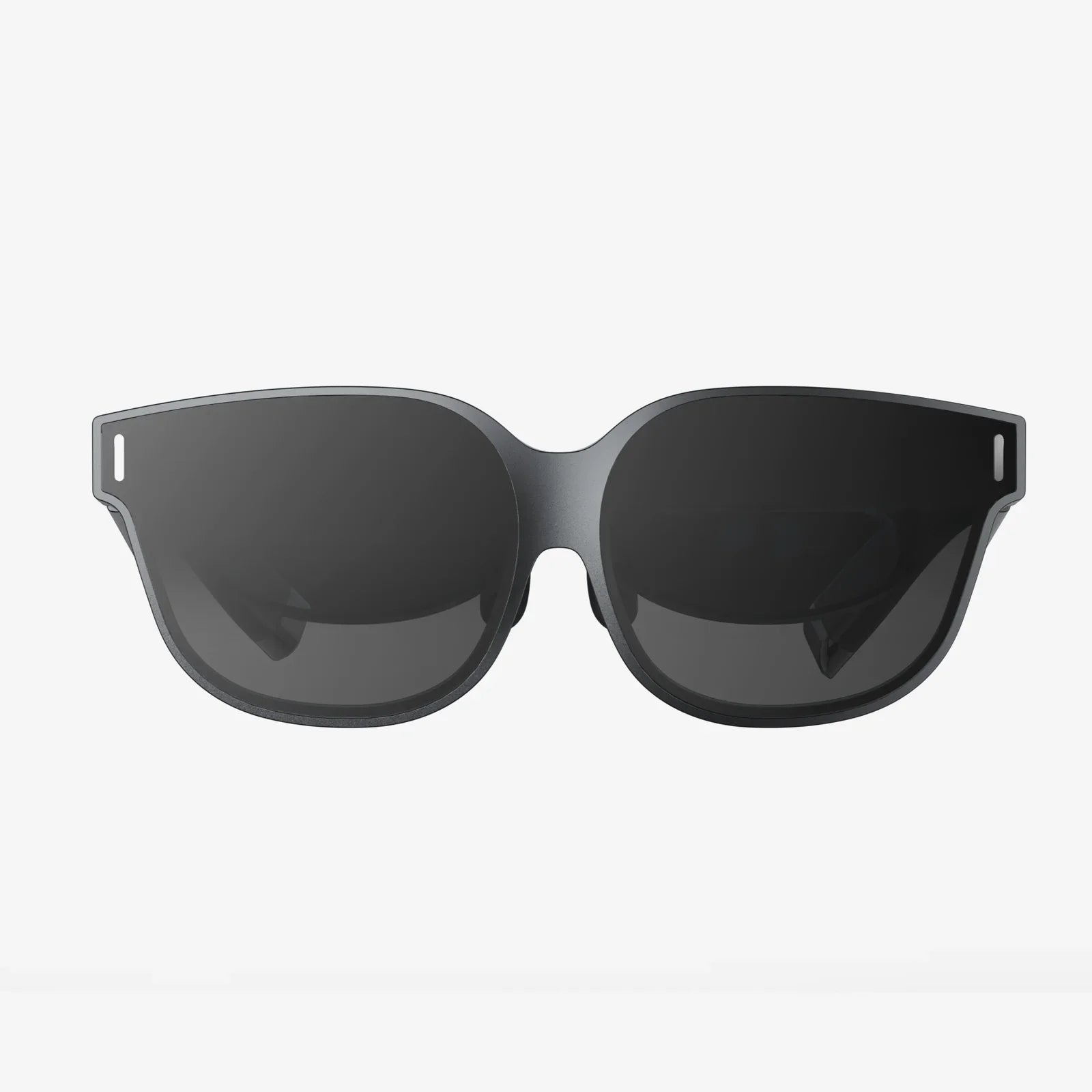
- by wangfred
Best AR Glasses Hardware: A Deep Dive into the Future on Your Face
- by wangfred
Imagine a world where digital information doesn’t live on a screen in your hand but is seamlessly woven into the fabric of your reality. Directions float on the road ahead, a colleague’s avatar sits across from you at your kitchen table, and the history of the building you’re admiring is displayed on its facade. This is the promise of augmented reality, and it’s a promise being delivered by the most advanced and best AR glasses hardware the world has ever seen. This isn't science fiction; it's the cutting edge of consumer technology, and it’s hurtling toward the mainstream.
What separates a forgettable tech demo from a truly transformative pair of AR glasses? The magic lies in the harmonious integration of several critical hardware systems. Superior AR isn't defined by one single component but by the symphony of its parts working in perfect concert to create a believable, useful, and comfortable digital overlay on the real world.
At the very heart of the AR experience is the display technology. This is the engine that generates the photons that will eventually land on your retina, painting the digital layer you interact with. The best AR glasses hardware employs several cutting-edge micro-display technologies, each with its own strengths.
Micro-OLED (Organic Light-Emitting Diode): Favored for their exceptional image quality, Micro-OLED displays offer incredibly high resolution, perfect pixel pitch, and stunning contrast ratios with true blacks. Because each pixel produces its own light, they are incredibly efficient for their size and offer vibrant colors. This makes them ideal for applications requiring high-detail graphics, text, and video.
LCoS (Liquid Crystal on Silicon): A more established technology, LCoS is a reflective micro-display that uses a liquid crystal layer on top of a silicon backplane. It’s known for its high optical efficiency and ability to produce very bright images, which is crucial for overcoming bright ambient light conditions. It often requires a separate light source, like an LED or laser.
Laser Beam Scanning (LBS): Perhaps the most futuristic approach, LBS systems use tiny mirrors, known as Micro-Electro-Mechanical Systems (MEMS), to scan red, green, and blue laser beams directly onto the retina. This method can achieve immense brightness and a very large depth of field, making the digital content feel solidly anchored in the real world. It allows for incredibly sleek and minimalist form factors.
You have a tiny, powerful display generating images, but how does that image get from the side of your head into your eye while still allowing you to see the real world? The answer is the waveguide, arguably the most critical and proprietary piece of optical hardware in AR glasses.
Waveguides are transparent substrates, often made of glass or plastic, that use diffraction, reflection, or holography to "pipe" light from the micro-display into the user’s eye. They are the reason the glasses can be relatively normal-looking instead of having massive, opaque screens in front of each lens.
Diffractive Waveguides: These use microscopic grating structures to diffract (spread out) and couple light into and out of the waveguide. Examples include surface relief gratings and volume holographic gratings. They are excellent for mass manufacturing and enable a wider field of view (FOV) and more compact form factors, but they can sometimes introduce color uniformity challenges like rainbow effects.
Reflective Waveguides: Sometimes called "birdbath" optics due to their shape, these systems use a beamsplitter or a partially mirrored surface to reflect the display's image into the eye while allowing real-world light to pass through. They often offer excellent color fidelity and clarity but can be bulkier than diffractive solutions.
The evolution of waveguide technology is a relentless pursuit of a larger field of view, better optical clarity, reduced glare, and more efficient manufacturing—all key to creating the best AR glasses hardware.
For digital content to interact convincingly with the physical environment, the glasses must understand that environment in real-time. This is the job of a sophisticated array of sensors.
Cameras: Multiple monochrome and RGB cameras work together for different tasks. They track the user’s hand movements for intuitive interaction, scan the room to create a 3D depth map, and read QR codes or identify objects.
Depth Sensors: Technologies like time-of-flight (ToF) sensors or structured light projectors actively measure the distance to every surface in the field of view. This creates a dense 3D mesh of the room, allowing virtual objects to be occluded by real-world furniture or to rest convincingly on a table.
Inertial Measurement Units (IMUs): These are the workhorses of positional tracking. Combining accelerometers and gyroscopes, they track the precise rotation and movement of your head at a very high frequency, providing the low-latency response that prevents simulation sickness.
Eye-Tracking Cameras: This is a hallmark of high-end AR hardware. By using infrared cameras to track the pupil, the glasses know exactly where you are looking. This enables revolutionary user interfaces based on gaze, dynamic depth of field rendering for more realistic visuals, and foveated rendering—a power-saving technique that renders the area you are directly looking at in high detail while subtly reducing the detail in your peripheral vision.
All the data from these sensors is a torrent of raw information that must be processed instantaneously. This requires immense computational power, which is handled by a combination of hardware.
Many advanced glasses feature a dedicated onboard processor, a System-on-a-Chip (SoC) designed to handle the complex tasks of simultaneous localization and mapping (SLAM), computer vision, and rendering graphics. This allows for a untethered, mobile experience. Some systems may offload heavier processing to a companion device, like a smartphone or a dedicated compute puck, via a high-speed wireless connection, balancing performance with battery life and thermals.
The efficiency of this processor is paramount. The best AR glasses hardware must deliver desktop-level performance with a mobile device’s power envelope, all while being worn on a person’s face where heat dissipation is a major challenge.
Packing this much technology into a glasses form factor creates two fundamental challenges: power and heat. A device that only lasts 30 minutes or gets uncomfortably warm on your face is useless, no matter how advanced its displays are.
Innovative battery solutions are crucial. This includes not just higher density cells but also sophisticated power management systems that dynamically allocate power to different components. Some designs use a split-battery approach, distributing weight for better balance. Others rely on a tethered battery pack that can be stowed in a pocket.
Thermal management is equally important. Passive cooling through clever heat spreaders and the use of materials that dissipate heat effectively is essential to keep the user comfortable and the hardware running within safe operating temperatures.
The single greatest challenge for AR hardware engineers is the "holy trinity" of constraints: performance (brightness, FOV, compute), battery life, and form factor. You can typically only maximize two at the expense of the third.
A device with a massive field of view and desktop-level processing power will likely be bulky, have a short battery life, and require a large external battery. Conversely, a sleek, fashionable pair of glasses that you can wear all day will inevitably make compromises on processing power and display capabilities, perhaps focusing on simpler notifications rather than complex 3D rendering.
The best AR glasses hardware available today represents the current pinnacle of navigating this trade-off. Some lean heavily into maximum performance for enterprise and developer use, accepting a larger form factor. Others prioritize social acceptability and all-day wearability, offering a more limited but still powerful set of features. There is no single "best" answer, only the best tool for a specific purpose.
When evaluating this category of hardware, beyond the raw specs, several experiential factors define a top-tier product.
Visual Fidelity: This encompasses high resolution, a wide field of view that immerses you in the content, high brightness (nits) to be visible in sunlight, and excellent color accuracy. There should be minimal ghosting, glare, or optical artifacts.
Spatial Understanding: The glasses must quickly and accurately map your environment. Virtual objects should stay locked in place without jittering or drifting. Occlusion—where real objects pass in front of digital ones—should be flawless.
Intuitive Interaction: The interface shouldn’t feel like using a mouse on your face. It should leverage hand-tracking, voice commands, and eye-tracking to create a natural and effortless way to interact with the digital world.
All-Day Comfort: The hardware must be lightweight, well-balanced, and available with prescription options. It should not cause fatigue over long sessions, either physically or visually.
A Robust Ecosystem: Hardware is nothing without software. A healthy platform with compelling applications, games, and productivity tools is what transforms a technological marvel into an indispensable daily tool.
The journey to perfect augmented reality is a marathon, not a sprint, defined by incremental breakthroughs in material science, optics, and chip design. The best AR glasses hardware available today is not the final destination but a breathtaking glimpse into a future where our digital and physical lives are no longer separate, but beautifully, usefully, and magically intertwined. The devices we strap to our faces are the keys to unlocking this new layer of reality, and they are evolving at a staggering pace.
Share:
Affordable AR Glasses 2025: The Year Digital and Physical Worlds Truly Merge for Everyone
AI Desktop PC: The Definitive Guide to Powering the Next Generation of Computing