


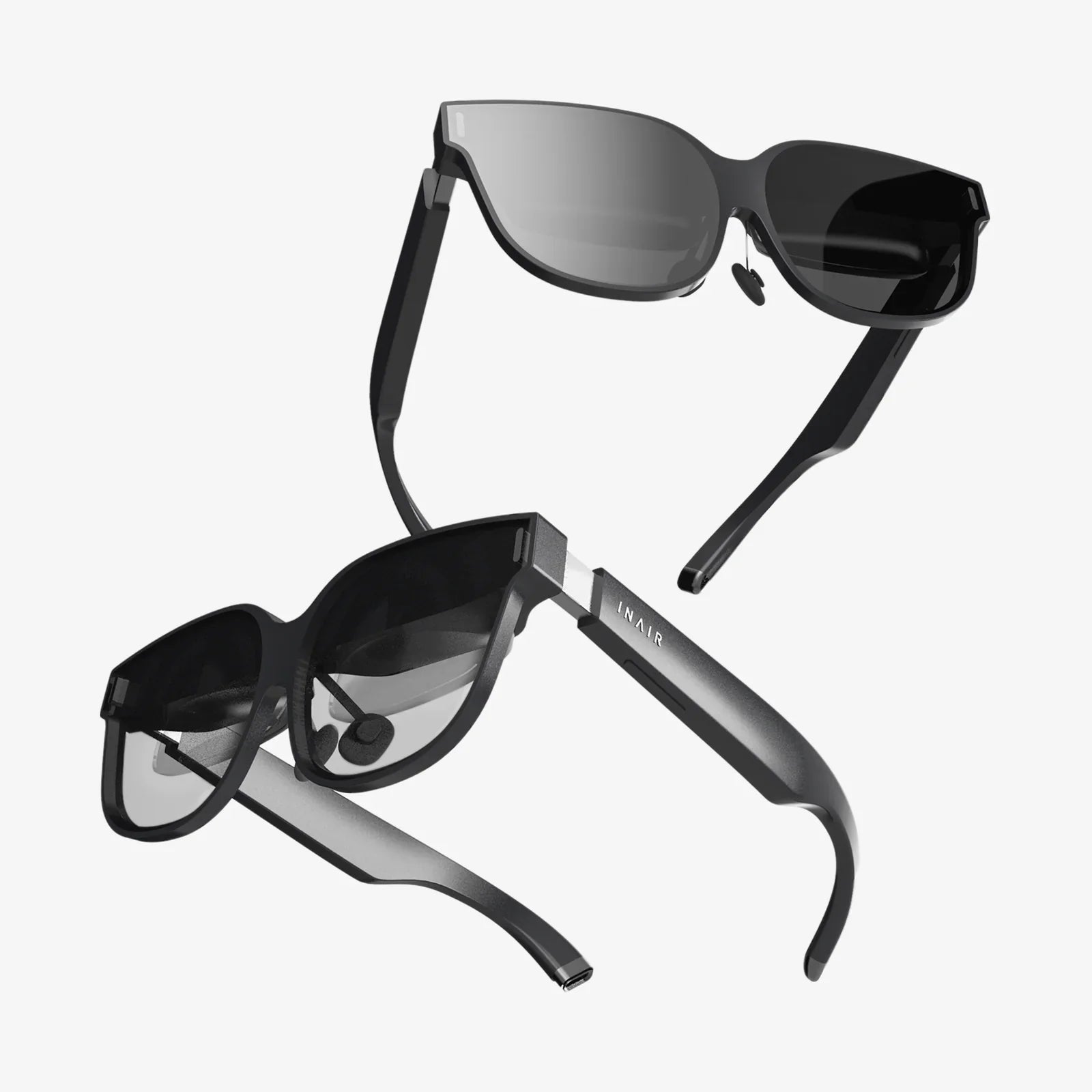
Imagine reaching into thin air and sculpting a new product prototype, walking through a full-scale architectural model before the first brick is laid, or troubleshooting a complex mechanical assembly with schematics overlaid directly onto the physical world—all without ever touching a mouse, keyboard, or screen. This is the promise, and now the reality, of hands-free design work powered by advanced augmented reality headsets. For professionals across industries, from industrial design and architecture to engineering and digital art, this technological leap represents a fundamental shift from interacting with designs on a 2D surface to inhabiting and manipulating them in immersive 3D space. The liberation of your hands is the liberation of your creative process, untethering innovation from the desk and allowing intuition and spatial reasoning to take the lead. The quest for the best AR headsets for this specific, demanding task is not about entertainment or passive consumption; it's about finding the perfect synergy between human intent and digital manifestation.
The Paradigm Shift: From Screen-Bound to Spatially Unbound
For decades, digital design has been confined to the rectangle. Whether it's a high-resolution monitor, a drawing tablet, or a laptop screen, the interface has consistently been a barrier—a window into a digital world that we can observe but not truly enter. We manipulate objects through abstracted controls like a mouse and keyboard, translating our intentions into on-screen actions. This process, while powerful, inherently creates a disconnect between the designer and the design. Spatial understanding is inferred, not experienced.
Augmented Reality shatters this paradigm. Instead of looking at a design, you look through it and around it. An AR headset equipped for design work projects high-fidelity, spatially aware holograms into your real environment. You can walk around a life-sized model, peer underneath it, and examine it from every conceivable angle. The most critical evolution, however, is the move to intuitive, hands-free interaction. This is achieved through a combination of advanced technologies:
- Inside-Out Tracking: Modern headsets use sophisticated cameras and sensors to map the environment in real-time, understanding their position and orientation without external beacons. This allows for precise placement of digital content.
- Eye Tracking: Cameras monitor your pupil movement, enabling you to select menus, navigate interfaces, and focus on specific parts of a model just by looking. This is the first layer of hands-free control.
- Voice Commands: Natural language processing allows you to execute commands—"create new sphere," "hide all layers," "save version"—without lifting a finger.
- Hand Tracking: This is the true game-changer. Advanced computer vision algorithms interpret the precise movements of your fingers and hands, allowing you to grab, rotate, scale, and push/pull digital objects with natural gestures. It’s the digital equivalent of working with clay or physical models.
The combination of these input methods creates a seamless, fluid workflow where the technology itself fades into the background, and the designer is left alone with their creation.
Deconstructing "Hands-Free": The Non-Negotiable Features
Not all AR headsets are created equal, especially for the rigors of professional design work. The term "hands-free" is more than a marketing slogan; it's a functional requirement built upon a foundation of specific hardware and software capabilities. When evaluating options, these are the critical pillars to assess.
Ergonomics and Comfort for Extended Sessions
Design is not a five-minute activity. Professionals often spend hours deeply focused on a project. A headset that is front-heavy, creates pressure points, or causes neck strain will be abandoned, regardless of its technical prowess. The best devices for extended hands-free work prioritize weight distribution. This often involves a counter-balanced design, where the battery pack is moved to the back of the headstrap, creating a more natural center of gravity. Materials matter too—lightweight polymers, breathable foam facial interfaces, and easily adjustable straps are essential. The goal is to achieve a "forget-it's-there" level of comfort, allowing for complete immersion in the task, not the device.
Visual Fidelity: Resolution, Field of View, and Clarity
To make precise design decisions, you must see your work with impeccable clarity. Three factors are paramount:
- Resolution: The displays must be high enough resolution to render sharp text, fine lines, and complex textures without visible pixels (screen-door effect). This is crucial for reviewing detailed CAD models or intricate artistic designs.
- Field of View (FoV): A narrow FoV is like looking through a letterbox; it constantly reminds you that you are wearing a device and limits your peripheral perception of the digital model. A wider FoV provides a more immersive, natural experience, making large-scale designs feel truly present in the room.
- Optical Clarity and Brightness: The holograms must be bright enough to be visible in various lighting conditions, from a dimly lit studio to a well-lit workshop. The optical system must also maintain edge-to-edge clarity to avoid distortion when looking around the scene.
The Interaction Trifecta: Eye, Voice, and Hand Tracking
As mentioned, true hands-free operation is a symphony of input methods. The hardware must support this flawlessly.
- Hand Tracking Accuracy: This needs to be sub-millimeter precise and low-latency. A laggy or jittery hand representation breaks immersion and makes fine manipulation frustrating. The system must reliably recognize complex gestures like pinching, tapping two fingers together, or making a fist, even when hands are partially occluded from the sensors' view.
- Eye Tracking Responsiveness: Gaze-based selection must be instantaneous and accurate. It should feel like a laser pointer attached to your will, not a sluggish cursor. This is also used for foveated rendering, a technique that maximizes processing efficiency by rendering the area you are directly looking at in highest detail while slightly reducing detail in your periphery.
- Voice Recognition: It must work reliably in noisy environments and understand context-specific commands within professional design software.
Spatial Computing Power and Software Ecosystem
The headset is just the window. The real magic happens in the spatial computer—whether it's a self-contained unit or a connected processing puck—that powers the experience. It requires a top-tier processor, ample RAM, and a powerful GPU to render complex 3D models in real-time without stuttering or dropping frames. This raw computational power is what makes interacting with high-polygon designs feel fluid and real.
Equally important is the software available. The device must support robust professional applications tailored for AR creation and visualization. Look for platforms that allow for the import of native CAD files (like .STEP, .IGES, .FBX), offer real-time collaboration features where multiple users can see and interact with the same model, and provide tools specifically designed for 3D sketching, sculpting, and annotation in space.
The Impact on Real-World Design Disciplines
The theoretical benefits of hands-free AR are compelling, but the practical applications are already transforming industries.
Architecture and Construction (AEC)
Architects are using these devices to step inside their BIM (Building Information Modeling) designs at a 1:1 scale. They can walk through virtual hallways, check sightlines, assess spatial relationships, and identify potential design clashes long before construction begins. On the job site, construction managers can overlay the digital blueprint onto the physical structure, verifying dimensions and placements of systems like electrical conduits or plumbing hands-free, with all relevant information available via gaze or voice command.
Industrial and Product Design
Designers can place a full-scale prototype of a new car interior, kitchen appliance, or consumer product in their studio. They can assess ergonomics, form, and aesthetics by physically interacting with it. Does the dial feel like it's in the right place? Is the curve of this handle comfortable? They can make iterative changes on the fly, drastically compressing the design iteration cycle that traditionally required costly physical prototyping.
Engineering and Manufacturing
Technicians performing complex assembly or maintenance procedures can have interactive, holographic instructions overlaid directly onto the machinery they are working on. They can see animations showing the order of assembly, torque values for specific bolts, and warnings for specific components, all without referring to a manual or a tablet they’d have to put down. This reduces errors, improves safety, and accelerates training.
Navigating the Current Limitations
While the technology is revolutionary, it is not without its challenges. The field of view, though improving, is still not equivalent to human vision. Battery life for intensive computing tasks can be a constraint, often requiring hot-swappable batteries for all-day use. Furthermore, creating a universal standard for 3D UI and gestures is still a work in progress, leading to a learning curve with different software platforms. Finally, the cost of entry for professional-grade hardware and software remains significant, though it is often justified by the gains in efficiency, reduction in errors, and acceleration of time-to-market.
The Future is an Empty Workspace
The trajectory is clear: the tools of creation are becoming increasingly invisible and intuitive. The best AR headsets for hands-free design work are not just a new type of display; they are a portal to a new methodology. They represent a future where the barriers between the digital and the physical are erased, where our ideas can manifest and be shaped in the space around us with the tools we've used since birth—our eyes, our voice, and our hands. This isn't just an incremental improvement to the workflow; it's a redefinition of the very canvas of creation, promising a world where designers and engineers don't just build for the real world—they build within it.
Your next breakthrough design won't be trapped on a screen; it will be waiting for you in the empty space of your studio, ready to be pulled into reality with nothing but your vision and a gesture. The era of looking at your work is over; the era of being inside it has just begun.
Share:
AR Headsets 3D Object Manipulation Support 2025: The Dawn of a New Digital Craftsmanship
Laptop Spectacles: The Essential Tech Accessory for Modern Digital Wellness