


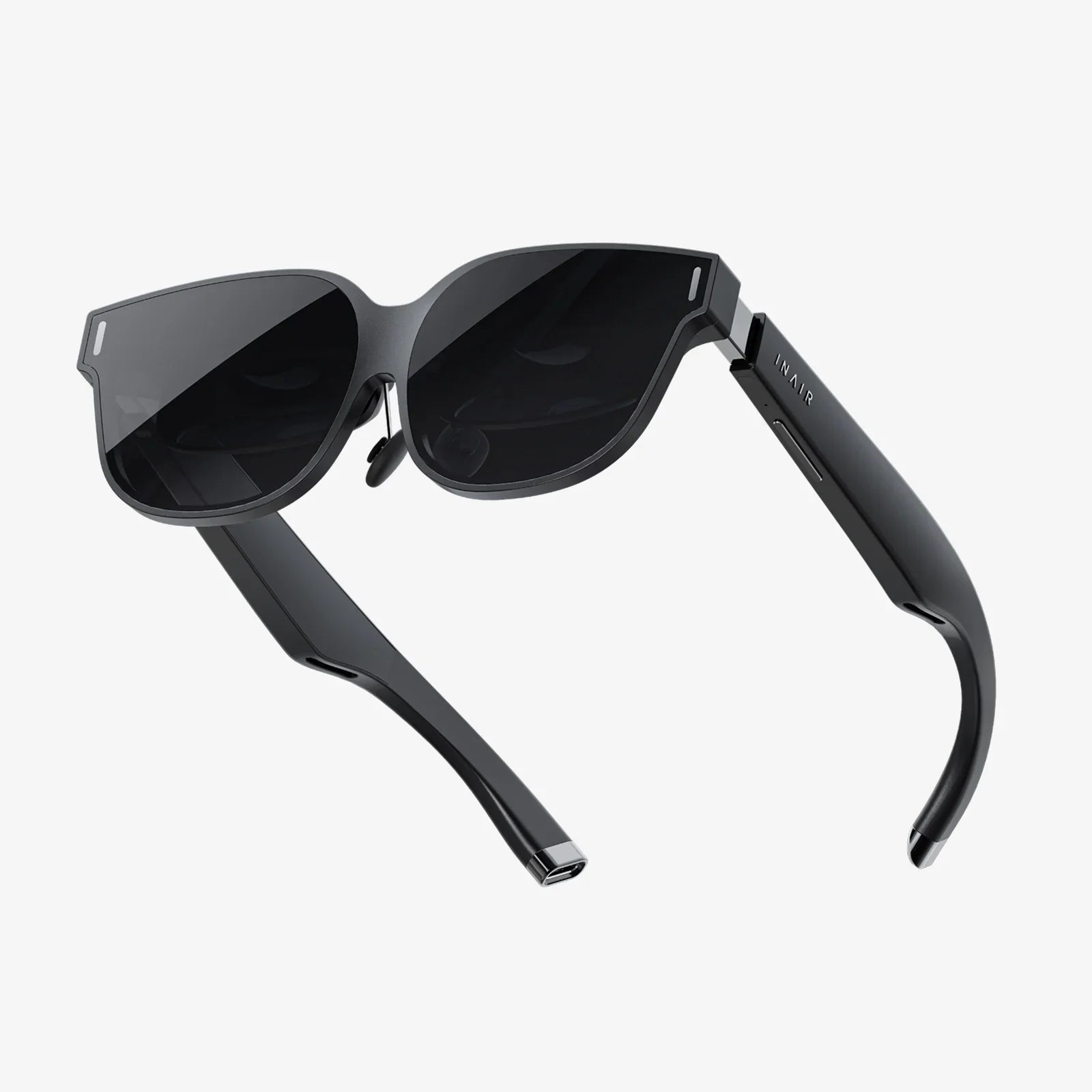
Imagine walking into a store where the physical and digital worlds are seamlessly intertwined, where products come to life before your eyes, and expert assistance is just a glance away. This isn't a scene from a science fiction movie; it's the rapidly approaching reality of retail in 2025, powered by a new generation of Augmented Reality headsets. The race to dominate this transformative space is fiercer than ever, with manufacturers pushing the boundaries of technology to create devices that are not only powerful but also practical, comfortable, and accessible for both consumers and retail employees. The right headset can mean the difference between a forgettable shopping trip and an unforgettable brand experience, between logistical chaos and streamlined efficiency. As we look ahead, the very definition of shopping is being rewritten, and these sophisticated wearables are holding the pen.
The Retail Renaissance: Why AR is No Longer Optional
The retail landscape has undergone seismic shifts in the past decade, and the pressure to innovate has never been greater. Traditional brick-and-mortar stores are fighting to offer something that e-commerce giants cannot: a tangible, immersive experience. This is where AR headsets transition from a novel gimmick to an essential business tool. In 2025, we see this technology maturing beyond early adoption into a core component of retail strategy.
For the consumer, these devices promise to eradicate pain points. Finding a specific item in a vast department store, understanding how a piece of furniture will look in a living room, or getting detailed specifications without hunting for a sales associate—all these frustrations are solved with a simple, hands-free visual overlay. For the retail worker, the benefits are equally profound. Imagine warehouse pickers being guided by digital arrows to their next item with pinpoint accuracy, or floor staff having instant access to inventory data, customer purchase history, and detailed product information without ever leaving the customer's side. The headsets of 2025 are designed to empower both sides of the counter, creating a symbiotic relationship that elevates the entire commerce ecosystem.
Key Features Defining the 2025 AR Headset Market
Not all AR headsets are created equal, especially when tasked with the diverse and demanding environment of retail. The leading devices emerging in 2025 share a common set of advanced characteristics that set them apart from their predecessors and competitors.
Visual Fidelity and Field of View
The ghostly, translucent images of early AR are gone. The best headsets for retail in 2025 boast stunning visual fidelity, with high-resolution displays that overlay crisp, vibrant, and life-size digital objects onto the real world. A critical differentiator is the field of view (FOV). A narrow FOV feels like looking through a keyhole, shattering immersion. The top-tier devices now offer an expansive FOV that allows users to see large digital elements, like a virtual appliance or an entire outfit, without awkward cropping, making the experience genuinely persuasive and natural.
Form Factor and All-Day Comfort
The clunky, cumbersome prototypes of the past have been refined into sleek, professional-grade wearables. For retail employees who must wear them for entire shifts, comfort is paramount. Lightweight materials, ergonomic weight distribution, and adjustable straps are non-negotiable features. We are also seeing a clear divergence in design philosophy: some manufacturers favor a full-framed, glasses-like design for discretion and social acceptance, while others offer a more robust, visor-style design for dedicated, high-intensity tasks in warehouses or on the sales floor, prioritizing feature set over minimalism.
Spatial Awareness and Mapping
The magic of AR lies in its ability to understand and interact with the physical environment. This is achieved through a sophisticated array of sensors—cameras, LiDAR, depth sensors, and inertial measurement units (IMUs). In 2025, these systems are incredibly precise, allowing for instant room mapping and persistent digital content that stays locked in place, whether it's a price tag on a shelf or an informational panel next to a product. This robust spatial awareness is the bedrock upon which all retail applications are built.
Battery Life and Performance
There's nothing immersive about a headset that dies in the middle of a customer demonstration. Leading units are equipped with batteries that easily last a full workday, with some offering hot-swappable options for continuous uptime. Under the hood, powerful, dedicated processors handle complex computer vision algorithms and high-polygon 3D rendering without lag, ensuring a smooth and responsive experience that feels magical, not frustrating.
Transforming the Customer Journey: Applications in Action
The theoretical benefits of AR are compelling, but their practical applications within a retail setting are where the true revolution is taking place. The headsets of 2025 are the gateways to these transformative experiences.
Virtual Try-On and Visualization
This is the most obvious and impactful application. Customers can now try on clothing, accessories, and eyewear virtually, seeing how they look from every angle without ever entering a changing room. The technology has advanced to accurately simulate materials like fabric drape and sheen. Beyond apparel, shoppers can visualize products in their own homes at true scale. A sofa can be placed in their lounge, a new grill on their patio, or a fresh coat of paint on their walls, drastically reducing purchase hesitation and the rate of returns.
Personalized In-Store Navigation and Promotions
Upon entering a store, a customer wearing a headset (or using a complementary app on their smartphone) can be greeted with a personalized navigation path directly to the items on their shopping list. As they walk through the aisles, the headset can highlight special promotions on their favorite brands or items that complement past purchases, creating a highly tailored and efficient shopping experience that boosts customer satisfaction and average basket size.
Access to Infinite Aisles and Product Information
Physical stores are limited by square footage, but AR headsets offer access to "infinite aisles." A customer looking at a specific model of a product can instantly call up every available color, configuration, or compatible accessory that may not be physically in stock. Tapping or looking at a product can summon a rich overlay of information: materials, origin story, how-it's-made videos, and user reviews, all accessible without needing to find a box or scan a QR code.
Empowering the Workforce: The Backend Revolution
While customer-facing applications are flashy, some of the most significant ROI for retailers comes from deploying AR to their employees. These headsets are powerful tools for operational excellence.
Enhanced Picking and Warehousing
In distribution centers, AR-guided picking is becoming the standard. Workers wearing headsets see digital arrows superimposed on their path, leading them directly to the correct bin. The required item and quantity are displayed visually, streamlining the process, reducing errors by over 99%, and slashing training time for new employees. This leads to faster order fulfillment and monumental gains in supply chain efficiency.
Streamlined Inventory Management and Restocking
Store associates conducting inventory checks can simply look at shelves. The headset's computer vision can identify items, count quantities, and automatically flag low-stock or misplaced products, syncing this data instantly with the inventory management system. This eliminates manual counting with scanners and clipboards, freeing up staff for more valuable customer-facing tasks.
Remote Expert Assistance and Training
When a complex situation arises—such as repairing specialized equipment or setting up an intricate display—a junior employee can share their live AR view with a remote expert. The expert can then annotate the employee's real-world view with arrows, diagrams, and notes, guiding them through the process step-by-step. This "see-what-I-see" support reduces the need for expert travel, accelerates problem resolution, and serves as a powerful on-the-job training tool.
Navigating the Challenges: Privacy, Cost, and Implementation
Adopting this technology is not without its hurdles. The path to a seamless AR retail future requires careful consideration of several critical factors.
Privacy is paramount. Headsets equipped with cameras and sensors that map environments and recognize faces raise legitimate concerns. The leading solutions in 2025 address this with transparent data policies, on-device processing for sensitive information (so data isn't streamed to the cloud), and clear visual indicators when recording or mapping is active. Building trust with both customers and employees is essential for widespread adoption.
Total cost of ownership remains a significant factor for businesses. Beyond the initial hardware investment, retailers must consider software development, system integration, maintenance, and ongoing updates. However, the ROI demonstrated through increased sales, reduced returns, and massive operational efficiencies is making the business case stronger than ever, transforming the expenditure from a cost into a strategic investment.
Finally, successful implementation requires more than just handing out devices. It demands a cultural shift within the organization, rethinking old processes, and developing new protocols. Comprehensive training programs are crucial to ensure staff feel confident and empowered using the technology to enhance their roles, not replace them.
The shelves of tomorrow's stores are already being designed in the R&D labs of today. The best AR headsets for retail in 2025 are not merely accessories; they are the central nervous system of a new, dynamic, and deeply connected shopping universe. They represent the final piece of the puzzle in merging the convenience of online shopping with the tangibility of physical retail, creating a hybrid model that offers the best of both worlds. For forward-thinking brands, the question is no longer if they should adopt this technology, but how quickly they can integrate it to start building the loyal customer base and ultra-efficient operations that will define the next decade of commerce. The future of retail is not on the horizon; it's already being built, one headset at a time.
Share:
Examples Digital Media: The Definitive Guide to Modern Content and Strategy
Holographic PC The Future of Personal Computing and Immersive Interaction