


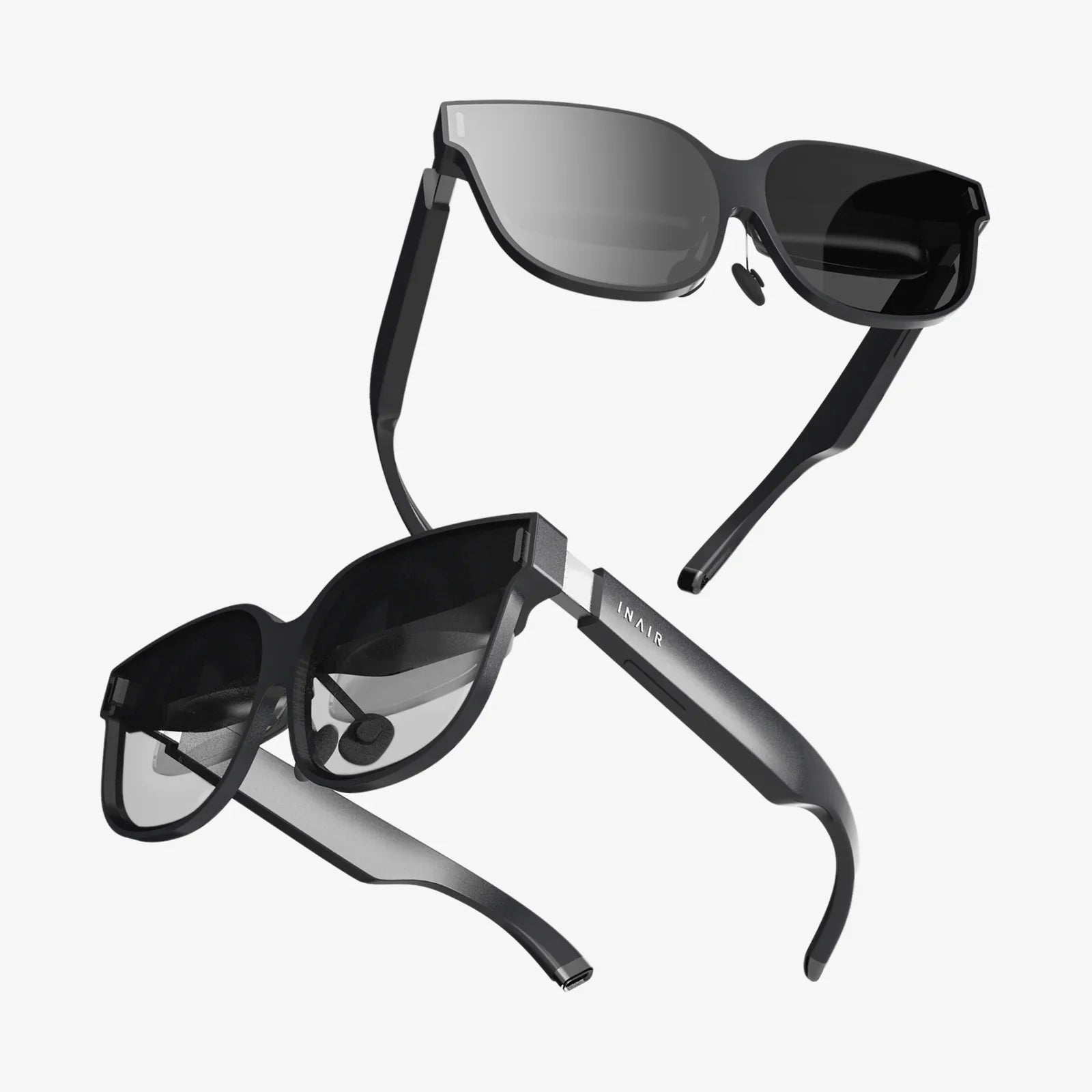
Imagine a world where digital information doesn't just live on a screen but is seamlessly woven into the fabric of your everyday life, enhancing your perception, empowering your decisions, and transforming your reality. This is the promise of Augmented Reality (AR), a technology poised to revolutionize how we work, learn, play, and connect. The quest for the best AR experience is not about a single device; it's a journey into a new paradigm of human-computer interaction, and it's already beginning to reshape our world.
The Fundamental Shift: Understanding Augmented Reality
At its core, Augmented Reality is a technology that superimposes a computer-generated overlay—comprising images, sounds, text, and even haptic feedback—onto a user's view of the real world. Unlike Virtual Reality (VR), which creates a completely immersive, digital environment, AR enhances the real world by adding a digital layer to it. This crucial distinction means AR is designed for use in your existing environment, not as an escape from it. The goal is to provide contextually relevant information exactly when and where you need it, creating a powerful synergy between the digital and physical realms.
The Technological Pillars Powering the Best AR Experiences
The magic of a seamless AR experience rests on a complex foundation of advanced technologies working in concert. The quality of an AR system is judged by how well these components perform.
Sensing and Perception
This is the eyes and ears of any AR system. A combination of cameras, LiDAR (Light Detection and Ranging), radar, and depth sensors work to constantly scan and understand the environment. They map the physical space in real-time, detecting surfaces (floors, walls, tables), understanding lighting conditions, and tracking objects. This environmental understanding is what allows digital content to sit convincingly on your desk or occlude realistically behind a real-world couch.
Processing and Power
The raw data captured by the sensors is meaningless without immense computational power. Sophisticated algorithms and processors handle simultaneous localization and mapping (SLAM), which builds a map of an unknown environment while simultaneously tracking the device's location within it. This happens continuously and at lightning speed, requiring either incredibly powerful onboard processors or a robust, low-latency connection to cloud computing resources.
Display Technologies: See-Through and Immersion
How the digital overlay is presented to the user is a primary differentiator. Current display methods include:
- Optical See-Through: Often used in smart glasses, these displays use waveguides, miniature projectors, or semi-transparent mirrors to beam light directly into the user's eyes, allowing them to see the real world with digital elements layered on top.
- Video See-Through: Common on smartphones and tablets, this method uses the device's camera to capture the real world and then displays the combined real-world video and digital graphics on the screen.
- Projection-Based AR: This method projects digital light directly onto physical surfaces, turning any wall or table into an interactive display without the need for a headset.
Interaction Paradigms
The best AR experiences feel intuitive and natural. Moving beyond touchscreens, AR leverages new forms of interaction:
- Gesture Control: Using cameras to track hand and finger movements, allowing users to pinch, grab, and manipulate digital objects as if they were physical.
- Voice Commands: Integrating natural language processing to let users ask questions or give commands hands-free.
- Eye Tracking: Monitoring where a user is looking to enable gaze-based selection and more realistic avatars in social applications.
Defining "Best": The Hallmarks of a Superior AR Experience
With the underlying technology in mind, we can define the qualitative metrics that separate a good AR experience from the best AR experience.
Precise and Stable Tracking
The digital content must remain locked in place in the real world. If a virtual model of a chair jitters, floats, or drifts away from its intended spot, the illusion is instantly broken. Rock-solid tracking is the non-negotiable foundation of immersion.
Realistic Occlusion and Lighting
This is the difference between a digital object that looks pasted on and one that feels like it truly exists. Realistic occlusion means a virtual dog should run behind a real table leg, disappearing from view and then reappearing. Similarly, the digital object must react to the environment's lighting, casting believable shadows and matching the color temperature and intensity of the room.
Intuitive and Effortless Interaction
The interface should feel like a natural extension of the user. Complicated menus or clunky controls destroy the magic. The best AR feels responsive and easy, whether you're resizing a 3D model with a pinch or selecting an option with a glance.
Comfort and Wearability
For wearable AR, the hardware must be comfortable enough for extended use. This encompasses weight distribution, field of view, battery life, and industrial design. The best technology is useless if it's too heavy, cumbersome, or socially awkward to wear in public.
Contextual Relevance and Utility
Ultimately, the best AR experience is one that provides genuine value. The technology should serve a purpose, solving a problem or enhancing an activity in a way that wasn't possible before. It should deliver the right information at the right time without overwhelming the user.
The AR Revolution in Action: Transforming Industries
The potential applications for AR are vast, and several industries are already being transformed.
Revolutionizing Enterprise and Manufacturing
This is where AR is having its most immediate and profound impact. Technicians can receive remote expert guidance with annotations overlaid directly onto the machinery they are repairing, reducing errors and downtime. Warehouse workers can see digital pick-and-place paths overlaid on shelves, dramatically accelerating logistics. Complex assembly instructions can be visualized step-by-step in 3D space, improving accuracy and training speed.
Redefining Healthcare and Medicine
Surgeons can visualize CT scans and MRI data projected directly onto a patient's body during procedures, improving precision. Medical students can practice procedures on detailed, interactive holographic models of human anatomy. AR can also assist in vein finding for injections and provide therapeutic experiences for patient rehabilitation.
Enhancing Retail and E-Commerce
The "try before you buy" concept is being redefined. Customers can use their smartphones or AR mirrors to see how furniture would look in their living room, how a new shade of paint would transform a wall, or how a pair of glasses or makeup would look on their face. This reduces purchase uncertainty and returns while creating an engaging shopping experience.
Unlocking New Forms of Education and Training
Textbooks become living, interactive models. Students can explore the solar system from their classroom, dissect a virtual frog, or walk through a historical site as it looked centuries ago. This experiential learning leads to dramatically improved retention and understanding of complex subjects.
Gazing into the Crystal Ball: The Future of AR
The current state of AR is impressive, but it is merely a prelude to what is coming. The future points toward even more seamless and powerful integration into our lives.
The Path to True Ubiquity: AR Glasses
The ultimate goal is a pair of stylish, lightweight glasses that can replace the smartphone as our primary computing interface. This will require breakthroughs in battery technology, display miniaturization, and processing efficiency. When achieved, it will unlock a truly always-available, hands-free AR experience.
The Spatial Web and Contextual Awareness
Future AR devices will not just see the world; they will understand it on a deeper level. Tied to a concept often called the "Spatial Web" or "Web 4.0," digital information will be anchored to locations and objects. Walking past a restaurant could reveal its digital menu and reviews floating nearby. Your coffee machine could display a digital maintenance manual when you look at it. The environment itself becomes the interface.
The Rise of the AR Cloud
This is a persistent, universal digital layer over the physical world. It would allow for shared, multi-user AR experiences that persist over time. A digital art installation in a public square could be seen and interacted with by everyone, or navigation arrows for a scavenger hunt could remain in place for days. The AR Cloud is the infrastructure that will make the digital world a permanent, shared facet of our physical reality.
Navigating the Challenges Ahead
For all its promise, the path to mainstream AR adoption is not without significant hurdles. Privacy concerns are paramount, as devices that constantly scan our environments raise serious questions about data collection and surveillance. There are also societal challenges, such as digital distraction and the potential for new forms of advertising spam in our physical view. Establishing clear ethical guidelines and robust security measures will be just as important as the technological advancements themselves.
The journey to find the best AR is not a search for a single product but an exploration of a technological frontier that is fundamentally changing our relationship with information. It’s a shift from pulling data from a device to having data pushed into our reality in a contextually rich, intuitive, and profoundly useful way. As the hardware becomes more capable, the software more intelligent, and the applications more essential, the line between the digital and the physical will continue to blur, unlocking a future of limitless potential that we are only just beginning to imagine.
Share:
VR Goggles Smartphone: Your Pocket-Sized Portal to Virtual Worlds
Can You Wear Smart Glasses While Driving? Navigating the Legal and Safety Maze