


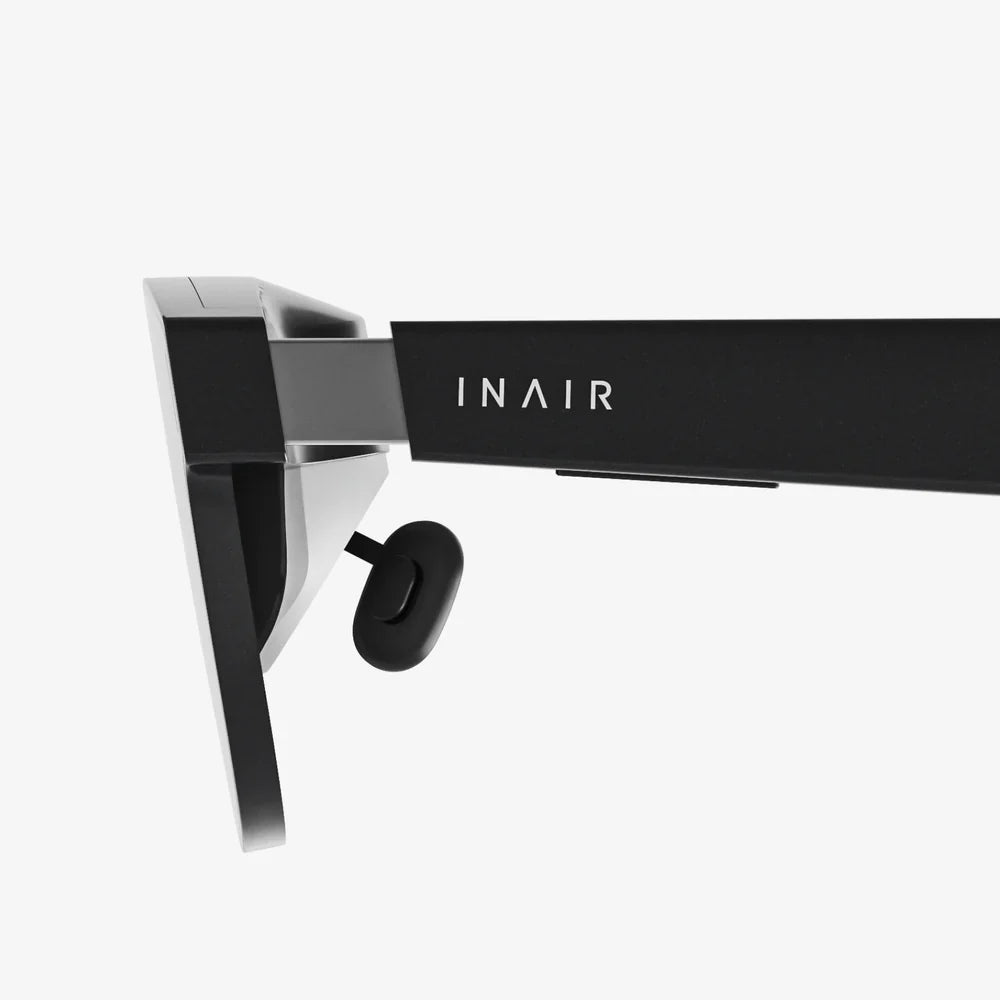
Imagine a world where digital information doesn’t live on a screen in your hand, but is seamlessly woven into the fabric of your reality. Where directions float on the street in front of you, a foreign language is instantly translated onto a restaurant menu, and a colleague’s 3D model can be manipulated mid-air during a meeting. This is no longer the stuff of science fiction; it is the promise of 2025’s best augmented reality devices, and the future is putting on a headset. The race to dominate our visual field is heating up, and this year’s crop of hardware is nothing short of revolutionary, offering a glimpse into a permanently augmented existence that is more intuitive, immersive, and powerful than ever before.
The evolution of AR technology has been nothing short of meteoric. From the clunky, tethered prototypes of the early 2020s to the sleek, standalone marvels of today, the journey has been defined by a relentless pursuit of the holy trinity of wearable tech: power, comfort, and affordability. In 2025, we are witnessing the culmination of these efforts. Processors have become exponentially more efficient, capable of rendering complex holograms without draining a battery in minutes. Waveguides and micro-OLED displays have achieved unprecedented levels of clarity and brightness, making digital objects indistinguishable from their physical counterparts. Most importantly, form factors have finally shrunk to resemble something akin to fashionable eyewear, shedding the bulky, geeky aesthetic that once hindered mass adoption. This convergence of technological maturity is what defines the current generation and makes the devices of 2025 truly stand out.
The Defining Features of 2025's Elite AR Wearables
So, what separates the best from the rest this year? While specific specs vary, the leading devices share a common set of groundbreaking features that set a new industry standard.
Visual Fidelity and Immersion: The screen-door effect is a distant memory. The best augmented reality devices of 2025 boast high-definition, full-color displays with a field of view that finally encompasses natural human vision. This eliminates the frustrating "binocular" effect, allowing users to engage with large-scale holograms without black borders cutting them off. Furthermore, advanced automatic ambient light sensors adjust hologram brightness in real-time, ensuring perfect visibility whether you're in a dimly lit conference room or outdoors under bright sunlight.
Spatial Computing and Environmental Understanding: This is the brains of the operation. Onboard LiDAR, depth sensors, and high-resolution cameras work in tandem to map your environment with millimeter precision instantly. This allows digital content to not just appear in your space, but to interact with it intelligently. A virtual pet will jump on your real sofa and hide under your actual table. A virtual monitor will stay locked in place on your wall, even if you walk away and return. This deep environmental understanding is the foundation for truly persistent and interactive AR experiences.
Intuitive and Varied Control Schemes: Forget clumsy controllers. The premier devices now offer a multimodal approach to interaction. Sophisticated hand-tracking technology allows you to pinch, grab, and manipulate holograms with natural gestures. Voice assistants, powered by contextual AI, understand complex commands without requiring specific trigger words. Some devices even incorporate emerging technologies like subvocal recognition or subtle neural interface bands that detect intention, allowing for silent, thought-based commands for certain functions. This creates a frictionless and magical user experience.
All-Day Form Factor and Connectivity: The goal of looking like a standard pair of glasses has largely been achieved. The best devices are lightweight, comfortable for extended wear, and come with options for prescription lenses. They are true standalone computers, featuring powerful onboard chipsets and all-day battery life, often supplemented by a sleek, pocketable battery pack for extended use. Seamless 5G/6G connectivity ensures you are always online, with low latency for cloud-based processing and multi-user experiences.
Beyond Consumerism: The Professional and Industrial Revolution
While consumer applications like gaming and social media are flashy, the most profound impact of 2025’s AR devices is happening in the professional world. Enterprises are adopting this technology at a staggering rate, realizing immense gains in efficiency, accuracy, and safety.
In medicine and healthcare, surgeons are using AR headsets to overlay critical patient data, such as MRI scans and vital signs, directly onto their field of view during procedures. Medical students can practice complex surgeries on detailed holographic cadavers. Technicians can receive remote, expert guidance from a specialist who can see their perspective and annotate the real world in front of them.
The manufacturing and field service sectors have been completely transformed. A technician repairing a complex machine can see digital schematics overlaid onto the physical components, with animated guides showing the exact tools and steps required. This reduces errors, slashes training time, and empowers a single worker to perform tasks that previously required a team of experts.
Architecture, engineering, and construction (AEC) are perhaps the ideal use case. Architects and clients can walk through a full-scale, holographic model of a building before a single brick is laid, making changes to the design in real-time. On construction sites, workers can see the digital blueprint perfectly aligned with the physical structure, ensuring everything is built to exact specifications.
A Glimpse at the Categories Defining the Market
The market in 2025 is no longer monolithic. It has matured into distinct categories catering to different needs and budgets.
The Premium Professional Tier: These are the workhorses. Designed for enterprise and prosumers, they prioritize power, durability, and feature completeness. They often feature the most advanced sensors, the longest battery life, and are built to withstand harsh industrial environments. The software ecosystems for these devices are focused on productivity, remote collaboration, and specialized industrial applications.
The Mainstream Consumer Tier: This category focuses on style, comfort, and accessibility. While still powerful, these devices are designed for all-day wear as a replacement for your smartphone. They excel at navigation, communication (with life-like avatars on video calls), content consumption, and social AR experiences. Their design is paramount, with collaborations from renowned fashion houses making them a statement piece.
The Specialized Niche Devices: This includes everything from ruggedized devices for extreme sports that overlay performance metrics onto a skier’s goggles, to more affordable audio-focused wearables that provide a minimal AR experience primarily through sound and simple notifications. There’s a device for nearly every conceivable activity.
Navigating the Challenges and Looking Ahead
Despite the incredible progress, the AR industry still faces hurdles. Privacy concerns regarding always-on cameras and microphones are significant and are being addressed through on-device processing and clear user-control indicators. Digital litter—the AR equivalent of spam—could become a real-world problem if not managed properly. Furthermore, creating a truly open and interoperable "metaverse" where digital objects and avatars can move between different devices and platforms remains a key challenge for the industry to solve.
Looking beyond 2025, the trajectory points towards even greater integration. We are moving towards contact lenses with AR capabilities and eventually direct neural interfaces, eliminating hardware altogether. The line between the digital and the physical will continue to blur until it disappears completely.
The best augmented reality devices of 2025 are not merely new gadgets; they are portals. They are the key that unlocks a new layer of human experience, transforming how we perceive and interact with our world and with each other. From revolutionizing global industries to enhancing our most mundane daily tasks, this technology is poised to become as indispensable as the smartphone, fundamentally reshaping the landscape of human-computer interaction. The devices are here, the future is putting them on, and reality will never be the same.
Share:
At AR Glasses by Generative AI: The Invisible Interface Reshaping Reality
At AR Glasses by Generative AI: The Invisible Interface Reshaping Reality