


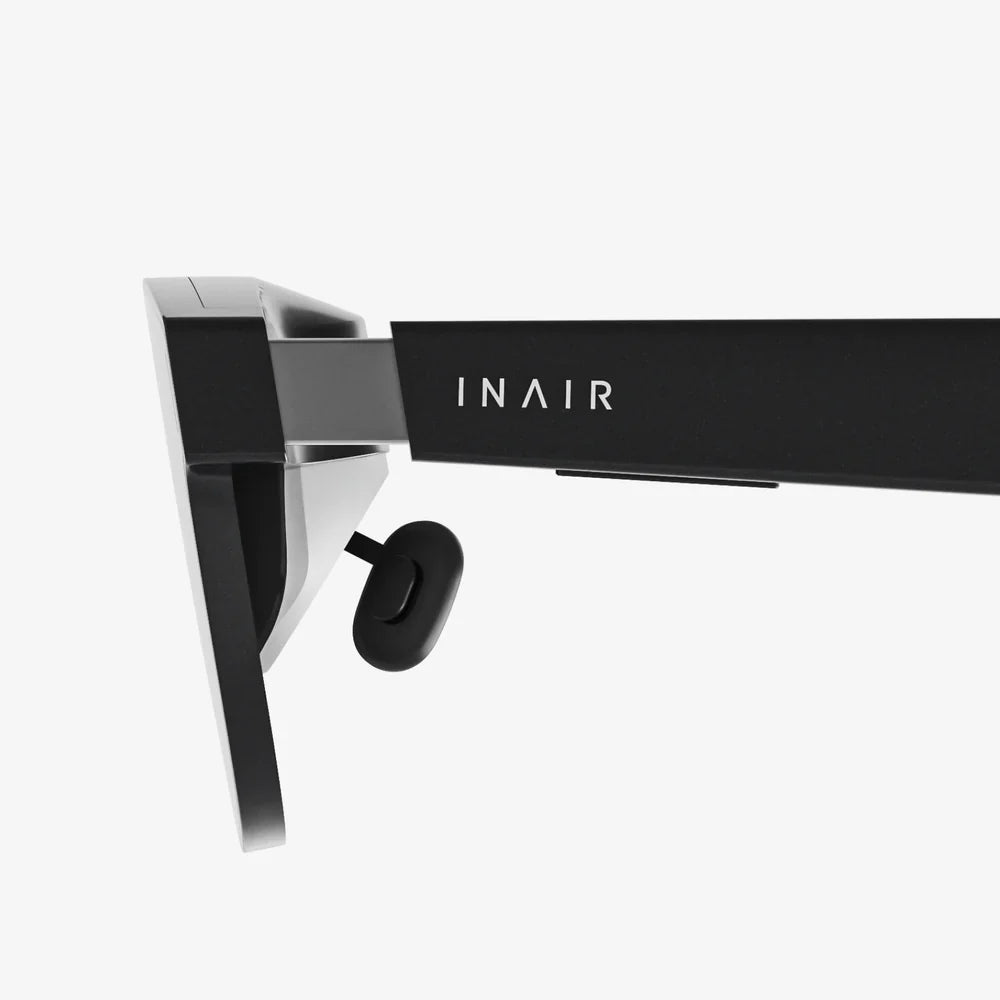
Imagine a world where digital information doesn't just live on a screen in your hand but is woven seamlessly into the fabric of your reality. This is the promise of the best augmented reality goggles, a portal to a future where the line between the physical and digital worlds blurs into irrelevance. These are not mere gadgets; they are the next great leap in human-computer interaction, poised to revolutionize everything from how we work and learn to how we play and connect. The race to perfect this technology is on, and the current generation of devices offers a breathtaking glimpse into a world of limitless possibility, waiting for you to step through.
The Core Technologies Powering Modern AR Goggles
At the heart of every pair of high-quality augmented reality goggles lies a symphony of advanced technologies working in perfect harmony. Understanding these components is key to appreciating the engineering marvel they represent.
Optical Systems: Waveguides and Beyond
The primary challenge for any AR device is projecting a bright, clear digital image onto the real world. Most of the best augmented reality goggles achieve this through sophisticated optical systems like waveguides. These are essentially transparent glass or plastic plates that use microscopic structures to reflect light from a micro-display into the user's eye. This allows for a compact form factor while creating a convincing illusion that digital objects exist in the user's environment. Other systems, like birdbath optics, use a combination of mirrors and beam splitters to achieve a similar effect, often resulting in a wider field of view.
Spatial Mapping and Computer Vision
For digital content to interact believably with the real world, the goggles must understand the environment. This is accomplished through a suite of sensors, including depth-sensing cameras, LiDAR scanners, and standard RGB cameras. These sensors constantly scan the room, creating a real-time 3D map of the surroundings. Advanced computer vision algorithms then process this data to identify surfaces like floors, walls, and tables, allowing virtual objects to be placed, occluded, and anchored with astonishing accuracy. This spatial awareness is what prevents a virtual dragon from clipping through your sofa and makes it appear to sit convincingly on the cushion.
Processing Power and Connectivity
The computational demand of rendering complex 3D graphics while simultaneously processing vast amounts of sensor data is immense. Some of the best augmented reality goggles are self-contained computers, packing powerful mobile processors, RAM, and storage into the frames. Others adopt a hybrid approach, leveraging the processing power of a connected smartphone or a dedicated computing unit worn on the body. This split allows for a lighter, more comfortable headset while still delivering high-fidelity experiences. Low-latency wireless connectivity, such as Wi-Fi 6E and eventually 5G, is also crucial for streaming rich, untethered content.
Unlocking a World of Applications
The true value of this technology is revealed not in its specs but in its transformative applications across countless industries and aspects of daily life.
Revolutionizing the Professional Workspace
In enterprise and industry, AR goggles are moving from experimental novelties to essential tools. Technicians and engineers can overlay schematic diagrams and animated instructions directly onto complex machinery they are repairing, guiding them through each step with precision and reducing errors. Architects and interior designers can walk clients through full-scale, interactive 3D models of unbuilt structures. Surgeons can have vital patient statistics and imaging data visualized in their field of view during procedures. The ability to have hands-free access to contextual information is dramatically improving efficiency, safety, and outcomes.
The Future of Education and Training
Learning is becoming an immersive, interactive adventure. Instead of reading about ancient Rome, history students can walk through a digitally reconstructed Forum, watching historical events unfold around them. Medical students can practice complex surgical procedures on detailed holographic patients, making mistakes without consequence. Mechanics-in-training can learn to dismantle and reassemble a holographic engine, with each part labeled and its function explained. This experiential learning paradigm enhances retention and understanding in ways textbooks never could.
Redefining Social Connection and Entertainment
Beyond productivity, the best augmented reality goggles are social and entertainment platforms. Imagine watching a movie not on a television, but on a virtual cinema screen that feels 100 feet wide, placed on the wall of your living room. Friends and family, represented by realistic avatars, can join you from across the globe, sitting on your virtual couch as if they were there in person. Games will escape the confines of the TV and invade your home, with characters hiding behind your furniture and puzzles that use your entire house as a playing board. This technology promises to make digital interaction feel more human and present than ever before.
Key Considerations When Choosing Your AR Goggles
With a growing market of devices, selecting the right pair depends on a careful balance of several critical factors.
Form Factor and Design Philosophy
The physical design of AR goggles exists on a spectrum. On one end are sleek, consumer-focused glasses that prioritize all-day comfort and a socially acceptable appearance, often sacrificing some graphical fidelity and field of view. On the other end are more robust, visor-like devices designed for maximum immersion and powerful performance, typically aimed at developers and enterprise users. Your choice will hinge on whether you value discretion and comfort for daily wear or power and immersion for specific tasks.
Field of View and Visual Fidelity
The field of view (FOV) is one of the most important specs, determining how much of your vision can be filled with digital content. A narrow FOV can feel like looking through a small window, while a wide FOV is essential for truly immersive experiences. Similarly, resolution, color accuracy, and brightness are paramount for ensuring virtual objects look solid and real rather than faint and ghostly. The ultimate goal is a device where you can no longer distinguish where the real world ends and the digital one begins.
Input Methods and Interaction
How do you interact with this new mixed reality? The best augmented reality goggles offer a combination of intuitive input methods. Hand-tracking is becoming standard, allowing users to pinch, grab, and manipulate holograms with their bare hands as if they were physical objects. Voice commands provide a hands-free way to launch apps and search for information. Some systems also include dedicated motion controllers for precise input in gaming and design applications. The most seamless experience will be one where the technology fades into the background, and interaction feels natural.
Gazing Into the Crystal Ball: The Future of AR
The current generation of devices is impressive, but it is merely the foundation for what is to come. The trajectory of this technology points toward even more profound integration into our lives. We are moving toward sleek, lightweight glasses that look no different from standard eyewear, yet are capable of projecting photorealistic holograms. Advances in artificial intelligence will enable context-aware assistants that anticipate our needs and surface information before we even ask. The concept of the spatial internet will emerge, where digital information and experiences are tied to locations and objects in the real world, accessible to anyone wearing AR glasses. This will fundamentally change how we navigate cities, shop for goods, and consume media.
The journey into this augmented age is already underway, and it's a ride you won't want to miss. The best augmented reality goggles available today are more than just the most powerful or the most comfortable; they are the key that unlocks a new layer of existence, transforming the mundane world around you into a dynamic canvas for information, storytelling, and connection. This isn't just about seeing the future; it's about stepping into it and experiencing a reality enhanced, amplified, and reimagined.
Share:
Benefits of VR Headset: Unlocking Immersive Potential in Modern Life
Where Can You Buy a VR Headset - The Ultimate Purchasing Guide