


- by wangfred
Best Augmented Reality Smart Glasses: A Guide to the Future on Your Face
- by wangfred
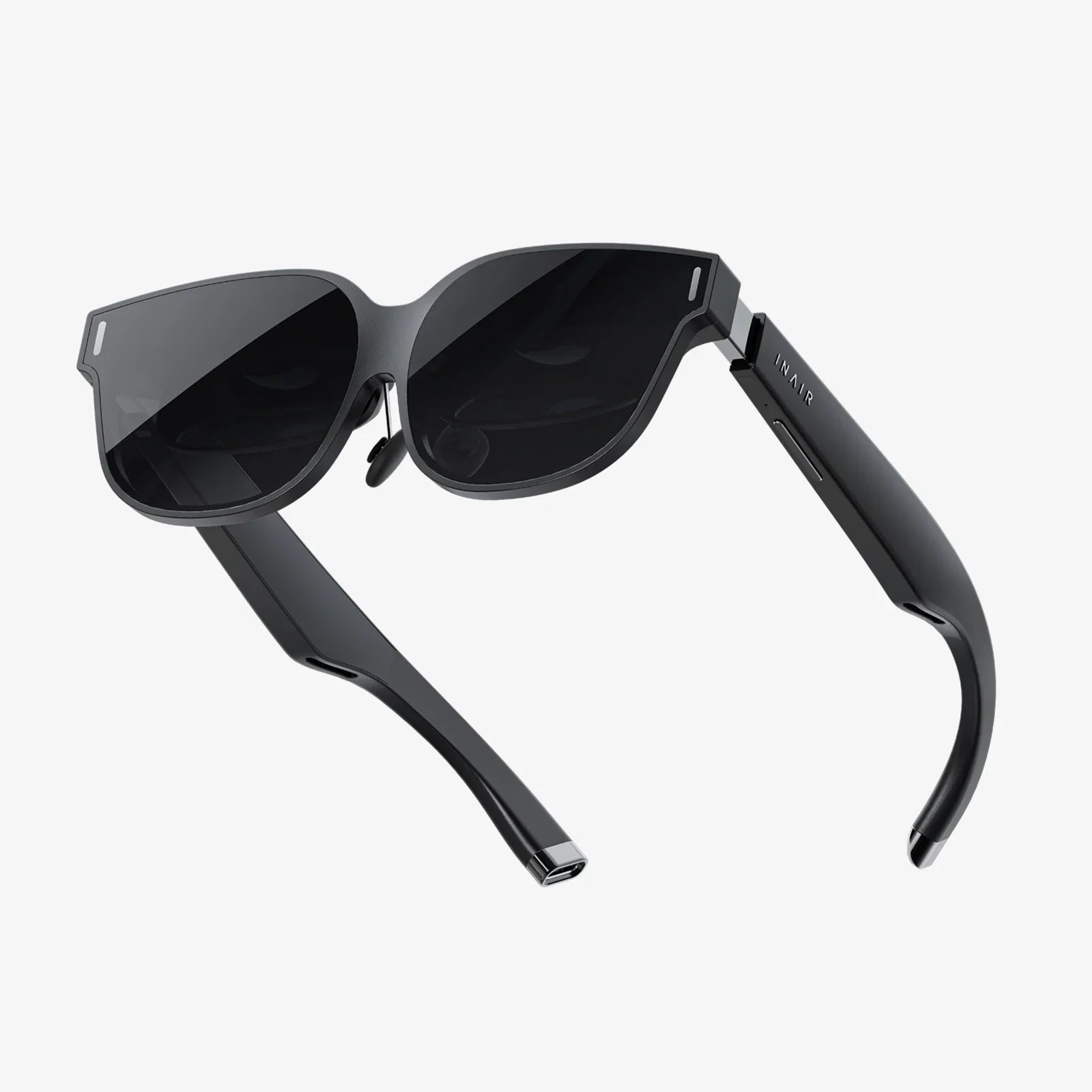
Imagine a world where digital information doesn’t live on a screen in your hand, but is seamlessly woven into the fabric of your reality. Directions float on the sidewalk ahead of you, a colleague’s avatar helps you fix a complex engine as if they were standing right beside you, and your evening recipe is projected onto your kitchen counter without a single smudge on your phone. This is the promise of augmented reality (AR), and the vessel for this revolution is a pair of the best augmented reality smart glasses. This isn't science fiction; it's a technology rapidly maturing and vying for a place on your face, ready to redefine how we work, play, and connect with the world around us.
It's crucial to distinguish true augmented reality smart glasses from other wearable displays. Many devices marketed as "smart glasses" are primarily focused on audio features or offer a small, fixed display in the corner of your vision for notifications—essentially a heads-up display (HUD). True AR glasses, however, are characterized by their ability to project persistent, interactive digital imagery that appears to coexist within your real-world environment.
The core magic lies in their ability to perform spatial mapping. Using a suite of sensors, including cameras, depth sensors, and inertial measurement units (IMUs), the glasses continuously scan and understand the geometry of the space around you. This allows digital objects to be occluded by real-world obstacles, stay locked in place on a physical table, or interact with the environment in a believable way. This creates a genuine sense of mixed reality, where the digital and physical are not just viewed together, but are contextually aware of each other.
The quest to create the best augmented reality smart glasses is a monumental challenge in miniaturization, optics, and processing power. Several competing technologies are at the heart of this endeavor.
How light is projected into your eyes is the single most defining characteristic of AR glasses. The goal is to create bright, high-resolution images that are visible in various lighting conditions while maintaining a sleek, socially acceptable form factor.
For digital content to stay locked in the real world, the glasses must understand their own position and orientation within it. This is achieved through Simultaneous Localization and Mapping (SLAM) algorithms. Cameras track visual features in the environment, while IMUs handle high-frequency tracking of head movements. Depth sensors, such as time-of-flight sensors, provide precise 3D mapping of surfaces. The fusion of this data creates a real-time 3D model of your surroundings, enabling truly immersive AR.
The computational demand for rendering complex 3D graphics and running advanced SLAM algorithms is immense. Different glasses solve this problem in different ways:
When evaluating any pair of AR glasses, several key specifications and features will determine the quality of the experience.
The potential applications for AR glasses are vast, stretching across every facet of life.
This is where AR is already delivering immense value today. Technicians can have schematic diagrams and instruction manuals overlaid directly on the machinery they are repairing. Warehouse workers can see optimal picking routes and item information hands-free. Architects and engineers can visualize full-scale 3D models on a construction site. In these scenarios, AR glasses boost efficiency, reduce errors, and enhance training.
Imagine walking through a foreign city with turn-by-turn directions painted onto the streets, or historical information and reviews popping up above restaurants as you look at them. AR can provide a contextual information layer over the entire world, transforming tourism and everyday exploration.
The concept of the "metaverse" is deeply tied to AR. Instead of video calls on a flat screen, you could share a virtual space with photorealistic avatars of friends or colleagues, collaborating on virtual whiteboards or watching a movie together on a virtual big screen as if you were in the same room.
Gaming will be transformed. Instead of looking at a TV, your entire living room could become a game level, with characters hiding behind your real sofa and interactive elements on your walls. This moves gaming from a sedentary activity to an immersive, physical one.
The market for AR glasses is evolving rapidly, with different players targeting different segments. Some focus squarely on enterprise and industrial applications, prioritizing power and functionality over style. Others are making a push for the consumer market, often starting with media consumption—providing a giant, virtual screen for watching movies or playing mobile games—as a gateway to full AR. There are also open-source projects and developer kits aimed at fostering a community of creators to build the software and experiences that will ultimately define the platform. Choosing the best pair is less about finding a single winner and more about identifying which device aligns with your specific intended use, whether it's for productivity, entertainment, or development.
Despite the incredible progress, significant hurdles remain before AR glasses become as ubiquitous as smartphones. Battery technology needs to advance to support all-day use without adding excessive weight. Network connectivity, particularly the low latency promised by 5G and future networks, is crucial for streaming rich content and enabling multi-user experiences. There are also serious questions around privacy and social etiquette that need to be addressed, as glasses with always-on cameras understandably make people nervous. Furthermore, we need a robust ecosystem of apps and developers to create the killer applications that will drive mass adoption. The ultimate goal is a pair of glasses that are indistinguishable from regular eyewear, offer all-day battery life, and provide a stunning, wide-field-of-view display—a goal that likely relies on breakthroughs in areas like micro-LED displays and neural interface input.
The journey to find the perfect pair of augmented reality smart glasses is more than a search for a gadget; it's an invitation to participate in the next computing revolution. From transforming how we work on complex tasks to overlaying a layer of magic and information onto our daily walks, the best AR glasses are poised to break down the final barrier between our digital and physical lives. The future isn't on a screen; it's all around you, waiting for the right pair of glasses to bring it into focus.